Why invest Miami now means compute power
Key points:
- • AI-driven data center demand is reshaping South Florida’s commercial real estate map.
• Miami-Dade office vacancy sits near 8%, well below the 18% gateway-market average.
• Three subsea cables and FPL gigawatt pipelines make Miami a top compute corridor.
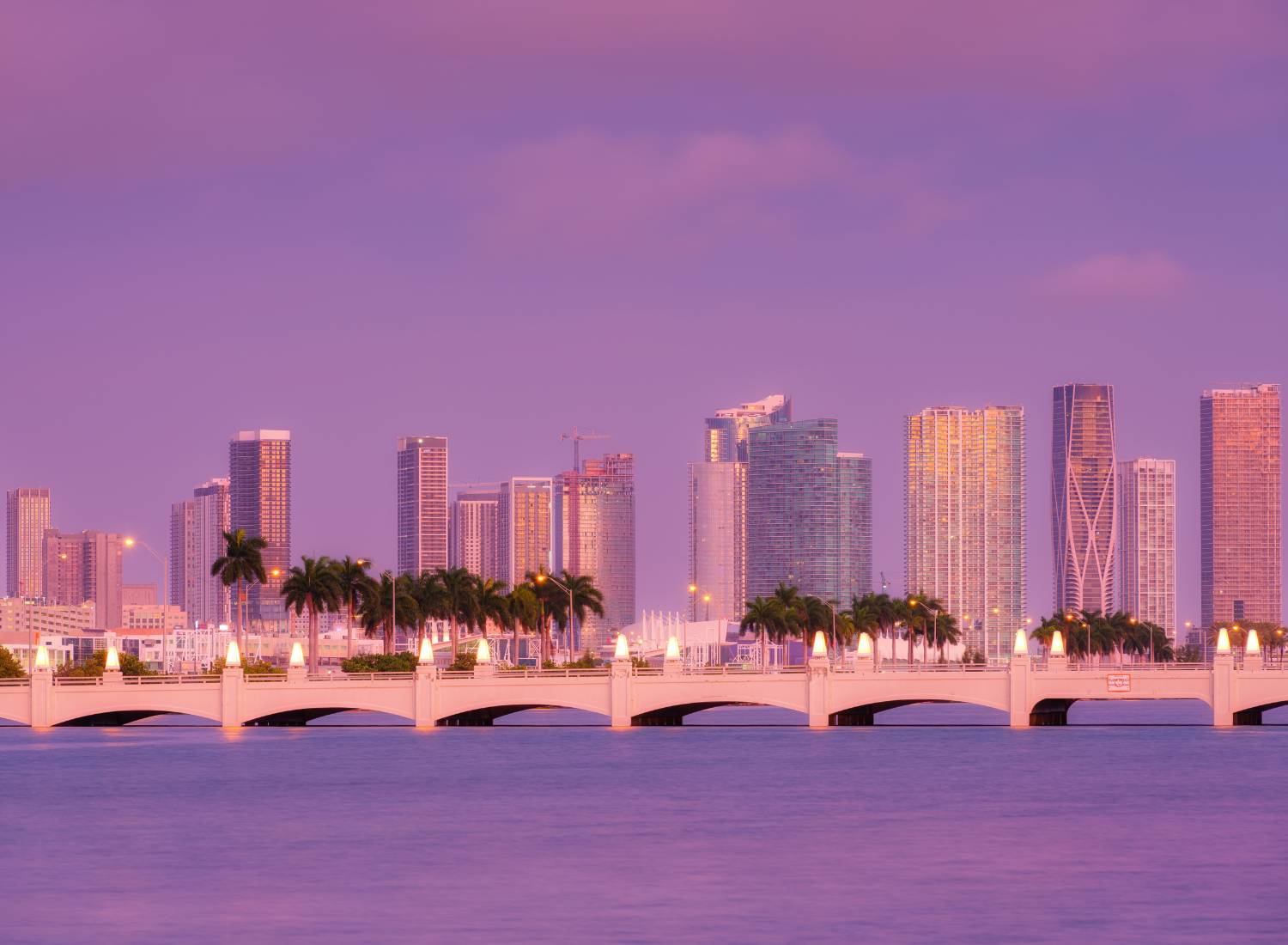 May 2026 — A wave of hyperscale data center development is rewriting South Florida’s commercial real estate map, and the invest Miami story now reads as much like an infrastructure thesis as a financial-services one.
Join us at caa’s upcoming leadership summits! These premier events bring together hundreds of public and private sector leaders to discuss the challenges and opportunities for businesses and investors. Find the next summit in a city near you!
Behind the cranes in Doral, Hialeah Gardens, and along the Beach Corridor sits one force: artificial intelligence’s appetite for compute, power, and proximity to subsea cable landings.
Join us at caa’s upcoming leadership summits! These premier events bring together hundreds of public and private sector leaders to discuss the challenges and opportunities for businesses and investors. Find the next summit in a city near you!
The shift has been swift. Three years ago, Miami’s commercial real estate narrative still centered on corporate relocations from New York, Chicago, and the Bay Area. Today, the deal flow is dominated by data-center developers, power-aggregation specialists, and hyperscalers seeking landing pads with low latency to Latin America. According to U.S. Energy Information Administration data, Florida data-center electricity demand has more than doubled since 2022, and the trajectory continues to steepen as generative-AI workloads scale.
Florida Power & Light has filed interconnection requests representing several gigawatts of new data-center load through the end of the decade, and parent NextEra Energy has told investors that South Florida is now one of its priority growth corridors. The interest is rational. Greater Miami sits at the convergence of three subsea cable systems landing at Equinix’s MI1 and MI3 campuses in the NAP of the Americas, which makes the region one of the lowest-latency hops between U.S. compute and the entire Caribbean and Latin American user base. That geography is not replicable in Northern Virginia or Phoenix. For workloads that need to serve a hemisphere from a single site, Miami is now structurally advantaged, and the capital stack has noticed.
The Brickell Pivot
The rise of compute infrastructure has not displaced Miami’s financial-services story; it has accelerated it. Citadel’s Brickell tower remains on schedule, Ken Griffin’s commitments to Miami-Dade keep expanding, and the corridor between Brickell and Edgewater continues to attract asset managers and private-credit funds.
Data centers are key and Greater Miami is a central focus, with facilities that include EdgeConneX, the Downtown Miami Data Center, and QTS Miami. Iron Mountain MIA-1 is expected to come online in 2026, while Metrobloks Miami Data Center and Project Apollo are also in the works for the next couple of years.
What is changing is the nature of the demand stack. Tenants now want both top-tier financial-grade office space and immediate access to AI-grade computing capacity, and they want them in the same metro. That dual demand is something only a handful of U.S. markets can credibly serve, and Miami is firmly inside that group, which is part of why the latest invest Miami pitch decks lead with both finance and infrastructure rather than either alone.
The data tells the story. The Miami-Fort Lauderdale-West Palm Beach metro has added more than 70,000 high-wage jobs over the past 24 months, with the Bureau of Labor Statistics’ QCEW dataset showing outsized growth in information, finance, and professional services. Office vacancy in Brickell sits at 3.7% as of mid-2026, well below the 17.6% national vacancy rate, as cited by Miami Realtors.
Data centers are key and Greater Miami is a central focus, with facilities that include EdgeConneX, the Downtown Miami Data Center, and QTS Miami. Iron Mountain MIA-1 is expected to come online in 2026, while Metrobloks Miami Data Center and Project Apollo are also in the works for the next couple of years.
Power & policy
There are headwinds. South Florida’s power grid was not designed for AI-scale loads, and FPL has flagged that some interconnection requests will not be granted until new transmission and on-site generation come online.
Miami-Dade and Broward, however, have started negotiating fast-track entitlement frameworks for data-center developers willing to commit to renewable procurement, water-efficient cooling, and noise mitigation. Insurance costs remain a structural drag, particularly after the 2024 and 2025 hurricane seasons, and reinsurance pricing has not fully normalized.
What to watch
Looking forward, the next 18 months will test whether Miami can absorb compute, financial services, and a still-swelling population without overwhelming its grid, its housing stock, or its insurance market.
Watch three signals. First, whether FPL’s next rate case includes accelerated transmission capital expenditure specifically tied to AI loads. Second, whether Brickell trophy lease comps continue to expand even as national gateway markets reprice downward. Third, whether any of the new South Florida data-center campuses move from breaking ground to powered shell within calendar-year 2026 — the marker that separates announcement-cycle markets from delivery-cycle markets.
Executives evaluating their invest Miami thesis for the rest of the decade should be watching those three indicators more closely than the next round of relocation headlines. If the signals print favorably, the next chapter of the Miami story will not be about who relocated their family office to Coconut Grove — it will be about whether South Florida quietly became a Top 5 U.S. AI-infrastructure metro.
Want more? Read the Invest: Miami report.