
Spotlight On: Jeffrey Taraboulos, Managing Partner, KSDT CPA
Key points:
- • KSDT’s merger into the Ascend platform is helping the firm scale technology and advisory capabilities.
- • Miami’s growth is driving demand for more sophisticated tax, accounting, and cross-border expertise.
- • AI is boosting efficiency, but personalized client service remains the firm’s biggest differentiator.
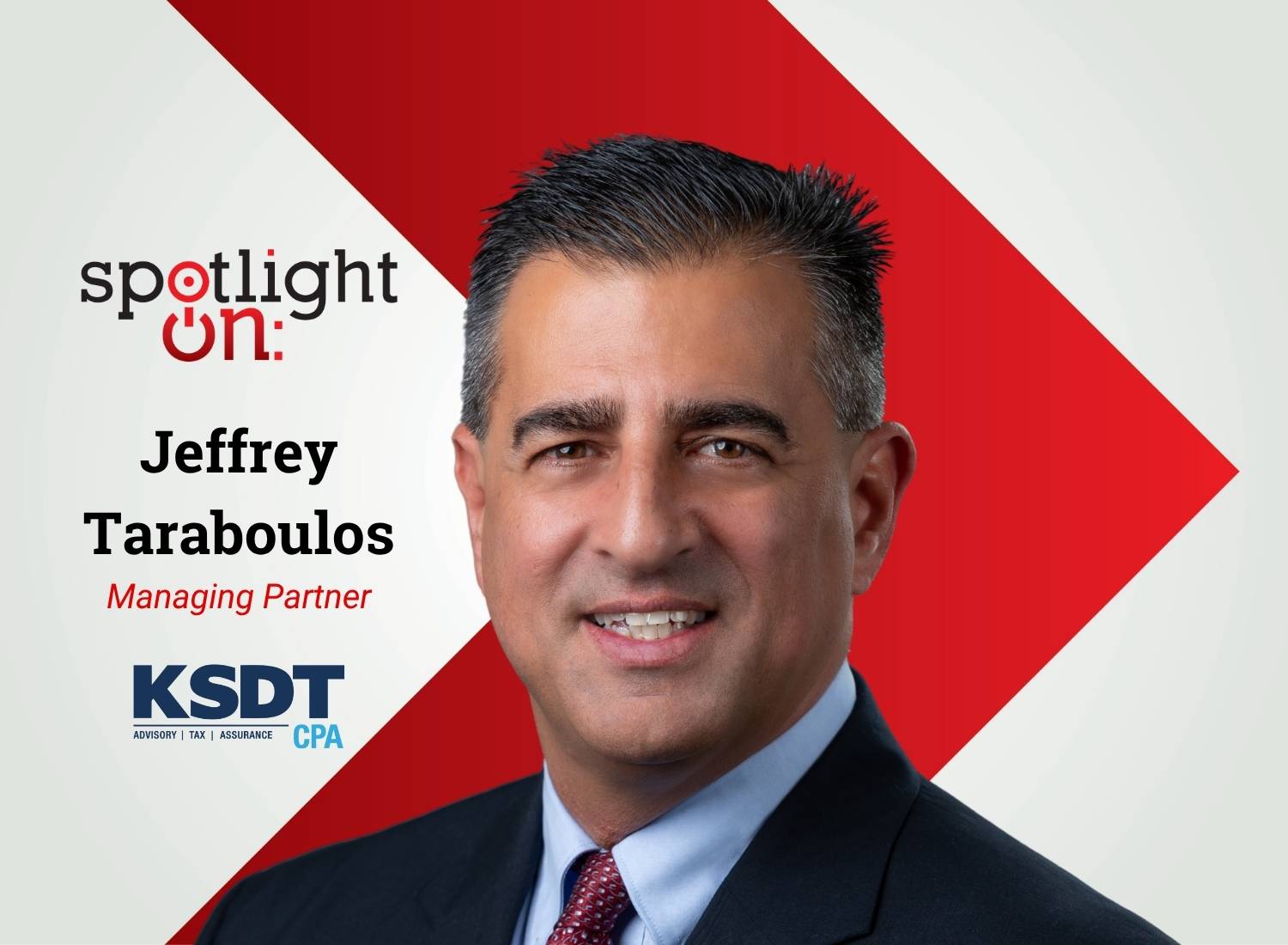 June 2026 —Invest: spoke with Jeffrey Taraboulos, managing partner of KSDT CPA, about the firm’s recent merger into the Ascend platform backed by Alpine Investors, how technology and AI are reshaping the accounting profession, and why Miami’s growth is raising expectations for higher-touch advisory services. “We’re really becoming the quarterback for our clients, coordinating every part of their financial lives,” Taraboulos said.
Join us at the Invest: Miami 11th Edition Leadership Summit! This premier event brings together hundreds of Miami’s business and regional leaders to discuss the challenges and opportunities for businesses and investors. Buy your ticket now!
How would you describe KSDT’s strategic focus in Miami and Florida right now, and how the region supports the firm’s overall growth?
KSDT’s focus is to be the financial partner for businesses and individuals across Miami and Florida. That includes the traditional work people expect from a CPA firm, such as tax, audit, and accounting, but it also extends to advisory and coordination across a client’s broader financial world. Our goal is to be the firm clients turn to when they need clarity, strategy, and reliable execution, whether they’re building a business, managing investments, or navigating complex planning decisions.
Miami has been a major contributor to our growth because it’s dynamic and fast-moving. The market is sophisticated, and the mix of industries, entrepreneurs, high-net-worth individuals, and international activity creates a consistent need for higher-level guidance. That environment pushes firms like ours to build more depth, invest in tools and talent, and operate at a pace that matches the region.
In 2025, KSDT merged into a private equity-backed platform. Why was that move important for the firm?
On September 1, KSDT merged into Ascend, which is owned by Alpine Investors. For us, it was a strategic move tied to scale and capability, especially on the technology side. The reality is that the level of investment required to compete in this market and in this profession is rising quickly, and we wanted the resources to take the firm to the next level while remaining KSDT in our market. The scale we now have is significant and changes what is possible. It gives us access to technology, resources, and back-office support that would be difficult to replicate independently, and it positions us to operate with capabilities comparable to much larger firms.
How did that technology transition show up day to day for the firm?
It was a rip-off-the-bandage approach, and it was intense. We went into full technology transition mode around mid-November, and at one point, from December 31 to January 5, we were completely without email and without access to key systems. In professional services, that kind of disruption is hard because so much of the work is communication-driven, deadline-driven, and relationship-driven.
But we decided to do it because the long-term outcome is better. The transition created short-term strain, but it also accelerated our ability to modernize, standardize, and build a stronger foundation for how we serve clients.
What major tax, audit, or advisory trends are you seeing among Miami- and Florida-based clients, particularly in real estate and development?
Tax law changes have been a major theme, and we’ve spent significant time advising clients on how new rules affect planning and compliance. Florida also remains a magnet for investment and migration, so clients are constantly asking how they should structure ownership, residency, and entity decisions in a way that supports long-term outcomes.
Miami is unique because of its international character. We work with many clients dealing with international tax issues, whether they’re relocating, investing across borders, or managing structures that involve foreign entities. When instability or uncertainty rises in parts of Latin America, Miami often becomes a destination, and that has real implications for tax planning, reporting, and compliance.
How has KSDT adapted its services to meet the needs of high-net-worth individuals and new businesses moving into the market?
Technology is a major part of that adaptation, especially AI-supported research and tools that help us move faster and operate more efficiently. The point is not technology for its own sake. The point is to reduce friction and increase insight, so clients get better answers and better support.
At the same time, our value is often in coordination. We’re becoming the quarterback for our clients, coordinating every part of their financial lives. That means working alongside bankers, attorneys, wealth managers, and insurance professionals, and making sure the client’s decisions are aligned across all those areas. A tax decision affects a legal structure. A financing decision affects cash flow and planning. A transaction affects estate planning and reporting. Clients want an advisor who can see the whole field and help them connect the dots.
What unique opportunities and challenges do Florida clients face compared to other regions of the country?
Florida is business-friendly, and the absence of a state income tax can make certain elements of planning less complex than in states with layered tax regimes. In that sense, Florida can be simpler.
Where complexity shows up is in the scope of clients’ activities. Many clients are not limited to Florida. They may have investments in other states, ownership in operating companies across multiple jurisdictions, or international holdings. In those cases, we need to bring the right resources to the table, whether that’s internal specialization or collaboration through broader networks, so clients can manage complexity without losing strategic focus.
What role does digital transformation, including AI, play in how the firm serves clients today?
The platform model allows for deeper technology development, and one of the initiatives underway is building a client book of record, which consolidates information from across systems into a centralized view. The idea is to pull together tax files, communication history, key contacts, and the context that helps professionals understand what is happening with a client across time.
That supports higher service levels because it creates continuity and visibility. If you want to operate like a true advisory partner, you need a better understanding of the client, not just the task in front of you. Technology helps the firm be more proactive, more coordinated, and more consistent in how we manage relationships.
Considering Miami’s global connections, how does the firm approach advising international clients and cross-border investment issues?
We have dedicated professionals on the international tax side who work directly with clients on cross-border planning and compliance. That specialization matters because international rules and reporting requirements are complex, and the risk of getting something wrong can be significant.
From my role as managing partner, I focus on building the firm in a way that supports those capabilities: recruiting and retaining strong talent, expanding the firm strategically, and ensuring the platform we operate within gives our teams the tools they need to deliver high-quality work.
From your perspective, what drives organic growth for professional services firms in Florida’s competitive environment?
Organic growth is ultimately about relationships. It is about meeting people, listening carefully, understanding what is happening in their business, and helping them recognize what you can do. Clients and referral partners want to know that you can handle complexity, communicate clearly, and respond quickly.
Visibility helps, too, because people cannot engage a firm they do not understand. Platforms that highlight what we do and how the market is changing can support that, but the foundation is still trust built through consistent, high-quality service.
What market segments in Florida are you most excited about over the next few years?
Technology and financial services are growing in South Florida, and we want to grow with the market as those sectors expand. The region is attracting companies and entrepreneurs who have high expectations, fast timelines, and complex needs, and that creates opportunities for firms that can keep up and deliver sophisticated support.
KSDT has grown through acquisitions over time, and that has helped us build expertise across many industries. We are not a niche firm. That breadth matters because as Miami’s economy diversifies, demand is coming from multiple directions, and we want to be positioned to support clients across that range.
How has the influx of high-net-worth individuals and businesses influenced demand for tax and advisory services at KSDT?
It has increased expectations for both specialization and responsiveness. Some people are arriving from markets where the expertise they need was not readily available, particularly around complex structures or international issues. Others are coming from places like New York and expect a high level of sophistication, but they also want a more personal experience.
One thing I value about KSDT is the personalized touch. Clients are not treated like a number. We aim to be responsive, accessible, and engaged. That approach matters even more when the market is competitive, because expertise gets you in the conversation, but service and consistency determine whether you keep the relationship.
How do you see the accounting industry evolving, and where does KSDT fit in that shift?
Consolidation is a major trend. Many firms are doing variations of what we have done, and I think that is a reflection of the pressures and opportunities in the profession, especially technology investment and the need for scale. We were intentional about finding a partner that allows us to remain KSDT, continue making decisions that fit our market, and still gain access to the back-office resources and capabilities that the largest firms have.
There is also a workforce reality. A large number of older CPAs are approaching retirement, and the profession has faced challenges attracting enough new talent over recent years. Salaries have been rising, and the pipeline is improving, but there is still a gap. That makes technology investment, including AI, even more important because firms need ways to meet demand, improve efficiency, and maintain service quality as the talent landscape shifts.
Want more? Read the Invest: Miami report.