
Spotlight On: Simon Amesbury, Partner, Alair Homes
Key points:
- • Storm recovery and stricter flood requirements are driving demand for resilient, custom-built homes across Tampa Bay.
- • Homeowners are prioritizing durability, energy efficiency, and smart-home technology to protect long-term value.
- • Alair Homes is growing through neighborhood regeneration projects and expanding its footprint across the region.
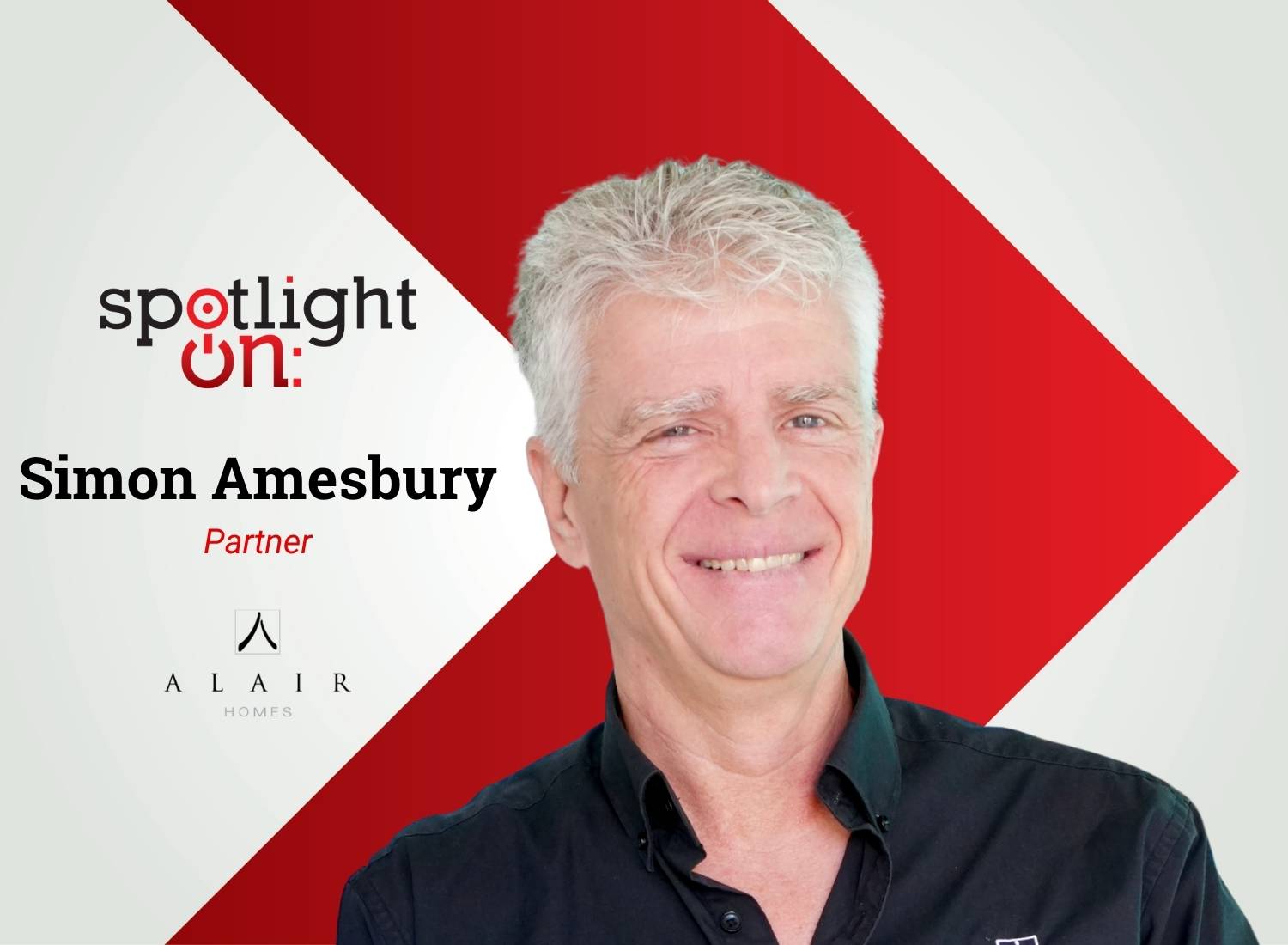 June 2026 — Invest: spoke with Simon Amesbury, partner at Alair Homes, about how storm-driven regeneration, stricter flood requirements, and rising expectations for durability are reshaping custom residential construction in Tampa Bay. “Most homeowners we meet right now are prioritizing resilience and durability. They want to know their investment is protected for the foreseeable future,” Amesbury said.
Join us at caa’s upcoming leadership summits! These premier events bring together hundreds of public and private sector leaders to discuss the challenges and opportunities for businesses and investors. Find the next summit in a city near you!
How would you characterize Alair Homes’ performance over the past year, and what changes most impacted your work in Tampa Bay?
2025 was a strong year for us, and a lot of it flowed directly from the hurricanes in 2024. Many of the new projects we took on were regeneration projects, where older homes were damaged and clients decided to replace them with new product rather than keep patching what they had. That brings opportunity, but it also brings complexity. Clients come into these projects much more educated now, especially about flood zones, wind resistance, and code requirements, because they have lived through the consequences firsthand.
It has been challenging, but construction is challenging anyway. Our project managers enjoy being pushed into new designs and new ideas, and we have been able to tap into more sustainable products, updated codes, and tighter standards. Overall, it was a demanding year that still produced good outcomes.
What recent projects or milestones best demonstrate your firm’s approach and differentiation?
The two storms brought different types of damage. One was primarily wind, which can open up a home and create widespread envelope failures. The other was flooding, and once seawater is inside, it is extremely destructive. In low-lying parts of Tampa Bay, that combination changes what a replacement home needs to be.
A key differentiator for us is how early we integrate the full team. Elevating a home to meet flood requirements is not just a structural challenge. It changes how a client lives. People who are used to ground-level living may now be required to live ten feet above grade. That affects daily access, storage, parking, and long-term plans like aging in place.
We work closely with architects and engineers early to make those constraints feel intentional, not imposed. We look at entry sequences, elevator and stair strategies, and how to preserve the home’s curb appeal when the finished floor height shifts dramatically. The goal is to meet code and resilience expectations while reducing compromise to the client’s lifestyle.
What economic factors most influence custom home demand and renovation activity?
Custom homes are typically for a wealthier segment of the market, simply because one-off construction costs more than repeating a model. But we focus the client conversation on value, not just cost.
In practical terms, most buyers have four paths: buy an existing home, buy a production home, buy a spec home, or build custom. In the first three, you are largely paying for established market value. With a custom home, you are paying the cost to build, while creating value through design, performance, and long-term livability. That means clients can create equity as part of the process.
Custom also does not automatically mean a massive footprint. It means specific. Clients come with a budget, and our job is to design and build within that budget while still delivering the features that matter most to them.
How are flood risk, insurance pressure, and sustainability changing homeowner decisions?
Most homeowners we meet right now are prioritizing resilience and durability. They want to know their investment is protected for the foreseeable future, and they want to reduce exposure to both physical damage and ongoing operating costs.
That starts with hurricane-rated products wherever possible, and a structure designed to current code. But it also extends to lower-maintenance materials, higher-quality finishes, energy efficiency, and sustainability features that reduce lifetime cost. We are also seeing more demand for home intelligence and integrated technology, because clients want convenience and efficiency to be built in, not added later.
Why do you think clients are now driving demand for efficiency and technology, rather than needing to be educated about it?
Most of our clients have already been homeowners, so they have experienced what annoys them, what costs them, and what breaks down over time. They are looking to reduce costs in a meaningful way, and they are willing to pay more upfront if it lowers cost over the life of the home.
If we can show options like better insulation or better-performing systems, the client can weigh that trade-off with clear information. Technology is similar. AI and smart home systems are now part of everyday life across industries, so clients arrive more aware of how it can benefit them at home. Many homes we build are for families, and the home is also about how kids live, learn, and socialize. Clients want spaces that support that.
How does residential construction activity influence Tampa Bay’s broader growth and development?
You can see a city’s momentum in its neighborhoods. If you walk one area and see aging housing stock that has not been reinvested in, and then walk another area with visible regeneration, the second environment feels more like a place that is improving.
Tampa Bay continues to attract new residents, and housing is part of the first impression. Regenerating neighborhoods supports livability and signals long-term confidence in the region. That does not replace the importance of jobs, healthcare, or commercial investment, but housing is often the most immediate, tangible indicator of progress.
How does Florida’s lifestyle shape residential design priorities?
Florida gives you the climate for true indoor-outdoor living, and clients embrace that. We build outdoor kitchens, large sliders and bifold systems, and entertainment spaces that move seamlessly from inside to outside. Waterfront and canal-front projects introduce another layer of integration, because clients want their boat access to be part of the home experience.
Technology ties into that, too. Clients want the pool at the right temperature, lighting and shading controlled easily, and systems that make the home comfortable without constant manual adjustment. The best projects feel like one continuous environment, not separate indoor and outdoor zones.
How does Alair approach risk management, certainty, and client communication through a multiyear custom build?
We begin with a feasibility stage to confirm we are the right fit, because a custom project is often a two-year relationship. From there, we move into project planning, where we pull together the architects, engineers, interior designers, and other stakeholders early and build the budget alongside the design.
We run our process on an open-book basis. We do not tell a client what something costs. We show them what it costs, using competitive pricing and strong relationships with trade partners and suppliers. Those relationships are long-term, not transactional, and that helps when conditions change.
During permitting, we use the time to work through value engineering and risk planning. We talk through scenarios like tariffs, labor shortages, and material constraints, and we identify practical ways to mitigate them. During COVID, for example, we faced lumber shortages and limited truss manufacturing capacity in Florida, so we leveraged the broader Alair network and sourced trusses out of Alabama without shifting cost to the client. That is risk management in action.
The goal is for the client to enter a construction contract feeling informed, protected, and as certain as possible. Good communication solves most of the problems we have. When everyone has the same information and understands the why behind decisions, the project runs better.
What are your priorities over the next three to five years, both locally and across the Alair network?
Locally, we still have a lot of regeneration ahead. Some older homes that were damaged cannot be renovated under current requirements, and many owners do not have the resources to rebuild immediately, so the inventory of teardowns and impacted properties will keep the market active.
For our Tampa Bay operation, the area is large for one office to cover, so we plan to open additional locations. I have project managers and a general manager who want to lead their own offices, and I want to help them fulfill that goal.
At the broader Alair level, we have continued to invest in process and technology, and we expect to keep growing into additional markets in the United States and Canada. We believe the model addresses many long-standing construction challenges, even if no model solves everything. The focus is to keep improving and to remain a trusted partner for clients.
Want more? Read the Invest: Tampa Bay report.