Invest: Tampa Bay debuts first full-day summit as region recalibrates for long-term growth
Key points:
- • Tampa Bay leaders framed this year’s summit around “recalibration” — shifting from rapid expansion toward long-term sustainability in infrastructure, education pipelines, and housing.
- • Speakers pointed to purpose-built human and physical infrastructure as the region’s competitive edge.
- • Housing affordability, coastal resilience, and a historic generational wealth transfer are reshaping where and how capital moves into the region.
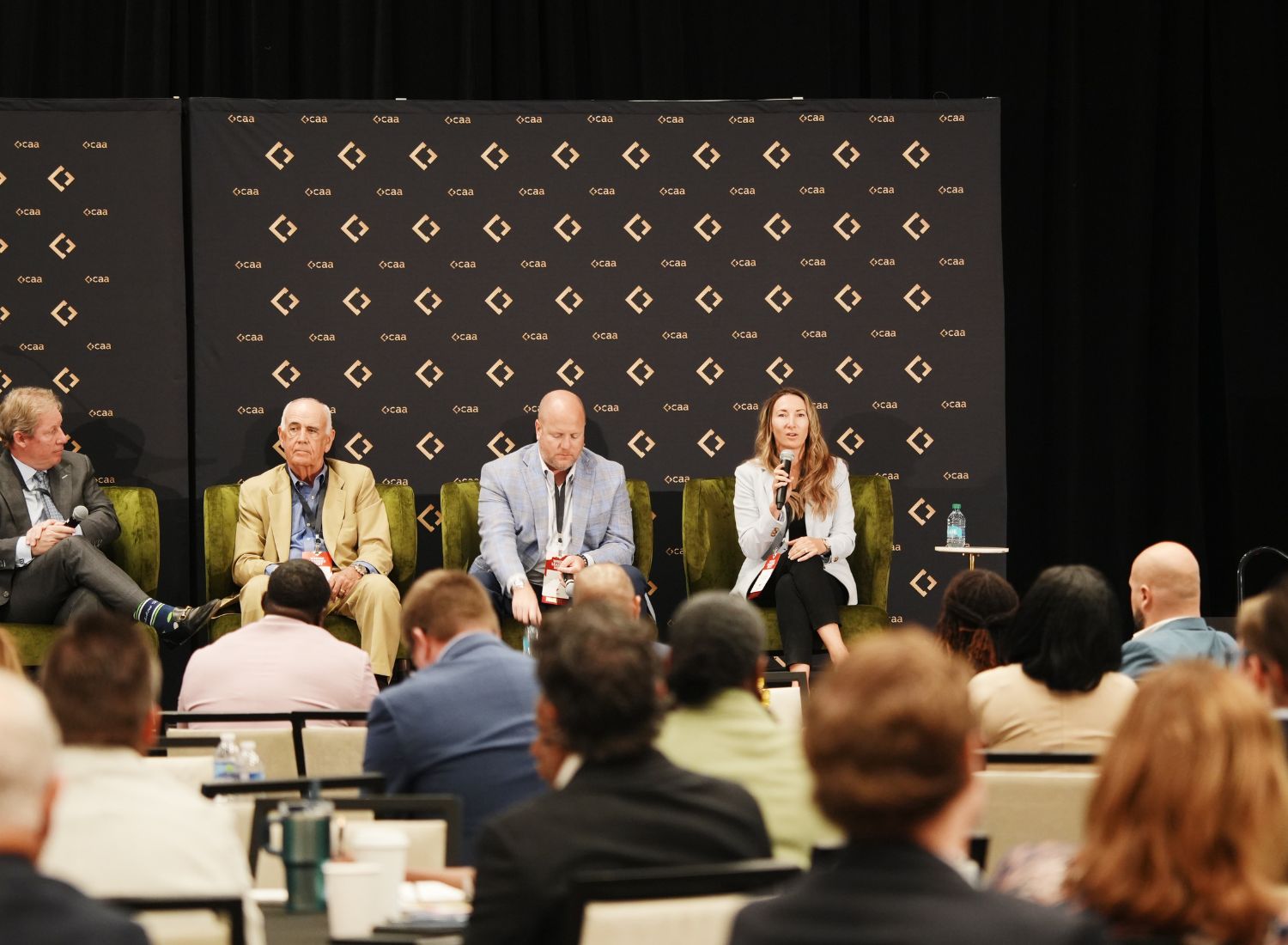
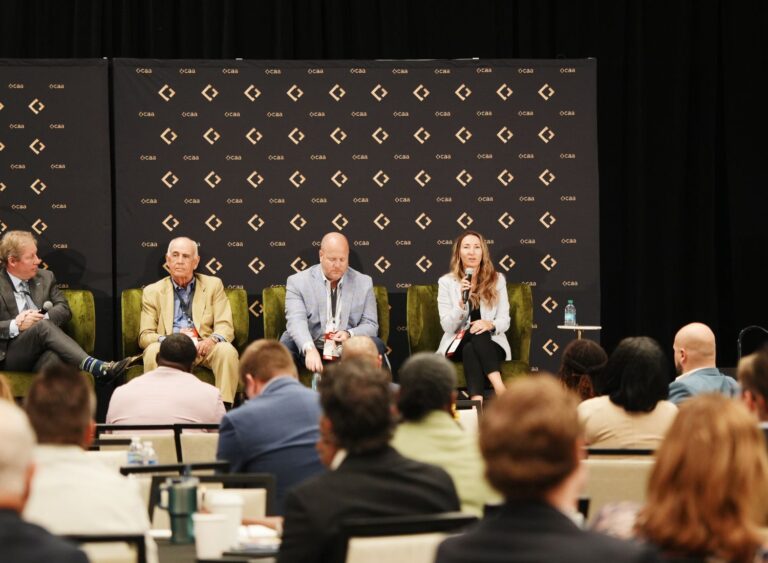
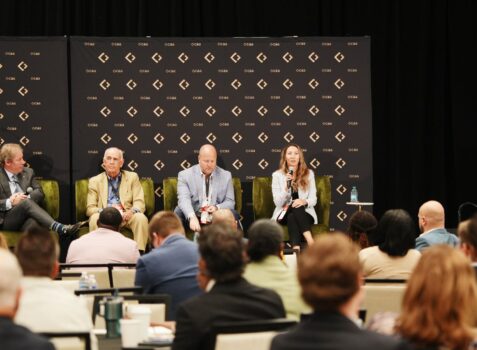 September 2026 — Tampa Bay continues to grow into a diversified hub for technology, finance, life sciences, and innovation, according to regional leaders at caa’s seventh annual Invest: Tampa Bay Leadership Summit. caa’s first-ever full-day event in Tampa Bay, held at Hotel Flor Tampa Downtown, brought together 400 public- and private-sector leaders to discuss how the region can grow without losing what makes it work.
Join us at caa’s upcoming leadership summits! These premier events bring together hundreds of public and private sector leaders to discuss the challenges and opportunities for businesses and investors. Find the next summit in a city near you!
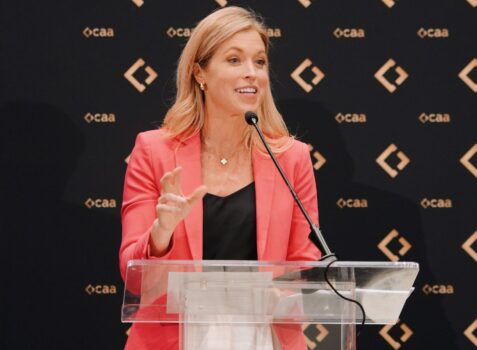
Abby Lindenberg, founder and CEO of caa, opened the summit by framing this year’s Invest: Tampa Bay report around the theme of recalibration and exciting opportunities ahead. “Recalibration is not just about slowing down, it is about growing with intent,” Lindenberg said, pointing to the region’s efforts to align infrastructure, education pipelines, and housing strategy with its rapid growth.
Investing in talent
The summit’s first panel, “Building to Learn and Lead: How Schools and Construction Partners are Investing in Talent, Spaces, and the Experience Supporting Tampa Bay’s Next Generation,” examined how educational institutions and their construction partners are preparing for the region’s next generation of workers. Moderated by Karen Morinelli, Tampa office managing shareholder at Ogletree Deakins, the panel featured Fr. Vincent Giacabazi, president of Jesuit High School of Tampa; Toby Johnson, vice president for Florida’s West Coast at Verdex Construction; and Jim Rhinehart, vice president at KAST Construction. Panelists described the discipline required to balance growth with mission and culture.
“We would rather be a little slower and intentional… so that we can really define what we’re going to deliver in the client experience,” said Johnson. Fr. Giacabazi echoed the sentiment from the education side, describing conversations with donors as a “dance” to ensure alignment with the school’s mission — “even to the extent of saying, thank you, but no thank you, for your money.”
Following the opening panel, Al Battle, assistant city manager for the City of Clearwater, delivered the morning’s keynote on downtown development opportunities in Clearwater. Battle described a roughly 25-acre publicly owned redevelopment site in downtown Clearwater — the largest publicly controlled redevelopment opportunity in the city’s history — alongside private projects including a 28-story mixed-use development on Osceola Avenue and a new Hilton-branded hotel near Coachman Park. Battle pointed to the city’s “Green Print 2.0” sustainability framework as its answer to investor questions about long-term environmental planning amid new development.
The second panel, “Closing the Housing Gap: How Public-Private Partnerships and New Development Models Unlock More Attainable Homes at a Critical Period,” was moderated by Alan Higbee, partner at Shutts & Bowen LLP, and featured Detra Smith-O’Bryant, CEO of Florida Home Partnership, Inc.; Kevin Johnson, co-founder of Shacres Design + Development; and Oliver Cima, vice president of development, multifamily, at The Michaels Organization.
Panelists debated whether a cooler housing market represents genuine progress on affordability or simply a pause. Smith-O’Bryant highlighted Florida Home Partnership’s sweat-equity model, which requires buyers to commit 600 hours of labor to lower costs, and pointed to more than 100 homes coming to the Wimauma area — a community she said has grown well beyond its rural reputation, with new schools, Moffitt Cancer Center, and Amazon nearby. Johnson emphasized the importance of preserving Tampa’s identity amid rapid investment.
“There’s no point in going to a city if everything’s going to be a Starbucks, a Chick-fil-A… that destroys the purpose of traveling to a beautiful city like Tampa,” he said, describing Shacres’ focus on affordable urban infill housing in the city’s core neighborhoods.
The final panel of the morning session, “Where is the Money Going? Market Forces, Demographic Shifts, and Development Trends Guiding Investment Decisions in One of the Country’s Hottest Markets,” was moderated by David Singer, attorney at Older Lundy Koch & Martino, and featured Paul Allen, president and CEO of Wealth Strategies Partners; David Bradley, senior managing director and market leader at Marcus & Millichap; Raymond Ferrara, founder and executive chair of ProVise Management Group; and Kristine Retetagos, senior vice president at KAST Construction.
Panelists broadly agreed that capital continues to flow into Tampa Bay, though at a more measured pace than in recent years. Bradley cited internal data showing roughly five times more investors looking to place capital in Florida than to move it out, driven in part by high-tax residents relocating from the Northeast and California. Ferrara noted Tampa Bay was recently ranked the third-best place to retire in the country, behind Orlando and Miami, but flagged concerns about Florida’s Amendment 3 and its potential impact on cost of living.
Better designed
Following a lunch and networking hour, the afternoon opened with a presentation from Paul Hoback, president and CEO of Sarasota-Bradenton International Airport (SRQ), who called SRQ the fastest-growing airport in the country — passenger traffic has climbed from about 1.2 million six years ago to nearly 5 million today.
Drawing on his prior role leading Pittsburgh International Airport’s $1.7 billion terminal modernization, recently named one of the world’s top airport terminals by Architectural Digest’s Prix Versailles awards, Hoback argued that infrastructure projects succeed when they’re designed around how people feel, not just how they function. “People will forget what you said, people will forget what you did, but people will never forget how you made them feel,” Hoback said, citing his own family’s experience in a children’s hospital as the moment that reshaped his approach to facility design.
The fourth panel, “Design for Lasting Value: Using Data, Local Insight, and Resilient Place-Making to Create Developments Built to Perform,” was moderated by Nikki Gaskin-Capehart, president and CEO of the Pinellas County Urban League. She was joined by Crystal DiJoseph, partner and co-founder of ONE10 Advisors, LLC; John Faircloth, chief investment officer at Riverwalk Wealth Advisors; and Jason Jensen, president and CEO of WJ Architects, LLC.
Jensen noted that 42% of St. Petersburg sits within a coastal high-hazard area, and that both St. Petersburg and Tampa devote roughly 75% of their land to single-family housing that accommodates only about half of residents — a mismatch he argued makes higher density, paired with resilient construction and elevated buildings, unavoidable if the region wants to keep growing. Panelists closed by urging the region to protect Tampa Bay’s distinct culture and walkability as new capital and residents continue to arrive.
A fireside chat paired Jason Mathis, president and CEO of the St. Petersburg Downtown Partnership, with Alison Barlow, CEO of the St. Petersburg Innovation District, for a conversation on “Growing Smart: St. Pete’s Blueprint for Resilient Development.” Barlow described the roughly 600-acre Innovation District as anchored by institutions including the Dali Museum, Albert Whitted Airport, USF St. Petersburg, Johns Hopkins All Children’s Hospital, Bayfront, Orlando Health, and the region’s marine science cluster. The district’s first comprehensive master plan calls for greater density and mixed uses across its southern acreage — an underused, coastal high-hazard zone — while pointing to divergent flood outcomes during Hurricanes Helene and Milton as proof that resilient, elevated design can perform even in vulnerable locations.

The summit’s final panel, “Investing in Better Care: How Capital, Technology, and Improved Delivery Models are Strengthening Tampa Bay’s Healthcare Ecosystem,” was moderated by Phillip Dingle, managing partner at HealthEdge Investment Partners, and featured Kyle Sweeney, chief investment officer at Flagship Healthcare Properties; Linda Ward, president and CEO of Gulfside Healthcare Services; and Pete Chang, senior vice president and chief transformation officer at Tampa General Hospital.
All three panelists identified workforce housing as an emerging risk to healthcare staffing. Chang pointed to Tampa General’s partnership with the Michaels Organization on workforce housing near the hospital’s Brandon campus, expected to open within a year to eighteen months, as a model other health systems should consider. Looking ahead, Chang predicted hospitals will need fewer inpatient beds in urban areas — Florida hospital occupancy rates run in the mid-to-high 60% range even as major systems continue investing in high-acuity academic medicine — while ambulatory and at-home care absorb a growing share of demand from an aging population.
Lindenberg closed the summit by thanking attendees, sponsors, and speakers before the group moved to 511 Franklin for the summit’s happy hour, raffle, and the caa Business & Leadership Award Ceremony.
Recognizing Tampa Bay’s leaders
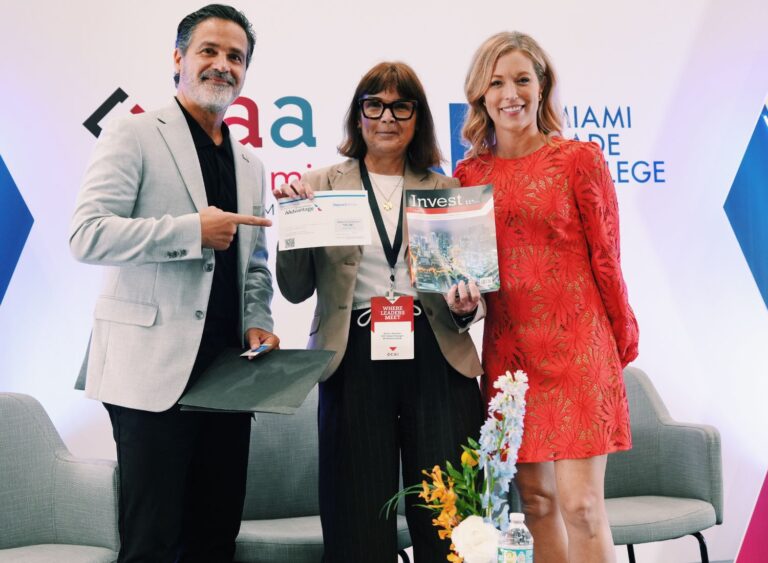
Following the full-day leadership summit, Invest: Tampa Bay held its first-ever caa Business & Leadership Award Ceremony at 511 Franklin, honoring standout leaders across four categories:
Healthcare Transformation Winner: Linda Ward, President & CEO, Gulfside Healthcare Services
Honoree: John Couris, President & CEO, Tampa General Hospital
Women in Leadership Excellence Winner: Jane Castor, Mayor, City of Tampa
Honoree: Bemetra Simmons, President & CEO, Tampa Bay Partnership
Technology & Innovation Winner: John Zettel, CEO, AVI-SPL
Honoree: Courtney Jackson, Founder & CEO, Paragon Cyber Solutions
Financial Leadership Excellence Winner: Sul Hemani, Vice President & Branch Manager, Sunflower Bank
Honoree: Shirl Penney, CEO & President, Dynasty Financial Partners
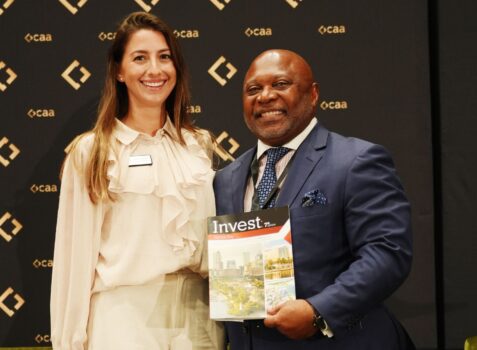
Become a member today to access the latest edition of Invest: Tampa Bay.