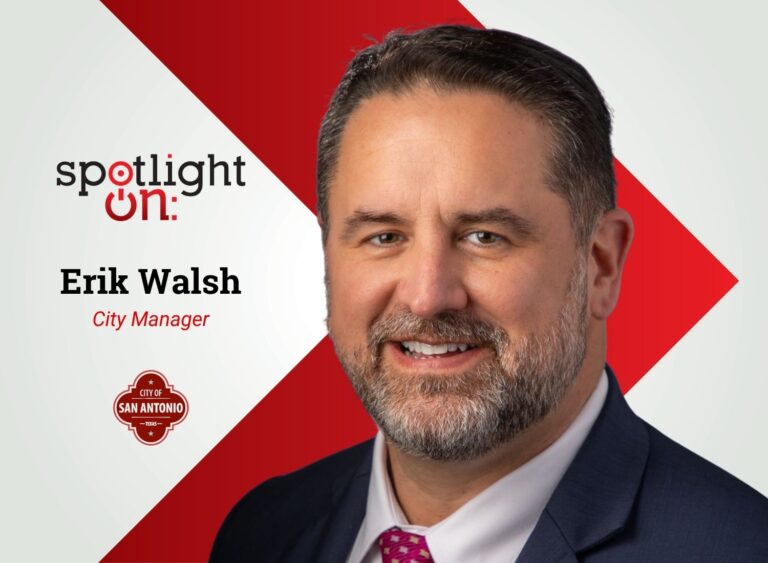
Spotlight On: Erik Walsh, City Manager, San Antonio
Key points:
- • San Antonio added 6,525 jobs and attracted $4.7 billion in capital investment.
- • Major downtown and airport projects are strengthening infrastructure and economic competitiveness.
- • Workforce development and affordable housing remain central to sustaining long-term growth.
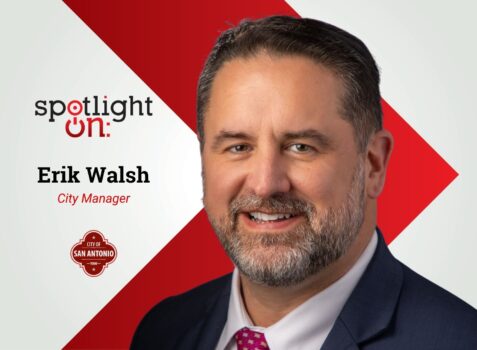 November 2026 — Invest: spoke with Erik Walsh, city manager of San Antonio, about the city’s economic momentum, major infrastructure investments, workforce development, housing affordability, and priorities for sustaining growth. “We’re focused on making sure we maximize what we have and don’t stay still,” Walsh said.
Join us at caa’s upcoming leadership summits! These premier events bring together hundreds of public and private sector leaders to discuss the challenges and opportunities for businesses and investors. Find the next summit in a city near you!
Looking back over the past year, what developments have had the greatest impact on San Antonio?
San Antonio continues to grow in population, and this part of the state is one of the fastest-growing areas of the country. Over the last year, through our partnership with Greater SATX, 6,525 new jobs were added to San Antonio, with about $4.7 billion in capital investment. Growth in our economic environment is important, and we’ve had a really good year. I suspect we’ll continue to see those opportunities as we move into 2027. One of the biggest expansions was Toyota announcing plans to double its plant and employment. Construction on that project will begin by the end of the calendar year. Toyota is one of our major employers and a major contributor to the local economy.
Downtown also continues to be a priority. We’re focused on making sure we maximize what we have and don’t stay still. That includes the redevelopment of Hemisfair, the new Sports and Entertainment District, the Convention Center, and the new downtown arena. There are also many new destinations downtown for both visitors and residents because we want to maintain that economic vitality.
The Alamo project and restoration, including the new museum, are under construction and expected to be completed in 2028. That represents about $500 million. The Convention Center, new arena, and mixed-use development total about $3.5 billion in investment, both public and private, with the majority coming from the private sector.
We also have the new downtown baseball park under development, with about $1 billion in mixed-use development surrounding it. Those projects are being developed in two very underutilized areas of downtown.
How important is the airport expansion to San Antonio’s growth?
Our airport terminal project remains on track, and we’re scheduled to open it in June 2028. The new terminal is bigger than our two existing terminals combined.
We are still actively in conversations to restore transatlantic service and add service to South America. Those are two fronts internationally that we’re focused on. We’ve had some additions in domestic flights, and the airport is doing well.
Earlier in the year, we, along with many other major airports in the country, saw some slowdown. Fuel prices are affecting airline tickets, and there has been some softening in air travel across the country. We’ve seen a little of that as well, but we remain bullish on the airport. The airport has about a $7.5 billion annual economic impact, not only for San Antonio but for our region.
We also recently had our AAA rating from Standard & Poor’s, Aaa rating from Moody’s, and AA+ rating from Fitch reaffirmed. When you look at cities with populations over 1.5 million, we have the best bond rating of any large city in the country. That helps us from a debt standpoint by allowing us to market our debt instruments effectively, get the best interest rates, and put more money into infrastructure.
Which sectors offer the greatest opportunity for San Antonio today?
Important sectors include advanced manufacturing, healthcare, bioscience, and cybersecurity. I would add another area that has become more of a focus: making sure we are prepared and aligned for opportunities related to defense manufacturing. We have a large military footprint in San Antonio and several federal installations.
With changing technology, we’re also pursuing opportunities in advanced defense technology and manufacturing. Those projects don’t necessarily look like a Toyota, but they are a growing area of opportunity and have become more of a focus for us in addition to the other sectors mentioned.
Where do you see the largest workforce gaps, and how is Ready to Work addressing them?
I don’t think you ever hit a finish line when it comes to workforce because economic conditions and sectors keep changing.
Our Ready to Work program is designed to be nimble and connect with employers around in-demand positions. In 2026, we surpassed 5,000 graduates from the program who have been placed in jobs locally. They have seen an average increase in annual wages of more than $33,000 compared with where they were before.
If you look at those 5,000 people and that $33,000 average wage increase, that represents an additional $169 million in direct wages being introduced into our economy through local employers.
We have about $120 million left in the program, so it will likely continue through mid-2029. What we’ve accomplished so far has had about an $11 billion direct and indirect impact on our local economy.
The program has given San Antonians who needed additional skills training the opportunity to move into in-demand jobs with local employers. Those positions span medical and healthcare fields, construction, electrical trades, IT, and other areas.
It’s one of the largest ongoing economic development projects that any major city in the country has right now. We are investing in people who live here and making sure they are getting employed by companies that are expanding or have growing job demand in San Antonio.
What progress has been made on housing affordability, and what pressures remain?
We’ve almost completely spent our 2022 bond money that was set aside strictly for adding affordable housing units to San Antonio. Five years ago, we set a goal of creating or preserving more than 28,000 affordable homes within 10 years. We are at the halfway mark and have reached 14,000 units, so we are on track to meet that 28,000-unit goal.
It continues to be a major conversation for the City Council, especially around finding new ways to help fund and incentivize that type of growth.
The housing market is a little soft right now. Interest rates remain high, and homes for sale are staying on the market a little longer. That is happening not just in San Antonio but in many parts of Texas and the country.
I take a more bullish view of it. Everything we do economically runs in cycles, and we’re in a cycle right now that will eventually lift. In spite of those challenges, we’re still growing in population and adding jobs.
Housing will continue to be both a challenge and an opportunity, and we need to make sure we are investing public dollars in ways that allow us to stay on track with that 28,000-unit goal.
Looking ahead three to five years, what are the city’s main priorities for sustaining growth?
As a city, we need to continue investing and partnering with stakeholders in the private sector to provide the fertile ground for growth. Whether that involves the airport, downtown, or our other regional economic centers, we need to make sure we are investing in infrastructure and creating areas that are shovel-ready for growth. That will remain an important conversation internally and for the City Council.
Those investments help keep us competitive both nationally and statewide. Another priority is making sure that as we focus on investment, we also focus on quality of life. That includes public safety and our Linear Creekway Parks system, which extends more than 100 miles throughout the city. Those basic services are critical to how and why a city exists. It’s a balance between economic development and quality of life.
We’re going through our annual budget process now, and like a lot of cities, we are dealing with a little bit of a downward cycle. Making sure we can effectively manage our financial position as an organization keeps us in the best standing from a bond-rating standpoint and ensures we are making the right investments for our community.
We need to keep everything in front of us, in front of the council, so we can make effective decisions. From my standpoint, we also need to make sure we are being intentional and strategic in our investments and in how we approach these issues.
Want more? Read the Invest: San Antonio report.