Leaders discuss shaping the region’s future at Invest: San Antonio Leadership Summit

Writer: Andrea Teran
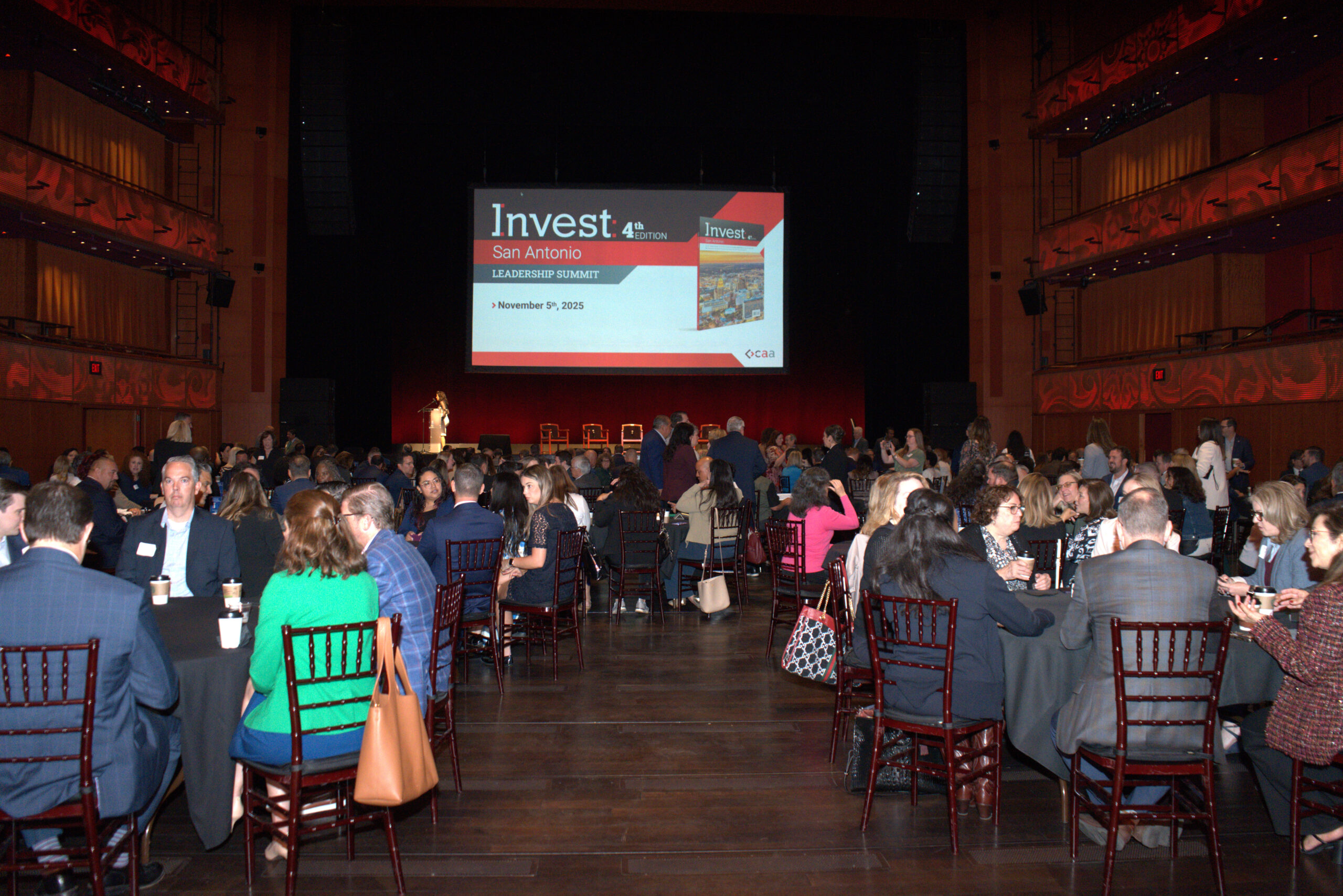 November 2025 — San Antonio is growing fast, but regional leaders are not just thinking about expansion — they are focused on doing it the right way. That message came through at the Invest: San Antonio 4th Edition Leadership Summit, hosted by caa at the Tobin Center for the Performing Arts.
More than 250 attendees from across business, government, education and nonprofit sectors came together for a morning of honest conversations about the future of the city. Through keynote insights and three dynamic panels, the event explored how San Antonio can continue to grow while protecting what makes it special — its people, its culture, and its deep sense of place.
Abby Lindenberg, caa founder and CEO, opened the event with a powerful message — not just about the city’s future, but about the 10-year milestone her company is celebrating this year.
“From growing from one market — Miami — to close to 20 today, including San Antonio, it has been a privilege to carve out my own slice of the American Dream,” Lindenberg shared. “The supportive ecosystem here and the focus on innovation resonate with me. I connect easily and feel inspired each and every time I am here. You are creating something so special — something you should all be proud of.”
San Antonio Mayor Gina Ortiz Jones followed with keynote remarks that focused on the city’s momentum and its future. “San Antonio has everything we need to succeed — we have the talent, we have hardworking people, we have rich culture, we have spirit and resilience, and we have incredible growth ahead of us,” Mayor Jones said. “We literally cannot afford business as usual; we need to invest in solutions that strengthen our economic core.”
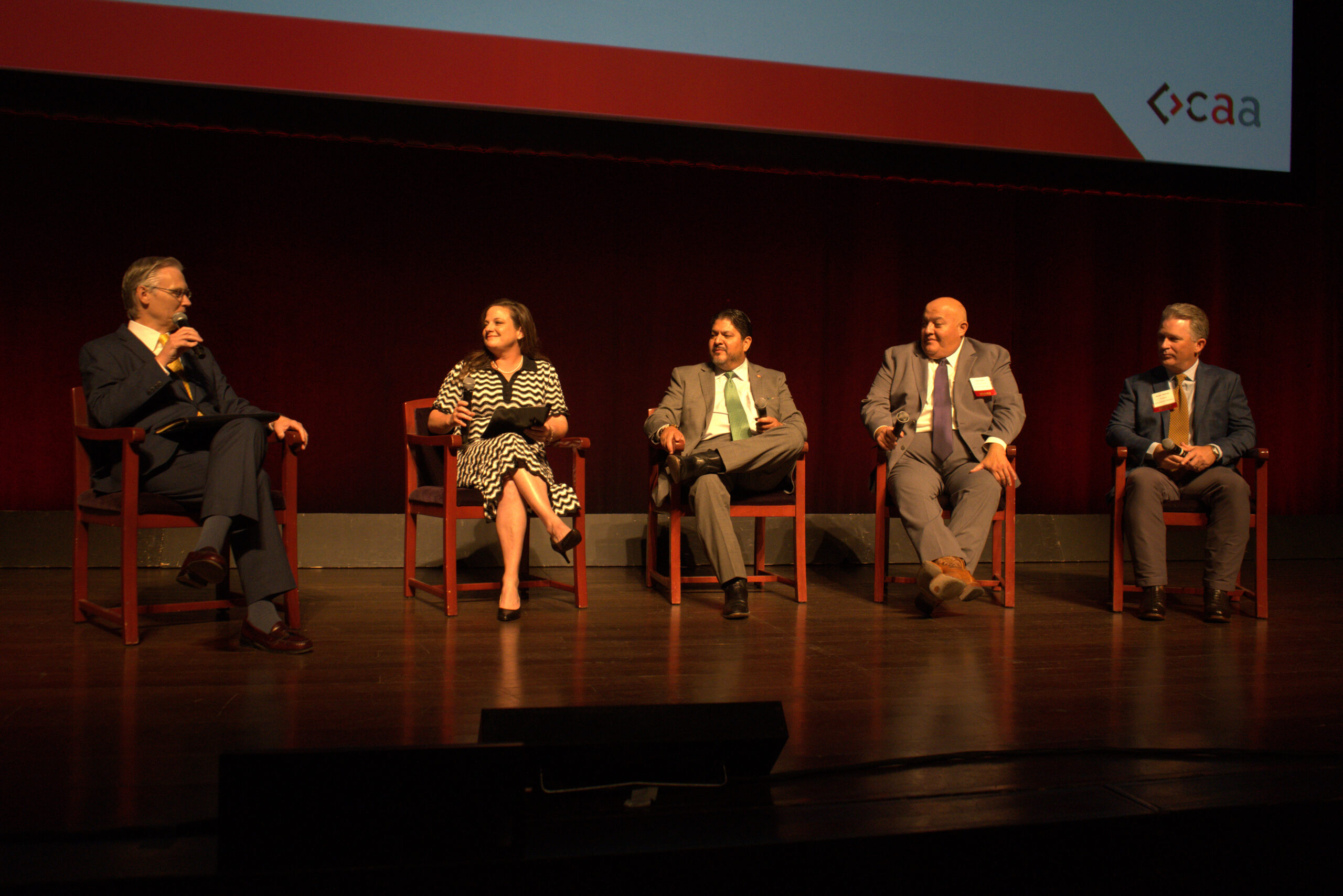
The first panel of the morning, “Building for Tomorrow: How San Antonio leaders are future-proofing infrastructure strategies while protecting its historical roots,” brought together leaders in energy, construction, aviation, and recycling. Moderated by Rob Killen, partner at Killen, Griffin and Farrimond, the panel featured leaders from CPS Energy, Joeris General Contractors, City of San Antonio Aviation, and Monterrey Metal Recycling Solutions who shared how they are working to ensure the region’s infrastructure keeps pace with demand—without compromising on culture or community.
“We’ve got a big job in San Antonio. Nobody sees the growth that’s coming as far in advance as we do,” said Rudy Garza, CEO of CPS Energy. “And we take that responsibility really seriously. That’s our number one focus — to be the best we can be for you all and do it as affordably as we possibly can.”
Jesus Saenz, director of airports for the City of San Antonio Aviation, spoke about the $1.6 billion terminal expansion underway at San Antonio International Airport. “Right now is the time for us to cook in San Antonio,” he said. “We’re moving more than 11 million passengers — more than ever before — and building a new terminal with 18 gates, 850,000 square feet, and 40,000 square feet of new concessions. We’re making sure people don’t just see San Antonio when they land, but they taste it too.”
Jordan Vexler, CEO of Monterrey Metal Recycling Solutions, added: “Modernization can’t only mean building new. It has to mean reinvesting in older parts of the city, supporting family-owned and small businesses, and making sure that growth benefits everyone.”
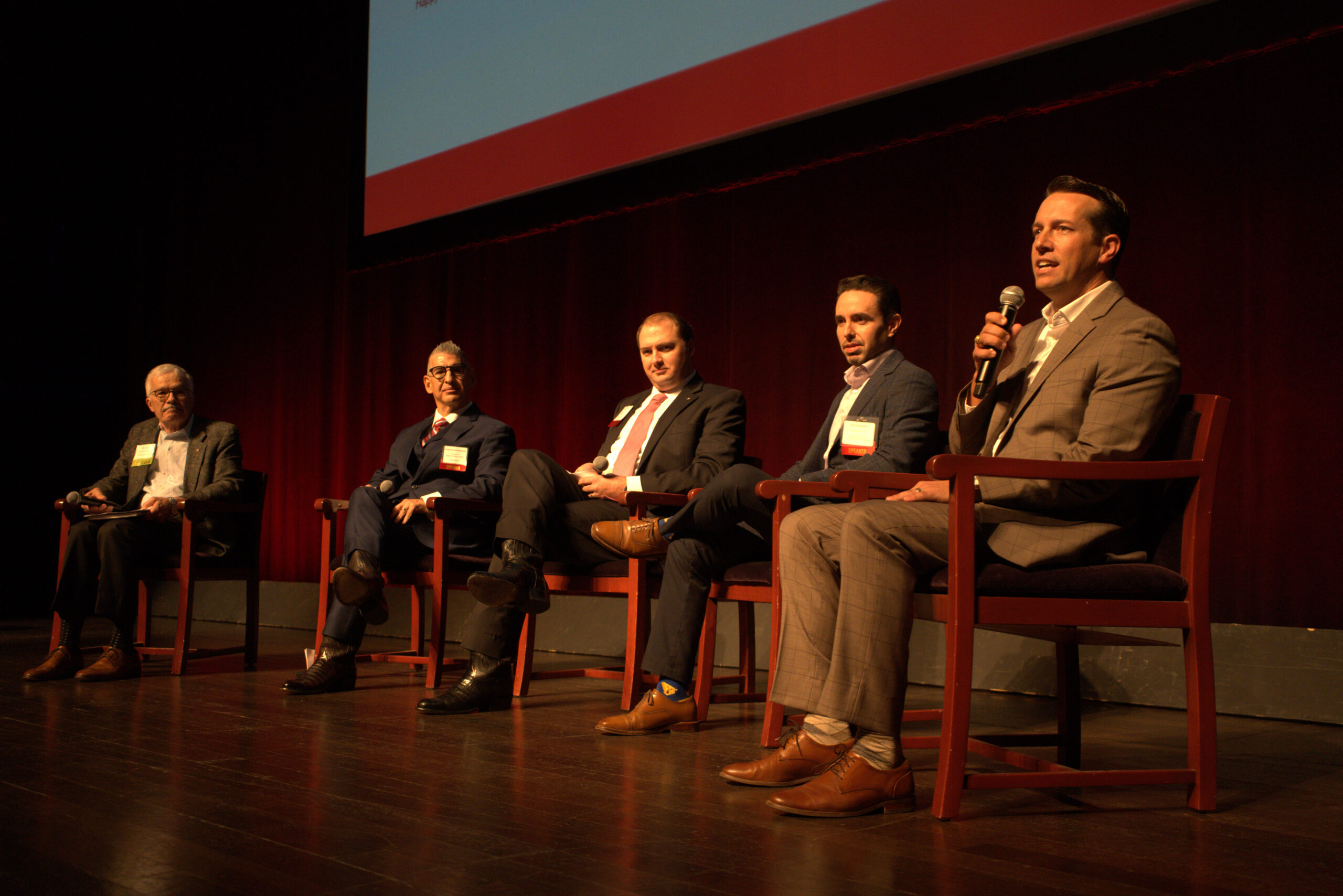
The second discussion, “Unity in Progress: Balancing expansion with authenticity through cross-sector collaboration,” focused on partnerships across industries — and how those collaborations are shaping a more inclusive version of growth. Moderated by Mike Koch, regional president of Happy State Bank, the panel featured voices from construction, healthcare, banking, and economic development — all working across sectors to align growth with cultural authenticity.
For Josh Schneuker, executive director of the Seguin Economic Development Corporation, workforce development stood out as a key theme. Just a day before the summit, Texas voters passed Proposition 1, directing $850 million to support technical education across the state.
“Yesterday was not only a great day for the city of San Antonio with Prop A and Prop B, but it was a great day for Seguin and the state of Texas,” Schneuker said. “That’s going to help accelerate the construction of the TSTC campus in Seguin, ensuring our region has the talent in place to remain economically competitive.”
Andro Herrera-Mendoza, senior vice president and chief innovation officer at PAM Health, brought attention to the role healthcare providers play in local culture. “All healthcare is local,” he said. “What works in San Antonio may not work in Harrisburg, PA. We’re designing care systems that meet people where they are — because no one wants to be in the hospital, but they do want to be home.”
On the financial side, Parker Hensley, market president for Bank of Texas, described authentic growth as investment rooted in community: “Authentic growth for San Antonio has always been defined—and will continue to be defined—as capital investment from people who understand our culture, who understand our community, and who are focused on long-term growth.”
Wrapping up the summit, the final panel, “Classrooms and Community: The role of educators in preserving San Antonio’s cultural character amid economic growth,” turned the spotlight to education. Moderated by William Handmaker, head of school at Keystone School, the panel explored how schools and universities are responding to both workforce needs and the responsibility to honor the city’s cultural legacy.
Scott Brown, president and head of school at TMI Episcopal, described how his school is encouraging students to get off campus and into the broader community. “We want our students to know their neighbors,” he said. “It’s easy to stay in your own pocket of the city, but we believe students should experience the full beauty of San Antonio. Our ‘Religion in the San Antonio Context’ class sends them to visit mosques, missions, and local landmarks — not just to study them, but to understand them.”
Our Lady of the Lake University President Abel Chávez emphasized the need for cross-disciplinary and culturally grounded education. “We’re preparing students not only to lead but to lead with awareness,” he said. “They’re tackling real challenges — like housing, energy, and water access on the West Side of San Antonio — and doing so with cultural fluency and lived understanding. That’s how we build community-based problem solvers.”
The event closed with a strong message: San Antonio’s strength comes from its people and its partnerships. The conversations made it clear that while growth is inevitable, it can also be thoughtful — and grounded in the values that have always made San Antonio unique.
“This turnout and the energy in the room speak volumes — not just about the value of business intelligence and smart growth, but about the character of this region,” said Alina Manac, senior executive director at caa. “San Antonio is a community that shows up, leans in, and strives to make things better.”
To read the brand-new Invest: San Antonio 4th Edition report, click here. (Subscription required.)
For conference panel discussions, please subscribe and stay tuned to our YouTube Channel as those videos are released in the coming week.
About caa & Invest: San Antonio
caa is an integrated media platform that produces in-depth business intelligence through its annual print and digital economic reviews, high-impact conferences and events and top-level interviews via its video platform, Invest:Insights.
Invest: San Antonio is an in-depth economic review of the key issues facing the San Antonio economy, featuring the exclusive insights of prominent regional leaders. Invest: San Antonio is produced with two goals in mind: 1) to provide comprehensive investment knowledge on the region for local, national, and international investors, and 2) to promote the region as a place to invest and do business.
The report conducts a deep dive into the top economic sectors in the region, including technology, real estate and construction, infrastructure, banking and finance, healthcare, education, and tourism. The publication is compiled from insights collected from more than 200 economic leaders, sector insiders, political leaders, and heads of important institutions. It analyzes the leading challenges facing the market and uncovers emerging opportunities for investors, entrepreneurs, and innovators.
For more information, please contact:
Alina Manac
Senior Executive Director
305-731-2342