Fort Lauderdale Business News Today: Port Nets $48B
Key points:
- • Port Everglades generated $48.3 billion in economic impact in fiscal 2025, based on updated reporting standards.
- • The port supported 295,166 statewide jobs, a 44.4% jump from the prior fiscal year.
- • Cruise traffic hit 4.8 million passengers as cargo tonnage rose to 27.7 million short tons.
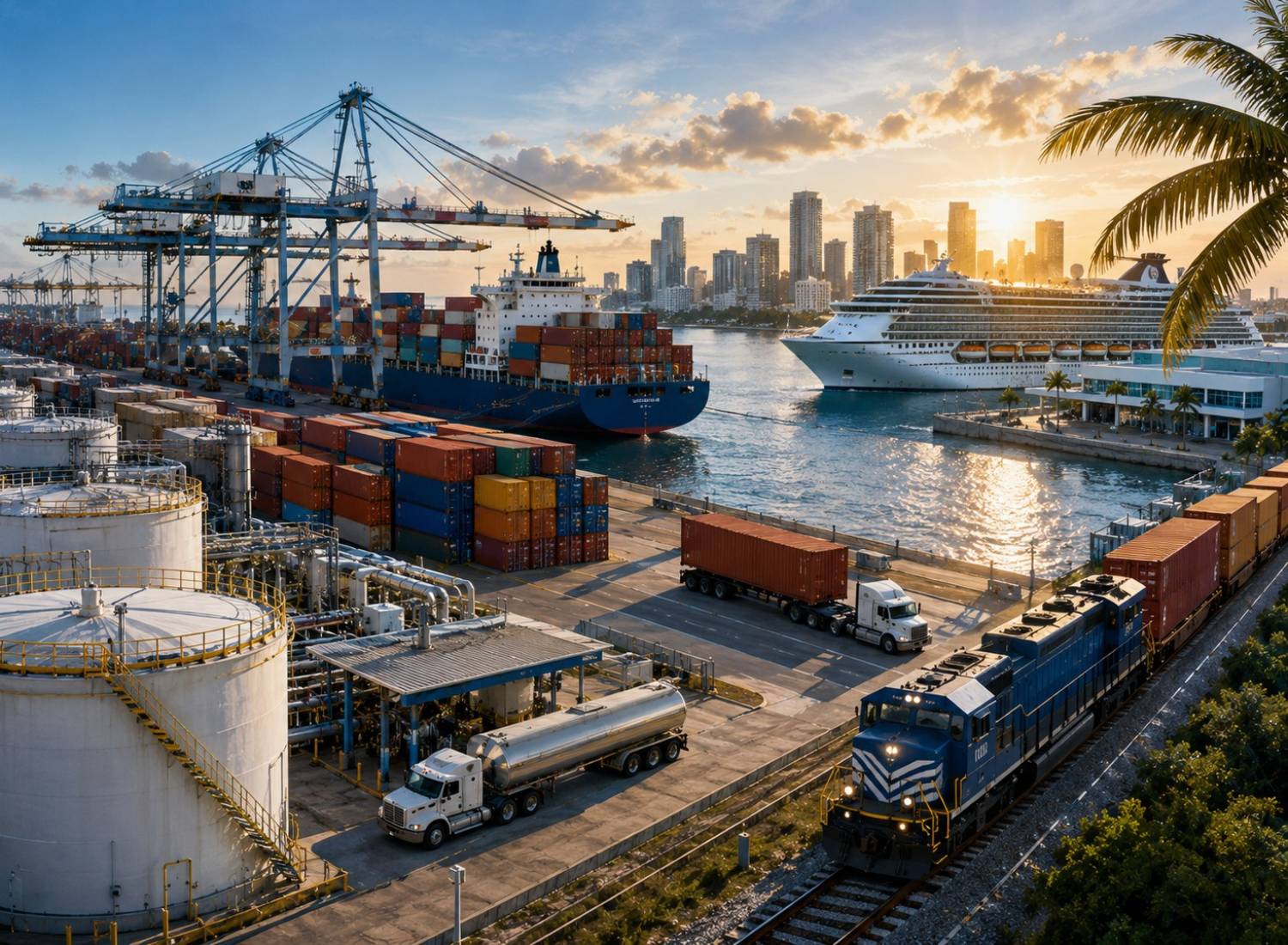 July 2026 — In Fort Lauderdale business news today, Port Everglades has revealed its strongest fiscal year on record, mapping $48.3 billion in economic activity for Florida. While the 72% jump on paper signals a massive leap, the surge is primarily driven by updated reporting standards that finally capture the full scale of the port’s critical energy supply chain.
Join us at caa’s upcoming leadership summits! These premier events bring together hundreds of public and private sector leaders to discuss the challenges and opportunities for businesses and investors. Find the next summit in a city near you!
The figures come from Port Everglades’ own Fiscal Year 2025 Economic Impact Report, prepared by Martin Associates and published on the port’s official statistics page. For the 12 months ending September 30, 2025, the port’s cargo and cruise operations generated $48.3 billion in total economic value, up from $28.1 billion the year before. That single-year jump is the kind of number that normally takes a decade to accumulate at a midsized American seaport, and it is now the baseline Broward County planners are using to size road, rail, and terminal investments through the end of the decade.
What drove the surge?
The massive statistical jump is less about a sudden explosion in local cargo demand and more about a modernized accounting framework. For the first time, the economic impact model incorporates energy-related user impacts, specifically tracking the downstream economic power of the waterborne petroleum distributed through the port. Because Port Everglades handles the vast majority of South Florida’s fuel, bringing this entire supply chain onto the ledger added billions in previously uncounted economic value.
Jobs and tax revenue tell a parallel story:
-Employment: Port Everglades supported 295,166 jobs statewide tied to cargo, cruise, and energy activity in fiscal 2025 — a 44.4% increase from the 204,385 jobs tracked under the old model the year before.
-Personal Income and revenue: Personal income tied to that employment reached $15.5 billion, while businesses providing direct services collected $4.5 billion in revenue.
-Tax footprint: State and local tax collections linked to port activity climbed to $1.89 billion. Crucially for Fort Lauderdale business news today readers, this represents total statewide tax generation; Port Everglades itself operates strictly as a self-sustaining enterprise fund of Broward County, meaning it runs on user fees rather than local property or sales taxes.
Record-breaking operational growth
Beyond the accounting adjustments, the port’s actual operational metrics hit historic highs. According to official Port Everglades Cargo and Cruise Statistics, cargo tonnage rose to 27.7 million short tons. The container sector broke records by handling 1,166,543 Twenty-Foot Equivalent Units (TEUs), driving a 17.9% increase in containerized cargo economic output.
The cruise sector saw an even sharper operational surge. Driven by 130 additional ship calls, cruise passenger traffic climbed 21.7% to a record 4.7 million guests (up from 3.8 million the previous year).
Petroleum and jet fuel remain the port’s backbone, accounting for 69% of total tonnage in fiscal 2025. This makes Port Everglades a critical fuel artery for the entire South Florida peninsula, from Miami-Dade to the Treasure Coast, justifying prioritized capital spending on berth depth and storage capacity.
Why it matters beyond Broward
Nationally, the story fits into a broader pattern of resilience in U.S. seaborne trade. Port Everglades’ combination of cruise, container, and energy cargo gives it a diversified base that many single-purpose ports lack. For a metro area long defined in national coverage primarily by tourism and real estate, a $48.3 billion trade and logistics engine operating largely out of view is a meaningful counterweight — and one that Fort Lauderdale business news today coverage is only beginning to reflect in proportion to its actual economic weight.
The report also reinforces why Broward’s industrial and logistics real estate market has stayed tight. Warehousing, trucking, and marine-services firms clustered near the port are direct beneficiaries of this cargo volume. Commercial brokers report sustained waiting lists for space near the port’s truck gates—a dynamic distinct from, and arguably more durable than, the speculative activity that has periodically inflated other segments of the regional property market. It’s the kind of shift that rarely makes Fort Lauderdale business news today headlines on its own, even though it matters deeply to local business-to-business hiring.
What comes next
The key now is whether fiscal 2025 was an operational inflection point or a stabilization plateau. Port officials have flagged continued investment in berth expansion and rail infrastructure as prerequisites for sustaining growth. Supply chain executives should watch capacity announcements out of the port closely over the next two quarters. The pace of these infrastructure commitments will determine how effectively the port compounds its newly measured economic scale.
Want more? Read the Invest: Fort Lauderdale report.