Matthew Rocco, President, South Florida Manufacturers Association
 Invest: sat down with Matthew Rocco, president of the South Florida Manufacturers Association, to discuss how SFMA is strengthening South Florida’s manufacturing base through workforce development, partnerships, and hands-on operational support. “At the end of the day, it’s all about whether we’re effecting change,” Rocco said.
What are the most tangible ways SFMA is supporting member companies right now, and how do you keep those efforts aligned with real-world manufacturing challenges?
SFMA’s mission is straightforward: serve manufacturers. In practice, that means supporting a highly diverse base across Miami-Dade, Broward, and Palm Beach counties, with more than 6,000 manufacturers operating in sectors such as marine, life sciences, aerospace and defense, printing and packaging, and traditional fabrication and machining, among others.
Because manufacturing needs vary widely by vertical and company size, staying aligned means staying close to the factory floor. We spend a lot of time convening manufacturers and partners in ways that surface real-time operational challenges. That includes roundtables focused on workforce, growth constraints, and technology adoption, as well as manufacturing tours where companies open their facilities to peers. Those tours allow manufacturers to see processes in action, ask direct questions, and learn what has worked and what has not.
A major pillar of our work is our annual Manufacturer of the Year program, which focuses on operational excellence rather than revenue or sales volume. Modeled after the Malcolm Baldrige framework, the program evaluates leadership, strategy, customer focus, measurement, and execution. Participating companies receive an in-depth on-site assessment and a detailed report outlining strengths, gaps, and opportunities, along with benchmarking against peers. We track outcomes from this work and have seen well over $200 million in operational impact tied to companies that have gone through the program.
We also provide direct business advisory support. Our advisors go into manufacturers’ facilities without a preset checklist. The goal is to understand the company’s roadmap, constraints, and priorities, then connect them to the right resources. These resources can include supply chain support, capital access, workforce solutions, or operational improvement.
At the end of the day, it’s all about whether we’re effecting change inside a manufacturer’s operation and helping them build a more resilient, competitive business.
Workforce continues to be a challenge across industries. How is SFMA helping build a sustainable talent pipeline in South Florida?
Workforce is one of the most persistent challenges manufacturers face, and partnerships are essential because no single organization can solve it alone. We work closely with technical colleges and workforce institutions to connect manufacturers with training and talent pathways.
In Broward County, we have an apprenticeship program with Atlantic Technical College focused on skilled machining. In Palm Beach County, we work with Palm Beach State College to connect manufacturers with its robotics and machining capabilities, and those relationships have supported internships that frequently turn into full-time jobs. We also have a long-standing partnership with Broward College, which has been represented on our board for years.
In Miami-Dade, we see opportunities to strengthen collaboration and are actively working with local institutions on apprenticeship development and training alignment. Beyond postsecondary education, we believe workforce awareness must start earlier. That is why we support initiatives that engage middle school and high school students, including programs that introduce them to modern manufacturing careers and pathways.
We also collaborate with local CareerSource offices and encourage manufacturers to participate in job fairs, training programs, and workforce initiatives. Workforce development is not a short-term fix. It requires sustained coordination, but South Florida has momentum and the opportunity to build a stronger pipeline if stakeholders remain aligned.
How does SFMA measure its economic impact across the region, and how is that data used?
We measure impact across several categories, including total investments made by manufacturers, cost savings achieved, jobs created or retained, and new sales generated. These metrics provide a clear picture of operational and economic outcomes.
Much of this impact is driven through our partnership with FloridaMakes and the business advisory work delivered in South Florida. We have tracked this data since 2016, and in recent years, the overall operational impact in South Florida alone has exceeded $2.8 billion. That reflects tangible outcomes tied to projects completed with manufacturers across the region.
We use this data in several ways. It helps manufacturers understand the value of engagement, supports outreach to non-manufacturing partners such as economic development organizations, and strengthens our advocacy efforts at the state level. While we do not lobby, we regularly educate policymakers by sharing real examples of how manufacturing support translates into jobs, productivity, and long-term economic value.
As manufacturing technology evolves, how is SFMA helping members adapt to automation and digital transformation?
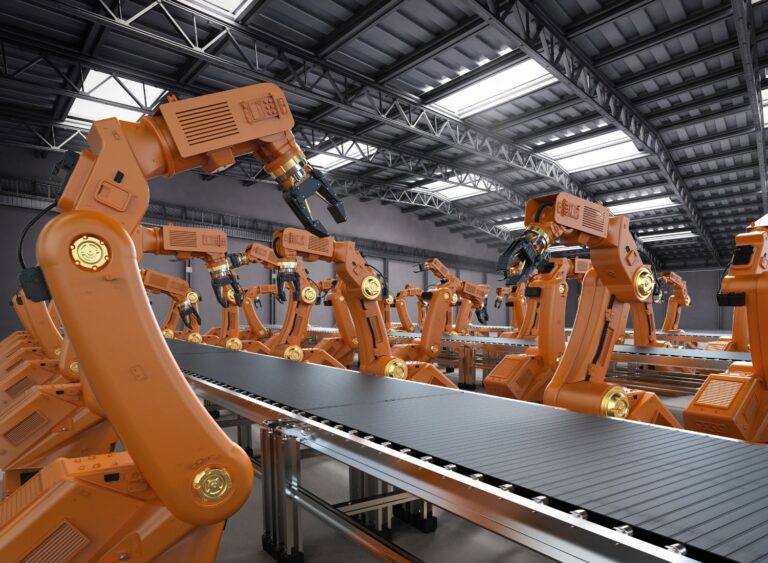
We approach technology adoption through education and implementation support. On the education side, we convene manufacturers and experts to discuss practical applications of automation, AI, and digital tools, particularly for smaller firms that may not have internal resources to evaluate these options.
On the implementation side, we help manufacturers move from interest to action. That often begins with a technology assessment to clarify gaps and identify a realistic roadmap. From there, we connect manufacturers with trusted partners who can evaluate workflows, recommend solutions, and support implementation. Our role is to reduce uncertainty and keep the focus on operational outcomes, not technology for technology’s sake.
Many manufacturers are exploring automation and AI to improve efficiency, quality, and capacity. For smaller companies, having access to trusted expertise is critical because the wrong decision can be costly. We also help manufacturers identify training grants and workforce funding opportunities that support upskilling and technology adoption.
Manufacturing is often overlooked in Florida’s economic narrative. What should business leaders understand about the sector’s trajectory?
Manufacturing plays a much larger role in Florida’s economy than many people realize. The state has roughly 27,000 manufacturing companies, ranking third nationally. Florida is number one in boat building and marine manufacturing and ranks near the top in life sciences manufacturing. Over the past decade, manufacturing GDP growth in Florida has outpaced that of any other state.
In South Florida alone, there are approximately 6,000 manufacturers, supporting a wide range of supply chains and skilled jobs. Manufacturing careers also offer strong wage potential, with average wages in the region approaching $70,000, and demand spans skilled trades, engineering, operations, and advanced manufacturing roles.
As companies continue to rethink supply chains and reshoring strategies, manufacturing is positioned for further growth. Realizing that potential will require continued investment in talent, modernization, and coordination across the ecosystem, but the opportunity is significant and increasingly visible.