
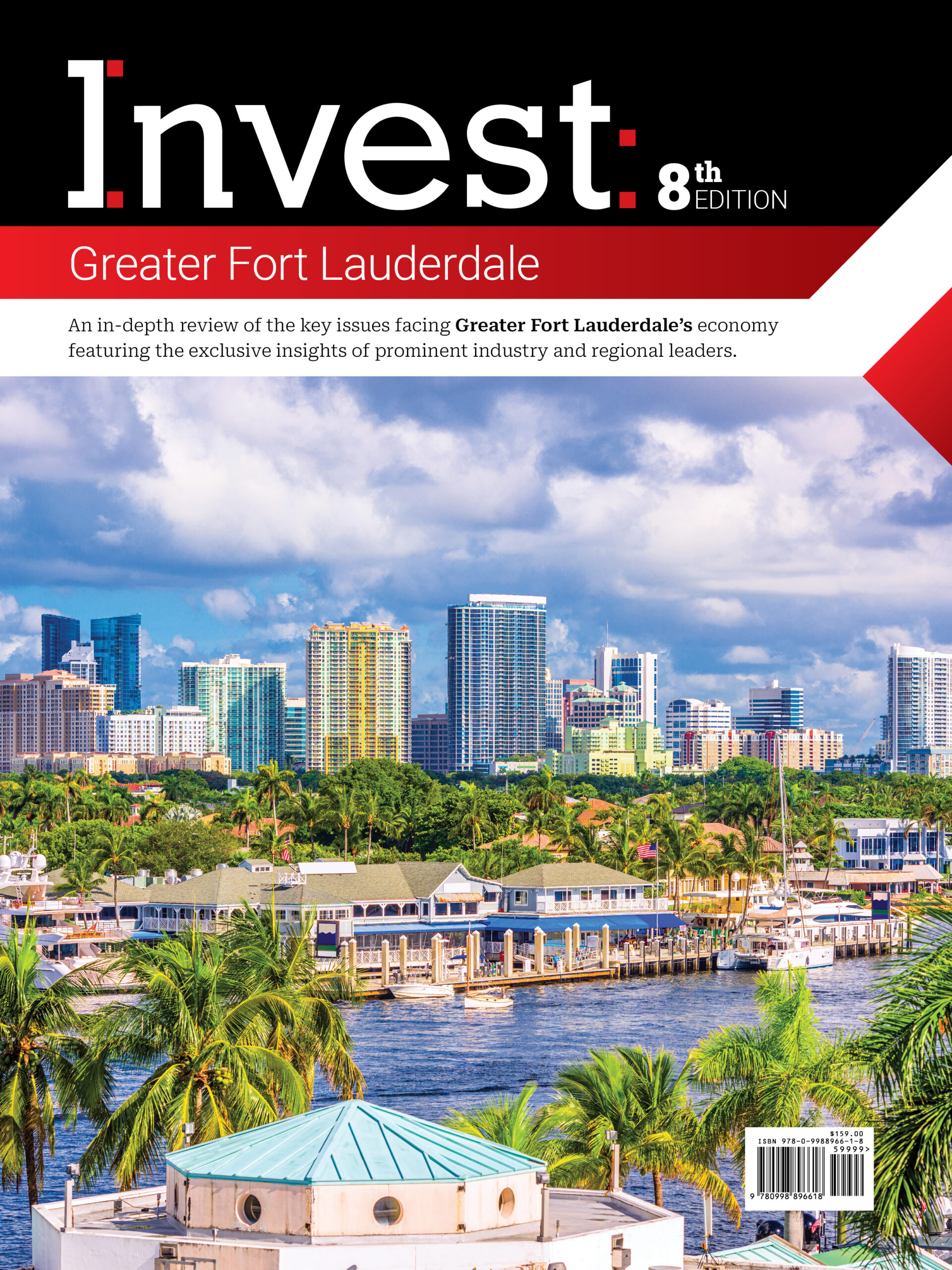
Invest: Greater Fort Lauderdale 8th Edition to explore growth drivers

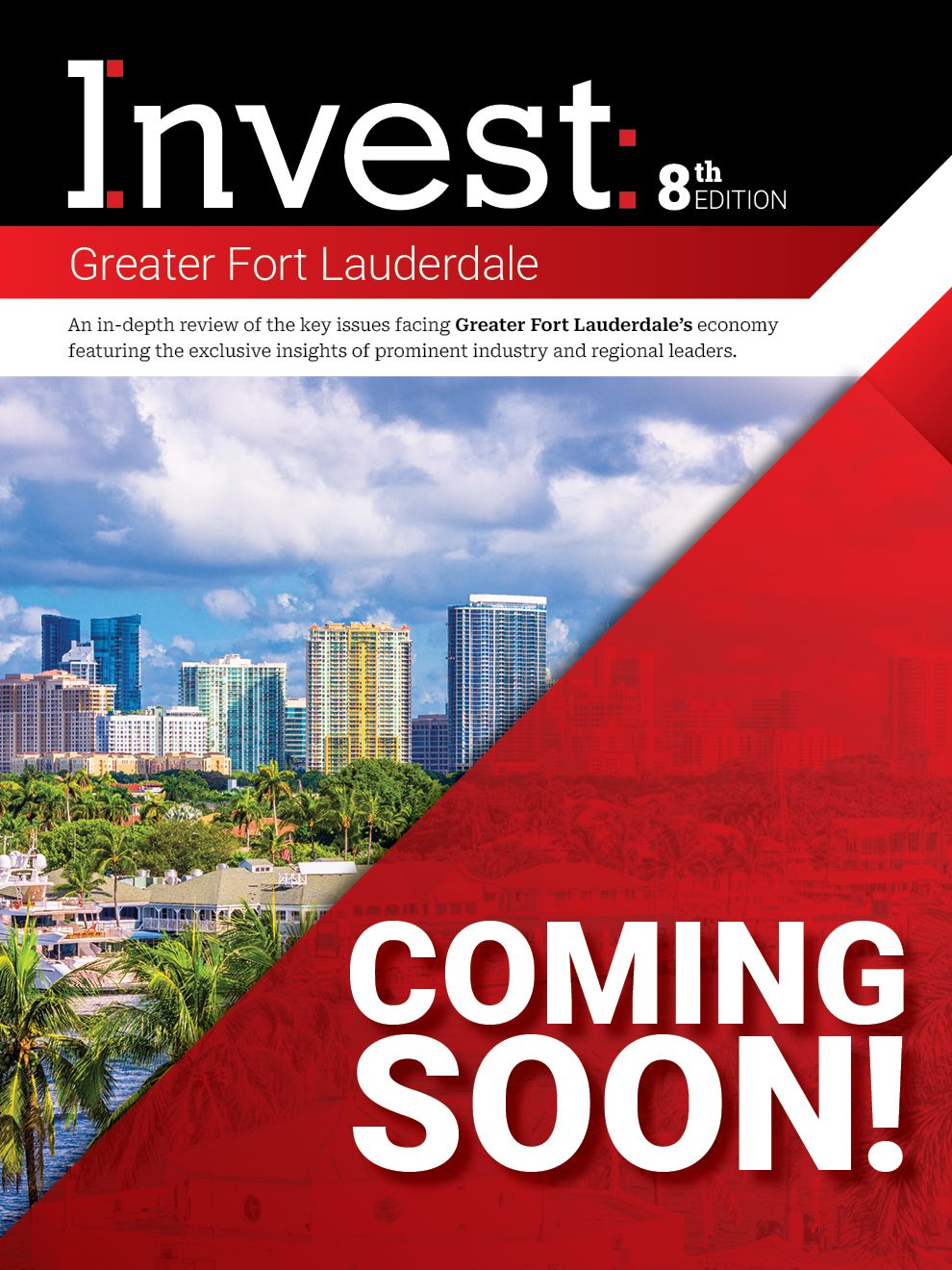
IGFLe8_Cover_Greater_Fort_LauderdaleNovember 2025 — Greater Fort Lauderdale continues to stand out as one of South Florida’s strongest engines of economic growth, backed by a rising concentration of business, community, and cultural assets. As the region cements its role at the center of the Tri-County area, local leaders are taking a proactive approach to improving quality of life and strengthening a business-friendly environment — priorities that anchor the upcoming Invest: Greater Fort Lauderdale 8th Edition.


Join us at caa’s upcoming leadership summits! These premier events bring together hundreds of public and private sector leaders to discuss the challenges and opportunities for businesses and investors. Find the next summit in a city near you!


Research is now underway for the latest report, which will examine investment trends, development activity, and competitive advantages across major industries. The edition will also feature deep dives on Broward County municipalities pursuing sustainable economic growth strategies.

Major infrastructure expansions — including ongoing upgrades at Port Everglades and Fort Lauderdale-Hollywood International Airport — have enhanced global connectivity and accelerated business attraction. At the same time, a growing talent pool and favorable tax landscape continue to draw companies from higher-cost markets, especially the Northeast. These trends are reinforcing Greater Fort Lauderdale’s position as a magnet for corporate relocations and innovation-led economic development.

“Strategic location, growing talent pool, and a favorable business environment have contributed to an influx of companies from sectors like technology, finance, and healthcare choosing Broward County as their base,” said Abby Lindenberg, CEO and founder of caa. “The challenge now is ensuring that regional infrastructure and housing keep pace with this rapid growth — key areas that will be covered in this year’s edition of Invest: Greater Fort Lauderdale.”

Distributed locally, nationally, and globally, Invest: Greater Fort Lauderdale 8th Edition provides an authoritative, holistic assessment of the region’s economy. Nearly 70% of Capital Analytics’ two million global readers are senior executives who rely on the report’s in-depth business intelligence to inform decisions across sectors including healthcare, education, banking, and economic development.

About caa & Invest: Greater Fort Lauderdale 8th Edition

caa is an integrated media platform that produces in-depth business intelligence through its annual print and digital economic reviews, high-impact conferences and events and top-level interviews via its video platform, Invest:Insights.

Invest: Greater Fort Lauderdale is an in-depth economic review of the key issues facing the regional economy, featuring the exclusive insights of prominent regional leaders. Invest: Greater Fort Lauderdale  is produced with two goals in mind: 1) to provide comprehensive investment knowledge on Broward County for local, national and international investors, and 2) to promote the region as a place to invest and do business.

The report conducts a deep dive into the top economic sectors in the region, including banking and finance, legal, healthcare, education, real estate, construction, energy, infrastructure and tourism. The publication is compiled from insights collected from more than 200 economic leaders, sector insiders, political leaders and heads of important institutions. It analyzes the leading challenges facing the market and uncovers emerging opportunities for investors, entrepreneurs and innovators.

For more information, contact: 

Milena Mignone
Sr. Executive Director
786-634-5306

Ryan Gandolfo
Senior Editor
786-843-8500

Want more? Read the Invest: Greater Fort Lauderdale report.

Subscribe to Our Newsletters

"*" indicates required fields

Address*
Would You Like To Receive Our National Newsletter?*
Interests
Markets
This field is hidden when viewing the form

While travel slows nationwide, San Antonio doubles down

CAA25_Conexio_Banner

Writer: Andrea Teran

San_AntonioNovember 2025 — While the U.S. braces for a decline in international travel in 2025, San Antonio is moving ahead with one of Texas’ largest airport infrastructure projects. At the Invest: Houston Leadership Summit on Nov. 20, Jesus Saenz, director of airports for the City of San Antonio, made the city’s intent clear: it’s not just planning for more flights — it’s preparing for a fundamental shift in its regional and global role.


Join us at the Invest: Houston 2nd Edition Leadership Summit! This premier event brings together hundreds of Houston’s business and regional leaders to discuss the challenges and opportunities for businesses and investors. This year’s theme centers on Houston’s role as a leader in world innovation. Buy your ticket now!


“We’re spending $1.6 billion on what we’re doing with a brand-new Terminal C — 18 gates, 850,000 square feet, and 40,000 square feet of brand new concession space,” Saenz said. “We’ve been running. My team probably says, ‘Can you calm down a little bit?’ But I’m a firm believer that when the embers are hot, you cook. And right now, is the time for us to cook in San Antonio.”

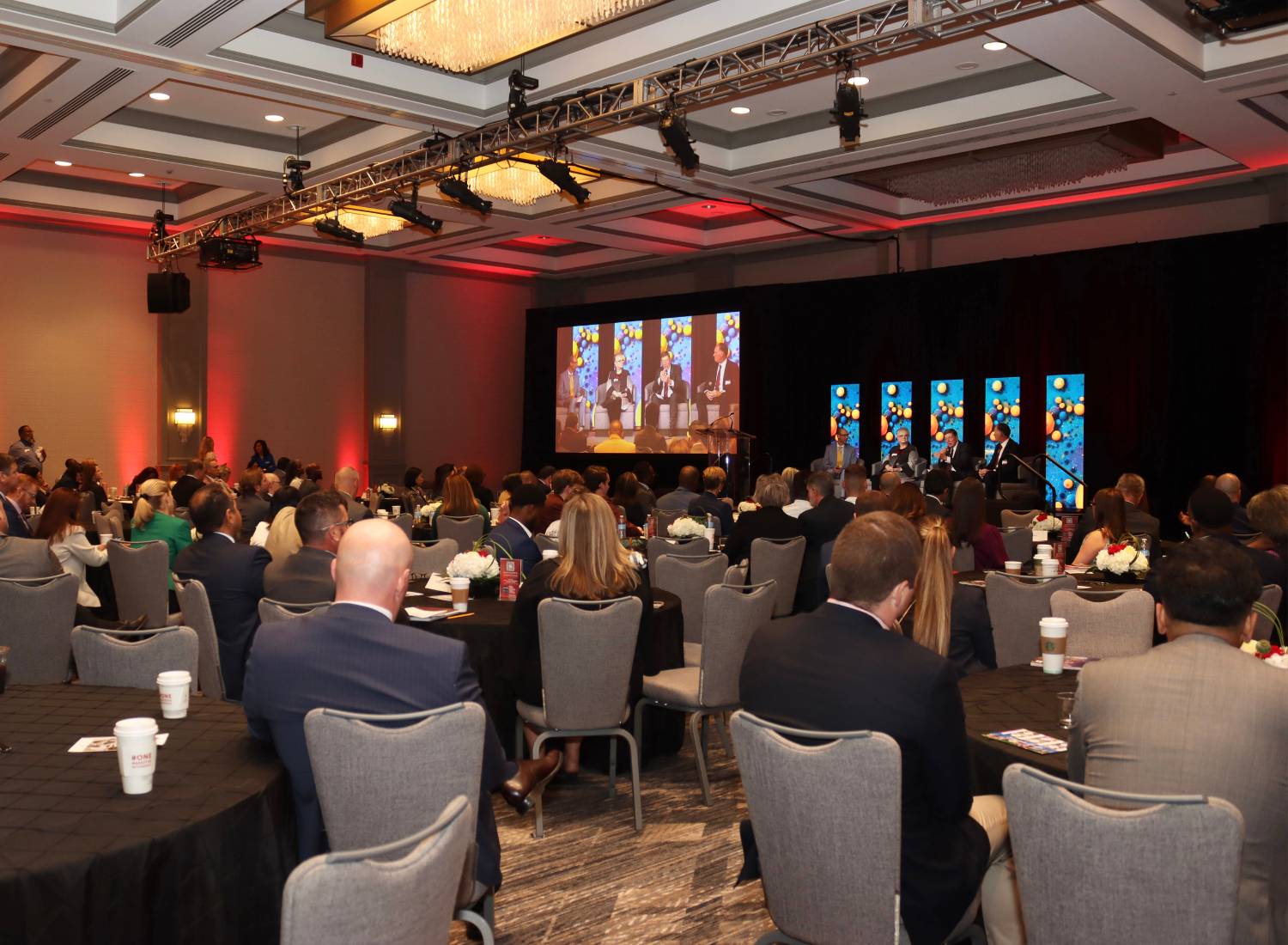
The summit, held at the Tobin Center for the Performing Arts, brought together more than 250 C-suite executives, public sector leaders, and industry stakeholders to explore the city’s infrastructure future. During a panel titled “Building for Tomorrow,” Saenz outlined what is now one of the region’s most ambitious undertakings: a $2.5 billion expansion of San Antonio International Airport — a long-term bet on global connectivity amid a national travel slowdown.

The new terminal is part of a multi-phase, 20-year strategic development plan projected to generate roughly 16,000 jobs and nearly double the airport’s footprint. The expansion also includes 29,000 square feet of passenger lounge space. 

“We’re wrapping up the design pieces … and this year, we’ve moved more than 11 million passengers — the most in the city’s history,” Saenz said during the panel. “We’re turning into a large hub.”

That timing puts San Antonio on a different trajectory than national air travel trends. Cities like Las Vegas and Los Angeles are seeing fewer foreign visitors this summer, with industry leaders and analysts warning the downturn may extend well beyond peak season. The World Travel & Tourism Council recently projected that the United States will be the only country among 184 studied where foreign visitor spending will fall this year. While other U.S. airports brace for weaker inbound volumes, SAT is investing for the long term.

“We’ve taken the number of nonstop flights from what it was in 2023 — 33 — to today, 49,” Saenz noted. “And we’re going to start service in May of 2026 into Canada. So we continue to move in those directions.”

“All that new infrastructure is going to need what? Electricity,” said Rudy Garza, CEO of CPS Energy, during the panel, linking infrastructure investment to the city’s broader growth strategy. “We’ve got a lot of planning work to do to make sure we do our part to make that happen, just as we’re trying to do for the great work that Jesus is doing at the airport.”

For Saenz and his team, infrastructure design has gone beyond capacity metrics. The new terminal will feature River Walk-inspired bridge elements and design motifs that reflect San Antonio’s cultural and historical character — a conscious move to create a sense of place. “We went out and obtained 100,000-plus direct feedback [submissions],” Saenz said. “Everyone said they wanted to have a sense of place … You’re going to see pieces of the River Walk on the bridges in the new airport terminal. We’ll take it back to the 1500s.”

At a time when many U.S. markets are deferring capital improvements due to labor and funding constraints, San Antonio’s airport is locking in 15-year commitments with air carriers to build stability and route diversity. “That gives us a very diversified portfolio so that we have all types of carriers and where we’re going — into transatlantic service, into Europe, continuing to grow what we’re doing,” said Saenz.

From a strategic standpoint, the SAT expansion positions San Antonio as a connective anchor between Austin and the rest of the I-35 corridor, especially as the two cities increasingly integrate into a single economic region. “The second that aircraft stops taking off and landing, nothing else really matters after that at an airport … Our goal is to be the most successful airport in the world. That’s what’s in our design standards today as we look out into the future.”

The panel discussion included leaders from CPS Energy, Monterrey Metal Recycling Solutions, and Joeris General Contractors, who underscored that this is not a standalone effort. It’s part of a coordinated regional strategy to reinforce San Antonio’s infrastructure, economic resilience, and role as Texas’ next-generation growth hub.

Want more? Read the Invest: San Antonio report.

Subscribe to Our Newsletters

"*" indicates required fields

Address*
Would You Like To Receive Our National Newsletter?*
Interests
Markets
This field is hidden when viewing the form

Power defines America’s next data center era

IPITe3_Banner_SetonHill

Writer: Mirella Franzese

America_data_centerNovember 2025 — The balance of data centers in the U.S. has shifted, according to a new report. While investments in data center infrastructure are expected to exceed $4 trillion globally by 2030, more than 40% will be invested in the United States, shaping the dynamics of local economies. Where this spending will trickle down to is still uncertain, but one key factor will play a decisive role: power.


Join us at caa’s upcoming leadership summits! These premier events bring together hundreds of public and private sector leaders to discuss the challenges and opportunities for businesses and investors. Find the next summit in a city near you!


At this scale, data centers are expected to tip the balance of entire regions, unlocking major growth, creating thousands of high-skill and high-wages jobs, and driving innovation across industries. 

Yet, in recent years, data center demand has well outpaced the energy capacity required to support it — a gap which is only expected to grow wider in the near-term. 

“Demand for power exceeds the growth capabilities of utilities,” said Mike Brady, VP of power generation execution for national energy provider Liberty Energy, in an interview with Invest:. 

McKinsey projects that data center demand in the U.S. will grow by 20% to 25% per year until 2030, while capacity will rise at a much slower rate. This alone will not be sufficient to meet demand, according to JLL.

At this rate, the U.S. will need three times the current level of energy consumption to maintain the surge in demand for data centers expected from 2023-2030. This new load on regional grids will call for additional infrastructure development, such as new energy resources and expansions in transmission. Yet, timelines for these build-outs will likely lag, given the rapid pace of data center growth in the country.

The availability of power and the speed of infrastructure delivery have therefore become the most decisive factors shaping site selection for data center projects across all U.S. markets, according to CBRE.

“Tech companies and hyperscalers are looking for power that is reliable, affordable, and low-carbon,” said Ricky Sakai, SVP of investment business development at Mitsubishi Heavy Industries America, in an interview with Invest:.

As a result, data centers have popped up in some of America’s more remote locations, especially in markets like Phoenix, Dallas, Northern California, Northern Virginia, and Chicago — all favored due to their abundance in power supply and grid resilience. 

In each of these regional economies, data centers are unlocking millions — if not billions — of dollars worth in direct and indirect expenditures, as per McKinsey estimates. The distribution of data centers across the U.S. is also shifting the national balance of power towards more isolated markets. 

The city of Gallatin in Middle Tennessee is a prime example: Meta’s $1.5 billion investment in the Gallatin Data Center delivered more than $1 million in direct funding to Sumner County schools and non-profits, and created more than 1,000 skilled trade jobs for its construction. 

“The biggest highlight of our year has been the grand opening of our Meta hyperscale data center, a $1 billion investment in our city,” Gallatin Economic Development Agency Executive Director Rosemary Bates told Invest:. “It’s a massive project, and its presence is significant for Gallatin.”

The potential for emerging data center markets is considerable as well, especially in states like Pennsylvania, where the demand for power is burgeoning, but energy resources are abundant. 

“Pittsburgh is a sleeper town with a huge opportunity to have data center infrastructure. Today, our mission focuses on taking advantage of big opportunities in an effort to grow southwestern PA’s economy, and right now, that’s through our energy assets,” said Matt Smith, chief growth officer of the Allegheny Conference on Community Development, in an interview with Invest:.

“These energy assets are attracting AI, data centers, and large-scale industrial and manufacturing projects, driving the economy forward.”

“Power is driving our economic solutions,” said Brady. “We’re only scratching the surface…The energy needed for the computing power, without latency issues, is enormous … We are going to see incredible changes in our lives.

 Yet, power alone won’t be enough to lure in capital investment, observed Smith. “Something that is clear across all of these big projects – whether it’s a data center or an industrial project making advanced switchgear – is that they all want speed.”

“Whether that’s permitting efficiency or making sure that local governments and the community are supportive … all that goes to the idea of getting the project up and out of the ground quickly,” he added. 

In general, launching a data center requires significant land, labor, and equipment resources, which, if constrained, could upset the timely completion and operational efficiency of new data center projects.

This means that states looking to attract large-scale data center investment will need to balance energy capacity and agility to deploy infrastructure with demand in order to secure bigger prospects. 

Want more? Read the Invest: reports.

Subscribe to Our Newsletters

"*" indicates required fields

Address*
Would You Like To Receive Our National Newsletter?*
Interests
Markets
This field is hidden when viewing the form

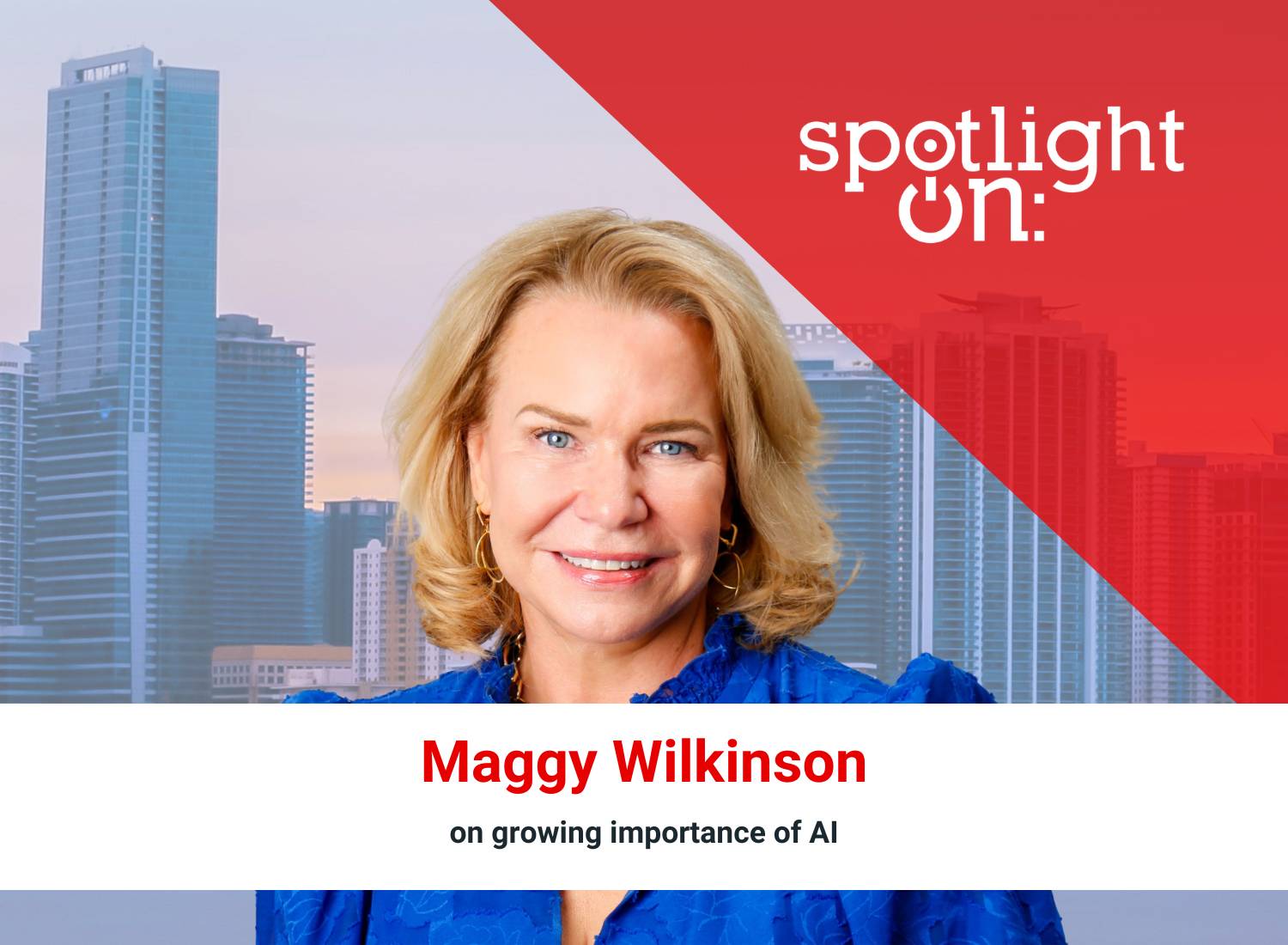
Spotlight On: Maggy Wilkinson, CEO, Athena Global Advisors

Maggy_Wilkinson_Spotlight_OnNovember 2025 — Maggy Wilkinson, CEO of Athena Global Advisors, sat down with Invest: to discuss the firm’s evolution into a full-service marketing agency, its strategic embrace of AI, the value of purpose-driven campaigns, and how accountability and client partnership continue to shape its growth. “Employees are the best sales channel any company can have, but they must be fully bought in. Consumers can see whether employees believe in the company’s mission — it shows in how they represent the brand,” Wilkinson added.


Join us at the Invest: Philadelphia 6th Edition Leadership Summit! This premier event brings together hundreds of Southeast Pennsylvania and South Jersey’s regional leaders to discuss the challenges and opportunities for businesses and investors. This year’s theme centers on the regional strengths of the eds and meds. Click here to learn more.


What changes in the business landscape over the past year have had the biggest impact on Athena’s approach?

For us, there have been changes that have affected our clients, though not necessarily the work we do for them. In some cases, employees might read the news and anticipate shifts, but our strength lies in remaining relevant to our clients. We have customers in sectors such as automotive, where tariffs have had an impact, and others undergoing major transitions, which has kept us busy. One of the biggest topics, though often discussed abstractly, is the growing importance of AI. It is especially relevant for service-based companies like ours, and we have fully embraced it. We are measuring how it has improved our work and passing those lessons on to our clients, which makes us more effective and relevant. 

There are many practical ways we use AI. For example, we use bots to find press clips, reducing manual effort. Our creative team uses AI to resize content for different formats and personalize it for various cities, which saves time and reduces human error.

Over the past decade of growth, how has your core mission adapted to meet evolving client needs, increasing market complexity, or other emerging challenges?

Before starting Athena, I was the chief operating officer at my previous company and expected to continue in compliance consulting. The truth is that my plan was born out of necessity. We followed the opportunities and discovered within three years that compliance work required enormous effort with little return. At the same time, clients were engaging us in new areas as social media was emerging, and we approached that challenge with a data-driven, analytical mindset.

The results were strong, and 13 years later, Athena has evolved into a full-service agency that does what a traditional firm does: marketing, events both live and virtual, data analytics and reporting, and strategic consulting. Our five core practice areas work together to deliver comprehensive solutions. Sometimes it takes time for clients to understand our model, but once they do, they see how the “Athena machine” operates seamlessly.

What differentiates Athena and how has this model of combining strategic consulting with hands-on execution shaped the kinds of clients and challenges you take on?

Our sweet spot tends to be larger organizations that need integrated, end-to-end solutions. A great example is our work on the NFL’s “Huddle for 100” campaign, which we conceived and executed. It involved every part of the organization: strategic marketing, events, and community engagement. The campaign generated more than 100 million minutes of volunteer time through “pedals,” or community initiatives, with participation from all clubs, coaches, players, and legends. Our events team coordinated 10 major events and 1,100 activations nationwide. Most companies would need to hire multiple firms to deliver something of that scale, but we manage it all in-house through a full-funnel approach.

Because your projects sit at the intersection of branding, events, community engagement and beyond, how do you define success?

Every campaign needs to be measurable. While there is a feeling of accomplishment when a campaign goes well, tangible results are essential. For the NFL, we measured participation, minutes contributed, and economic impact, not even including components like food drives, cancer screenings, or Boys and Girls Club programs. Being able to quantify and report those results reinforces our value to clients.

What trends are emerging around how companies communicate purpose in a way that resonates with both internal and external stakeholders?

Employees are the best sales channel any company can have, but they must be fully bought in. Consumers can see whether employees believe in the company’s mission — it shows in how they represent the brand. Internal and external communication must therefore align. We have noticed a shift among employees in the first 15 years of their careers: they want to see meaning in their work, understand their impact, and be part of an organization that contributes to the community. Articulating that purpose internally is essential for engagement. It is a positive and necessary trend that reflects how workplace values are evolving.

Philadelphia has long been both a home base and a fertile ground for Athena. How would you characterize the city’s creative and civic energy?

Philadelphia is vital to who we are, and I am very thankful for that. The city has been fertile ground for Athena’s growth. Winning a major contract with Comcast led us to hire local talent, and we quickly fell in love with the city. I was struck by its character — its architecture, food, and energy make it an exciting place to live and work. Philadelphia rewards effort and commitment. When you invest in the city, it notices and gives you a chance to succeed, which is something you may not find elsewhere.

What does building a workplace culture of creativity and trust require, especially in today’s world?

I am proud of the culture we have built at Athena. Collaboration is central to how we operate. People speak up and share ideas openly. We do not always agree, and I sometimes have to make the final decision, but everyone feels heard. Transparency is also key. We share earnings and have a profit-sharing model so that everyone understands how the company is performing. It is a safe environment in which to make mistakes and learn from them. Owning those moments and continuing to grow is part of what makes our team strong.

Where do you see the greatest opportunity for Athena to grow and evolve in the next three to five years?

Our biggest opportunities lie in large-scale campaigns, such as the FIFA World Cup bid or projects that help major companies introduce new products or implement structural change. These broad-reaching campaigns allow us to combine all our strengths across strategy, creativity, and execution.

What we have built at Athena represents what organizations will increasingly seek in the future: partners who can guide them through the entire journey from strategy to execution. There is a growing appetite for action-oriented firms that do not just advise but deliver. We are proud to think strategically while working side by side with our clients, sharing responsibility for success. Most new business comes through word of mouth rather than brand recognition, which means we must prove ourselves every single day. That accountability keeps us sharp and driven.

Want more? Read the Invest: Philadelphia report.

Subscribe to Our Newsletters

"*" indicates required fields
Address*
Would You Like To Receive Our National Newsletter?*
Interests
Markets
This field is hidden when viewing the form

Infrastructure investments position New Jersey for the 2026 FIFA World Cup and beyond

INJe6_Banner_Cumberland_County_Improvement_Authority

Writer: Mariana Hernández

Newark_Airport_New_JerseyNovember 2025 — The Garden State is stepping confidently onto the global stage. As the state prepares to host the 2026 FIFA World Cup final at MetLife Stadium, its leaders are strengthening partnerships, collaboration, and investment in infrastructure to ensure that New Jersey is ready to welcome global tourism.


Join us at caa’s upcoming leadership summits! These premier events bring together hundreds of public and private sector leaders to discuss the challenges and opportunities for businesses and investors. Find the next summit in a city near you!


Last week, Governor Phil Murphy participated in the Economic Mission Trip to Mexico City, where discussions with FIFA representatives, investors, and business leaders took place, highlighting New Jersey‘s prominence as a strategic location for attracting tourism and investment. These efforts reflect a broader positioning vision for New Jersey, not just as a tourism and sports destination, but as a global hub for businesses and innovation.

As part of the long list of investments in New Jersey infrastructure, the aviation sector is at the forefront of this transformation. The Port Authority recently broke ground on the long-awaited $3.5 billion AirTrain Newark project, a modernization effort designed to replace the outdated infrastructure to provide faster and more reliable connections between the Newark Liberty International Airport, Amtrak, and the New Jersey Transit system. With over 40 million travelers passing through Newark each year on average, this project sets the stage for the state’s commitment to maintaining operational excellence and keeping its infrastructure on pace with the expected growing demand due to the World Cup.

Complementing this, the recently completed runway renovation at Newark Airport was delivered 13 days ahead of schedule on June 2nd — an encouraging sign of efficiency and coordination among state and federal partners. The project, part of the Port Authority’s larger investment strategy, is expected to reduce delays and improve airfield performance. For the past four years, the Newark Airport was ranked last among the top 20 biggest airports based on passenger satisfaction, mostly due to inconveniences with the runway construction. With the renovation finished, this sets the groundwork for a more efficient and passenger-friendly experience as the region gears up for an influx of international visitors.

At the same time, airline operations stabilized at Newarl Airport after a turbulent period in April. United Airlines reported significant improvements in scheduling and staffing following widespread flight disruptions earlier in 2025. The airline’s executives acknowledged that while operational reliability has improved, challenges remain, including the need to increase ground staff and ensure the completion of infrastructure projects on time to accommodate growing passenger volumes. Addressing these workforce and logistical needs will be essential to sustaining Newark’s momentum and maintaining its reputation as a global gateway.

According to the New York Times, Bryan Bedford, administrator of the F.A.A., stated, “this summer, the F.A.A. took immediate action to relieve substantial inconveniences to the traveling public — deploying a temporary satellite backup system, upgrading fiber optic technology, expanding high-bandwidth telecommunications, increasing controller staffing, and limiting arrivals and departures.”

Looking ahead, these strategic investments in transportation and connectivity are more than just upgrades; they represent a coordinated effort to secure New Jersey’s long-term competitiveness in tourism and international business. With FIFA’s arrival on the horizon and global attention turning toward the region, the Garden State’s airports are poised to play a pivotal role in the broader US aviation industry.

Want more? Read the Invest: New Jersey report.

Subscribe to Our Newsletters

"*" indicates required fields
Address*
Would You Like To Receive Our National Newsletter?*
Interests
Markets
This field is hidden when viewing the form

Spotlight On: Rob Lyszczarz, President, RE/MAX Select Group

Rob_Lyszczarz_Spotlight_OnNovember 2025 — Rob Lyszczarz, president of RE/MAX Select Group, sat down with Invest: to discuss the company’s recent expansion, how interest rates have been impacting the market, shifts in buyer behavior, and why people should consider adding real estate to their portfolios. “Real estate has always been a vehicle for shelter, but it is also a vehicle for wealth,” Lyszczarz said.


Join us at caa’s upcoming leadership summits! These premier events bring together hundreds of public and private sector leaders to discuss the challenges and opportunities for businesses and investors. Find the next summit in a city near you!


Reflecting on the last year, what changes or milestones have most impacted RE/MAX Select Group and in what ways?

We have taken the slowdown in the market as an opportunity to focus on growth and growing our footprint. We now have over 40 offices with more than 900 associates, which were huge milestones for our company.

How have ongoing changes in the market impacted your business?

The interest rates have impacted the business most significantly. It has tied up inventory that we typically trade. It has been challenging to get people to move out of their homes with rates in the twos to fours.

What strategies is RE/Max Select Group implementing to help agents adapt in a more complex and challenging market?

We have a tremendous focus on getting new people into the entry point of homeownership, whether that is getting people into starter homes or transitioning others into downsizers.

What is RE/MAX Select Group doing to help first-time homebuyers, given the affordability challenges?

We have formed partnerships that have access to both discounted interest rates and downpayment assistance programs to help those first-time buyers more easily enter the market. Utilizing financing alternatives for self-employed individuals, who are often cut out of the traditional financing marketplace, has also been helpful.

When the market was abundant and everybody was buying, I believe the industry became a little bit complacent, and many REALTORS were able to succeed with bad habits. Now we are going back to the fundamentals. One of the cornerstones of our business is educating people on the merits of homeownership. One thing that most people don’t know is that in the United States, the average homeowner is nearly 40 times wealthier than their counterparts who rent. Many statistics will show that most retirees have more equity in their home’s value than they have in their retirement accounts.

Those are some of the important things we want to make sure that we discuss with our clients so they can make better decisions and avoid entering a market that might be challenging.

How does your business differentiate itself in this competitive real estate market, and how are you maintaining growth?

I like to tell our agents that we don’t just sell homes. We have a moral obligation to be the real estate resource to the people who entrust us to serve them. We take care of the customer with integrity. I believe when you do that, the business becomes more abundant. Doing business solely on a transactional level is challenging. It is important to build a business on a solid foundation with a relationship that is built on trust.

Which markets or regions in New Jersey are most attractive or experiencing the most growth?

Neighborhoods closer to the city tend to be more robust. The Jersey Shore area, from Monmouth County to Cape May, is desirable, and it seems as though there is never enough inventory to satisfy the demand.

What other trends in residential real estate have you noticed?

I anticipate the addition of Netflix in Monmouth and Ocean counties having a huge positive financial impact in the Monmouth and Ocean County markets. This will further fuel growth there and is an excellent addition for New Jersey.

Have you noticed any shifts in buyer behavior evolving over the past year, especially when it comes to remote work and lifestyle preferences changing?

We do business in six states: Arizona, Florida, Virginia, New Jersey, Pennsylvania, and New York. We are seeing some people in the Sun Belt states move back up to New Jersey because many workers are required to go back to work in person. I also think people have missed the proximity to friends and family, which has caused them to come back to New Jersey, further fueling the robust real estate market here. Having the clients’ best interests at heart and helping them make the best choice is imperative to long-term sustainability and growth.

What makes New Jersey attractive for real estate investors?

A lot of investors do best if they invest in real estate within 25 miles of their home. This allows them better control over the properties. Many people prefer to do that as opposed to going out of state. There are limited new construction homes in New Jersey, especially when compared to  South Carolina, Florida, or Arizona. New construction pulls demand away from sellers of existing homes, making the investment a little less resilient and the returns a bit more volatile. New Jersey doesn’t have much land to develop, and it is often difficult to develop due to rules and regulations. This protects the value of the existing real estate.

What criteria do you follow or prioritize when selecting the markets or properties to add to your portfolio?

We invest locally and buy properties that we use or are strictly residential, which have strong demand for occupancy. One of the things that we are trying to do is promote real estate as an investment class. Many of our clients that we sell to have not considered real estate as an asset class. I tell our teams that it is important to educate homeowners that real estate can be part of their financial portfolio. Most people do not have a broker or qualified financial expert on real estate, so that asset class is often overlooked. We are on a mission to educate our clients because there are a lot of excellent financial options out there.

Looking forward, what are RE/MAX Select’s top priorities for the next three to five years?

The top priority is educating clients on the opportunities that exist in taking their real estate success outside of their homes, if that suits them. It is a real passion of mine to educate our sales team and get them to talk to their clients about real estate. Real estate has always been a vehicle for shelter, but it is also a vehicle for wealth. 

There is a tremendous opportunity for people to build value in real estate where they conduct their business. New Jersey can be a tough place to do business because of all the rules and regulations, but I aim to encourage these business owners to explore building their wealth through real estate.

Want more? Read the Invest: New Jersey report.

Subscribe to Our Newsletters

"*" indicates required fields

Address*
Would You Like To Receive Our National Newsletter?*
Interests
Markets
This field is hidden when viewing the form

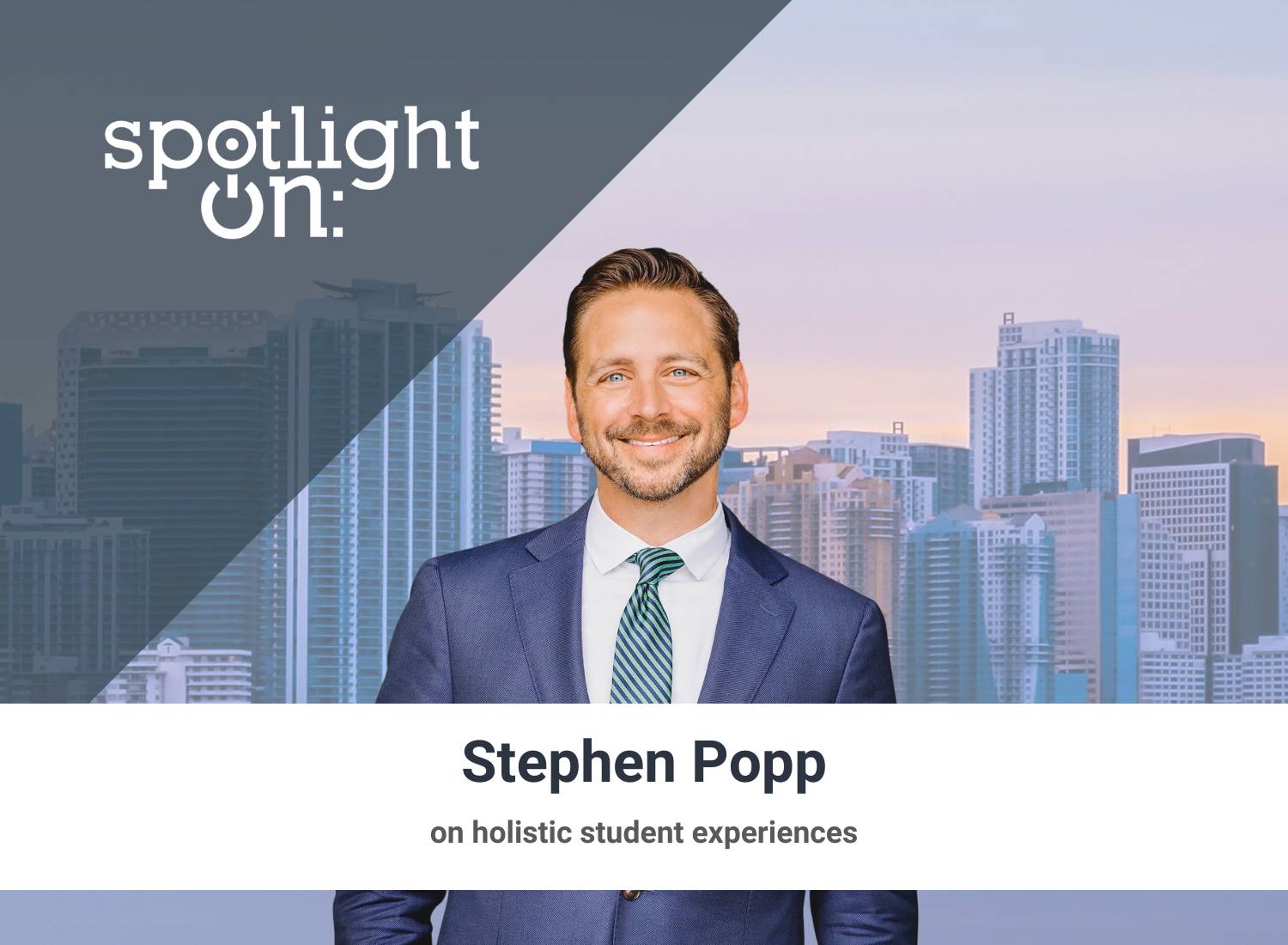
Spotlight On: Stephen Popp, Head of School, The John Cooper School

Stephen_Popp_Spotlight_OnNovember 2025 — In an interview with Invest:, Stephen Popp, head of school for The John Cooper School, highlighted the institution’s commitment to student well-being and forward-focused education. Popp also detailed strategic priorities, including pedagogical innovation, the responsible integration of artificial intelligence, and providing transformative, holistic student experiences. “At The John Cooper School, our mission emphasizes skills that travel: critical and creative thinking, effective communication, responsible citizenship, leadership, and lifelong learning,” Popp said.

What developments in the past year have most significantly influenced The John Cooper School’s operations and strategic direction?

Over the last year, we’ve stayed focused on our mission, prioritizing the student experience at our independent school. We’re in the third year of our strategic plan, aimed at providing transformative opportunities for students now and in the future. This includes investing in pedagogical innovations, supporting faculty through internal workshops for curricular alignment and professional growth, and expanding opportunities for independent research. Our students already access over 60 courses through the Global Online Academy, taught by independent school teachers worldwide, in addition to our robust curriculum here at Cooper.

We also emphasize a holistic education, and we are proud of our new 26,000-square-foot athletic facility for our students, 75% of whom participate in athletics. Additionally, we’ve developed an innovation space within our visual arts center, integrating technology and dynamic tools, and have plans for a new innovation and arts center on our horizon. We’re intentionally exploring artificial intelligence, ensuring students and teachers use it responsibly and ethically. Through these collaborative efforts on campus, and with our parents and alumni in the field, we are seeing great outcomes.


Join us at the Invest: Houston 2nd Edition Leadership Summit! This premier event brings together hundreds of Houston’s business and regional leaders to discuss the challenges and opportunities for businesses and investors. This year’s theme centers on Houston’s role as a leader in world innovation. Buy your ticket now!


How do you see the school contributing to the broader Houston community, both economically and socially?

We were founded in 1988 and were part of the master plan of The Woodlands founder George Mitchell. The John Cooper School was envisioned as a catalyst for good, industry, and innovation in The Woodlands and the Greater North Houston area. Spanning 43 acres, our mission is to challenge and care for students and cultivate responsible citizens and leaders. Our 1,380 students are from 45 countries, representing 900 families, and we actively serve The Woodlands and Houston communities, fostering their growth. This rich diversity at Cooper welcomes families relocating globally, while also supporting regional economic growth.

As educators, we emphasize mental health and emotional intelligence, earning recognition as a spotlight school by the Yale Center for Emotional Intelligence. We mentor other schools and present at regional and national conferences, sharing expertise to ensure student and community success.

Which national and state-level education trends do you believe will most impact how your school delivers education in the coming years?

At The John Cooper School, our mission emphasizes skills that travel: critical and creative thinking, effective communication, responsible citizenship, leadership, and lifelong learning. In today’s complex and uncertain landscape, we prioritize cultivating a nimble, intellectually curious mindset in our students. These transferable skills are essential not only for the present but also for the future, preparing students for college and careers that may not yet exist. As a college preparatory school, we recognize the dynamic changes in education and industry, with new majors emerging on university campuses. Our focus is equipping students with the skill set to navigate both opportunities and challenges in this evolving world, ensuring they are ready for a future of tremendous dynamism and change.

How does your curriculum incorporate experiential learning and real-world applications, particularly in preparing students for tomorrow’s workplace?

At The John Cooper School, our students, from 4-year-olds to 18-year-olds, learn best through experiential engagement with the curriculum, both on and off campus. We foster an intellectually curious mindset, encouraging students to thoughtfully address dilemmas and opportunities with diverse perspectives, building knowledge to solve problems and enhance life. This innovation thread, increasingly vital across industries, universities, and schools, drives students to apply learning to improve the world. We’re committed to expanding opportunities through new facilities and programming, ensuring immersive, transformative experiences.

Central to our approach is placing students at the core, amplifying their voices, creativity, and analytical thinking. While our expert teachers guide with pedagogical expertise, we prioritize student agency, fostering ownership of learning that translates to college and careers.

How is the school preparing students to use AI responsibly, and are there other technologies or innovations you are excited about for the future of education?

As head of school, my omnivorous curiosity and love for reading keep me engaged with rapidly evolving technologies like artificial intelligence. Ethan Mollick’s “Co-Intelligence” suggests that grappling with AI’s integration into daily life can be profound, even existential. At The John Cooper School, we’ve collaboratively developed guidelines with faculty, staff, and students to responsibly integrate AI into assignments and assessments. We focus on balancing AI’s potential with human agency, emphasizing conversation, discussion, and collaboration. While AI offers personalized learning opportunities, we prioritize community and collaborative experiences to prepare students for universities and careers. Our intentional approach ensures students develop critical skills to work effectively with others, fostering a community-driven response to technology’s opportunities, now and in the future.

We must still teach students to read, write, think critically, and solve problems; we can’t replace that intellectual process. At the same time, if technologies help us see, frame, and contextualize ideas more accurately, they can enhance learning. I sense a cautious but genuine optimism about these emerging tools from parents and experts.

Looking ahead, what are the school’s top priorities for the next three to five years?

At The John Cooper School, we prioritize a holistic student experience, offering opportunities in academics, arts, and athletics. We’re focused on integrating innovation across multidisciplinary and interdisciplinary programs on our 43-acre campus in the verdant Woodlands, just 30 miles north of Houston. Embracing the area’s vibrant arts, culture, and businesses, we honor George Mitchell’s vision as The Woodlands’ independent school. As the community grows, we’re planning purposeful, strategic expansion to meet rising demand for a John Cooper education while maintaining our intentional community. With 1,380 students, we ensure every student feels known and cared for, fostering a supportive environment that upholds our commitment to personalized, transformative education.

We are also proud of our eight- to nine-year focus on fostering a caring community, emphasizing emotional intelligence and well-being. We recognize that stressors are inevitable, but as our director of wellness, Dr. Diego Estrada, says, “You cannot stop the waves, but we can teach students to surf.” Through our partnership with the Yale Center for Emotional Intelligence, we’ve developed initiatives that benefit our campus and other schools. Our faculty and staff share a mindset valuing emotional understanding. My doctoral work at Vanderbilt on mental health in independent schools underscores the real pressures youth face, driving our responsibility to share our insights globally.

Located in The Woodlands, which celebrated its 50th anniversary last year, we’re nearing our 40th and are energized by the community’s synergy, excited for the future of our students and region.

Want more? Read the Invest: Houston report.

Subscribe to Our Newsletters

"*" indicates required fields

Address*
Would You Like To Receive Our National Newsletter?*
Interests
Markets
This field is hidden when viewing the form

Spotlight On: Mercedes Miller, President, ATL Airport District Convention & Visitors Bureau

Mercedes_Miller_Spotlight_OnNovember 2025 — In an interview with Focus:, Mercedes Miller, president of ATL Airport District Convention & Visitors Bureau, highlighted the positive changes and opportunities in the area, many of which came from partnerships and social media strategy. “We put out interesting stories that pique people’s interest, so the numbers are only going to get better,” she said.

What opportunities have landed in the district over the past year?

I am both encouraged and energized by the momentum within the hospitality and destination marketing industry. Our region is on the radar for meeting planners and event producers because we have so many strengths and offerings. And with all the things coming to the Atlanta metropolitan area — FIFA, MLB, and the Super Bowl — we see heightened excitement and investment for our region, creating a great opportunity for the District. 

Our destination provides visitors with unmatched convenience through our proximity to the world’s most traveled airport, as well as a growing mix of high-quality hotels and venues. This is a destination that offers authentic local experiences alongside being a global connectivity hub. We’re focused on harvesting the upcoming opportunities and elevating the District’s profile with all the international travelers we’re going to have in the area. They’ll get to see all the great things that we have, from riding MARTA, seeing the Georgia International Convention Center (GICC), experiencing the high-end hotels, to enjoying our extensive list of restaurants providing a taste of our local flavor.


Join us at caa’s upcoming leadership summits! These premier events bring together hundreds of public and private sector leaders to discuss the challenges and opportunities for businesses and investors. Find the next summit in a city near you!


How are you adapting to trends for group travel, meetings, and conventions?

In March of 2025, we saw our room bookings double compared to last year.  Many planners were asked to make spur-of-the-moment decisions about conventions that had been put on hold for a while, and our fully equipped team was right there to accommodate them! Facilities downtown often require longer booking windows, but our airport properties offer flexibility for short-term planning, resulting in better availability for sudden bookings.

After COVID, and being out of survival mode, expectations have shifted. We’ve realized how important it is to be face-to-face with our customers and employees. People are indeed cautious, but determined to have face-to-face gatherings. That makes a big difference for morale and supports the growing confidence in group travel, meetings, and conventions.

How would the bureau adapt its infrastructure and services to meet the increasing demand for sports tourism?

Our marketing strategy used to focus on corporations and associations, but we have expanded to accommodate increased demand. GICC has now hosted basketball games, volleyball tournaments, and countless cheerleading competitions. The Gateway Center Arena opened us up to a whole new industry — esports — and the opportunity to host teams like the Atlanta Dream and the Atlanta Hawks’ NBA G League affiliate, the College Park Skyhawks. The sporting market is taking over the area, putting more people in our shops and restaurants.

How are you leveraging technology to enhance visitor experience?

We stay very active with our social media. People are always interested in a story, so we’re always telling stories to keep people engaged, to make them wonder. We try to leave enough in their mind that they want to check it all out for themselves.

And in going digital, we are able to collect more statistics than we could by picking up the phone. It has a way of tracking what works and what does not. It seems to be working for what we do here. We’ve gotten our visitor numbers up within the past year, and almost doubled the number of website and social media visitors. As we continue to develop this strategy and tell the stories within the District, we know these numbers are only going to get better.

Do you see any distinct trend among different visitors?

We have to appeal to different generations when we advertise — we want to be able to reach everybody. The traditional meeting has not been the same since COVID. People want to be entertained more, with more activities that bring them together. People host certain events to bridge the gap between generations. So, we make it easy enough for Gen X to navigate our advertising platforms, but also sophisticated enough to keep Gen Z engaged.  

To find out what’s going to motivate these different generations, you have to actually have a conversation with them. The younger generations are thinkers, with a different language, and I admire them. They all want work-life balance. They want places to go, and maybe bring families. They want something that’s going to pique their interest, versus just sitting in a breakout room or in a general session all day. There’s a lot that we can learn from them.

What are the key strategic initiatives that will be essential for the district to remain competitive in a rapidly evolving event tourism landscape?

An increasing number of meeting planners expect destinations to demonstrate sustainable practices and community impact. We are incorporating green event practices and promoting local tourism to meet these demands. We are also dealing with a lot of hybrid and tech-enhanced events. The number for in-person gatherings stays strong, but we still want to support people who are not able to get here. The technology has to be improved in venues, and in hotels, in order to perform those duties – something our hospitality partners have taken seriously to provide these groups hosting their events in the District. 

We have a competitive market nationwide, vying for the same business. We need to have a value proposition for them to stay in our area, because everybody’s shopping for the best deals. It is worth the value if a group is filling up the District and the hotels. The GICC will also work with us to offer discounted rates because we’re filling up the hotels. It’s all about these partnerships.

What challenges is the industry facing, and what strategies are you implementing to navigate any headwinds?

Planners are booking closer to event dates, which can be good or bad. If we’ve already booked a group requiring a lot of space, and then comes a group requiring a thousand rooms but using less space, we might feel like we’re losing something. But, we can’t take the risk of not booking anything. There is increasing pressure on sales and operations to respond with agility. We need to be faster with our processes and our proactive outreach.

We also have some opportunities with people on tighter budgets. We position the District as a high-value, high-impact destination by highlighting some of our cost advantages. People don’t have to rent a car or pay for transportation to go downtown. You can come right here and get everything. We have to take what we have and communicate its value to the customer.

Then, there’s always a shortage of labor in the hospitality industry. That’s just a challenge for everybody industrywide. People focus on service, and the value they’re getting with their money. We work with a lot of the temp agencies and a group doing Work First advocacy to overcome the labor shortages. And we are partnering with local stakeholders to advocate for workforce development and to consistently improve our services.

What are your top priorities for the organization over the next couple of years?

We’re trying to grow our market share and think outside of the usual events. Years ago, you wouldn’t have seen a sporting event in a convention center or a corporate group’s general session in an arena. We’re very flexible with that now. If we get a client in our building one time, we know that they are likely to rebook due to our elevated customer service. It’s all about awareness.

We do a lot of out-of-the-box things, like having people shop anonymously in the District and tell us about their experience. When we provide a testimony, we’re actually giving it from a customer who has experienced it directly. That transparency makes a big difference, especially with the new generations — they all want to know what somebody else experienced. While we remain mindful of potential headwinds from economic fluctuations, the ATL Airport District is well-positioned to navigate these challenges through adaptability, collaborations, and strategic investments. We stay ready for whichever way the economy flows. I stay energized and remain optimistic that this industry will begin to grow again.

Want more? Read the Focus: Atlanta report.

Subscribe to Our Newsletters

"*" indicates required fields

Address*
Would You Like To Receive Our National Newsletter?*
Interests
Markets
This field is hidden when viewing the form

How universities and healthcare systems anchor Nashville’s real estate surge

INASe4_Banner_Butler_Snow

Writer: Eleana Teran

NashvilleNovember 2025 — Middle Tennessee’s growth is redefining how healthcare and education shape the built environment. In Nashville, that connection is visible across the city’s expanding campuses and medical corridors, where universities, healthcare systems, and developers are working together to meet both workforce and community needs.


Join us at caa’s upcoming leadership summits! These premier events bring together hundreds of public and private sector leaders to discuss the challenges and opportunities for businesses and investors. Find the next summit in a city near you!


According to Transwestern’s 2Q25 Nashville Healthcare Market Report, the region’s healthcare real estate fundamentals remain strong, with the direct vacancy rate at about 6.6%, holding within a steady 5.7% to 7% range since 2021 even after more than 1 million square feet of new space was delivered. Average asking rents have risen to $34.22 per square foot, reflecting sustained demand as population and medical employment continue to grow across the metro.

Healthcare remains a cornerstone of the local economy. The Nashville Health Care Council reports that more than 900 healthcare companies now operate in the area, spanning hospital management, life sciences, and digital health innovation. At the same time, the Business & Economic Research Center at MTSU projects that by 2030, the state’s healthcare and social assistance sector will add over 80,000 jobs. These employment shifts are being recognized by higher-education institutions and developers alike, as they respond not only to facilities demand but to talent pipelines and community outcomes.

These trends are driving new conversations about real estate, talent development, and community impact. Developers are adapting to the rise of healthcare-anchored projects, where clinics and therapy spaces are increasingly integrated into mixed-use environments. At the same time, higher education institutions are expanding medical schools, launching healthcare training programs, and partnering with developers to meet the region’s rising demand for skilled professionals and modern facilities.

This intersection where education meets healthcare, and workforce meets infrastructure, is defining Nashville’s next phase of growth. Invest: spoke with regional leaders whose organizations are shaping the evolution and supporting the next wave of development in Middle Tennessee.

Brannen_Edge_Quote_Stack_NashvilleBrannen Edge, president & CEO of Flagship Healthcare Properties

Nashville feels like the healthcare center of the country. It’s home to major healthcare REITs, hospital systems, surgery center operators, and providers. We opened an office with just one person, and it’s now grown to a team of five and we’re outgrowing our space. Tennessee has become increasingly important to us, with seven properties generating about 6% of our net operating income. We’ve invested in multiple markets — Chattanooga, Knoxville, Memphis — and we’re preparing to buy another building in Chattanooga. Still, Nashville remains at the heart of healthcare, not just in Tennessee but nationally, and we plan to continue putting resources into that market.

Teaching hospitals and medical schools are crucial drivers of healthcare growth in markets like Nashville, Tampa Bay, and now Charlotte. They not only train the next generation of doctors and nurses but also attract research funding, drive innovation, and spur business investment. Charlotte, for example, is finally getting a medical school, which will be a game-changer for the region. A strong educational and research presence strengthens the entire healthcare ecosystem.

Elizabeth_Goodwin_Quote_Stack_NashvilleElizabeth Goodwin, senior managing director and Tennessee market leader at CBRE

Nashville is full of opportunities, but it’s also evolving quickly. Nashville’s rapid growth, particularly in the tech sector, is a key focus for CBRE. Our recent “Scoring Tech Talent in 2025” report highlighted Nashville’s strong position, ranking it third in the nation for tech job growth.

Another unique growth opportunity exists within healthcare. Last year, we added Alan Kirby as a leader of our Healthcare Services Group in Nashville to help us navigate this complex industry that is becoming more retail-oriented, with minute clinics and therapy offices being incorporated into mixed-use developments. So, really, mixed-use is booming.

Shanna_Jackson_Quote_Stack_NashvilleShanna Jackson, president of Nashville State Community College

Employers increasingly value practical skills over degrees for many roles. We’re seeing more success as we align training with specific employer needs. That’s the future of education. We support both degree and non-credit training. Healthcare has seen strong growth, particularly in entry-level roles like patient care technicians — jobs that don’t require degrees but serve as stepping stones to advanced programs. While this has always been our focus, it’s now gaining more traction, especially with support from state leadership. We remain committed to helping adult learners access training while balancing work and family.

We’re also working through the Nashville Area Chamber of Commerce to create a regional healthcare workforce collaborative. Many healthcare roles don’t require a degree but can lead to longer-term careers. This initiative focuses on quickly launching training programs for those roles. We recently reopened our East Davidson campus in partnership with the Tennessee Department of Labor and Workforce Development and Workforce Essentials. It now houses our entire workforce development team and an American Job Center, creating a one-stop shop for job seekers and employers.

Greg_Jones_Quote_Stack_NashvilleGreg Jones, president of Belmont University

The biggest highlight is the opening of our Thomas F. First, Jr. College of Medicine. We admitted and welcomed our first class of 50 students. They’re now completing their first year of medical school. Given both the healthcare needs in the country and Nashville’s role as a healthcare city, we are now developing healthcare professionals in medicine to complement our work in nursing and pharmacy, and health sciences is tremendously exciting.

Part of what we built with our new College of Medicine building is a 60,000-square-foot simulation center that is both high tech and high touch. We’re right out there working with advances in AI and technology in healthcare. We’re also focusing on that high-touch interaction, but you also want a healthcare professional who knows you as a whole person, and our approach to technology and education allows that to happen. We’re looking to adapt and focus on practice in all that we are and do.

Top image provided by R.C. Matthews Contractor

Want more? Read the Invest: Nashville report.

Subscribe to Our Newsletters

"*" indicates required fields
Address*
Would You Like To Receive Our National Newsletter?*
Interests
Markets
This field is hidden when viewing the form

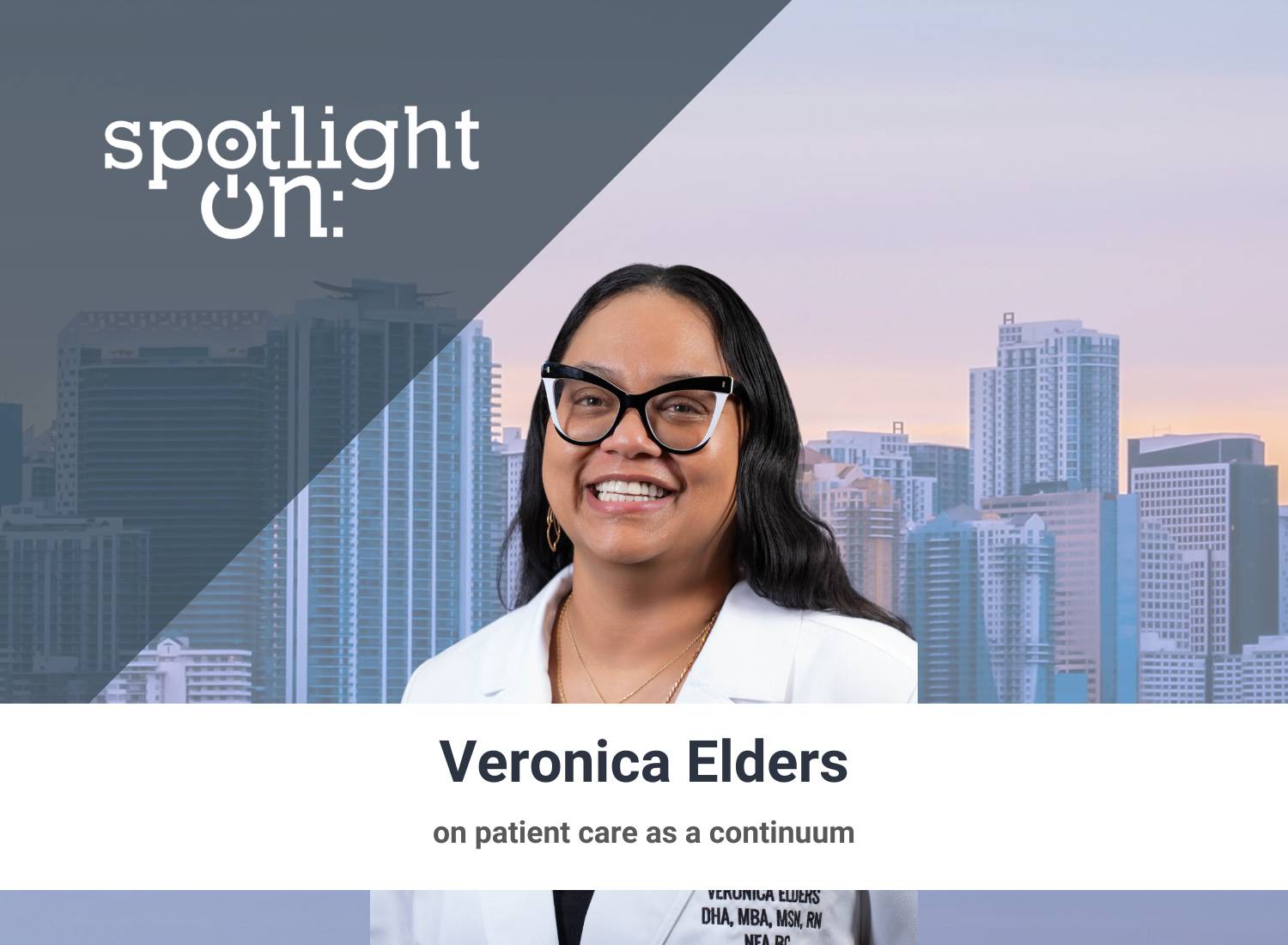
Spotlight On: Veronica Elders, Interim CEO & Chief Nursing Officer, Nashville General Hospital

Veronica_Elders_Spotlight_OnNovember 2025 — In an interview with Invest:, Veronica Elders, interim chief executive officer and chief nursing officer for Nashville General Hospital, said that strengthening community partnerships and improving patient-centered care are central to the hospital’s mission and future strategy. “Nashville General has an incredible mission, but we need people to invest in it. We can’t do it alone. Building those external relationships is one of my top priorities,” she said.

Over the past year, what have been the most significant changes within the hospital, and how do these developments reflect broader trends in healthcare?

Over the past year, two of our biggest milestones were achieving a Leapfrog Grade A in both Fall 2024 and Spring 2025. This accomplishment reflects our commitment to prioritizing patient care, especially care transitions, which is making sure patients fully understand their treatment and how to manage their care at home. We achieved this through strong collaboration with our Community Care team. It was a huge accomplishment for us.

We’ve also experienced significant leadership changes, and I’m honored to now serve as both the interim CEO and chief nursing officer. The reason that Leapfrog Grade A means so much is because when I first became chief nursing officer in February 2020, COVID hit the following month. My first Leapfrog score as CNO was a D — I was devastated. But we steadily improved: from a D to a C and now to an A.

The A score came from us re-evaluating our care model and adapting it to meet our patients’ current needs. I think hospitals everywhere have had to shift toward a more patient-centered, even consumer-driven, model. Patients know what they want and need, and we must respond to that. Only four hospitals in Nashville earned an A, and we were one of them. We’re proud that we’ve maintained that grade over two consecutive reporting periods, even through all the changes we’ve faced.


Join us at caa’s upcoming leadership summits! These premier events bring together hundreds of public and private sector leaders to discuss the challenges and opportunities for businesses and investors. Find the next summit in a city near you!


Could you talk more about the specific clinical or operational strategies that contributed most to recent recognition?

We view patient care as a continuum, not a series of isolated events. For example, when a patient arrives in our emergency department, we ensure that before they leave, they have follow-up appointments scheduled right at the bedside. We do bedside discharge planning in both the ED and inpatient settings. We call this “care transition” because we’re not simply discharging patients, we’re transitioning them to the next appropriate level of care to support their wellness.

Additionally, our Community Care team focuses on long-term needs after discharge. That includes addressing food insecurity, transportation, and housing issues. This patient-centered approach ensures we’re meeting people where they are and supporting them throughout their entire healthcare journey.

How is the hospital adapting its strategy to meet the needs of an increasingly diverse and expanding community, particularly underserved populations?

That’s truly at the core of our mission. We’re committed to serving vulnerable populations, which includes patients with insurance, underinsured individuals, and those without insurance. We treat all patients regardless of their ability to pay.

We’ve adapted by navigating rising operational costs, addressing staffing shortages, and responding to changing patient expectations. One of our most significant approaches has been strengthening community partnerships and expanding access to preventive and primary care services. These steps are crucial to meeting the evolving needs of our community and staying true to our mission.

How are you addressing nurse staffing shortages and retention, especially in a public hospital setting like yours?

Our leadership style emphasizes a sense of community and family. We’re smaller than some larger facilities, which allows us to foster close relationships — many of our nurses I know by name. This sense of connection helps us support one another at the bedside.

We also have a nurse residency program overseen by our Nursing Leadership and Professional Development team. We’ve developed a Clinical Excellence program where experienced nurses mentor new staff. For example, our nursing education team sometimes works full 12-hour shifts alongside frontline staff to better understand their needs and ensure proper patient care. These programs build a supportive, growth-oriented environment.

How is the hospital innovating in nurse education, mentorship, or career development through internal programs or partnerships?

We have numerous clinical affiliations. For example, we offer clinical training opportunities for students from TSU, Vanderbilt, and Vol State Community College. Surgical tech students come from Nashville State Community College. These partnerships allow us to help shape the next generation of caregivers.

We also received a grant from THA (Tennessee Hospital Association) in collaboration with TSU, which supports our own nurses serving as clinical faculty for TSU students. This enhances the students’ experience because they’re learning from professionals already embedded in the hospital’s culture and environment.

I’ve personally taught at Lipscomb and South College, and I can tell you there’s a learning curve when you’re not familiar with the clinical site. Having hospital staff serve as instructors bridges that gap and gives students a much richer experience. We also partner with Belmont for pharmacy student placements. These partnerships are crucial for building a strong healthcare workforce.

What are the most urgent challenges facing public hospitals in Tennessee today?

Safety net hospitals like Nashville General are being hit hard by several issues. Rising costs — for supplies, pharmaceuticals, and general operations — are a major burden. Funding remains a significant challenge, especially due to Tennessee’s reluctance to expand Medicaid, which would help both patients and hospitals like ours.

Staffing shortages are persistent, which strains our ability to provide consistent care. There’s also a shift in patient expectations; people now expect more from their healthcare experience. These combined pressures create a complex environment for safety net hospitals.

How are you positioning the hospital to lead through these challenges?

We’re closely evaluating our financial infrastructure and looking to expand our community partnerships. Strengthening our alignment with the mayor’s office and Meharry Medical College — our academic partner — is a key focus. We’re also exploring public-private partnerships, which have helped other safety net hospitals like Erlanger in Chattanooga and Grady in Atlanta grow and thrive.

Nashville General has an incredible mission, but we need people to invest in it. We can’t do it alone. Building those external relationships is one of my top priorities. It’s the path forward for long-term sustainability and growth.

What are your top strategic priorities for the hospital in the coming years?

Our top priority is expanding community partnerships, which are vital to our survival and success. We’re undergoing a transition and are working to grow our preventive and primary care services in collaboration with Meharry Medical College. The goal is to address health needs early, before they become critical, and to ensure everyone has a reliable place to go for care.

On a personal note, I’m a native Nashvillian. I’ve been in healthcare for 30 years, and Nashville General has always held a special place in my heart. I was once a patient here myself. After 17 years at Vanderbilt, I returned to serve the community that shaped me. To help this hospital move forward, we need strong partnerships with community stakeholders and private entities. That’s how we grow and thrive.

Want more? Read the Invest: Nashville report.

Subscribe to Our Newsletters

"*" indicates required fields

Address*
Would You Like To Receive Our National Newsletter?*
Interests
Markets
This field is hidden when viewing the form