Spotlight On: Jim Allen, CEO, The Jim Allen Group
Key points:
- • The Jim Allen Group emphasizes client-first service, consistent processes, and market expertise across its real estate business.
- • Strong population growth, limited inventory, and economic diversity continue to support the Triangle’s housing market.
- • The firm is helping buyers and businesses navigate growth by leveraging deep local market knowledge.
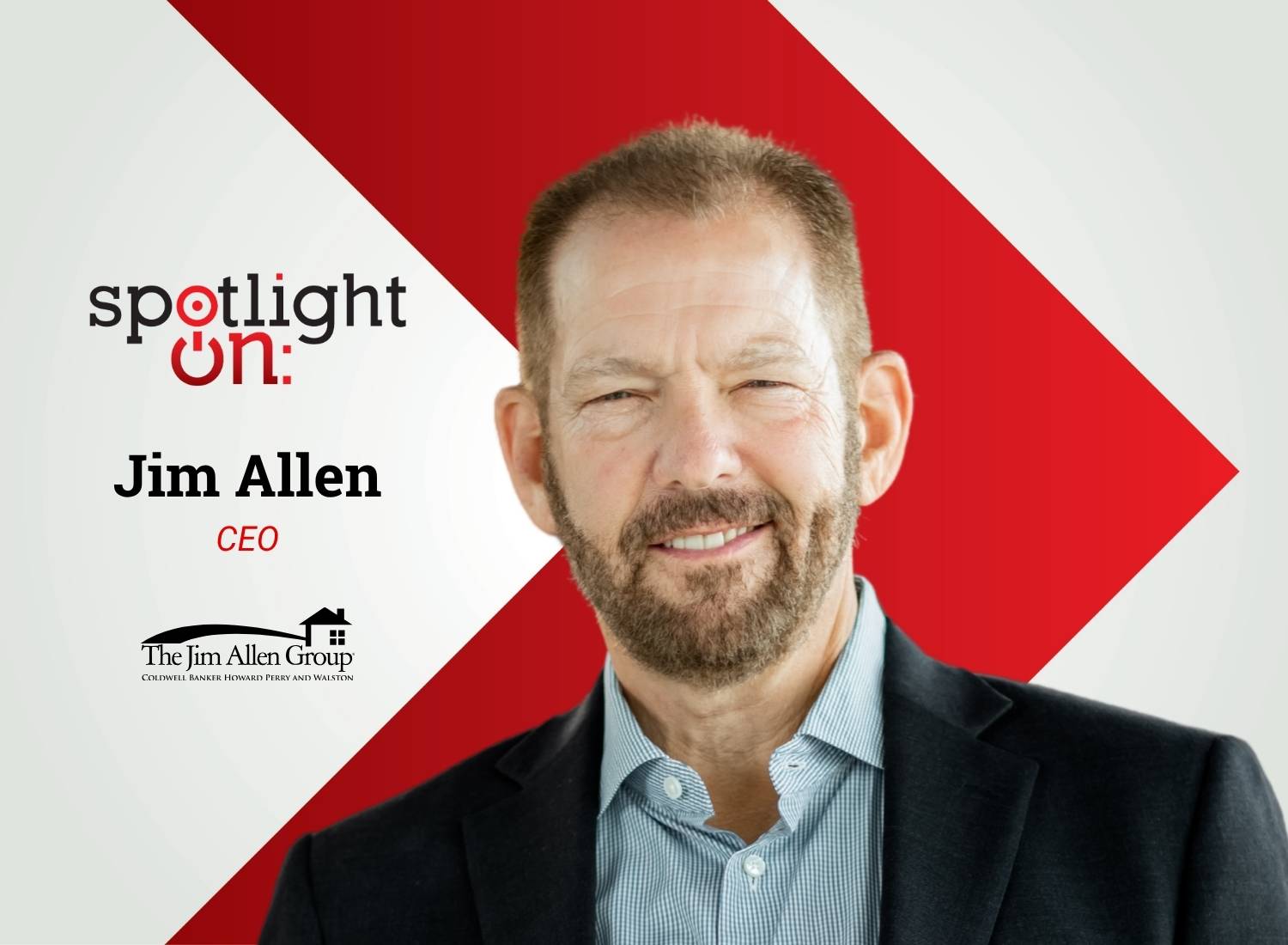 July 2026 — In one of the fastest-growing housing markets in the country, The Jim Allen Group has built its reputation on deep market knowledge, operational consistency, and a client-first philosophy. CEO Jim Allen attributes this success to listening closely to clients, maintaining rigorous internal processes, and anticipating market needs before they emerge. “Our role is to hear what clients are saying and ensure we reflect that in every interaction,” Allen said.
Join us at the Invest: Raleigh-Durham 4th Edition Leadership Summit! This premier event brings together hundreds of Raleigh-Durham’s business and regional leaders to discuss the challenges and opportunities for businesses and investors. Buy your ticket now!
How do you put a client-first philosophy into practice in such a competitive real estate market?
Everything starts with listening to the client. Too many people in this business focus on what they think clients should do instead of understanding what clients actually want. We emphasize that constantly. Every Thursday morning, our entire team meets to go through talking points, review market activity, and reinforce that our job is to make sure their needs are met — not ours. We’re not the purchaser. Our role is to hear what clients are saying and ensure we reflect that in every interaction.
How do you maintain quality and consistency across a team of more than 100 professionals?
Communication and structure. We require every agent and staff member to attend our Thursday meetings from 9 a.m. to 11:30 a.m. We use that time to train, align on market trends, and reinforce our processes. We also have a dedicated closing and listing department. Every transaction runs through those teams, which ensures consistency regardless of who the client is or what price point they’re buying in. Whether someone is purchasing their first starter home or a $10 million estate, we want them to have the same level of care and professionalism. That consistency is one of the reasons people come to us — we don’t need to recruit; people seek us out.
Your team works heavily in both new construction and resale. What is driving activity in each segment right now?
A major part of our business is tied to new construction because my partners and I are among the largest residential developers in the Triangle. We produce a significant share of the lots that fuel new home growth in the Raleigh area. We also do a tremendous amount of urban infill, particularly teardowns, in areas like North Hills, North Ridge, and inside the Beltline. Those markets attract strong demand, and we’re seeing more activity expand into Cary as well.
Urban infill has accelerated because development timelines are long. It can take three to four years to bring new lots to market, and in some cases, much longer. In one municipality, it took 11 years to get a project approved. New state rules have helped streamline certain parts of the process, but development remains a major factor affecting supply.
How do you support first-time buyers or clients who may feel intimidated by the Triangle’s fast-moving market?
Education and access. Because we develop so much of the surrounding area, we have opportunities in outlying markets where USDA loans and 100% financing are available. Our team is extremely knowledgeable about lending, even though we don’t originate mortgages ourselves. We also have two in-house lenders available 24/7 to answer questions. For first-time buyers, confidence is everything. Homeownership is becoming a priority again as rental prices have risen and the build-to-rent trend has shifted. Many of those properties are now returning to the for-sale market, opening up opportunities for buyers who were previously shut out. We focus on helping clients understand their options and feel empowered through the process.
What risks or opportunities are shaping the residential market in Raleigh today?
This year, the Raleigh market has strengthened significantly. Higher interest rates affected the lower tiers last year, but with rates back in the low-6% and high-5% range, demand has normalized. Those rates are still historically low outside of the brief COVID dip. The Triangle’s economy is extremely healthy and diverse, which has supported strong demand across most price points. The upper end of the market, from $2 million to $7–8 million, is the strongest it has ever been. Inventory is incredibly tight, and new high-end homes sell almost as soon as they come to market.
During the Parade of Homes in October last year, we sold five properties priced above $5 million in one week. That level of activity has become normal. The townhome segment also saw some softening due to oversupply and the impact of rental-focused buyers, but it’s stabilizing again as rates improve. Overall, everything above $350,000 remains strong, and inventory above $1 million is extremely limited.
How would you characterize today’s market — is Raleigh currently a buyer’s or seller’s market?
It is still a strong seller’s market. Some buyers make offers below asking because they’re listening to national headlines, but Raleigh doesn’t behave like many other markets. This region continues to attract major employers across pharmaceuticals, technology, manufacturing, distribution, financial services, and more. That economic mix drives population growth and supports demand at every price point. Our only real challenge is managing growth, which brings transportation and traffic considerations. But overall, the fundamentals remain exceptionally strong, and Raleigh continues to be one of the most attractive relocation markets in the country.
How do you keep your team closely aligned with real-time market trends?
Because we’re one of the largest purchasers and developers of land in the Triangle, we see market shifts before they hit the broader market. Every week, I update the team on new neighborhoods, upcoming lot releases, and absorption patterns. The decisions we make on land — how many lots to develop, at what price points, and at what pace — are all based on analyzing demand in each segment. That gives us a clear view of where opportunities are emerging. Producing inventory gives us insights into pricing, absorption rates, timelines, and market needs long before the data shows up elsewhere. That information flows directly to our agents and staff so they can guide clients effectively.
Looking ahead, what should business leaders and prospective employers understand about the region’s growth?
It’s important to understand how housing availability aligns with recruitment. When companies consider the Triangle, their employees need clear information on what price points are available, how fast homes are absorbing, and what commute patterns look like. Raleigh’s growth has expanded the market across more than 20 counties, which helps maintain affordability in certain areas. Distances don’t always equal longer commutes — sometimes a slightly farther location means easier travel because major arteries are more congested. Understanding the region’s sprawl, the diversity of housing stock, and the reach of state government and industry helps companies make better decisions when relocating teams.
Is there anything else community and business leaders should keep in mind as they look at the Triangle’s future?
From a residential standpoint, there are no major negatives in our market right now. Demand is strong, inventory is tight, and the region continues to attract people at all income levels. Commercial office space has been slower to recover, which is true nationally, largely because many companies still don’t require in-person work. For us, culture matters, and that’s why our office is full every day — even on Friday afternoons. The broader takeaway is that Raleigh’s economic diversity and rapid population growth continue to support one of the strongest residential markets in the country.
Want more? Read the Invest: Raleigh-Durham report.