


Spotlight On: Jordan Vexler, CEO of Monterrey Metal Recycling Solutions (MMRS)
Key points:
- • Nearshoring and manufacturing growth are driving demand for recycling and logistics services.
- • MMRS helps companies turn scrap metal into reusable materials that support sustainability goals.
- • Investments in automation and workforce development are helping the company scale with industry demand.
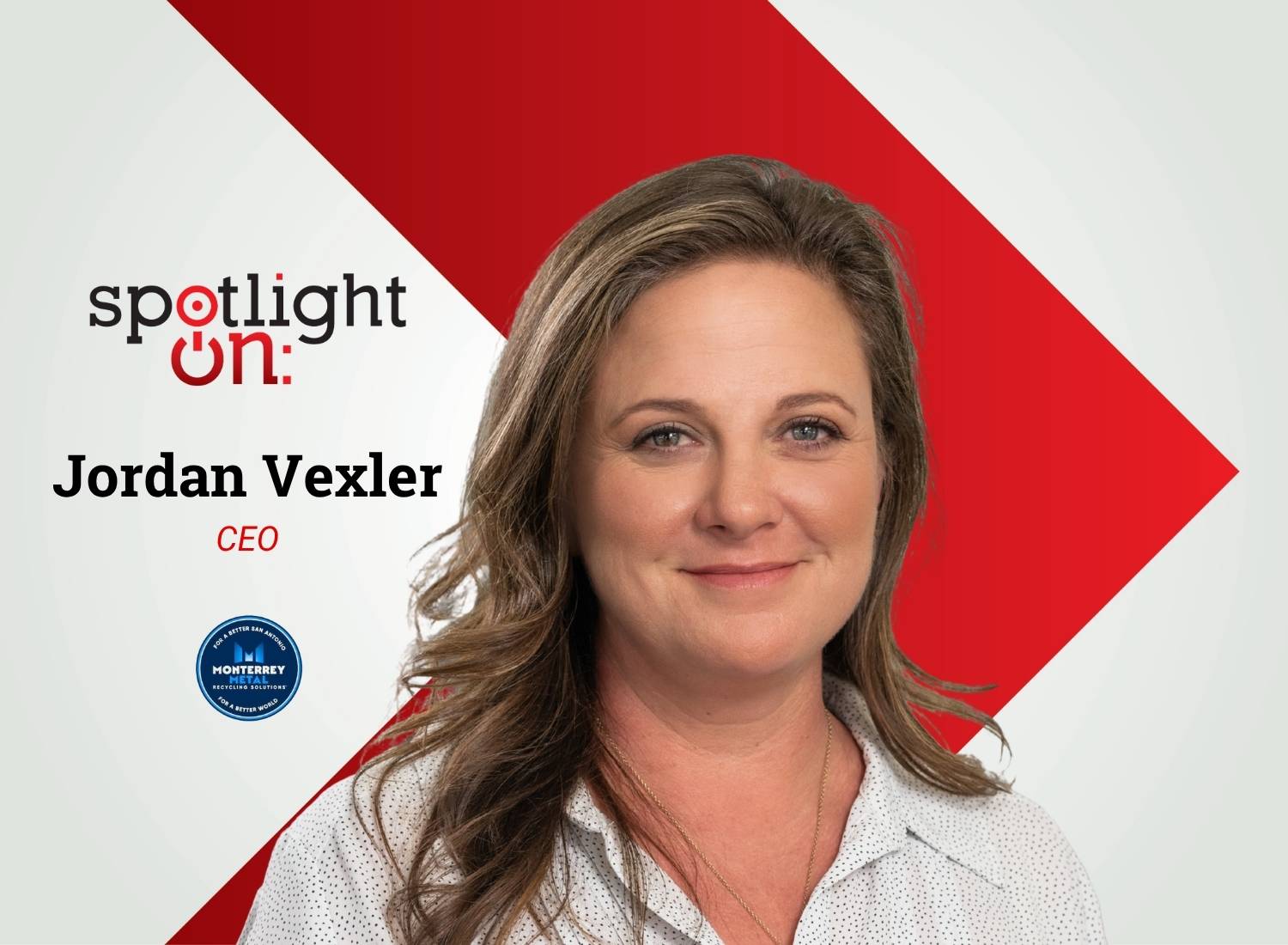 June 2026 — Jordan Vexler, CEO of Monterrey Metal Recycling Solutions (MMRS), spoke with Invest: about the company’s role in supporting manufacturers’ sustainability and efficiency goals, the evolution of recycling technology, and the importance of metal recycling to the circular economy. As a fourth-generation, family-owned San Antonio company, MMRS provides full-service metal recycling, logistics, and transloading support for manufacturers, municipalities, trades, and industrial partners. “Metal recycling is the original form of recycling,” Vexler said.
Join us at caa’s upcoming leadership summits! These premier events bring together hundreds of public and private sector leaders to discuss the challenges and opportunities for businesses and investors. Find the next summit in a city near you!
How has continued growth in San Antonio and Bexar County affected demand for your services?
As more manufacturers move into Texas, there is an increased demand for partners that can support their sustainability goals, logistics efficiency, and responsible material recovery. That is where we play the biggest role.
What we do for our manufacturing partners is sometimes mistaken for waste management, but it is actually recycling. It is about bringing their post-industrial materials back into the circular economy. That makes their waste a commodity that goes right back into domestic manufacturing.
Are companies thinking differently today about recycled metals and sustainability within their operations?
Definitely. Sustainability and operational efficiency increasingly go hand in hand, and companies are realizing that those goals can support one another. Manufacturers today are looking closely at efficiency, waste reduction, and sustainability, and recycling helps accomplish all three.
Monterrey Metal recognizes its role as a sustainability partner, helping manufacturers and industrial customers track and report their sustainability performance.
How has your transloading and rail-connected logistics business evolved, and how important is it to the San Antonio-Monterrey corridor?
Monterrey Transloading Solutions (MTS) operates at Port San Antonio within a Foreign Trade Zone, providing rail-connected logistics support for companies moving products and bulk materials between Mexico, San Antonio, surrounding Texas markets, and other destinations across the United States.
MTS helps companies on both sides of the U.S.-Mexico trade corridor move product more efficiently by offering access to rail, transloading, storage, and local distribution support. For companies in Mexico, it provides a way to move product into Texas and closer to U.S. customers and distributors. For companies in San Antonio and across Texas, it offers additional logistics options for moving materials regionally, nationally, or across the border.
By bringing bulk product closer to the markets it serves, MTS can help reduce unnecessary truck miles, improve delivery efficiency, and give companies more flexibility in how they move materials through the supply chain.
How is nearshoring creating new opportunities for Monterrey Metal and the broader recycling industry?
As manufacturing moves closer to San Antonio, we recognize the need to continue investing in our infrastructure and collection logistics so we can better serve our manufacturing partners. As their efficiency and productivity increase, ours does, too.
As a 110-year-old business, we are proud of our history, but we are equally focused on evolving for the future. We continue to modernize our operations, improve our processes, and invest in the infrastructure needed to serve our manufacturing and industrial partners more efficiently.
How have client expectations evolved when it comes to recycling services, logistics support, and responsiveness?
As our customers grow, we must scale our operations to keep pace. As their production ramps up, that generally leads to higher volumes of scrap metal, which requires enhanced attention to logistics for us to service their facilities, as well as increased productivity on the demanufacturing side.
As volumes increase, we also need to increase our throughput and efficiencies. It is the downstream effect of responsiveness. The sustainability goals of manufacturers and industrial partners also require us to be a very responsible environmental partner.
We are also able to provide the reporting needed to support their sustainability initiatives.
What technologies are having the biggest impact on efficiency in your operations?
I am always looking at implementing new technologies. I wish robots were already a thing in our industry, but they still are not. However, people are always very surprised to see the level of automation we already have.
All of our operators are pretty much behind a computer. They are watching our production reporting on screens, and our motors are reading into motor control centers. We hardly touch a piece of metal with our hands. It is highly automated.
People are amazed to see the different applications of magnets and what magnets and different currents can do. Our industry is also looking toward X-ray and laser technology for alloy identification, in order to upgrade materials and keep a lot of alloyed materials in the domestic market, responding to the nearshoring push.
As the industry becomes more technology-driven, how are your workforce needs changing?
I would highlight Alamo Community Colleges and their role in responding to exactly that. The majority of our employees are products of the Alamo Community Colleges system, and I think they do a great job providing a workforce that is ready to be responsive to the needs of today.
Digital literacy, including the ability to use computers, smartphones, and workplace applications, is increasingly important. The Alamo Community Colleges system is a great partner in providing that workforce.
In terms of education, we believe environmental awareness starts with education, which is why our community outreach with our school partners is so important. We believe the inspiration behind recycling starts young, and many of our employees feel a strong dedication to the stewardship and responsibility we have in this ecosystem.
How do you think education shapes public understanding of recycling?
Often in households that do not recycle, it is the children who inspire a household to change. Too often, that awareness diminishes as we get older.
There is also some disbelief in recycling that has to do more with waste management and the single-stream recycling we see in our households. There has been some bad press when it comes to single-stream recycling.
Metal recycling operates separately from that system. We existed long before single-stream recycling. In fact, we existed before there were even plastic bottles in the world. Metal recycling is the original form of recycling.
One aluminum can goes back into making one aluminum can, so it is a one-to-one correlation in many scenarios. At the end of the day, we are reducing the need for mining raw materials. Through Monterrey’s investment in our equipment, we can create such high-quality post-recycled materials that they go back into a raw commodity stream. That level of processing capacity and material quality is one of the ways Monterrey distinguishes itself in the region.
What misconceptions remain about metal recycling and its role in manufacturing and economic growth?
Our industry might not always be highly visible, but it plays a critical role in supporting manufacturing sustainability and economic development. We are a significant employer and an important part of the manufacturing ecosystem in South Texas.
We create circularity that goes right back into making brand-new steel, brand-new aluminum, and brand-new products that go into our infrastructure. We are often not seen as that connecting link, but we feel it every day.
It is also overlooked that we are creating a commodity that is traded throughout the world and domestically. While we support manufacturing and infrastructure development domestically, we also have a role throughout the world. On any given day, I could be in touch with at least 10 different countries.
Where do you see the biggest opportunities for Monterrey over the next few years?
Our priorities are to always serve our manufacturing and industrial partners better and create partnerships with them in sustainability and stewardship.
We have already spoken about the potential new technologies we might be able to integrate in order to produce additional raw recycled materials. That will continue to be important as manufacturers focus on sustainability and as the recycling industry continues to modernize.
What are the primary streams of material that Monterrey works with?
Our primary streams of material are ferrous materials, such as steel. That could be I-beams and rebar. Mostly, it comes out of our infrastructure, and it is generally inside things we do not even see, inside our roads and buildings. Monterrey also reclaims post-industrial and post-consumer metals, which helps keep valuable material in circulation.
We also see aluminum, such as aluminum signs, all over our highways. Aluminum cans are a very obvious source. We see a lot of stainless steel from industrial kitchens, and a lot of copper that comes from electrical contractors and plumbers.
We are partners with all the tradesmen, including HVAC, plumbing, electrical, and construction. There are a lot of end-of-life materials coming out of projects, and there are also the snips and clips that create the scraps we are able to give value to.
Is there anything else you would like to emphasize about Monterrey Metal’s role in the circular economy?
For every ton of recycled material, that is one less ton going to a landfill. But in addition, it is a multiplying factor. It is not only staying away from landfills but also going right back into domestic or international manufacturing to support our infrastructure.
Want more? Read the Invest: San Antonio report.






