
Spotlight On: Kevin Franklin, President, Randolph County Economic Development Corporation
Key points:
- • Advanced manufacturing is reshaping Randolph County’s economy.
- • Workforce and infrastructure remain critical to future growth.
- • Supporting existing businesses is central to long-term prosperity.
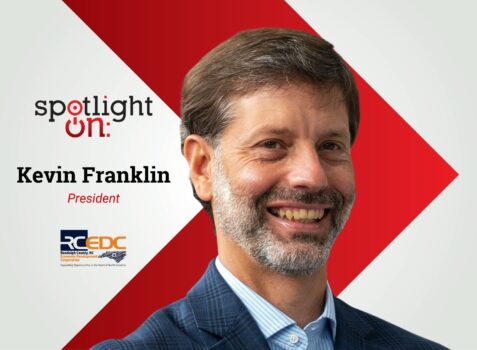 September 2026 — In an interview with Invest:, Kevin Franklin, president of Randolph County Economic Development Corporation, discussed the county’s transition from legacy industries to advanced manufacturing, the infrastructure needed to support future development, and the growing importance of workforce preparation. The conversation emphasized that existing businesses remain central to the county’s economic success while regional collaboration strengthens its appeal to new employers. “Those jobs open doors, they open opportunities, and people appreciate that,” Franklin said.
Join us at the Invest: Raleigh-Durham 4th Edition Leadership Summit! This premier event brings together hundreds of Raleigh-Durham’s business and regional leaders to discuss the challenges and opportunities for businesses and investors. Buy your ticket now!
What changes over the past year have had the greatest impact on Randolph County’s economic development landscape, and how are they shaping your priorities?
Water and sewer infrastructure development is becoming more of a priority across the county. The county has plans and is working on extensions, particularly for water distribution. Without water and wastewater infrastructure, industrial development does not take place.
Planning has been underway for several years, and we are starting to see that work implemented. We still have more years of implementation and partnerships ahead, but these infrastructure improvements are going to open more opportunities for business growth in our community over the coming decade.
How have ongoing market changes affected the county’s economy?
Randolph County was traditionally a textile, furniture, and tobacco community. We have not moved completely away from those industries, but we have experienced significant changes over approximately the past 20 years. Even during the last couple of years, we have seen substantial job losses, particularly in the furniture industry.
What we are seeing now is a transitioning economy. We are moving away from some of those legacy industries and beginning to experience growth in advanced manufacturing. One prominent example is Toyota, which announced in late 2021 that it would build its battery manufacturing operation in our community. Of its approximately $14 billion in announced investment, the company probably has $4 billion or $5 billion on the ground now and about 3,000 jobs on-site.
Toyota is the largest and most visible example, but other businesses have also been coming into the community on a smaller scale, and they are no less important. We have been able to productively manage the transition from legacy industries toward advanced manufacturing opportunities. These projects bring significant capital investment and, more importantly, better-paying jobs with stronger benefits. Those elements are important to improving quality of life throughout the community.
What conditions do existing employers need to remain competitive, expand locally and continue investing in the community?
The biggest issue we hear about from employers right now is workforce. They want to know whether we have the workers they need and whether potential employees possess the necessary skills. It is workforce, workforce, workforce.
We need to determine whether those workers are already here and whether we can develop them locally. We also must ensure that young people and their families understand the opportunities available to them. Can we grow our own labor force? Can we retain young people in our community while attracting others to come here? Workforce remains the key.
What lessons can Randolph County apply to future business recruitment and redevelopment efforts?
One lesson we have learned is that cooperation and collaboration, including across community boundaries, are extremely important. Randolph County is geographically large and relatively rural, without a huge population. We need to emphasize that we are part of the Greensboro market, where there are more people, a recognizable name, and an international airport.
Companies considering our community need to understand that the opportunity is not limited to Randolph County. We are part of a broader region with a great deal to offer. Randolph County also has significant advantages, but not everyone wants to live in a rural community. Someone can live in Greensboro, enjoy the amenities of a medium-sized city, and commute to work in Randolph County.
Alternatively, people can live in a more rural setting, have access to those regional amenities, and enjoy a high quality of life and a lower cost of living while working and living in the same community. Both options work, and presenting that complete regional picture strengthens our ability to attract investment and talent.
What are the organization’s top priorities for the next three to five years?
We are beginning the fourth year of our current strategic plan and starting work on our next five-year plan, so we are discussing these priorities frequently. One of our leading priorities remains ensuring that existing businesses understand that we want them here and can provide resources and connections to help them succeed.
For example, a business leader recently told us that the company focuses every day on making its products and is not always aware of resources that could help train its employees. We need to be relentless in helping the business community understand what resources are available to support its workforce.
Our focus must be on providing the resources existing industries need to remain successful and thrive. Most job creation and new investment in any community during a given year come from companies already operating there. We still need to recruit new businesses, attract investment and continue diversifying the local economy, but supporting the industries that are already here is a top priority.
What would meaningful economic progress look like for Randolph County’s residents and businesses?
When we talk about bringing a new business into the community or helping an existing company expand, I think about greater earning power for residents. That may mean someone who previously lacked reliable transportation can now afford a dependable vehicle that allows that person to continue getting to and from work without worrying about breaking down.
It can also translate into potential homeownership. Generational wealth transfer begins with homeownership, and a better job with stronger benefits may allow someone to move from renting to building equity in property.
Many of our manufacturers also provide tuition reimbursement. Not everyone needs a four-year degree, but community college can play an important role. In a rural community that has often had lower wages and incomes, someone may want a college education but be unable to afford it. A new job with the right company can provide tuition reimbursement and help make that education possible. It may take additional time or require a more difficult path, but it opens doors.
Those jobs open doors, they open opportunities, and people appreciate that. They then tend to become more engaged in the community and give back, which raises the overall quality of life. Those are the outcomes I consider when we discuss job creation and what it truly means for a community.
Looking ahead, what principles are guiding your vision for the community’s long-term future?
We have discussed supporting existing industries and the importance of workforce, but ultimately, this work is about helping people’s dreams come true. It comes down to the individual and whether we can leave the community better than we found it and make a positive difference.
We need to make decisions today that will have a positive impact 20 years from now. I do not want people to look back two decades from now and say that the leaders of this period missed an opportunity. I want to be part of an organization that makes forward-looking decisions so that the people who come after us can be grateful that we left the community in better shape than we found it.
Want more? Read the Invest: Raleigh-Durham report.