Spotlight On: Salim Chraibi, CEO, Bluenest Development
Key points:
- • Bluenest is expanding attainable homeownership through incentives, vertical integration, and workforce-focused housing.
- • Land constraints, environmental approvals, and high interest rates remain the biggest barriers to scaling development.
- • The company plans to grow across South Florida while delivering high-quality homes at attainable price points.
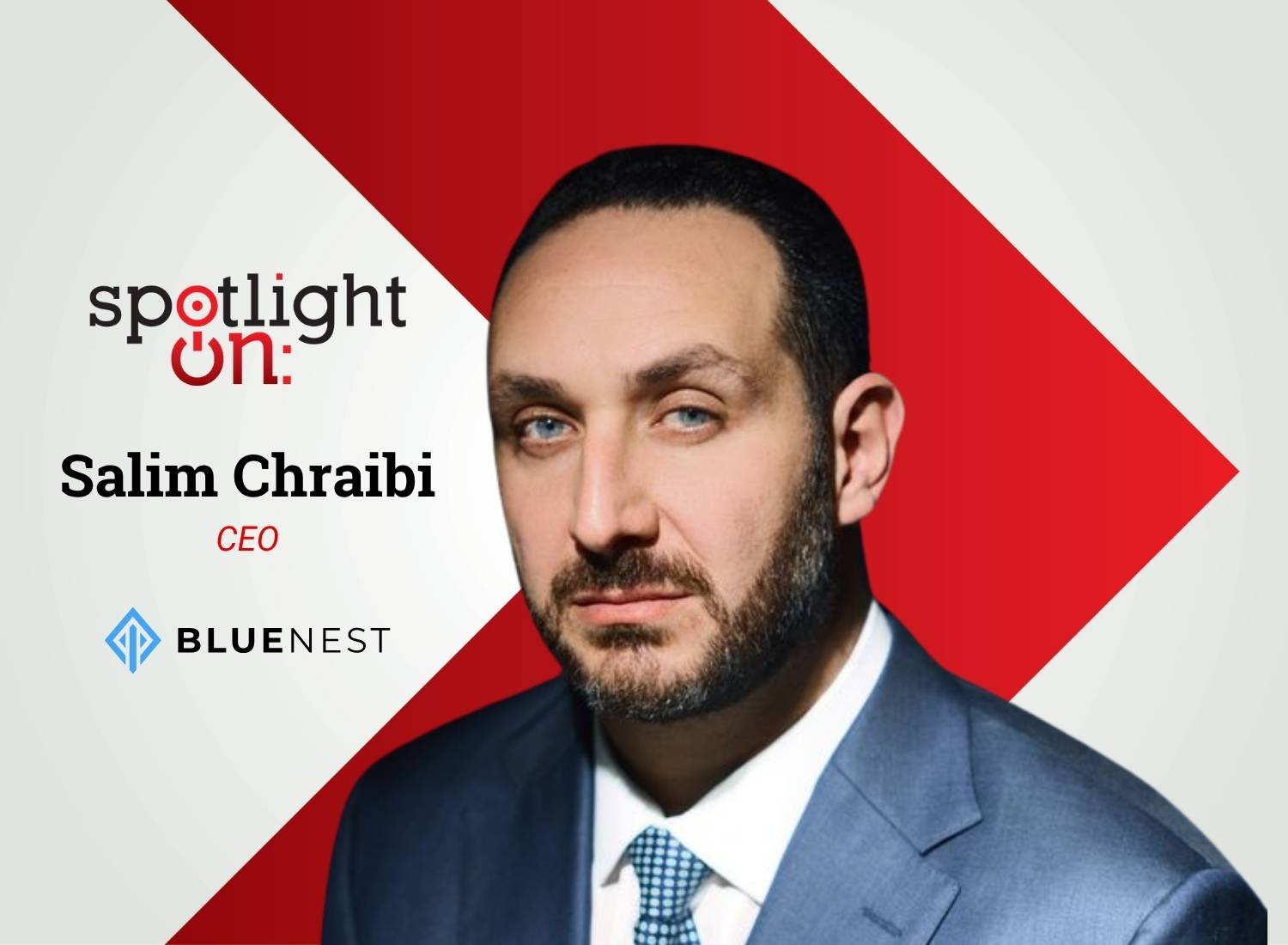 July 2026 — Invest: sat down with Salim Chraibi, CEO of Bluenest Development, to discuss attainable homeownership in Miami, the company’s vertically integrated model, and the barriers to scaling workforce housing. “We still need our workers, our local population, our workforce to remain in the city; otherwise, we’re not going to have the city,” Chraibi said.
Join us at the Invest: Miami 11th Edition Leadership Summit! This premier event brings together hundreds of Miami’s business and regional leaders to discuss the challenges and opportunities for businesses and investors. Buy your ticket now!
What does attainable homeownership mean in practice at Bluenest Development, and how does that shape your pricing and product strategy today?
First, you need to understand the buyer. It is a buyer who is buying a home with a monthly payment. What we are trying to do is make the purchase of a home cheaper than it would be to rent that same home. A three-bedroom in Miami today, in the areas where we build, rents for around $3,500 a month. We are trying to bring a payment, inclusive of everything, to around $2,600 to $2,900. For that to happen, the house has to be priced around $400,000.
Because interest rates are so high right now, we buy down the rate. If you buy a home from Bluenest, we will spend around $30,000 to lower your interest rate. We also work with different programs where the buyer only has to come out of pocket 1%. So the buyer puts around $4,500 down, and then we get them a second and a third mortgage. The second mortgage is 2% fixed for 30 years, and the third mortgage is 0% interest. If you live in the house for over 15 years, it is fully forgivable.
At the end of the day, it always comes down to how much money buyers have to put out as a down payment and how much they pay a month. For a couple making $50,000 or $60,000 each, saving for a 20% down payment on a $400,000 home is almost impossible in Miami. Everything is expensive. What we are trying to do is help buyers get into a home faster by working on those down payments and incentives. This is what we mean by attainable.
How does Bluenest’s vertically integrated model help you deliver homes faster and at a lower cost?
We would not be able to do it if we were not vertically integrated. If we had to hire third-party vendors, general contractors, and outside prime contractors, it would be too costly to bring the product to market. This is a product where you need to be careful and really control costs.
Land acquisition is key, and being able to rezone land is important because you need to start the project with some equity in the deal, with a cushion. After that, building the properties in-house is what allows us not only to control cost but also to control quality.
We looked at what matters most to our buyers on a $450,000 home. They want quartz countertops, tall kitchen cabinets, impact windows and doors. So we decided to include everything inside the package. There are different packages to choose from, but there are no real upgrades because the product is already upgraded. We have large-size tile, high ceilings, impact windows and doors; it’s an upgraded product.
Instead of making people add those features one by one, we include them in the price and gain efficiency by being faster, stocking more materials, and buying those materials in larger quantities. That is where we gain efficiency. We have an elevated product for the price, and we are proud of what we build.
How do you balance density, design, and community integration so neighborhoods are both livable and economically viable?
We have a project in mind right now in a single-family area. To be respectful of the neighborhood, we created a buffer. First, we created a 10-foot park buffer around the development. After that, we created a single-family buffer with homes that are going to sell for over $1 million. Then, inside, we will create townhomes.
As you drive around the neighborhood, it looks exactly the same because you see large single-family homes on the perimeter, but inside, you are also meeting the demand for townhomes at a lower price point. That achieves two things. You are respectful of the area where you are building, and you are also meeting the need for workforce housing.
On top of that, you are creating housing diversity and social diversity. We have seen what happens when there is no integration, no housing diversity, and no socioeconomic diversity. It is not good long term. This is not low-income housing; this is workforce housing, and having workforce housing with move-up homes is something that can live really well together.
Meeting that need is important because last year we lost 40,000 people to out-migration. People cannot afford to live in Miami anymore. Their rents keep going up. It is good that we have seen an influx of billionaires, but we still need our workers, our local population, our workforce to remain in the city; otherwise, we’re not going to have the city.
What does scaling workforce housing look like in practice, and what are the biggest challenges to doing it at volume in Miami-Dade?
The No. 1 challenge in Miami is land. Land is the main constraint in Miami-Dade. We are capped on the east by the water, on the west by the Everglades, and by the urban development boundary, so land is really the main challenge.
No. 2 is environmental. Most of the land that is left is in South Dade, and a lot of it used to be used for agricultural purposes. That means dealing with environmental agencies before you can start building, clearing contamination, and going through a lengthy and costly process.
Our buyers are also sensitive to interest rates. A year and a half ago, we did not need to give $30,000 in incentives because people were qualifying. Today, the demand is still there, maybe even stronger, but people cannot qualify for a mortgage because interest rates are at 6.5%. That is why we have to spend a lot of money buying the rate down so people can qualify. The demand did not go anywhere. We still need 5 million homes in this country. People just cannot qualify.
In Miami-Dade, we need about 90,000 homes. If people cannot qualify, then you have to help them qualify, and incentives are playing a huge role for us. That is an extra cost today, around $30,000 per unit, just to get people into a position where they can buy a home.
What policy changes would have the biggest impact on accelerating housing development in the region?
For us, environmental regulation is the biggest one. There are things that should be done in a faster, more streamlined way. We see the same case scenarios over and over, and some of them should be rubber-stamp approvals, but instead, they can take a year.
A lot of people are dealing with that. These are regulatory issues, especially on the environmental side, that should be much simpler. That would help accelerate development and help make a bigger dent in the housing issue.
How do your partnerships with lenders and financing programs expand access to homeownership for buyers who might otherwise be priced out of the market?
Those partnerships are essential. On a $450,000 home, if you get a conventional loan today, you may have to put 20% down plus closing costs, which means around $100,000 to buy that home. For a household making $140,000 a year before tax, with two kids, that kind of money can take many years to save, especially in today’s Miami market.
You need to look at how much people can put down and how much they can pay monthly. Without these programs, many of these buyers would not be able to buy a home. We have people buying homes with $3,000 or $4,000 down, and the monthly payment on our homes can still come in around $2,600 to $2,800. So the monthly payment and how much they need to bring out of pocket are essential.
What is your vision for Bluenest Development over the next few years?
Our short-term goal is to deliver 1,000 homes by 2028. We are already looking to expand into Broward and Palm Beach because this is not just a Miami problem. It is a South Florida problem, and maybe even a Florida problem.
What we are trying to do is build a brand and a quality product so that if you have a budget between $400,000 and $500,000, we are the first developer you think of. We want people to say, “Let’s see what Bluenest has available right now before we look anywhere else, because this is the best product we can get for the money.”
We could build a cheaper, lower-quality product, but we choose not to. We want to build something that meets a real demand while also being a quality home. We are trying to create a product with elevated finishes, something people can truly be proud to own.
Want more? Read the Invest: Miami report.