Unlocking business potential: The case for more women leaders

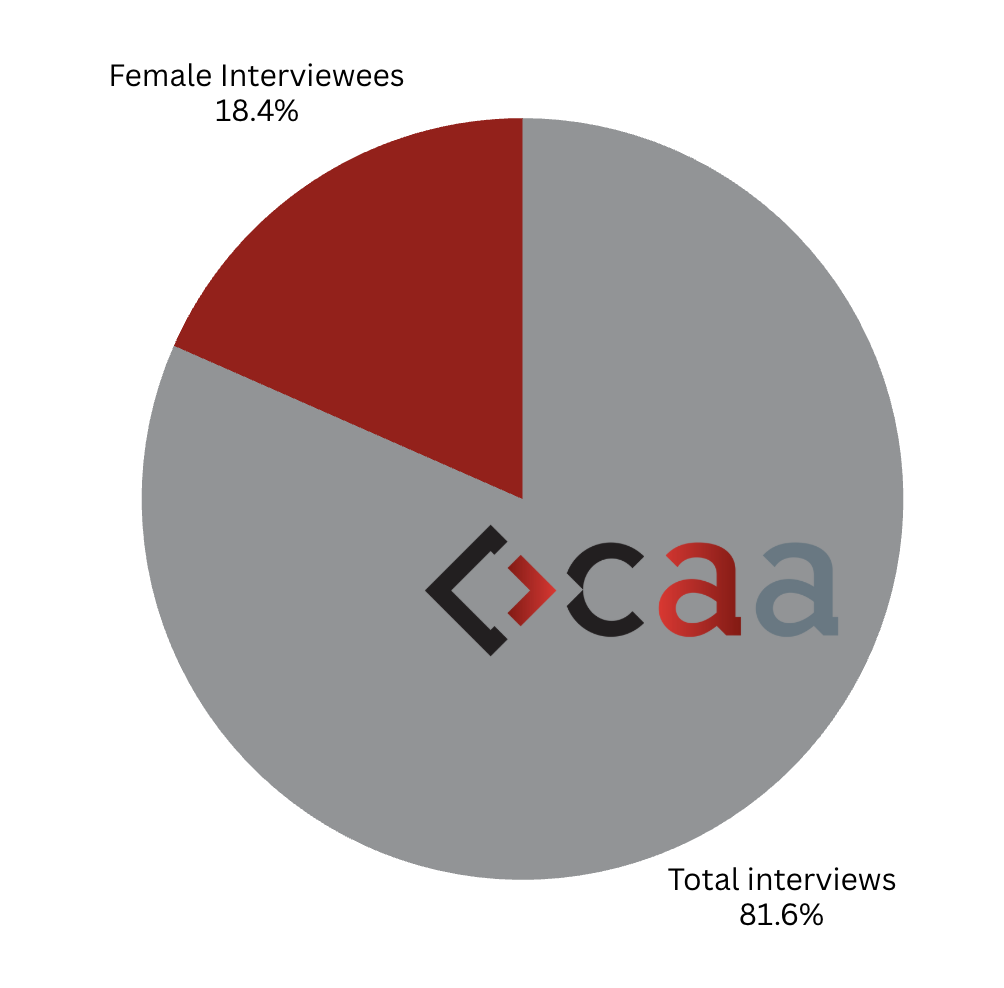
18.43%.
This is the percentage of women featured in published interviews across the entirety of the caa library over the past 10 years. 18.43%.
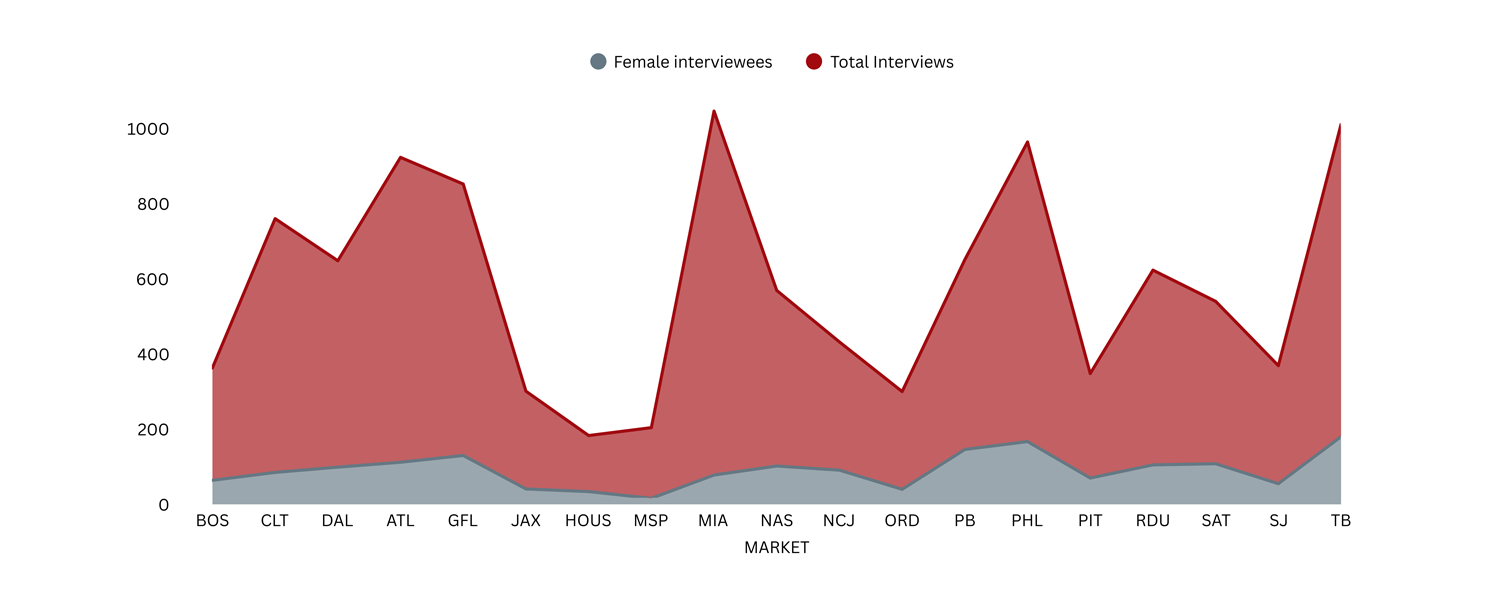
Let me back it up a second. At caa, we produce business reviews on 18 different markets within the United States. To do our research, we interview between 200 to 300 CEOs each year in each market to compile their thoughts across all different sectors, both private and public, and provide the most accurate reflection of what are the investment opportunities and challenges for that particular year. We speak with CEOs because our end-user is the C-Suite. Our readers range from interested investors to hedge funds, private equity, and business leaders who are either growing within the metro areas that we cover, or expanding to those areas and trying to decide which geographic location is right for them.
When we attack coverage within a market, we reach out to small and large companies alike, requesting interviews with one specific position: the CEO.
That is why that 18.43% is so alarming for me.
Most media focuses on how Fortune 500 companies are run predominantly by men. As of 2024, only 10.6% of Fortune 500 companies were run by women. But when I consider the research that we do, Fortune 500 companies make up a small fraction of our interviewees. In fact, based on the definition of a small and medium sized company by the SBA, 99.9% of businesses in the United States are indeed small and medium enterprises. So, while 18.43% is greater than the 10.4% of exclusively Fortune 500 companies, this number is far more important to me as it is a reflection of our overall business ecosystem as a country, and an undeniable head shake to all the changes that still must happen in our professional world.
It is already well established that women make companies more efficient, productive and profitable. No matter where you stand on the gender divide, why wouldn’t all companies want this?
Removing hot-button political debates on universal childcare or maternity and paternity leave, tax benefits to support young families, and traditional gender roles, I have two messages that I think could bring more immediate changes.
First, to my women leaders today and tomorrow:
I was reminded of a predominantly male way of thinking while watching the most recent season of The White Lotus after Patrick Schwarzenegger’s character gets turned down twice by two different groups of women. He turned to his brother and said without worry but with total confidence and a huge grin: Listen, Lotchey: It’s a number game.
Women, let’s play the numbers game! The more we think that it has to be this job or this promotion, the more we put our emotional eggs in one basket.
First: We must continue to put ourselves out there for the next step. Speaking from my own experience, I was simultaneously taught gender norms while being told I could be anyone and anything I wanted to be. I struggled to understand when I was “aloud“ to lead or speak up. Many times I knew it was right for me to take charge, but I didn’t. I wanted to be the “good girl,” to wait my turn until someone told me it was okay to move forward. I also often assumed the opportunity at hand was for a man. At the same time, I had an inner voice fighting these assumptions and telling me to “do it anyways.”
Second: You will never be ready. So do it now! Studies have shown that men will put their hat in the ring for a job where they meet 20% of the job requirements. Meanwhile, women will wait until they are closer to 100% of the requirements. Don’t miss your opportunity. Apply to that position!
Because, third: What’s the worst that could happen? You get turned down and now have the opportunity to either 1. learn and grow and be better at your current role, or 2. leave, and get a new, bigger job where you can step into your leadership.
If this resonates, you are worthy, you are ready. Go for that promotion, raise your hand for the next step. Trust yourself. Let’s play the numbers game without self doubt or fear. Without holding onto the results. We have room to grow collectively and with just 18.43% of us leading small and medium enterprises, there’s a lot of room to grow.
And then to companies, big and small, all across the United States: Utilize your female workforce better. Knowing that your company could be more efficient, productive and profitable: why wouldn’t you?
When I look at my own company, I am continually inspired by my female leadership. Now, this is not to say that my male leaders are not also inspirational: they are! But in this article, I am addressing the 18.43%.
For example, my sales manager is an absolute powerhouse. I have watched her transform her department in less than a year from incohesive to a smoothly running machine. From inconsistent sales numbers to knocking it out of the park each and every month. She puts her emotional intelligence to the test each and every day, rising up and coaching each person she works with to get them to the next level. On top of that, she’s a dedicated mother of two who navigates school systems, holidays, and extracurricular activities with grace.
In addition, one of my two senior editors is another huge source of inspiration. I watch her mentor her staff while holding them accountable and never babying them along. She teaches them to fish rather than feeding them each day. I have also watched her time and time again try something new and get out of her comfort zone. She is an inspiration to me and her team.
To think about underutilizing these women would be a tragedy to my company and the teams they work with.
And so I ask you:
What women are on your team and how are you underutilizing them?
Who should you motivate to go for that next promotion?
Who is a gem that you are letting fall through the cracks?
What can you do to create a more equitable environment?
What is the cost of not lifting up your potential of tomorrow?
Find them. Foster their talents. Allow them to take the next step. But as business leaders we must also know that while women might not always raise their hands, that does not mean they are not ready. Sometimes it is up to us to open the door so that they can walk through it. Let’s open more doors and make all American businesses rise because of it.