

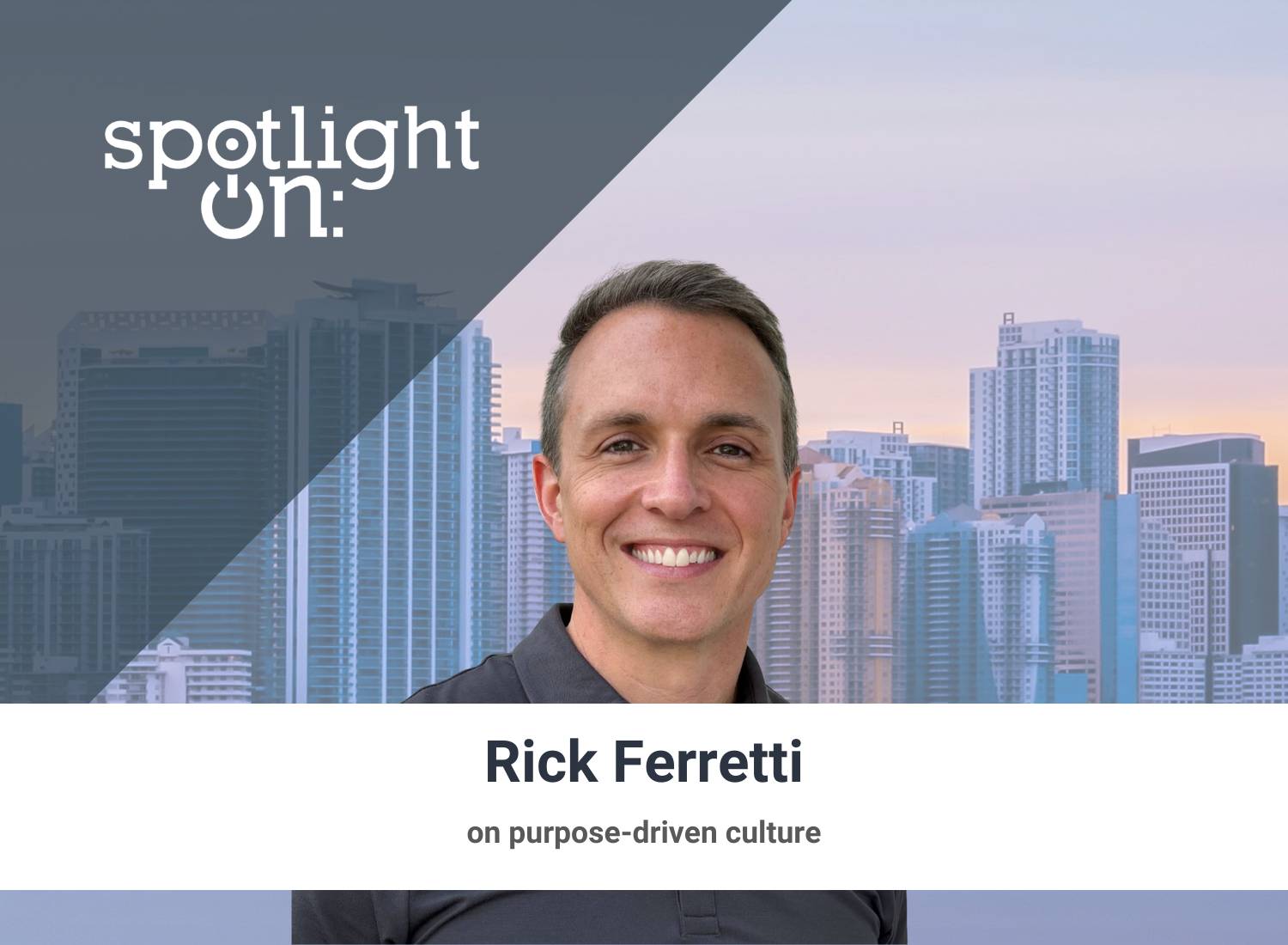
Spotlight On: Rick Ferretti, Founder & CEO, Ferretti Search

Rick_Ferretti_Spotlight_onDecember 2025 — In an interview with Invest:, Rick Ferretti, founder and CEO of Ferretti Search, highlighted the firm’s 30% headcount growth following expansion into South Carolina and Ohio. Fintech and professional services remain key demand drivers, while Charlotte anchors the firm’s national footprint. “We consistently fill over 50% of roles,” Ferretti noted, attributing success to veteran talent, AI adoption, and a purpose-driven culture.


Join us at caa’s upcoming leadership summits! These premier events bring together hundreds of public and private sector leaders to discuss the challenges and opportunities for businesses and investors. Find the next summit in a city near you!


What changes have shaped Ferretti Search this year?

A couple of things come to mind. We expanded our presence in South Carolina and the Midwest. These decisions were aligned with efforts to support our clients’ needs, which continue to grow outside of the Greater Charlotte area. 

In addition, we’ve made a deliberate investment in our business development efforts. We recognize the economy has shifted over the past year or two, and we’ve taken a proactive and agile approach. If certain client segments have decreased or diminished hiring needs, we’ve shifted resources and focus on others with a stronger and more persistent demand in our focus markets. This approach ensures our continued relevance and success, regardless of economic headwinds.

Which industries are driving the most demand?

From our perspective, the strongest demand from our clients has been in fintech. Fintech continues to see double-digit growth, and we don’t expect that to slow anytime soon. Corporate services and professional services continue to be a core and defining part of our platform. We also continue to see consistent and robust demand within various markets in traditional technology, accounting and finance, and manufacturing and operations, especially in our Ohio and Charlotte offices. These areas have helped define our brand and allowed us to specialize in supporting our clients.

What makes Charlotte stand out?

Ferretti Search was built on the shoulders of the Charlotte market, and it continues to be a cornerstone of our success. It consistently ranks as one of the top cities in the country to live and work by offering cost-effective living and real career growth. Many companies have identified this market for future headquarters or expansion. Fifty percent of our client companies are international businesses that have chosen the Greater Charlotte area as a hub for their U.S. operations or a strategic expansion point. I’ve collaborated with business leaders, economic development and the chamber to successfully position Charlotte against competitors like Atlanta, winning over an overwhelming percentage of those opportunities. 

It often comes down to cost of living, the strength of the talent pool, quality of higher education and the overall resources available. Charlotte offers a marketable salary and a clear path for expansion. As a leader, I endeavor to stay ahead of economic development trends, that way, we grow along with them. We’re seeing a continued influx of capital and talent from the Northeast and West Coast into this market. As our clients grow, we grow with them. It’s incredibly exciting to be an essential part of that journey, and even more rewarding to witness those companies thrive over time.

What are candidates looking for today?

Remote and hybrid positions are still of interest, but maybe not as dominant as people think. According to SHRM, only 17% to 18% of job seekers prioritize this. From our end, our clients request our support for remote positions in one out of every 30 positions. Most clients prefer to have talent on-site. 

Hiring timelines have significantly extended, doubling from an average of two to four weeks to four to eight weeks. This shift reflects a more calculated approach from clients, who are now prioritizing long-term planning in their recruitment strategies. Candidates are also evolving their priorities. Beyond salary and job title, they are increasingly seeking purpose-driven organizations that align with their personal and professional aspirations. This includes a demand for growth opportunities, training programs, and a strong cultural fit within the workplace.

How has the economy influenced hiring this year?

Heading into Q4, most recruiting and staffing firms like ours will see a slowdown in direct hire and executive search roles. That’s partly because many C-suite positions are tied to annual bonuses, so people aren’t looking to make a move right now. But what we do see is a spike in contract and staffing needs.

Many companies are hiring now in anticipation of headcount growth in 2026. In Q1, we filled 80% direct hire and 20% contract. Now in Q3, it’s flipped; 60% of the roles we’re filling are contract. So that’s tripled in just six months. Top talent is still out there, but they’re not just looking for a job; they want a purpose. They want to know the “why.” It’s not just about whether they have the skillset, but whether the company offers the right training, culture, and long-term value.

How is Ferretti Search investing in the development of its internal team?

The average recruiting firm fills about 20% of its roles. We consistently fill over 50%. A lot of that success comes down to our internal team. We hire veterans in the industry, people with eight to 15 years of experience. When we hire someone who is newer in their career, I personally, along with our experienced team, provide hands-on training over a 12-month period. This industry is hard to navigate without guidance, so we make that investment up front to ensure long-term success. I am a strong believer that “every day is a school day” – there is always more to learn, especially in a changing market and environment. 

In what ways are you leveraging technology, including AI, to improve operations?

Right now, AI makes up about 30% of our overall tech usage, and that number has grown. Several of our existing platforms have added AI technology, and we’ve embraced it. With AI and analytics, we can move much faster in identifying talent, and we can also be more transparent.

I believe the human element will always be essential to the best recruiting process; judgment is needed to make sure the candidate, their skillset, and what the client is looking for, are aligned. But when we start a search, we’re often reviewing thousands of resumes. AI helps us move through that initial phase more efficiently. From the candidate side, the experience is digital-first now. They appreciate being able to push out resumes quickly. But for us, high-touch still matters. That personal connection is key to success and building long-term relationships.

What drives your continued commitment to Charlotte and its business community?

I’ve always had a lot of passion and dedication to this market. Staying involved with local organizations gives our team visibility and allows us to provide insights on talent trends. We’re constantly partnering with local organizations and companies that help identify strong candidates who are in transition. I’m always grateful when they think of us. Referrals in the recruiting industry are key. It gives us a chance to build relationships, make connections, and always be next. Some of those candidates end up becoming long-term clients. It’s a cycle that plays out over time. Sometimes it’s a referral this year, sometimes it’s a placed candidate three years from now.

Either way, we stay engaged and open. Whether companies partner with us or not, we want to be a resource and offer support in our efforts to share information and create value in everything we do. That helps us brand the company, highlight our capabilities, and showcase what we bring to the table. We’ll continue following the cranes in the sky and supporting the companies moving to Charlotte. I’ve been here 31 years, and I’m not going anywhere. There’s a lot more success to come.

What are your top priorities moving forward?

We’ll continue expanding across the Southeast and targeting high-growth sectors. We’re always looking for top talent who want to partner with us and grow within our model. We’re also constantly re-evaluating our technology; we use nine different platforms today, and that typically changes every year or two. Beyond that, we’re committed to maintaining a talent-centric culture for our clients and internally. It’s not just about finding the right skillset. It’s about finding the right people. That’s what drives our high placement success rate. It takes a gifted team to do that well.

Want more? Read the Invest: Charlotte report.

Subscribe to Our Newsletters

"*" indicates required fields
Address*
Would You Like To Receive Our National Newsletter?*
Interests
Markets
This field is hidden when viewing the form

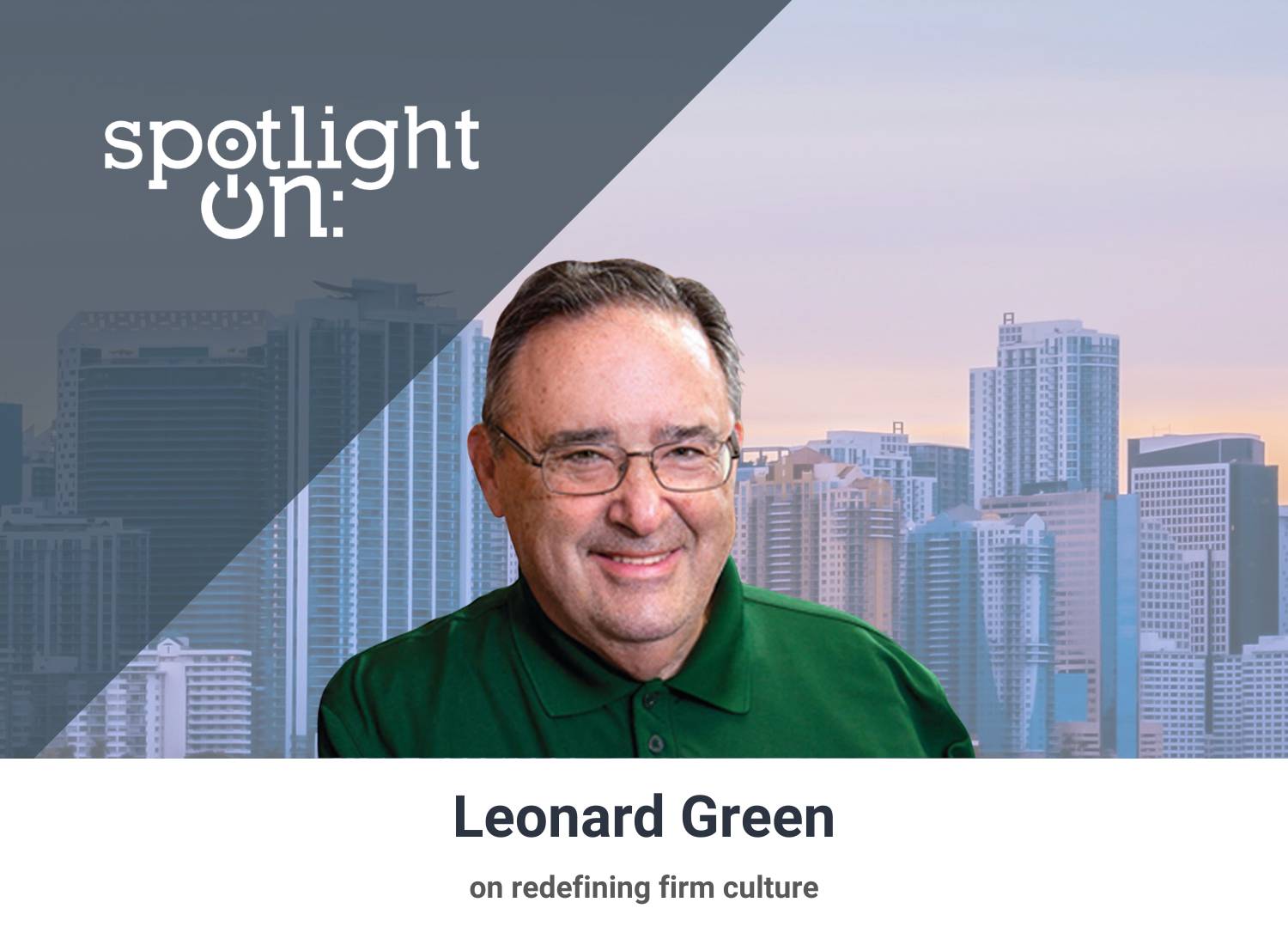
Spotlight On: Leonard Green, Founder & Chairman, The Green Group

Leonard_Green_Spotlight_onDecember 2025 — In an interview with Invest:, Leonard Green, founder and chairman of the CPA and consulting firm The Green Group, shared how redefining firm culture and prioritizing specialization have set the company apart in a rapidly evolving accounting landscape. “If we don’t have expertise in a particular area, we don’t take on the job. That’s part of why we’re one of the more boutique firms, but we consistently deliver value,” Green said.


Join us at the Invest: New Jersey 6th Edition Leadership Summit! This premier event brings together hundreds of New Jersey’s business and regional leaders to discuss the challenges and opportunities for businesses and investors. Buy your ticket now!


What is your overview of the accounting and advisory landscape in New Jersey and the role The Green Group plays?

The accounting profession as a whole is currently facing some serious challenges. It’s not seen as a glamorous field, and with the requirement of 150 hours of education to become a CPA, not to mention the notoriously difficult CPA exam, it has become increasingly demanding. The hours can be grueling, especially during busy seasons, which vary across firms. Some have intense tax seasons, others peak during audit season, but either way, the workload is heavy. Naturally, fewer people are entering the profession.

We acknowledged that issue and approached it head-on. While many firms simply accept the declining numbers, we asked ourselves what we could do differently. Big firms — the Big Four, Six, Eight, 10, or whatever number they’re using now — have the allure of prestige and potentially higher salaries. They advertise and seem glamorous, and that’s where the top talent usually flocks to. 

So the real question became: How can a small boutique firm in New Jersey attract top-tier professionals? For us, the answer lies in creating a unique model that prioritizes work-life balance, meaningful client relationships, and real-world learning experiences.

Most of our staff joined us from large firms. They left because they wanted more than just a paycheck. They wanted balance, client interaction, and business acumen. I make sure they join me on client calls and participate in follow-up sessions where we review what happened and discuss how to approach the issues. That gives them a richer, more practical education and lifestyle.

Our flexibility is also a major differentiator. For example, you could say, “I’d like to work four days a week” or “only half days,” and we’d make that work. Our office has the ability to be available from 7 am to 8 pm, six days a week, which provides employees with some flexibility in their work schedules. Remote work is also allowed, as long as at least 85% of your work is billable.

We also flip the salary model. Instead of fixed roles with rigid pay structures, we ask each employee how much they want to earn, calculate how many billable hours they will be required to achieve, and then help them meet that target. Some want to work fewer hours and earn less, and that’s fine. Others want to maximize income, and we support that, too.

We invest in our people. We offer incentives to continue their education. Our firm is filled with smart, specialized professionals. If we don’t have expertise in a particular area, we don’t take on the job. That’s part of why we’re one of the more boutique firms, but we consistently deliver results.

Clients see the value, and that’s why we succeed.

Which practice areas are driving demand or growth?

We currently work with over 800 clients in the horse industry, which makes us the largest accounting firm in the United States for that niche. We also handle a significant number of real estate clients. 

Most of our new clients come from referrals — we do a good job, we ask for referrals, and we offer complimentary reviews to demonstrate value.

Some people say, “I already work with a Big Four firm, so I’m covered.” But what they often don’t realize is that the name on the door doesn’t mean the most experienced people are handling their account. It’s often someone junior, and they don’t have the same tax or industry knowledge we offer. That’s where we can successfully compete.

And we keep growing. For instance, we recently hired someone who specialized in research and development credits at a national firm. Initially, we didn’t even offer that service, but I saw an opportunity. Now, they’re reviewing all our client accounts to identify missed opportunities. We’ve already seen the potential, and a recent tax law change has made those credits even more relevant.

Do you foresee any challenges in continuing your growth model?

One of the biggest ongoing challenges is aligning with the expectations of younger professionals. Many want a better work-life balance and are less motivated by money. That’s fine, but this job still requires responsiveness, even during vacations. Clients expect us to be available.

We also face an industry-wide talent shortage, partly due to the 150-hour CPA requirement. Thankfully, there is a movement now to relax that standard, potentially allowing people to take the exam while still in school. That would help.

But in our firm, becoming a partner doesn’t take 10 years; it could take three to four. We believe in rewarding effort and results.

Looking ahead, where do you see The Green Group in the near to mid-term?

We’ve received several attractive acquisition offers. Right now, private equity is reshaping the accounting landscape. When firms are bought, they often stop serving smaller clients and impose rigid policies like forced retirement at 55 or 65. 

That creates opportunities for firms like ours. And as larger firms drop smaller clients, they come to us. We added over 200 new clients last year alone. 

We also do a lot of charitable work because it’s the right thing to do. Interestingly, that visibility also leads to new business. For example, I was honored by the New York Chaplaincy for our work with horse care professionals. I raised $400,000 for their community, which was double their previous record. All this feeds into our model: do great work, be visible, and build expertise. We don’t take on work we’re not qualified for. We stick to our niche, and we grow strategically.

I also maintain a private LinkedIn network of 2,000, including past and present students and professionals. We share knowledge, ask questions, and help each other succeed. That’s part of our secret sauce, too.

Finally, I believe the fact that I have taught Entrepreneurship at Babson College (rated #1 in entrepreneurship) gives me a real advantage in providing entrepreneurial consulting value to our clients.

Want more? Read the Invest: New Jersey report.

Subscribe to Our Newsletters

"*" indicates required fields

Address*
Would You Like To Receive Our National Newsletter?*
Interests
Markets
This field is hidden when viewing the form

Spotlight On: Jerome Cheatham, Retail Vice President, Atlantic South Market, Verizon Consumer Group

Jerome_Cheatham_Spotlight_onDecember 2025 — In an interview with Invest:, Jerome Cheatham, retail vice president for the Atlantic South Market at Verizon Consumer Group, discussed how Verizon is advancing customer experience, retail innovation, 5G coverage, and community investment across Nashville. “Connectivity is a basic utility for our customers,” he said.


Join us at caa’s upcoming leadership summits! These premier events bring together hundreds of public and private sector leaders to discuss the challenges and opportunities for businesses and investors. Find the next summit in a city near you!


What changes have most significantly shaped Verizon’s strategy in the Nashville market?

Our strategy in the Nashville market is shaped by two main focus areas: relentlessly improving our customer experience and growing our converged (mobile and home) customer base.

We are focused on eliminating friction points and delighting our customers to earn their loyalty, making the experience seamless regardless of whether they’re visiting us in person, talking to a representative on the phone, or visiting our website.

We know that when customers have both our mobile and home services, they are more satisfied and stay with us longer. This strategy is increasingly fueled by AI and technology to enhance how we deliver the best customer experience.

Locally, this includes continued investment in our retail footprint in Nashville focused on upgraded store designs with new fixtures and furniture for our customers.

We are also continually investing in the community. We are proud of our partnership with the Tennessee Titans, including as a Cornerstone Partner in the new Nissan Stadium, and our local community efforts with Nashville Metro Parks and Recreation. In 2024, Verizon supported the opening of technology labs at McFerrin and Coleman Park Community Centers.

How is Verizon adapting its consumer services and retail footprint to meet shifting demand?

We are consistently evaluating our store distribution in the Nashville area and making changes based on the needs of our customers to meet them where they want to be. We are adapting to critical shifts in consumer behavior, particularly the focus on value, the demand for a frictionless customer experience, and the view of connectivity as a basic utility.

Our brick-and-mortar stores remain at the heart of how we engage with customers, and we are blending the digital and physical elements to create a seamless and immersive experience. This includes offering the convenience of many fulfillment options, such as in-store pickup or locker pickup for digital orders.

For customers who want to experience products, we are bringing in immersive AR/VR technology and displays that allow them to self-discover at their own pace.

How is Verizon making its 5G and home internet stand out in a competitive market?

Our commitment to network excellence is a core part of who we are as a company and we are demonstrating this in Nashville with significant local investment.

To keep up with population growth, Verizon has invested tens of millions in the past three years to grow our technology and network in Nashville. We now cover 95% of the 2.1 million POPs (points of presence) with 5G technology, which is supported by more than one thousand miles of fiber in the area.

Our 5G and home internet services stand out by providing a new, reliable solution in areas that may not have had a strong incumbent broadband provider.

A key reason customers choose us is the exceptional value and flexibility offered through our myPlan. This allows them to build a plan that bundles their mobile and home internet, creating a simple, combined bill. Furthermore, while streaming rates continue to rise, myPlan provides significant savings by allowing customers to add services like Netflix, Max, and Disney+ at locked-in, discounted rates. The more services our customers bundle, the deeper their savings become, offering them predictable value they can count on.

In what ways is Verizon tailoring its customer experience to reflect the distinct demographics and lifestyles across Middle Tennessee?

Verizon is combining the power of AI with the experience of our local sales professionals to provide exceptional, tailored service to every customer. AI helps our sales teams understand each customer’s needs and present relevant solutions to meet those needs. At Verizon, we continue to focus on customers’ needs and meet them where they are.

We have customers who have done their research and prefer to do their shopping online with no employee interactions. For them, we have both shipping and express locker pickup available. For those who would like to consult the experts and buy in person, our sales professionals are there to deliver a full solution. We have a relentless focus on exceeding customer expectations, meeting them where they are with the tools they need, and providing solutions that help them be more productive.

On a national level, we aim to have the best deployed conversational AI tools in the world to enhance customer interactions. A key part of this was a complete redesign of our app, which included the launch of the VZ Assistant, an advanced AI tool. This technology can help customers understand their bill or set up international roaming simply by asking.
We are applying AI across the board to build a better network, market more effectively, and personalize offers to create a better, more tailored customer experience.

How is Verizon making sure its services in Nashville stay both affordable and reliable as customer expectations keep rising?

We ensure affordability and choice by providing a variety of plan offerings, allowing customers to select the level of service that best fits their needs and budget.

To provide peace of mind, we launched a program that includes a three-year price lock guarantee for new and existing customers on our myPlan, a free phone guarantee, and access to savings on streaming services like Netflix and Max.

We are also enhancing reliability and service through national initiatives like our “Project 624” launch. Named for its launch date, 6/24/25, this project enhances the customer experience by revamping our app, assigning dedicated experts to tackle complex issues, offering 24/7 live support with expanded hours, and using cutting-edge AI to support it all.

How is the current economic climate shaping the telecommunications landscape in the region, and how is Verizon responding?

The current economic climate, including inflation, has led to a critical shift in consumer behavior, with a strong focus on value. We see customers, driven by economic uncertainty, holding onto their devices for longer periods and seeking budget-friendly options.

At the same time, the landscape is shaped by rising network demands from video and AI, which require massive, low-latency capacity. Our strategy is to respond with intelligent investment, not just building more but building smarter by aggressively deploying fiber and 5G assets while using AI to manage traffic efficiently.

In this hyper-competitive market, we are also responding to rising customer expectations for a personalized, effortless experience by differentiating on the total relationship, bundling mobile, home, and entertainment to become an indispensable part of their digital life.

What community engagement, small business support, and tech education efforts are underway or planned for Nashville, in line with Verizon’s approach in other Southeast markets?

Community Engagement: Verizon is proud to be the Exclusive Wireless Telecommunications Provider and a First Cornerstone Partner in the new Nissan Stadium, which is scheduled to open in 2027. We will provide state-of-the-art technology and wireless solutions to keep fans connected. Through this partnership, we have offered customers exclusive access via Verizon Access, including stadium tours and game day experiences, as well as sweepstakes for tickets and meet-and-greets.

Small Business Support: Verizon supports small businesses in Nashville through our Small Business Digital Ready platform, which is a free, online resource available to any small business owner. This platform provides over 50 free courses on topics like marketing, financial planning, and AI integration, as well as networking and grant opportunities. There are 1,900 small businesses in Nashville and over 6,800 across Tennessee using this free platform.

Tech Education Efforts: We are deeply committed to digital inclusion through our Verizon Innovative Learning program. There are 17 Verizon Innovative Learning schools across Tennessee, which receive free technology, tech-infused lesson plans, and a dedicated technology coach. Additionally, there are four Verizon Innovative Learning Labs in Tennessee, representing a nearly $1 million investment per lab, which provide free access to advanced technology like AR/VR, 3D printers, and robotics. We also offer the Verizon Innovative Learning HQ, our free online hub for tech-infused curriculum, which is used by 79 teachers in Nashville and 356 in Tennessee.

Looking ahead to the next three to five years, what are your strategic priorities for the Greater Nashville area?

Our strategic priorities start with ensuring that we are delivering the best customer experience in the industry, as we know connectivity is a basic utility for our customers. This includes continuing to invest in our network to remain the most reliable connectivity provider in America. It also involves continuing to hire and train our people so they are equipped to deliver a world-class experience with every interaction.

Finally, a key priority is accelerating convergence, which means prioritizing the profitable growth of our core mobility and broadband subscription businesses.

In the Greater Nashville area, this means we will continue to show up for the community with our local presence. We will consistently evaluate Nashville and the surrounding areas to ensure we are precisely where we need to be to serve our customers and deliver this best-in-class experience.

Want more? Read the Invest: Nashville report.

Subscribe to Our Newsletters

"*" indicates required fields
Address*
Would You Like To Receive Our National Newsletter?*
Interests
Markets
This field is hidden when viewing the form

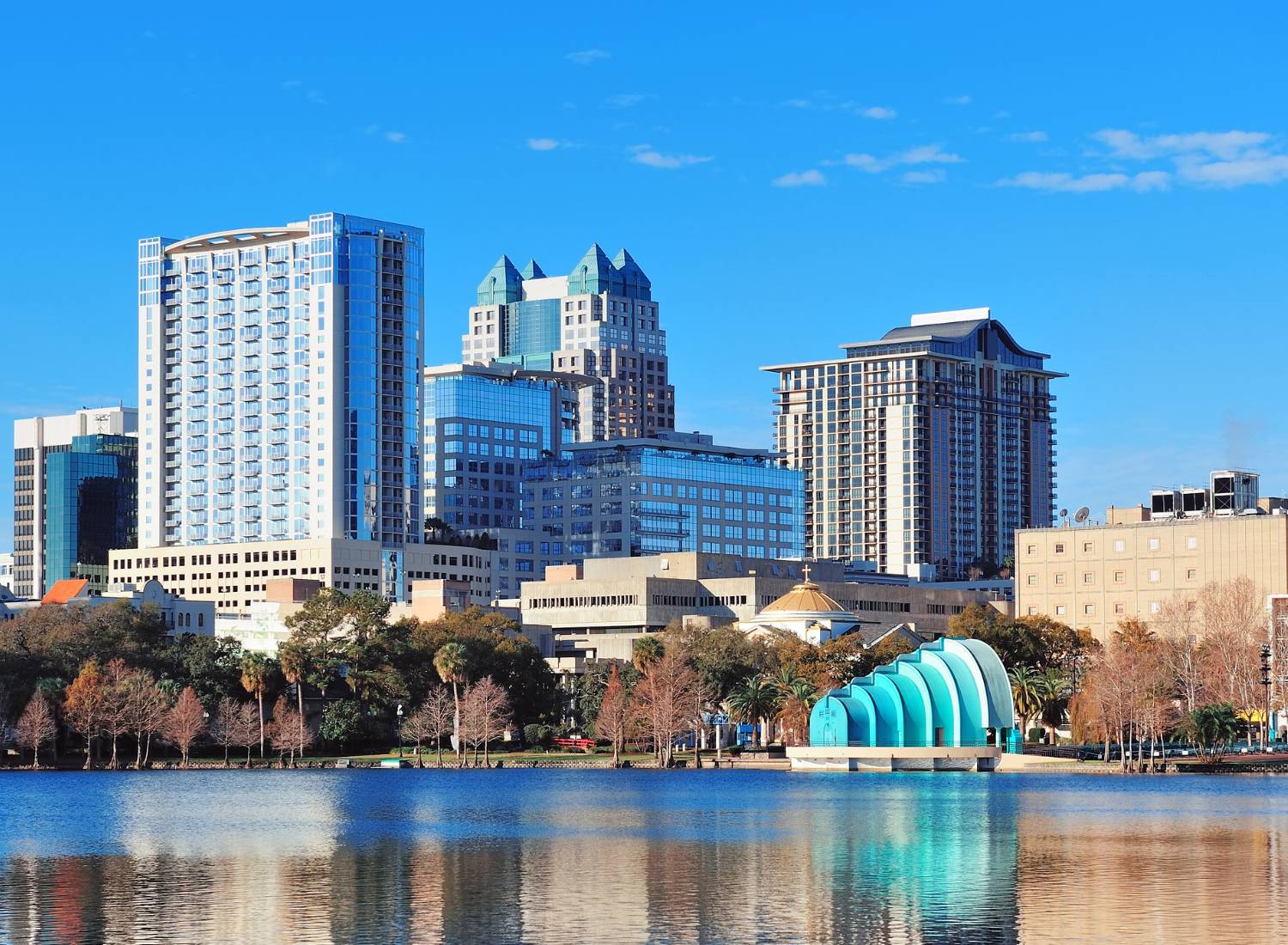
Regional Review: Orlando redefining growth and opportunities in real estate

Writer: Mariana Hernández

OrlandoRegional Review is a year-end series from caa that looks at key developments in a focused industry throughout the year and sets the stage for what’s to come in the near term.

December 2025 — Orlando entered 2025 as one of the nation’s most dynamic large metros, leading the country in job growth, population gains and nominal GDP expansion. Together, these indicators underscore Central Florida’s strong economic fundamentals and a resilient real estate market.


Join us at caa’s upcoming leadership summits! These premier events bring together hundreds of public and private sector leaders to discuss the challenges and opportunities for businesses and investors. Find the next summit in a city near you!


“Our tourism-driven base — anchored by Disney, Universal, the space industry and other theme parks — tends to insulate us from some of the headwinds other U.S. markets face. Because of that, housing activity has been flat to positive rather than negative.” said Cliff Long, Chief Executive Officer, Orlando Regional REALTOR® Association, in a recent interview with Invest:.

Orlando ranked No. 1 in job growth, population growth and nominal GDP growth among the country’s 30 most populous regions. The region posted 2.5% year-over-year employment growth, led by healthcare, tourism and a growing tech and financial services base anchored by companies such as ThreatLocker, BNY Mellon and Charles Schwab.

Population growth remains equally decisive. The Orlando metro recorded a 2.7% annual increase — the fastest among major U.S. metros. The latest official Census estimate places the region at 2.94 million residents, supporting labor force expansion and contributing to an average unemployment rate under 4% in 2025. Statewide population is projected to exceed 24 million by 2027, pushing Florida’s GDP toward $2 trillion by 2028. Industries such as construction, education and hospitality remain key beneficiaries of this demographic momentum.

Employment fundamentals continue to outperform peers. Orlando posted the highest five-year job growth rate among the nation’s 50 largest apartment markets at 24.8%, as cited by RealPage Analytics. Leisure and hospitality led with a 51.4% increase over five years, followed by strong gains across professional and business services and education and health services.

Housing market rebalancing

According to the Orlando Regional REALTOR® Association, the residential sector is trending toward balance. Interest rates dipped to 6% — the lowest in more than a year — helping lift October 2025 home sales 4% month over month to 2,335 transactions. Inventory held steady at 13,047 homes, while new listings rose 9% from September, signaling renewed seller confidence.

“I’m very optimistic about where we’re headed. Interest rates have already been cut twice this year, and as mortgage rates trend down, more buyers will come off the sidelines,” said Long. 

The median home price edged up to $380,000, while the average time on market increased to 77 days. Single-family homes continue to dominate activity, while condos and townhomes remain stable at median prices of $185,000 and $320,000, respectively.

Rising mortgage rates have contributed to a national “renters’ nation,” and Orlando reflects that trend with occupancy near 95% and average rents around $2,000. More than 70,000 new residents each year and a tourism base exceeding 74 million visitors continue to support both long-term leases and short-term rental activity. Growth hubs such as Lake Nona and the Disney corridor remain among the most competitive rental submarkets.

Regional infrastructure commitments are also shaping long-term expectations. Nearly $5 billion in upgrades — including new expressways and expanded connector roads — are underway across Horizon West, Sunbridge, Poinciana and surrounding areas. Osceola County’s development surge signals sustained demand across the south Orlando corridor.

CRE shifts

Largo Capital’s 2025 Orlando Outlook reports that retail vacancy remains tight at 3.7%, with asking rents at $29.77 per square foot, up 2.4% year over year. Nearly 795,000 square feet of new supply entered the market over the past year.

Multifamily performance reflects a temporary adjustment due to new supply. Rents declined 2% year over year, while occupancy dipped to 94.4% — the lowest in a decade. Development remains strong, however, with projects such as Ellison Nona and Standard441 adding nearly 700 multifamily units combined.

Orlando continues to lead as the top U.S. hotel market, with average daily rates at $230.05 and revenue per available room (RevPAR) at $167.47. New resort inventory — including hotels tied to Universal’s Epic Universe — continues to bolster the pipeline and keep investor interest high. Luxury and upper-upscale offerings such as the Stella Nova, Terra Luna and Helios Grand hotels further expand the region’s hospitality appeal.

Avison Young’s 3Q25 report identifies Orlando as one of Florida’s strongest industrial markets. Net absorption surged to 1.5 million square feet in Q3, and vacancy tightened to 7.4%, down 40 basis points from Q2. Development in 2025 shifted toward mid-sized facilities, ranging from 50,000 to 199,000 square feet, to meet rising demand for infill logistics and distribution.

Orlando’s role as Florida’s population and job-growth leader — with statewide gains of 1.8% and 2.3%, respectively — continues to strengthen warehousing and distribution interest across the region.

Key developments

Orlando’s 2025 development landscape was defined by large-scale projects reshaping mobility, tourism and community growth. Brightline advanced key environmental and right-of-way work for its planned Orlando–Tampa rail extension, expected to unlock new transit-oriented development. And Universal’s Epic Universe reached final construction milestones, adding more than 2,000 rooms.

Lake Nona continued its rapid expansion with a new entertainment district and ongoing growth across Medical City, including progress at the UCF Cancer Center, VA facilities and Nemours Children’s Health. Development sentiment in 2025 reflected long-term confidence in hospitality and retail driven by robust tourism, while multifamily projects moved more cautiously due to new supply and cooling rent growth. Industrial and healthcare-related real estate remained top targets for investors.

Looking ahead

Despite strong fundamentals, several challenges shaped Orlando’s real estate market in 2025. Rising construction costs continue to pressure affordability and development feasibility. Population growth and rapid household formation complicate long-term demand forecasts, while higher borrowing costs, stricter underwriting standards and rising insurance premiums create a more selective capital environment.

Simultaneously, the expansion of AI-enabled industries and increased interest in power-intensive data centers are introducing new zoning and infrastructure considerations. Developers and lenders face the need for greater operational discipline and strategic decision-making heading into 2026.

Want more? Read the Invest: Greater Orlando report.

Subscribe to Our Newsletters

"*" indicates required fields

Address*
Would You Like To Receive Our National Newsletter?*
Interests
Markets
This field is hidden when viewing the form

Invest: New Jersey leadership summit to spotlight healthcare, education, and development

CAA25_Conexio_Banner

INCJ23_New_JerseyDecember 2025 — On Wednesday, Jan. 14, 2026, over 250 of New Jersey’s civic, business, and institutional leaders will convene at Maritime Parc to celebrate the launch of Invest: New Jersey 6th Edition, the region’s annual economic review produced by caa. Running from 8 to 11 a.m., the event will serve as both the release of caa’s latest market report and a real-time dialogue about how New Jersey is navigating the next season of growth.


Join us at the Invest: New Jersey 6th Edition Leadership Summit! This premier event brings together hundreds of New Jersey’s business and regional leaders to discuss the challenges and opportunities for businesses and investors. Buy your ticket now!


This year’s Leadership Summit will center on a key question: How does New Jersey sustain its growth and become a key player on the national stage? The conversations will dive into how healthcare, real estate development, and education all work together as the Garden State strategizes for the future.

“New Jersey is more than its growth metrics — it has deep cultural currents and a strong sense of place,” said Abby Lindenberg, founder and CEO of caa. “What’s striking about this moment is not just the pace of development, but the way leaders are thinking about it: collaboratively, cross-sector, and with a deep awareness of timing. As someone who has learned that not all momentum needs to be rushed, the state is ready to build on its steady growth.”

The first panel of the morning, “Smart Health, Stronger Communities: Building an accessible future for New Jersey patients,” will explore how public and private stakeholders are prioritizing increasing access to healthcare in New Jersey. Moderated by Bob Rossilli of Kedrion Biopharma, the discussion will include Gary Huck, CFO of University Hospital New Jersey; and Amy Murtha, Dean of Rutgers Robert Wood Johnson Medical School. Together, they’ll unpack the city’s challenges to accessible healthcare and the strategies to turn the tide.

A special address will follow from Fred Castrovinci, regional president of New Jersey commercial and business banking at Valley Bank, focusing on creating value for relationships and adapting to change. His remarks will show leaders how to harness technology to deepen customer connections, respond to evolving market needs, and build organizations capable of thriving through disruption.

The summit’s second discussion, “Real Estate, Real Returns: Financing growth and community renewal in New Jersey,” will examine the regional partnerships shaping growth in more inclusive and equitable ways. Led by moderator David Greek, managing partner of Greek Real Estate Partners, the panel will feature Edwin Cohen of Prism Capital Partners; Bill Fink of Provident Bank; and Steven Bush of Apple Bank. Together, they’ll explore how financial institutions and the real estate industry are aligning their goals to ensure that New Jersey continues to grow economically while maintaining sustainability.

Closing out the morning, the final panel, “Future-Ready New Jersey: How education is driving the Garden State’s competitive edge,” will elevate the voices of academic leaders tasked with developing not just workforce-ready students, but culturally rooted citizens. Moderated by Vito Gagliardi of Porzio, Bromberg & Newman, P.C., the session will include David Birdsell of Kean University; Mark McCormick of Middlesex College; Francine Conway of Rutgers University – New Brunswick; and Augustine Boakye of Essex County College. Their dialogue will focus on how institutions are evolving to meet changing skill demands and push the state’s education sector into the national spotlight.

More than just a celebration of a new publication, the Invest: New Jersey Leadership Summit is a space for leaders to slow down, listen closely, and challenge the status quo together. It is built around the belief that strong economic development stems from shared vision, and that behind every data point, it’s the relationships that make the work meaningful.

About caa & Invest: New Jersey

caa is an integrated media platform that produces in-depth business intelligence through its annual print and digital economic reviews, high-impact conferences and events, and top-level interviews via its video platform, Invest:Insights.

Invest: New Jersey is an in-depth economic review of the key issues facing the New Jersey economy, featuring the exclusive insights of prominent regional leaders. Invest: New Jersey is produced with two goals in mind: 1) to provide comprehensive investment knowledge on the region for local, national, and international investors, and 2) to promote the region as a place to invest and do business.

The report conducts a deep dive into the top economic sectors in the region, including technology, real estate and construction, infrastructure, banking and finance, healthcare, education, and tourism. The publication is compiled from insights collected from more than 200 economic leaders, sector insiders, political leaders, and heads of important institutions. It analyzes the leading challenges facing the market and uncovers emerging opportunities for investors, entrepreneurs, and innovators.

For more information, please contact:

Ana Karen Gonzalez

Executive Director

267-817-7281

Want more? Read the Invest: New Jersey report.

Subscribe to Our Newsletters

"*" indicates required fields

Address*
Would You Like To Receive Our National Newsletter?*
Interests
Markets
This field is hidden when viewing the form

US housing: Wealth inequality and luxury demand create major changes

Writer: Mirella Franzese

USDecember 2025 — Surging home prices across the U.S. are widening the American wealth gap. In cities like Miami and Boston, where the average cost of a home exceeds income growth, the ultra-wealthy continue to drive demand for high-end properties while affordability remains elusive for lower- and middle-class families. This shift within the broader housing market continues to shape buyer and seller dynamics.


Join us at caa’s upcoming leadership summits! These premier events bring together hundreds of public and private sector leaders to discuss the challenges and opportunities for businesses and investors. Find the next summit in a city near you!


The average cost of buying a home remains elevated across multiple Southern markets — particularly North Carolina, Georgia, Florida and Tennessee — which have all seen sharp home price growth over the last five years. This rise in home prices has outpaced local incomes in several of the country’s largest cities, including Miami, Austin, Fort Worth, Philadelphia and Boston.

Priced out

While U.S. household incomes have nearly doubled since 2000 — rising from $41,990 to $80,610 in 2025 — median home prices have grown almost threefold, reaching an average of $339,937, according to data from the U.S. Census Bureau and Zillow compiled by Construction Coverage.

This trend has deepened wealth disparities across the country, said Marshall Crawford, president and CEO of Nashville’s affordable housing organization The Housing Fund.

“Homeownership is deeply tied to income levels. When we discuss affordability, whether renting or buying, it all comes down to wages,” Crawford told Invest:. “Rising home prices have outpaced wage growth, making homeownership increasingly difficult.”

Concentrated wealth

The distribution of wealth in the U.S. remains highly unequal — a reality reflected across the housing market. The top 0.1% of U.S. households control $23.56 trillion in assets, 8.4% of which is directly tied to real estate, according to 2Q25 data from the Federal Reserve’s distribution of wealth analysis. By comparison, the bottom 50% holds just $4.21 trillion, with real estate accounting for nearly half (47.8%) of their total wealth. The middle 50–90% range manages $50.27 trillion in assets, just under 40% of which is linked to real estate.

Historically, America’s bottom 50% has held a larger share of its wealth in real estate because homes and consumer durable goods — such as vehicles and electronics — make up its most significant assets. Meanwhile, the top 0.1% primarily invests in liquid financial assets like bonds, equities and private businesses.

Despite real estate’s historic role in wealth creation for the middle and lower classes, the current market continues to shut out many buyers. According to a 2025 Redfin report, America’s richest 1% could buy nearly the entire housing market. The wealthiest 0.1% alone have enough buying power to purchase every residential property in the country’s 25 most populous metros.

“It is a striking example of the concentration of wealth in America that the top 1% could hypothetically afford to buy every home in the country — without going into debt — while millions of households struggle to buy or hold on to just one,” said Chen Zhao, lead researcher at Redfin Economics, in the report.

The rapid accumulation of wealth at the top has been fueled in part by the sharp rise in home values, which has simultaneously priced out lower- and middle-income buyers. In the past few years alone, the wealth of the top 0.1% has grown by 24.9% ($4.4 trillion) — more than the total net worth of the entire bottom 50% of households, according to Mortgage Mag.

Luxury market dynamics 

In South Florida, for instance, there is a greater supply of luxury condos than affordable and mid-range single-family homes. According to Brett Atkinson, president of the South Florida business unit at Moss — one of the largest general contractors in the U.S. Southeast — the for-sale condo sector currently represents about 50–60% of their work.

“The market has shifted toward high-end luxury, largely due to the influx of wealth into the area,” Atkinson told Invest:. “Condominiums are getting larger, more luxurious and significantly more expensive.”

Data from Miami Realtors shows that Miami’s condo inventory increased from 9,775 listings in July 2024 to 12,838 in July 2025 — a 31% jump. Meanwhile, single-family home inventory, typically owned by middle and upper-middle-class buyers, saw an even sharper increase of 38.89% year-over-year. Yet the number of active listings (5,539) remained nearly half that of condos.

Nationally, luxury homes are selling faster than non-luxury properties. Data from National Mortgage Professional shows luxury home sales grew 2.9% year-over-year, compared with 0.7% for non-luxury homes. In fact, sales of luxury homes priced at $10 million or more in South Florida reached a second all-time high this year, according to July 2025 statistics from the MIAMI Association of Realtors (MIAMI) and the MIAMI Southeast Florida Multiple Listing Service (SEFMLS).

This illustrates how ultra-wealthy buyers are behaving differently from typical move-up or first-time buyers, who remain hesitant given current affordability constraints.

“The luxury market has been a little more protected over the past year,” said Jonathan Buch, a Redfin agent in West Palm Beach. “Affordability challenges have made it more difficult to sell homes priced under $800,000, but high-end properties are still moving.”

Want more? Read the Invest: reports.

Subscribe to Our Newsletters

"*" indicates required fields

Address*
Would You Like To Receive Our National Newsletter?*
Interests
Markets
This field is hidden when viewing the form

Regional Review: Raleigh-Durham’s life sciences cluster expands

IRDUe4_Banner_Town of Wake Forest

Writer: Eleana Teran

Raleigh-DurhamRegional Review is a year-end series from caa that looks at key developments in a focused industry throughout the year and sets the stage for what’s to come in the near term.

December 2025 As U.S. demand for biomanufacturing capacity grows, Raleigh-Durham is capturing an increasing share of investment. Global firms are expanding research and production operations, strengthening the region’s role in the national life sciences network.


Join us at caa’s upcoming leadership summits! These premier events bring together hundreds of public and private sector leaders to discuss the challenges and opportunities for businesses and investors. Find the next summit in a city near you!


“Life science manufacturing has grown tremendously in this market, and Raleigh-Durham offers the right combination of industry support, access to land, strong higher education institutions, and targeted incentives that bring major projects here,” said Shawn Pepple, Raleigh business unit leader at DPR Construction, in an interview with Invest:. 

In a year defined by global supply chain uncertainty and rising demand for biologics, the Raleigh-Durham region, anchored by Research Triangle Park (RTP) and leading institutions such as Duke University, NC State, and UNC-Chapel Hill, continued its transformation from a research center into a major hub for biomanufacturing. A wave of new investments and facility expansions reflected the region’s growing role in the nation’s life sciences economy. 

Several major announcements reinforced that momentum. FUJIFILM Biotechnologies officially opened the first phase of its $3.2 billion cell culture manufacturing facility in Holly Springs, one of the largest of its kind in North America. Biogen expanded its RTP operations with a $2 billion modernization project, marking three decades in the area. Novartis announced a $771 million investment across Durham and Wake County, adding new facilities expected to create 700 jobs by the end of 2030. Meanwhile, OXB acquired a viral vector manufacturing plant in Durham, expanding the region’s footprint in gene-therapy production.

Tracking growth and expansion

The scale and pace of activity across the Triangle reflect both local strengths and global market shifts. According to CBRE’s 2025 U.S. Life Sciences Outlook, national lab and R&D leasing activity grew by more than 41% year-over-year in late 2024, with Raleigh-Durham ranking among the top emerging clusters for biomanufacturing and innovation space. North Carolina’s combination of cost efficiency, research depth, and workforce readiness continues to draw new entrants to the market. 

“When companies look at where to expand or relocate, they consistently tell us their No. 1 consideration is the workforce,” President Jeff Cox of the North Carolina Community College System told Invest:. “There isn’t a community anywhere with thousands of engineers, technicians, or advanced manufacturing workers simply waiting for the next large employer to arrive. What companies want is confidence that a state has the ability to upskill or retrain its workforce quickly. That’s where our system comes in.”

The North Carolina Biotechnology Center (NCBiotech) reported that life sciences contribute more than $82 billion to the state economy, support over 75,000 highly skilled workers, and encompass more than 840 companies statewide. State and local organizations have played a central role in sustaining that trajectory. The Economic Development Partnership of North Carolina highlighted life sciences as a top recruitment priority, noting that the sector attracted over $10 billion in announced investments in 2024. Many of these projects focus on advanced biologics, cell therapy, and vaccine manufacturing, subsectors that require specialized facilities and highly trained staff. 

The focus on high-complexity manufacturing aligns with the broader U.S. trend toward domestic production resilience. According to PharmaVoice, Global firms are accelerating onshoring to reduce exposure to international supply chain risks, citing the Triangle as a preferred site for its established infrastructure and talent pipeline. Collaboration among state agencies, research institutions, and industry partners remains central to North Carolina’s success in attracting new biomanufacturing and life-sciences investment.

Challenges and constraints 

Rapid growth has created its own set of pressures. The Triangle’s biggest challenge is talent supply. Workforce readiness remains one of North Carolina’s greatest advantages, but it is also an area that will demand sustained attention as the industry scales. The North Carolina Biotechnology Center highlighted several initiatives aimed at building long-term capacity, from military-to-biotech transition programs under the MOVE initiative to scholarships through the Life Sciences Apprenticeship Consortium, and outreach efforts reaching more than 400 students across the state.

“Many of the programs that employers want us to expand — advanced manufacturing, healthcare, engineering technologies — are also the most expensive to operate,” said Cox, emphasizing the importance of ongoing support. “With Propel NC, we’re asking the General Assembly for an additional $93 million so we can increase reimbursement for high-wage, high-demand programs. This will allow colleges to expand capacity in fields where employers need workers most, without losing money every time they add a student. It’s an investment that will pay dividends across every region of the state.”

Cox added that expanding apprenticeships remains a top priority. “Apprenticeship is one of the most effective tools we have for building a strong workforce pipeline, and expanding those opportunities has been a priority for the system,” he said. “Together with partners from NCWorks, the community colleges, and many others, we’ve identified 11 major goals for strengthening workforce development statewide. One of those goals is to double the number of apprentices in North Carolina.”

While workforce readiness remains a competitive advantage, other structural challenges are beginning to surface. Supply and demand for specialized facilities, particularly laboratory and R&D space, are tightening as companies scale operations and new entrants seek room to grow. CBRE found that leasing activity across the 13 largest U.S. life-sciences markets rose to 2.9 million square feet in late 2024, up from 2.0 million a year earlier.

However, conditions remain mixed. According to Cushman & Wakefield, U.S. life sciences asking rents averaged $67.88 per square foot in 2Q25, flat quarter-over-quarter but down 3.3% year-over-year, while vacancy rates reached a record 23.9%. The firm noted that although construction activity has slowed, higher preleasing levels should help balance the market as new projects are absorbed.

“The life sciences industry… has slowed down,” said Ryan Toland, executive vice president and principal at Colliers, in an interview with Invest:. “Leasing velocity has dropped, and there aren’t many large biotech deals happening right now.” Toland added that while industrial activity remains solid, competition for high-quality sites has eased compared with the peak years of rapid expansion. 

Infrastructure and housing pressures are also growing as the population increases in Wake and Durham counties. These dynamics are shaping broader discussions about how the Triangle can balance growth with affordability and access, ensuring that its success remains sustainable over the long term. 

Navigating a shifting landscape

While local and state momentum remain strong, national policy shifts are creating new uncertainty for the research and innovation side of the life sciences ecosystem. According to the New York Times, federal funding for the National Institutes of Health (NIH) and other science agencies has faced renewed scrutiny, with proposed reductions to research budgets.

Analysts warn that sustained cuts to NIH and ARPA-H budgets could slow early-stage research, decrease innovation, and disrupt clinical trials, according to Fierce Biotech, affecting universities and startups that rely on federal awards to bridge discovery and commercialization. In North Carolina, major research institutions, including Duke, UNC-Chapel Hill, and NC State, benefit from substantial NIH funding that supports early-stage discovery and collaboration with industry. For emerging life-science hubs like Raleigh-Durham, that uncertainty reinforces the importance of state and private-sector investment in maintaining research continuity.

Federal uncertainty may test how far the region’s momentum can go, but the fundamentals remain clear. Years of strategic investment have positioned the Triangle to compete at a global scale in research, manufacturing, and workforce development alike. The challenge ahead will be sustaining that balance as growth spreads beyond traditional hubs and as national funding priorities evolve. Public and private initiatives are already shaping what the next phase looks like. From expanding biomanufacturing capacity in Holly Springs to deepening university partnerships across Durham and Chapel Hill, the market continues to prove its adaptability.

Want more? Read the Invest: Raleigh-Durham report.

Subscribe to Our Newsletters

"*" indicates required fields

Address*
Would You Like To Receive Our National Newsletter?*
Interests
Markets
This field is hidden when viewing the form

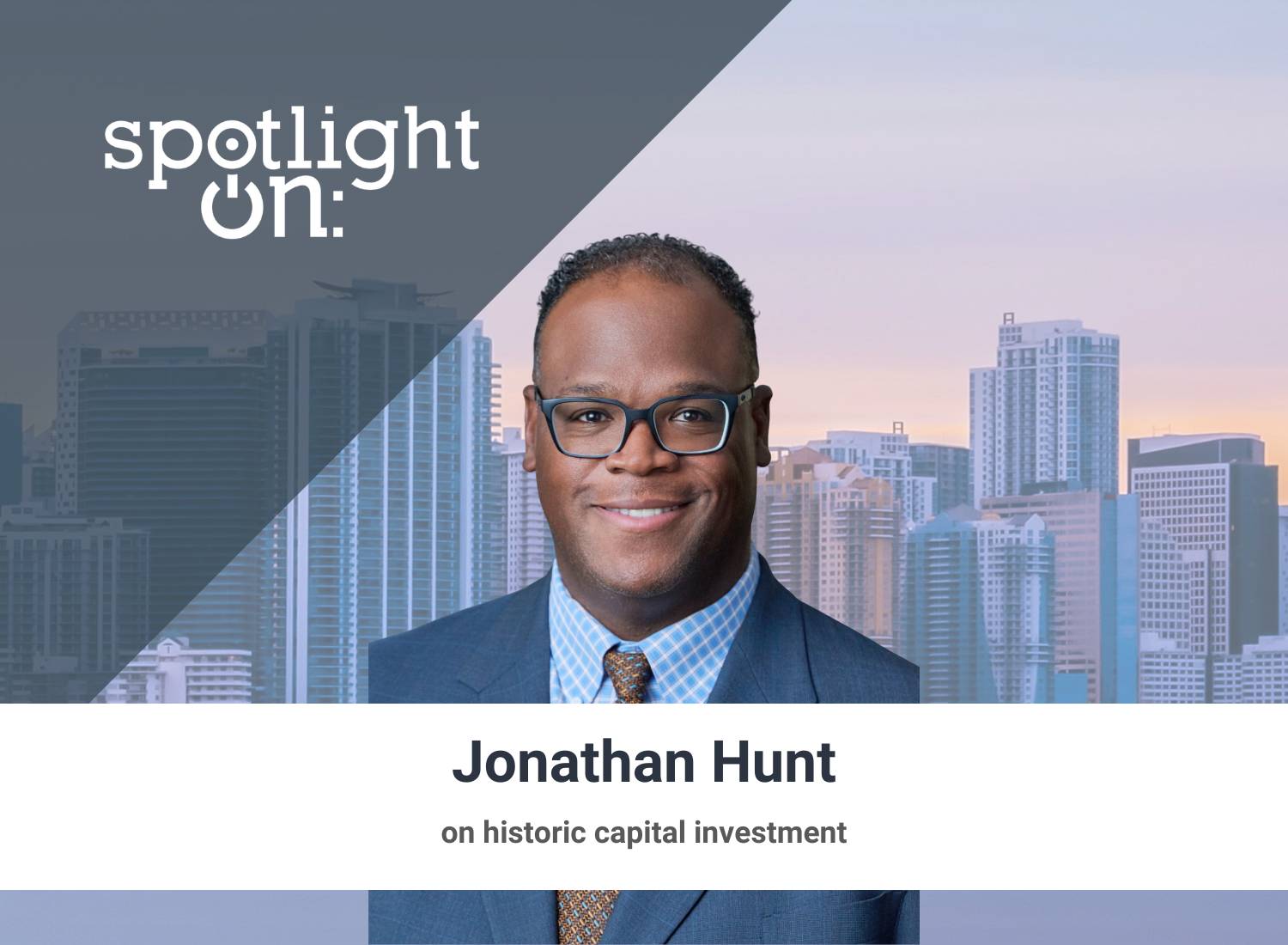
Spotlight On: Jonathan Hunt, Interim General Manager and CEO, MARTA

Jonathan_Hunt_Spotlight_onDecember 2025 — In an interview with Focus: Jonathan Hunt, interim General Manager and CEO at MARTA (Metropolitan Atlanta Rapid Transit Authority), emphasized the system’s largest capital investment in decades, including new railcars, a NextGen Bus Network, and major station overhauls. Ahead of the 2026 FIFA World Cup, MARTA is also modernizing its fare system and launching the metro Atlanta region’s first bus rapid transit line and arterial rapid transit line to support long-term regional growth and improve the daily rider experience.


Join us at caa’s upcoming leadership summits! These premier events bring together hundreds of public and private sector leaders to discuss the challenges and opportunities for businesses and investors. Find the next summit in a city near you!


What major changes at MARTA over the past year reflect its future direction?

Here at MARTA, we’re undergoing the largest capital improvement plan since our inception. We’re advancing several major projects: our NextGen Bus Network, AFC 2.0 — our new automated fare collection system, and new railcars, which are the most advanced in the country.

We’re also building a large operations and maintenance facility in Clayton County and investing heavily in that area. Five Points Station is undergoing a $230 million reconstruction, both underground and above, and we’re also working on the Rapid A-Line, the metro Atlanta region’s first bus rapid transit line that will be delivered before the World Cup.

Right now, we’re doing a six-week shutdown at Garnett Station to replace aging platform pavers, which is also part of downtown Atlanta’s revitalization. Just recently, I visited Stadler’s U.S. manufacturing facilities in Salt Lake City with my deputy general manager and our board chair. The new railcars are on track, and we just recently received our second trainset for testing. By the time the World Cup rolls around, we should have about a dozen new railcars in operation.

What challenges come with managing growth and congestion in a fast-growing region like Atlanta?

Atlanta’s population is growing, and MARTA is going to play a big role in handling that increased demand. The Atlanta Regional Commission estimates that metro Atlanta will grow from just under 6 million people now to nearly 8 million by 2050. We’ll be larger than Chicagoland and one of the biggest metropolitan areas in the country.

Our goal is to give people an alternative to driving. Transit offers choice, and that’s going to matter more as car ownership becomes more expensive, whether you’re driving gas-powered or electric. Even the grid isn’t ready for everyone to go electric yet.

We’re also focused on last-mile access and connectivity. We recently received a Safe Routes to Transit grant to help build safer paths to stations and bus stops. If you’ve got a stop surrounded by mud or grass, it’s not going to feel accessible, especially for people with mobility challenges.

We’re launching MARTA Reach, an on-demand microtransit service. It’ll operate in 12 zones next year and complement our NextGen Bus Network redesign. That redesign is the first full overhaul of our bus system in 40 years. Every route will be touched, with new signage and faster, more frequent service — 15-minute headways or less on our highest ridership routes. Where we are reducing routes, MARTA Reach fills those gaps. It’s like a public Uber, tailored to specific zones.

What’s the focus for safety, and how are you maintaining MARTA’s record?

Safety is our number one priority. Over the past five years, we’ve reduced major crimes on MARTA by 50%. This year, we’re down another 21% from the five-year reduction.

We’re also addressing the perception of safety. Some people still believe MARTA isn’t safe, even when the data says otherwise. We’re working to change that narrative. Our vision is to deliver safe, clean and reliable transit, through routine excellence every day.

We’re investing in our police department and focusing on empathetic enforcement, especially with unhoused individuals and those experiencing mental health crises. We have programs like MARTA HOPE that connect people to services. If someone is simply causing disruption, that’s a different matter. But we’re committed to treating people with dignity.

We’re hiring 10 more field protective specialists — trained personnel who aren’t sworn officers but help maintain safety and order. And we’re reaching our full budgeted number of sworn officers, 250, by the end of the year, with plans to hire 30 more in 2026.

We’ve got a full police infrastructure: K9, drone, bomb, SWAT teams, investigations units, and now a Real-Time Crime Center. That’s where we use technology to track incidents and help other departments across the region. If someone commits a crime in another jurisdiction and tries to use MARTA, we’ll know. They won’t get lost in the system.

How is MARTA preparing to support the 2026 World Cup?

We’re hyper-focused on six key priorities. One of those is securing a new collective bargaining agreement with our frontline workforce. None of this works without them.

We’re launching the NextGen Bus Network in April 2026. Our new fare collection system also goes live then. It will allow people to tap their credit card, use their phone, or buy a Breeze card. International travelers can pay the way they’re used to and use MARTA without friction.

Our Rapid A-Line line will be ready by then. The Garnett Station rehab will be completed. And we’re doing a major renovation at the newly renamed Sports, Entertainment and Convention District Station or SEC District Station — close to the stadium — where we’re overhauling the station.

We’re improving wayfinding and updating announcements. Once the tournament draw happens in December, we’ll be tailoring announcements in the languages of the countries coming to Atlanta. We want visitors to feel welcomed and able to move through the system confidently.

MARTA is the only transit system in the country that takes you directly from inside the airport concourse to the stadium. That level of connectivity is unique, and we’re leaning into it.

What long-term impact will these projects have on the region and daily riders?

Everything we’re doing is designed to last beyond the World Cup. These aren’t one-time projects. A new station rehab benefits us for 20 years. These investments are good for now and for the region’s long-term economic development.

After the World Cup, when people come back a year or two later, they’ll see the impact: new rail cars, a transformed Five Points Station, the fully rehabbed Garnett Station, and a completely redesigned bus network. These aren’t just short-term upgrades. They’re foundational changes to how people experience transit in Atlanta.

How is MARTA using technology and innovation to modernize operations?

We’re implementing a full suite of initiatives to modernize our operations, improve customer service, and enhance safety. Our new railcars go beyond simple replacement, they’re more accessible, safer, and more inviting.

We’ve awarded a contract for a new communications-based train control system. It’s a wireless safety system that lets us run trains closer together, reducing wait times and improving reliability. Stadler is providing both the railcars and the communications system. We’ll be the first in the U.S. to have this type of system.

Our fare collection system, Breeze 2.0, will support open payments and offer flexibility to riders. We’re also using AI-powered tools to analyze rider feedback. Our Voice of the Customer platform helps us process thousands of comments and respond meaningfully.

We’re modernizing our digital presence, launching a new trip planner, a unified app, and a project snapshot tool so the public can check the status of initiatives across the region.

How is MARTA leveraging public-private partnerships to support growth?

We have an extensive public-private partnership program, especially around transit-oriented development. Since 2017, we’ve launched seven TOD projects, generating over $40 million in revenue for MARTA, 600 affordable housing units, and over $437 million in private investment.

One example is Moving in the Spirit, a nonprofit teaching youth through dance. We helped them secure a 99-year capital lease near our Edgewood/Candler Park Station. They now have one of the most advanced dance studios in the region, and more importantly, a permanent home on MARTA.

These developments bring in revenue, create housing, and convert unused parking lots into vibrant communities. Because we’re tax-exempt, these projects also put land back on the tax rolls, supporting our city, county, and school systems.

We stay engaged with these developments through art programs, music performances, and community events. This isn’t just about buildings. It’s about creating a more livable, vibrant city.

What role will MARTA play in the future of the Atlanta region?

Our job is to deliver better transit — safe, clean, and reliable — every single day. But looking ahead, it’s about execution. We have a long list of transformative projects, and we need to deliver them.

We want to win back riders who may have left and show them what’s possible. A year from now, they should see a completely renewed system with new railcars, cleaner stations, and better service. Our focus is on delivery. If we do that well, MARTA will be the leading transit system in the country.

Want more? Read the Focus: Atlanta report.

Subscribe to Our Newsletters

"*" indicates required fields

Address*
Would You Like To Receive Our National Newsletter?*
Interests
Markets
This field is hidden when viewing the form

Regional Review: Palm Beach emerges as a finance hub

IPBe6_Banner_West Palm Beach Downtown Development Authority

Writer: Pablo Marquez

Palm_BeachRegional Review is a year-end series from caa that looks at key developments in a focused industry throughout the year and sets the stage for what’s to come in the near term.

December 2025 — Palm Beach County is emerging as one of the nation’s most active financial centers, a trend that continued in 2025 with steady growth among wealth advisers, asset managers, and private-equity firms.


Join us at the Invest: Palm Beach 6th Edition Leadership Summit! This premier event brings together hundreds of Palm Beach’s business and regional leaders to discuss the challenges and opportunities for businesses and investors. Buy your ticket now!


The Business Development Board of Palm Beach County (BDB) reports that hundreds of asset-management firms, hedge funds, private equity groups and financial-services companies now operate in the county. The finance sector has become the leading engine of personal income, generating more than $7.5 billion annually. The shift has brought an influx of high-net-worth individuals from traditional financial hubs, particularly New York, reshaping the region’s social and economic profile.

Expansion and relocation

Amerant Bank opened a new regional headquarters and banking center in West Palm Beach in April 2025, expanding its retail, commercial and private-client services. Flagstar Bank launched a Private Client Office in Palm Beach in August, reflecting growing demand for bespoke wealth services. Citizens Financial Group also opened its first private-banking office in the county this year with a multimillion-dollar investment.

“It makes for an excellent recipe for growth and competitiveness alongside the traditional global financial hubs,” said Todd Stoller, regional managing director at Fiduciary Trust International, in response to what makes the area an ideal location for his team. “We’re only at the tip of the iceberg, and we believe it will grow exponentially in Palm Beach.”

Private equity play

More than 300 hedge funds, private equity firms and financial-services companies now maintain operations in Palm Beach County, many of them relocations from New York and other major markets. These moves are driven by business-friendly tax policies, lower costs, abundant Class A office supply and a growing concentration of high-net-worth residents. According to BDB data, the county’s financial-services employment exceeds 120,000, with salaries above the national industry average.

“Palm Beach County’s rise as ‘Wall Street South’ is becoming increasingly evident,” Noel Martinez, president and CEO of the Palm Beach North Chamber of Commerce, told Invest:. “This shift is contributing to the region’s economic diversification and solidifying our position as a financial hub.”

Ripple effects

The inflow of wealth and finance jobs is reshaping both commercial and residential real estate. BDB’s latest snapshot shows strong growth in office demand, housing development and population inflows — including younger professionals relocating from dense, higher-cost cities. Luxury housing, waterfront properties and high-end condominiums are in especially high demand, often aligning with new office and commercial development.

“South Florida’s status as ‘Wall Street South’ has driven demand for high-value commercial leases, acquisitions, and construction financing. With the region’s continued economic growth, we anticipate that this demand will only increase, particularly as interest rates start to decline,” said Scott Hawkins, chairman and shareholder at Jones Foster, in an interview with Invest:.

Looking ahead

Palm Beach County has solidified its position as a dynamic financial center. Wealth migration, firm relocations, favorable business conditions and rising demand for private-client and asset-management services suggest continued momentum heading into 2026. The next stage of growth will depend on how the region balances expansion with livability and long-term competitiveness.

Want more? Read the Invest: Palm Beach report.

Subscribe to Our Newsletters

"*" indicates required fields

Address*
Would You Like To Receive Our National Newsletter?*
Interests
Markets
This field is hidden when viewing the form

Houston leaders push tech-driven sustainable growth

Writer: Mirella Franzese

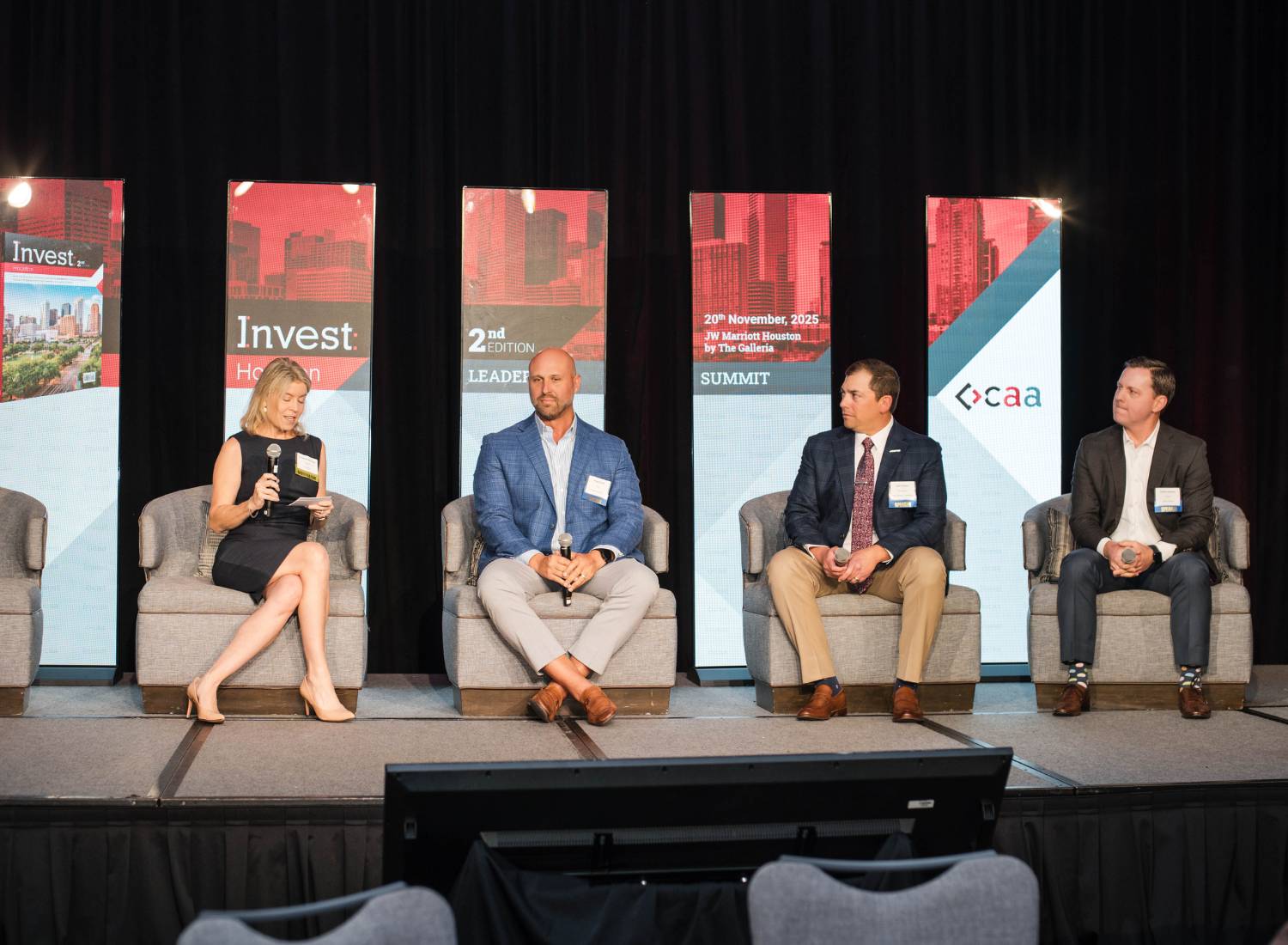
IHOUe2_Panel_2_HoustonDecember 2025 — At the recent Invest: Houston Leadership Summit, industry leaders from Houston’s technology, construction, and energy sectors came together to discuss leveraging technology to enhance sustainability and infrastructure while maintaining economic vitality.


Join us at caa’s upcoming leadership summits! These premier events bring together hundreds of public and private sector leaders to discuss the challenges and opportunities for businesses and investors. Find the next summit in a city near you!


Moderator, Suzanna Bonham, a partner at law firm Seyfarth Shaw LLP, noted that economic competitiveness and sustainability can sometimes appear at odds with each other — especially given the challenges of expanding sustainable solutions without increasing the cost for the end product. 

While balancing near-term performance gains with long-term environmental goals used to represent two diverging goals, the emergence of new technologies is changing the narrative across Houston’s core sectors, including energy, technology, and construction.  

Energy

“In the three to four years leading up to 2024, (the push towards sustainability) was all about building new assets, new plants, and creating entirely new value chains of hydrogen from scratch, and have it somehow not cost too much,” said panelist Parker Meeks, CEO of Utility Global. “That doesn’t happen.” 

Yet, investments in infrastructure and technology are helping bridge that gap, bringing the net-zero objective closer to reality.   

“Houston is the epicenter of energy and infrastructure,” explained panelist Ryan Ezell, CEO of the leading chemistry and data tech company Flotek Industries. 

Ezell pointed out that Houston has the largest petroleum infrastructure and wind farm battery in the U.S, the fifth highest solar output, and a rapidly emerging hydrogen sector. 

This massive energy density creates the potential for significant economic and technological transformation in the region, especially given the challenge of reconciling cost-saving business models with more expensive sustainability goals. 

“(Energy) is a change agent,” explained Ezell. “It’s a change agent to bettering human lives. It’s a change agent for driving innovation and technology because these things require sufficient energy.”

Eliminating Waste

According to Meeks, the rise of new technologies such as AI enables plants to pursue decarbonization without increasing the cost of their products by converting waste, such as finery off-gas, chemical off-gas, and steel off-gas, into valuable hydrogen.   

This is also rapidly changing the way energy companies approach sustainable waste management. For instance, Ezell and his team at Flotek can remove waste from their energy-infrastructure operations through AI, reducing emissions through real-time gas monitoring in pipelines and field operations. 

Powering AI Data Center 

With the data center boom in Houston, this process becomes key to sustaining some of the region’s growing electrification demands. 

As Ezell observed, big tech companies and hyperscalers with effectively unlimited capital are now entering the conversation around sustainability because they desperately need energy for data centers.

“We’re going to see more electricity growth in the next five years than we’ve seen in the last 50 years combined,” said Ezell. “A lot of this is driven by the requirements of AI data centers, the mass electrification, and also the reshoring of a lot of industrial processes.

To that end, corporations like Flotek and Utility Global are converting stranded gas into fuel for data centers and grid infrastructure by leveraging near-time data, AI models, and predictive analysis. 

According to Meeks, waste gases aren’t just “water” — they’re valuable feedstocks and fuels that can be used for advancing power capabilities. AI and software are both huge levers through which to achieve that.  

“We think technology can be 50% lower capex and 40% lower opex in just a few years by mainly software, smarter heat-management, balance, and gas flow,” Meeks told his fellow panelists.

For Ezell, these gains in performance showcase the need for further investment in AI and emerging technologies.

“There’s just that constant push. It’s our job to push sustainability forward and look for better ways to take waste out by driving new measurements, new advancements in material sciences, and new chemistries that bring efficiency to the forefront,” added Ezell. 

Real Estate Gains

Within Houston’s real estate and construction sector, technology breakthroughs are also unlocking new gains in the environmental and sustainability space, according to Jeff Challis, SVP of Joeris General Contractors’ Houston office. 

For instance, Joeris created a construction technology team dedicated to finding and testing the latest tools. These include 3D modeling, virtual design, AI, drone technology, and robotics.

The team’s robotic crawler technology — which uses a 360-degree camera to inspect confined spaces and eliminates the need to send workers into risky locations — was even awarded Innovation of the Year. 

These advancements cost money, as Challis noted. Yet, Joeris General Contractors’ customers increasingly see the value in their investment — from reduced waste, improved safety, and long-term cost savings.  

Responsibility 

The path forward is one driven by social responsibility, according to Meeks, Challis, and Ezell. 

As a global energy epicenter, Houston has a responsibility to help close that gap, according to Ezell. “It is our role… to facilitate the learning curve and reduce waste that we may have experienced in the previous years.” 

Now, major operators and private companies are embracing the transition. Investments are pouring into universities, schools, community partnerships, and innovation programs, which are expected to accelerate job creation for the next generation. 

For Ezell, growth in the energy sector will continue to enable technology — driving change in the regional economy. 

I don’t know that there’s ever been a more exciting time to be in the energy and infrastructure space,” he said.

Want more? Read the Invest: Houston report.

Subscribe to Our Newsletters

"*" indicates required fields
Address*
Would You Like To Receive Our National Newsletter?*
Interests
Markets
This field is hidden when viewing the form