
Spotlight On: Cyrus Vatandoost, President & CEO, Nossi College of Art & Design
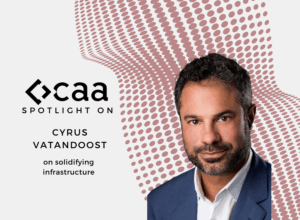
May 2025 — In an interview with Invest:, Cyrus Vatandoost, president and CEO at Nossi College of Art & Design, discussed the institution’s strategic preparations for industry shifts, designing agile curricula to address the evolving job market, and student outreach. “We prepared for the ‘enrollment cliff’ by upgrading our facilities and equipment to remain attractive to prospective students.”
Reflecting on the past year, what have been the main highlights and key milestones for Nossi College of Art & Design in the last 12 months?
Over the past year, we have focused on solidifying our infrastructure. In 2024, we welcomed the completion of our second kitchen for the culinary program, which supported growth. In 2025, we have finalized our infrastructure and are now positioned to grow incrementally. We are pleased with the growth in our culinary department and our illustration technologies program. Financially, as well, we are in a strong position as we took advantage of low interest rates in the past and do not need to borrow in the current high-interest environment. This stability allows us to navigate the next eight to 10 years with confidence.
On the broader trends, the education market is entering what is referred to as the “enrollment cliff” in 2025. Generation Z is smaller in number compared to previous generations, as millennials had fewer children and later in life than Gen Xers or Baby Boomers. As a result, there is a smaller pool of college-aged individuals, making the market more competitive. We prepared for this by upgrading our facilities and equipment to remain attractive to prospective students. Being located in a growing city, we do not anticipate as many challenges as institutions in the West or North, where population growth is stagnant. However, we must remain aware of market demands and employer needs. Over the past decade, we have focused on positioning ourselves for strength rather than vulnerability in the face of market fluctuations.
Our culinary program has expanded alongside Nashville’s thriving culinary scene, which continues to attract high-end restaurants and renowned chefs. Additionally, corporations are relocating or expanding here, creating more opportunities for our graduates.
Our illustration technologies program teaches students 14 or 15 different software programs, blending creativity with technical skills. This combination makes graduates valuable to architectural firms, engineering firms, manufacturing companies, and healthcare organizations, all of which are industries we previously did not see hiring our students as frequently.
Higher education is undergoing significant changes, with many institutions facing cutbacks due to reduced federal funding. As a proprietary institution, our funding is tied directly to student tuition, insulating us from these challenges. If students value what we offer, we can continue to grow.
How is Nossi College of Art keeping the curricula up to date in order to meet the demands of a fast-changing job market?
We pivot quickly by engaging with industry leaders through program advisory committees, which meet two to three times per year. These discussions inform immediate curriculum updates, often implemented by the following semester. This agility sets us apart from larger universities, where changes can take years due to bureaucratic processes.
For example, artificial intelligence is transforming industries, and we have already integrated AI into relevant courses. The approach varies by program and even by class. In coding courses, AI usage differs from creative classes, where generative AI may be restricted to research purposes only. Employers now ask graduates about their AI experience, and those unfamiliar with it are at a disadvantage. We ensure our students understand AI’s ethical use and can articulate their experience, making them more competitive in the job market.
How is Nossi College of Art leveraging technology and innovation in order to provide the best education programs to students?
We utilize various digital tools depending on the program’s needs. For instance, Adobe products now incorporate AI, and we train students on these features. We also permit the use of ChatGPT where appropriate, while educating students on ethical boundaries on when to use it and when not to. Beyond academics, we apply technology in student services to improve efficiency and support. The key is understanding where technology adds value and where it does not. At this stage, recognizing its limitations is just as important as leveraging its capabilities.
How is Nossi College of Art attracting new students to apply for undergraduate programs and degrees in order to drive growth?
Some of the things that we are doing involve significantly more high school outreach. We are inviting high schools, their teachers, and their students to visit our campus. We conduct workshops, tours, and various demonstrations so that students can experience our environment firsthand.
Most students research colleges by visiting websites, but as graphic designers, photographers, illustrators, and creative professionals, we understand that many university websites look similar as they all have beautiful buildings, smiling students, and picturesque campuses. This does not always provide a clear sense of what it truly means to be a student at a particular institution.
To address this, we focus on bringing high school classes to our campus, allowing them to see what it is like to be a student at Nossi. This approach has been very successful. In fact, we have had more high schools visit our campus in 2025 than in any previous year.
Beyond on-campus visits, we are also expanding our outreach by visiting high schools to conduct presentations and demonstrations. We believe direct communication between our program directors and high school teachers will help attract more students. Additionally, we are expanding our recruiting territory into Alabama, Kentucky, Mississippi, and Arkansas.
What are the primary challenges facing the arts education industry at the moment, and how is Nossi College of Art working to address these challenges?
The students, parents, and employers are demanding programs with measurable return on investment (ROI) and hard skills. Employers now expect entry-level hires to be productive within 60 to 90 days, rather than requiring extensive training. This shift is due to rapid industry changes and shorter job tenures. This means that the education industry will need to undergo significant changes. At Nossi, we are a career college with one foot in academics, the other in industry, so institutions like ours, that is, those that provide specialized training in fields such as plumbing, HVAC, automotive repair, nursing, design, and photography, have a clearer ROI for students. Whereas larger universities offering degree programs without direct career pathways will need to reevaluate their models. Students are becoming more selective, avoiding degrees that do not clearly lead to employment.
What should be the value proposition of higher education and colleges in the present and future?
The value proposition should take a long-term approach in evaluating programs. Some advocate for short-term metrics, such as measuring a graduate’s earnings immediately after college against those of a high school graduate. However, industries vary as some offer high early earnings, while others, like journalism, require time to build a career.
Similarly, graduation rates alone can be misleading. A high graduation rate does not necessarily indicate program quality, as it may simply reflect an easier curriculum. Instead, we must assess whether graduates are gainfully employed, whether in their field or another, and whether their income justifies the investment over time. Our role is to prepare students to enter their industries, to get them “on the pitch.” Once there, they must find their path. Evaluating long-term outcomes, rather than immediate post-graduation gains, will provide a clearer understanding of the true ROI of higher education.
For more information, visit: