
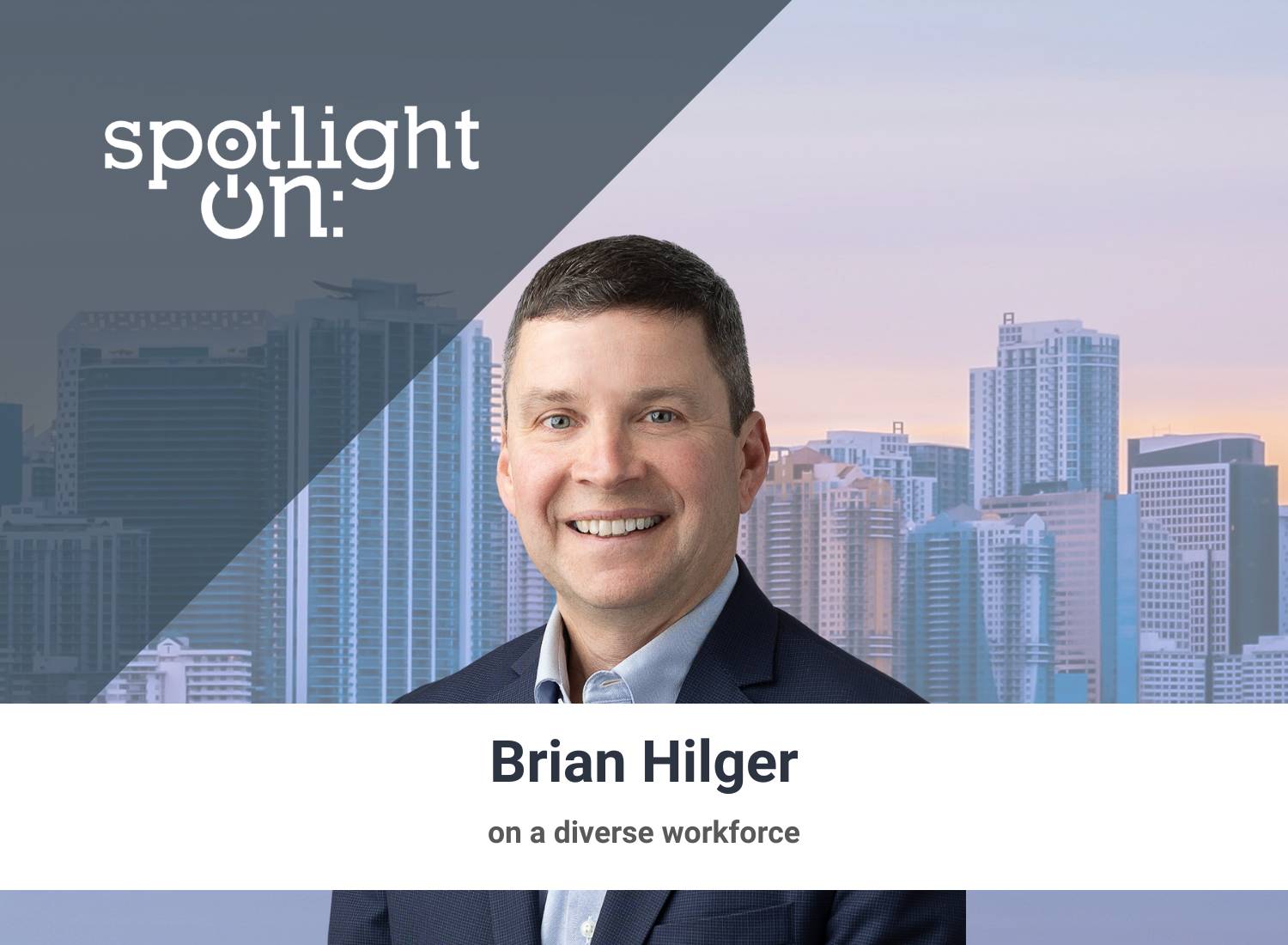
Spotlight On: Brian Hilger, Executive Managing Director, Philadelphia, Colliers
 October 2025 — Land availability is one of the biggest challenges in the Philadelphia real estate market. “They’re not making any more land, as they like to say, so it has been a challenge. That will result in an upward cost on things because land is just going to go up in value,” Colliers’ Executive Managing Director for Philadelphia Brian Hilger told Invest:.
What makes Philadelphia a great place for Colliers to operate in?
The No. 1 factor is labor. There is just a great diversity to the labor force here, spanning from blue collar to high tech, which has caused a lot of people to rethink Philadelphia. The city is also located near the Port of Philadelphia, Port of Camden, and Port of Wilmington in Delaware, as well as Newark. It’s got a great infrastructure in terms of rail. We also have a large airport with a significant UPS hub at the airport right on the runway, which helps as well.
Join us at the Philadelphia 6th Edition Leadership Summit! This premier event brings together hundreds of Southeast Pennsylvania and South Jersey’s regional leaders to discuss the challenges and opportunities for businesses and investors. This year’s theme centers on the regional strengths of the eds and meds. Click here to learn more.
How would you describe the state of the real estate industry in Philadelphia, and what factors are influencing market demand?
With almost every new year comes a lot of optimism. Last year, because of the election and because of interest rates, there was a lot of wait and see. Now, as the new year moves along, a lot of the projects from last year that got pushed into 2025 seem to be moving forward. We’re seeing a huge increase in our brokers’ opinions of value as well as listings and new pitches for new business. A lot of this was teed up last year, and it’s starting to take effect this year.
In the office space, Philadelphia is sitting in a good spot, with limited new office construction. We think that if an office building is in a good location and highly amenitized, it’s probably well leased with good rental rates. On the industrial side, we have great access to highways to get to New York, to get to D.C., and points further south. And as you get west into Pennsylvania, we’ve got an awesome reach to the entire Northeast. I think we’re situated well on the industrial side.
We’ve also seen retail come back. We’ve seen foot traffic at malls, and main streets across the region are coming back. Our retail brokers are benefiting from that as well.
What impact will tariffs have on commercial real estate?
We’re going to try to figure that out as we go along. I don’t think tariffs have had an immediate impact, although there have been some deals done because they were trying to get product into the region before the tariffs took hold. In that way, it was a little bit of a positive. But overall, we’re going to see what happens with these tariffs and how the economy reacts.
What are the biggest challenges for your company now?
One of the challenges that we’re facing is having the right people in the right segments. We think that there are some markets that are probably going to be better than they were a couple of years ago. I’ll use office as an example. In the last 10 years, most brokers getting into the business stayed away from office. So, there’s a glut of talent, call it under 35 years old, that has worked either in center city office or traditional suburban office markets. You can say that with retail as well, and vice versa on industrial. It’s probably oversaturated with talent on the industrial side.
In the next two years, we’ll see a shift of focus among some people on the younger end who are still trying to figure out their career paths, moving from industrial to retail or office. I think that’ll happen in the next 18 to 24 months.
The pandemic hurt retail and office. So, a lot of people in the business were advised to go into industrial because that boomed. It’s been booming for 10 to 12 years, nationally as well as in Philly. It’s still doing very well in Philadelphia. I’d say the number of brokers that have gotten into industrial compared to other fields is probably 10 to 1.
Another challenge is finding land because it’s such an established market, and a lot of the land has been picked over and rezoned. There have been a ton of industrial products that have come online, for example. Those projects took vacant lots, such as an old school or an old retail center.
They’re not making any more land, as they like to say, so it has been a challenge. That will result in an upward cost on things because land is just going to go up in value. I think there was a little bit of a pause there with the cost of construction, which has held off some projects, and that might not be a bad thing. It’s probably good because it is limiting the amount of supply that can come online.
What are some of the biggest opportunities for Colliers in Philadelphia over the next couple of years?
I think there are good opportunities in all sectors. We’re going to have to figure out where interest rates settle at some point. That’s going to help the institutional capital underwrite deals, and we’ll see more transactions out of that. The return to office should help with the office market in general. There’s not a whole lot of new construction within the office space, so we’re hoping that helps. We’ll still see industrial chug along pretty well as a lot of the projects that may have been stalled for a year or two are getting closer to coming out of the ground as the economy improves.
In multifamily, we’ve seen a huge impact in terms of requests for values and requests to sell properties. I don’t want to say there will be a supply glut, but a good amount of supply is coming on. As we figure out interest rates, we think the buyers will be able to figure out values for these buildings. That has been the challenge: Fluctuating interest rates have made it difficult for buyers to figure out value. I think multifamily, especially in Philadelphia, where it’s hard to find land, will continue to do well.
We’ve got a strong healthcare group, and Philadelphia has an aging population, which is going to continue to put pressure on healthcare. The challenge in healthcare is educating the labor force. Healthcare labor is also a big issue. I think we’ll do well in the healthcare segment.
What is in the pipeline for Colliers in Philadelphia over the next two to three years?
Our industrial team is out with some big projects. One of them is in Southern Berks County, a multimillion-square-foot project. I think that’s an exciting one. Our medical team is leading some projects that will push the needle on community-centered ambulatory healthcare in our region. We also have a group that’s focusing on data centers. That’s a hot place to be right now. The key here is power infrastructure. If we can find power, that’s going to be a good spot to be in.
Want more? Read the Invest: Philadelphia report.