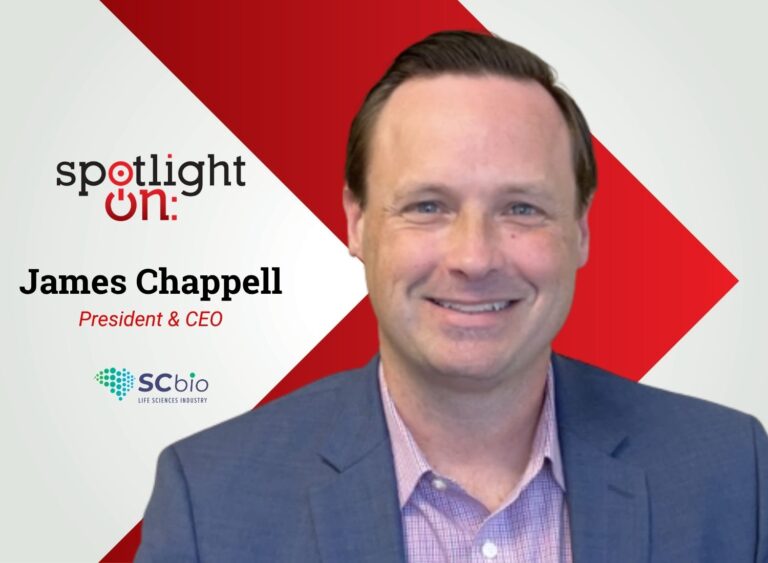
Juan Montoya, CEO, Rokk3r
 In an interview with Invest:, Juan Montoya, CEO of Rokk3r, discussed how Rokk3r supports businesses in mitigating risk while investing in technology, and in optimizing productivity potential. “There’s no doubt that hiring people who know these things will be a shortcut to help us do it right,” Montoya said.
How has South Florida’s evolving startup climate influenced Rokk3r’s priorities in the region?
Miami wasn’t a big tech hub when we started, but we saw a lot of opportunities with the connection to Latin America and entrepreneurship. We also saw real opportunities in multiple emerging technologies, including AI. We saw that, increasingly, smaller groups of people are able to create transformative businesses and viewed all of this as a big opportunity. Miami’s development as a legitimate technology hub clearly benefitted from all this, and we’d like to take a little bit of credit.
Through the years, we have had a lot of firsts, and we try to be part of a lot of firsts, including early-stage and tech-focused VC funds. Miami now is like no other time in history, populated with great founders, operators, and people who can execute. To some degree, that has driven the way we operate, both on the innovation and on the venture side. We’ve been able to create the right networks and see execution that wasn’t possible maybe 10-13 years ago. We’ve also seen businesses of all sizes in the area realize the changes they have to make, the threats they’re facing, and that the ability to innovate has become a core function.
How do you balance local engagement with broader international collaboration to benefit South Florida’s entrepreneurs?
Everything we’ve done has always been Florida-based and U.S.-based, but part of our value proposition has always been the opportunities for investors and entrepreneurs in Latin America to build here. The city has an advantage from a strategic perspective, from a structural perspective, from a raising capital perspective, from a talent perspective, and many other reasons. A lot of people pitch Miami as a bridge between here and Latin America, and increasingly, to other places, including Europe. It is a business-friendly place with a good quality of life, as well as good opportunities and technology.
How does Rokk3r address challenges in access to capital and scaling support for startups in South Florida?
Overall, the VC investment level has gone down from the peak in 2021 because costs remain high. Higher interest rates tend to crowd out some of the more speculative early-stage and venture-stage investors, who can now get a decent return elsewhere with a lot less risk. There’s also been a lot of hype and capital deployment around AI, and we’ve seen smarter deployment of capital skewing towards either experienced founders or products that already have a level of traction.
That is not to say that people aren’t investing in the early stages, particularly in AI, but it is harder to get the capital. Rokk3r has always been a little skewed towards strong execution and mitigating risk. The way we help entrepreneurs is by advising on how to minimize the risk of going to market, how to experiment quickly, how to prove demand for their product before they overspend on technology and other things, and how to run, at the early stage, an evidence-based approach to going to market. We teach courses, run accelerators, and advise startups.
We can either invest in it ourselves or help secure capital through our network. Through the years, we have created a network around VCs in the region, including in Latin America and other places in the United States, and connected them to the right investors.
What are the emerging trends from South Florida?
The hype has died down a little bit, but it remains a good hub for Web3 and blockchain. Miami went from a place with little development to a place with a lot more capital. There is now a decent amount of inflow of builders, operators, talent, and capital. Miami continues to be strong in media and fintech, with a lot of interesting things being built for those sectors. The thesis in Rokk3r revolves not just around cutting-edge technologies, but also the convergence between those technologies. We can see that anywhere; for example, we see a lot of opportunities around connected devices driven by AI and governed by blockchain.
With blockchain in the Web3 space, for example, some of the most exciting things have to do with mainstream adoption that enables commerce at scale to reduce costs and increase efficiency. It can also be a great tool to manage governance, access data, and identity verification. We’re still in the early innings for Web3, generative AI, and AI agents. As these things develop, they’re going to converge more, have more capabilities, and they’re going to need more security in terms of compliance, privacy, and ethics.
How does education support Rokk3r’s effort in strengthening Miami’s innovation capacity?
Education has always been a part of what we do. From early on, we codified everything that entails our methodology for company building, and we turned it into courses for entrepreneurial and corporate innovation. We offered it for free for a long time. We took them offline this year because we thought it was less relevant now, and it needed some updating. In our accelerator programs, for example, we have run four cohorts of blockchain accelerators, which have always been constructive and fun.
We do like to be in front of entrepreneurs to help them build their businesses with technology. We’re looking at AI as a conduit to the next level. We have to be careful with that, but there are a lot of big opportunities in taking knowledge from our venture building and turning it into tools. Soon we will be re-launching the first module of what we call our AI-enabled venture builder, starting with a chat interphase and agentic flows that help users execute our process in real time using their own ideas.
How does Rokk3r support startups in today’s challenging climate?
Ultimately, building a business means solving a problem. We have to be smart about how we use time and capital. We have to be realistic about what we learn from the market, which might inform the way we move into the future. None of that has changed. We are going to continue to do what we do best, which is abstracting ourselves from technology while focusing on business and problem solving without being blind to the changes.
We’re working hard on staying up to date on our process and tools to accommodate big opportunities, like AI. We also point out the risks and try to give the best advice possible. In an expensive capital environment, where execution is highly valued, we need to have a lot more traction before we raise money. There are real risks of bubble-type behavior at the infrastructure layers and at the app layer, which is more relevant to Miami. To give an example, there will be funded AI “products” that quickly become features of an LLM. Those will probably froth out and disappear.
There’s also a risk in even well-thought-through SaaS products, because it’s so easy to build something fully customized now, and a lot of these tools might be replaced with internal builds that cater to the needs of the customer. The results of the speed and quality of AI adoption will dictate what survives into the future. The early phase, where a lot of things get funded, can be a big risk for entrepreneurs today, but it is, by all means, the time to build.
What are Rokk3r’s top priorities for the next few years?
We have been focused on execution for the portfolio side. A lot of early bets that we invested in took a little longer to realize than we would have hoped for, but they are clearly happening. We are doubling down on technologies and integrating more AI into the portfolio. We continue to support our portfolio companies either as part of their operating team or as board members and advisors.
On the corporate innovation side, there are some big questions and big opportunities, for example, with AI in consulting. There were a lot of failed pilots over the last few years, and many companies are going to have to take a rational look at what’s necessary and what’s possible and how to leverage AI and other technologies in a way that creates value for them and their customers. We think there are big opportunities in advising these companies and helping them improve their execution capabilities to intelligently leverage these technologies.