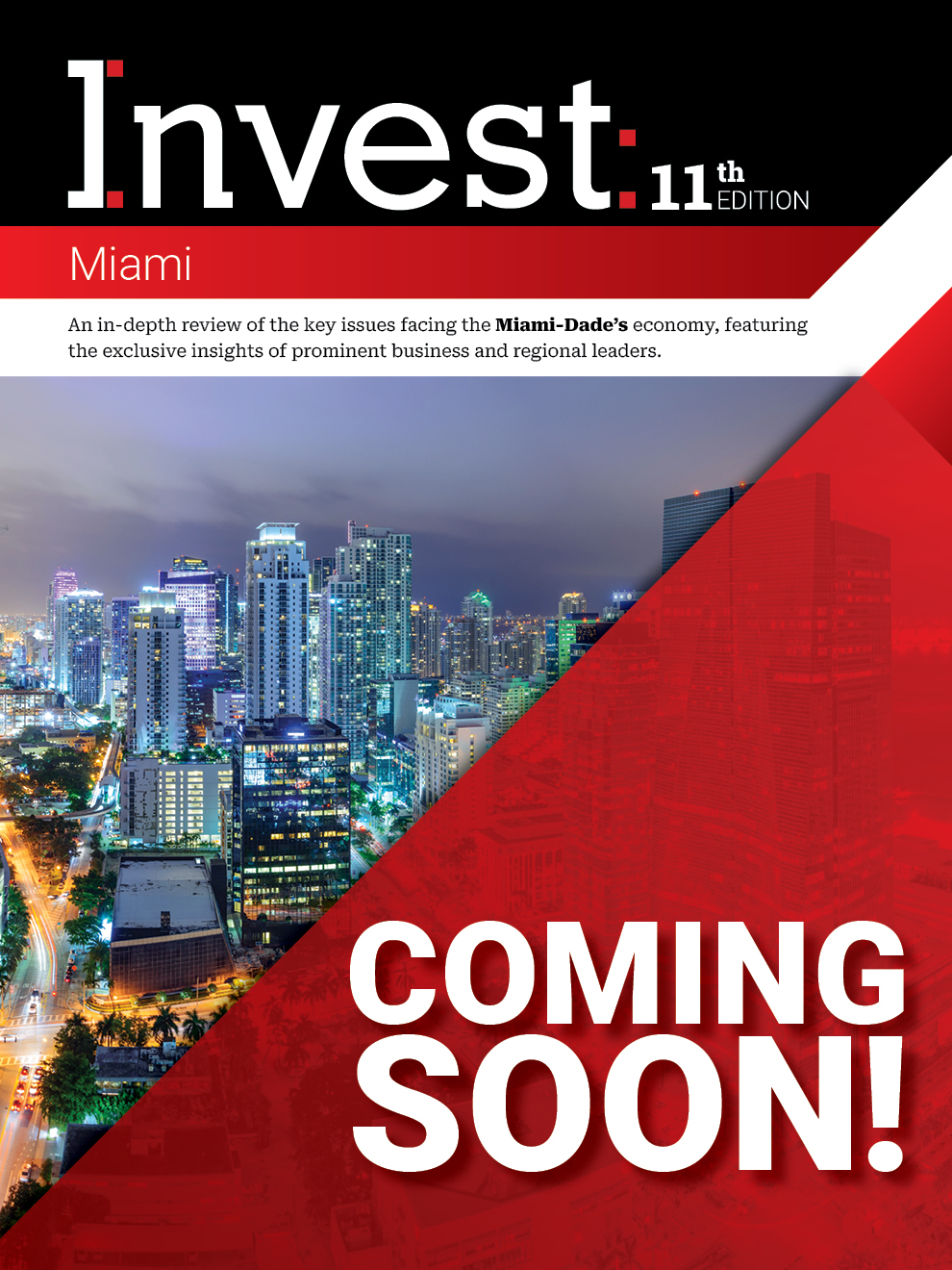
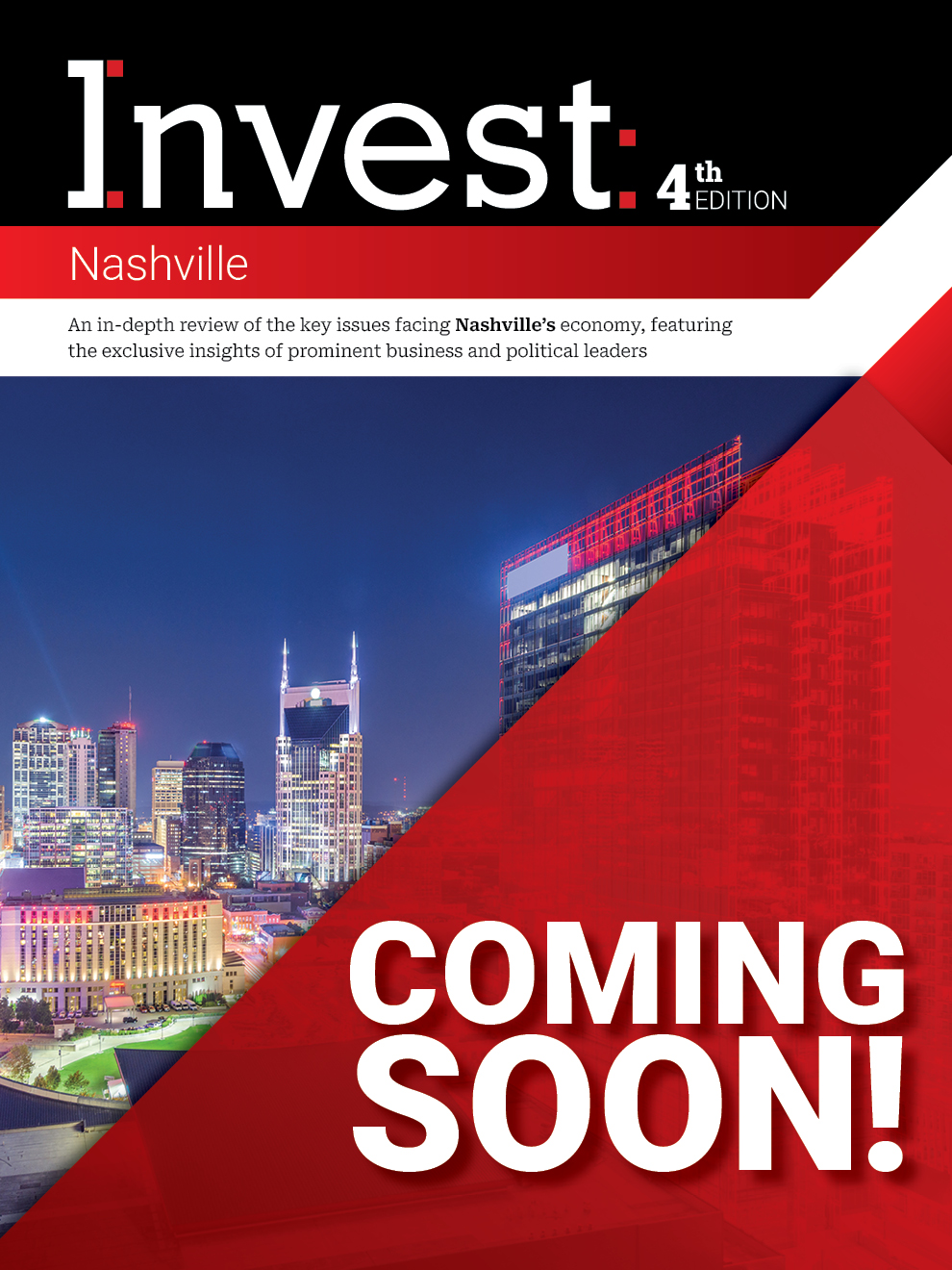

As regional banks scale up, Nashville’s financial footprint expands

Writer: Eleana Teran

BankOctober 2025 — Nashville’s banking sector is ripe for change as two recent M&A deal announcements, Pinnacle Financial Partners merger with Synovus and Fifth Third Bancorp’s acquisition Comerica, will reshape the city’s financial landscape amid broader bank consolidation in the United States.

Fifth Third’s planned $10.9 billion acquisition of Dallas-based Comerica marks a significant development in the banking landscape. The deal will create the nation’s ninth-largest bank, with roughly $288 billion in assets, and expand Fifth Third’s presence across the Southeast, Texas and California. For Nashville, where the bank already ranks as the ninth-largest bank with $3.8 billion in local deposits, the merger reinforces the city’s growing role in the regional financial network. The Cincinnati-based bank has been steadily deepening its Tennessee footprint, including a $20 million investment in North Nashville and the relocation of its regional headquarters to Germantown’s Neuhoff District. 

“Tennessee remains a crucial part of our success,” David Briggs, regional president for Fifth Third Bank, told Invest:. “We are deploying $180 million in capital through various initiatives, including opening 11 new financial centers,” he said. 

“Our company continues to support investment in talent, hiring aggressively and adding key leadership in Memphis while maintaining momentum in Middle Tennessee. From a holistic standpoint, no other regional bank is building as many financial centers as we are,” he added.

Pinnacle Financial Partners, headquartered in Nashville, announced in July its plan to merge with Synovus Financial in an $8.6 billion all-stock transaction that would create a regional bank with more than $115 billion in assets. Since the announcement, the implied value of the deal has declined to about $6.98 billion, reflecting broader uncertainty in the regional banking sector as investors weigh integration risks, higher capital requirements, and the potential impact of prolonged interest-rate pressure. The combined company would surpass the $100 billion asset threshold that classifies a bank as a “large financial institution,” bringing stricter capital and liquidity requirements that can pressure profitability.

Despite the market’s initial reaction, Pinnacle’s leadership remains focused on long-term performance and the merger is expected to close in early 2026, pending shareholder and regulatory approvals. In an interview with Invest: prior to the announcement, Tom O’Connor, market executive at Synovus, noted that consolidation across the financial services industry will likely continue, particularly in heavily banked markets like Middle Tennessee. “Consolidation has pros and cons, but it’s inevitable,” he said. “We’re closely watching the regulatory environment and the growth of the private credit market, which is competing more with the banking sector. Another area of interest is the evolving relationship between banks and fintechs, and creating partnerships that could lead to better offerings for clients.”

Data from S&P Global Market Intelligence shows that M&A activity this year is on par with 2024 levels, though deal value spiked in July to $10.83 billion, the highest since mid-2021, signaling renewed efforts by regional lenders to scale up amid rising costs and tighter regulatory expectations.

The acceleration in mid-2025 reflects more than dealmaking momentum. Banks are facing margin compression. While the banking industry recorded a 5.8% rise in profits in 1Q25, the FDIC noted that loan growth remains slow and provisions tied to commercial real estate are elevated, signaling uneven performance across the industry. 

READ MORE: Middle-market M&A activity drives economic transformation

Recent data shows that dealmaking has remained resilient despite market volatility, supported by high levels of available capital and the need for technological transformation in multiple sectors. 

As Jim Meade, CEO and managing shareholder of accounting and advisory firm LBMC, noted in an interview with Invest:, “Significant M&A activity exists in public accounting today. This has been fueled in part by the introduction of private equity and the expected need for organizational size to invest in digital transformation and industry challenges.” That same logic applies to banking — scaling up provides the infrastructure to support innovation and absorb costs tied to regulation and technology. For Nashville, these deals are likely to enhance the city’s banking diversity and capital availability, as larger institutions expand their investment base and lending capacity in key growth markets across the Southeast. 

Want more? Read the Invest: Nashville report.

Subscribe to Our Newsletters

"*" indicates required fields

Address*
Would You Like To Receive Our National Newsletter?*
Interests
Markets
This field is hidden when viewing the form

Spotlight On: Jessica Dauphin, President & CEO, Transit Alliance of Middle Tennessee

Jessica_Dauphin_Spotlight_OnOctober 2025 — Jessica Dauphin, president and CEO of Transit Alliance of Middle Tennessee, sat down with Invest: to discuss how the Alliance is working to push transit initiatives forward, its strategy for advocating for regional transit solutions, and how investing in transit will benefit both the community and economy for generations to come.

What recent developments or changes have most impacted the Alliance’s priorities and strategy for advocating for regional transit solutions?

The passage of Choose How You Move in November 2024 was a dream come true for us. We’ve been working alongside many partners, including Mayor Freddie O’Connell, toward that goal for 15 years, so finally meeting our mission in such a significant way has been huge. Many nonprofits go decades without achieving that kind of milestone. It has galvanized our work and, in the best way possible, pushed us to broaden our efforts. We’re making ripples and moving the conversation forward for the region. Regional growth is happening fast, with Middle Tennessee set to welcome another million residents over the next 20 years, but our roads are already at capacity. A survey by Williamson Inc. found that one in three people leave their county for work every day, and a state report shows inter-county travel is at an average of 70% — not even counting pass-through traffic. This reinforces the need for regionalism as a best practice.

What are the region’s biggest mobility challenges right now, particularly related to growth, and what opportunities do you see for closing those gaps?

My main focus now is figuring out how we get more collaborative across the region, and fast. The window for effective change is closing. It took the city 15 years to secure dedicated funding, meanwhile the rest of the region doesn’t have that kind of time. High-priority projects from TDOT could make an impact, like the dedicated lanes, and there are good RFPs coming in from collaborative partners, but beyond that, there’s not much on the horizon. The Star commuter rail went through a study to improve service, but implementation could be expensive.

People understand that transit improvements cost money, so the big question is where to allocate limited resources for the greatest impact. Personally, I look at benchmarking our region’s airport access as my next big goal. If we can improve connections to the airport from Clarksville, Franklin and across the region, we’ll boost mobility overall for residents and visitors alike. We cover 10 counties, and keeping up with each one is a tall order for a small organization like ours. We simply don’t have the bandwidth yet, so normalizing this conversation for a shared objective across the region is critical.

How are you seeing public and private stakeholders come together in new ways to push transit forward?

The TDOT choice lanes are an example of a public-private partnership to build extra lanes, with transit vehicles able to use them for free — a triple win. The WeGo Donelson Station is another regional public-private partnership that serves buses and rail. Nashville’s intentional transit-oriented development (TOD) will be a game changer for the city and the region. I don’t think we can fully grasp its impact yet — services from the Donelson TOD hub to the airport will become more frequent, improving connectivity. It’s similar to what we saw with the Dr. Ernest Rip Patton, Jr. North Nashville Transit Center where one transit development dramatically increased access to jobs, education and training and even won the Transit Development of the Year award last year at our Breakfast for Better Mobility event. 

If we succeed with the regional airport project, that will be another key public-private partnership. We’re seeking funding to conduct that study and share the findings. 

Housing plays a part as well. After Choose How You Move passed, the conversation turned to leveraging public and private funds to create affordable and workforce housing units. Collaboration is truly part of Nashville’s culture. I see it across city departments and the region. It’s our superpower, and the only way we will see success in addressing pressing challenges.

How does the Alliance work with local communities to better understand the connection between dedicated transit funding, better services, rideshare growth and beyond?

I always start by asking communities what they see and what challenges they face, then I go back to identify what changes and infrastructure are needed. This must be an ongoing conversation — a one-and-done approach will never work. Listening is a big part of what I do. The Transit Alliance plays the role of active listener. That strategy worked well in one county in 2023-2024, and now we’re bringing it to others to keep the dialogue going.

Looking ahead, what are your top priorities for the Alliance in the next few years?

My top priority is to contextualize our work in a regional strategy with shared goals to improve transit. We need more resources, a solid report to back our plans for regional airport access, and more bandwidth within the organization to keep pushing. Hiring more staff will help us keep our foot on the gas. If we do nothing, the region will keep paying the price — we already lose $1.2 billion annually sitting in traffic. We need to invest differently and push this conversation forward. Infrastructure and public services outlive elected officials and individuals because these are generational investments. For a region like ours, connected by geography and economy, it only makes sense that we should be connected through mobility as well. It’s like the interstate system, built 70 years ago and still shaping lives today. We have to solve today’s needs and think 30-50 years ahead. It weighs heavily on my mind because mobility affects access to healthcare, education, sustainability and economic resilience.

Want more? Read the Invest: Nashville report.

Subscribe to Our Newsletters

"*" indicates required fields

Address*
Would You Like To Receive Our National Newsletter?*
Interests
Markets
This field is hidden when viewing the form

The efforts keeping polo a fixture in Palm Beach County

Writer: Pablo Marquez

PoloOctober 2025 — Palm Beach has long been synonymous with luxury, elegance, and world-class sporting events, and polo remains one of the crown jewels in the region’s sporting calendar. Known as the “Winter Equestrian Capital of the World,” Palm Beach County draws a global audience each year to experience the high-speed, thrilling action of polo — a horseback team sport dating back over 2,000 years. 

While polo has been part of the Palm Beach lifestyle for decades, it continues to grow and evolve, attracting new players, sponsors, and spectators from around the globe. This resurgence of interest has been driven by several organizations working together to enhance the sport’s profile. 

Notably, the Palm Beach Polo Season, which runs from January through April, showcases top-tier talent and culminates in high-stakes matches at iconic venues like the Palm Beach Polo Golf & Country Club in Wellington, a key hub for the sport in the region.

“Wellington is home to world-famous equestrian events, with the equestrian industry serving as a powerful economic engine for the region,” said Michela Green, executive director of the Greater Wellington Chamber, in an interview with Invest:.

The development of new polo clubs and the modernization of existing facilities strengthen the area’s role as a polo powerhouse. One example is the newly envisioned PLYRS Polo Club, led by the Minuto Siete family. This ambitious project is redefining the sport in Palm Beach by introducing innovative playing formats and enhancing the overall polo experience. The club aims to bring a fresh perspective to the game while maintaining its traditional roots — a blend of innovation and tradition that is expected to draw younger, more diverse audiences.

The sport’s seasonal events generate millions in revenue, benefiting polo clubs, hotels, restaurants, and other local businesses. The influx of spectators contributes significantly to the local tourism industry, especially during peak seasons when polo matches attract affluent visitors from around the world.

“Palm Beach County is home to the world’s best equestrian and polo facilities in Wellington, including the Winter Equestrian Festival and the National Polo Center,” said Emanuel Perry, executive director of the Tourist Development Council of Palm Beach County, to Invest:.

Events like U.S. Polo Association (USPA) tournaments and high-profile matches at the International Polo Club (IPC) help maintain Palm Beach’s status as a luxury destination. The international appeal of polo in Palm Beach also drives investments in related sectors, such as equestrian services and real estate.

Sponsorship from global brands such as the U.S. Polo Association, recently signed on as the title sponsor for the Palm Beach Polo season, ensures the sport’s visibility on a global stage.

Several key entities are at the forefront of promoting polo in Palm Beach. The IPC remains a leading venue, hosting major tournaments, and offering a unique social scene for attendees. Additionally, organizations like the U.S. Polo Association and local clubs like the Wellington International Polo Club organize events that keep the sport vibrant.

For the village of Wellington, with a population of more than 60,000 people, the sport and wider equestrian sector have been a major part of economic and community development. 

“Our equestrian community not only brings international prestige but also adds a vibrant and dynamic element to our community,” said Michael Napoleone, mayor of Wellington, in an interview with Invest:.

“What truly makes Wellington unique is the seamless integration of the equestrian community with the rest of the village. We’ll continue investing in equestrian infrastructure which includes maintaining our extensive bridle trail network and protecting the rural lifestyle that has made Wellington such a special place for horse owners and competitors.”

Want more? Read the Invest: Palm Beach report.

Subscribe to Our Newsletters

"*" indicates required fields

Address*
Would You Like To Receive Our National Newsletter?*
Interests
Markets
This field is hidden when viewing the form

Spotlight On: Keith James, Mayor, City of West Palm Beach

Keith_James_Spotlight_OnOctober 2025 — In an interview with Invest:, West Palm Beach Mayor Keith James discussed the city’s approach to balanced growth, housing affordability, and technological innovation. “My North Star has always been and will continue to be inclusive growth,” James stated, emphasizing initiatives to ensure development benefits all residents while maintaining the city’s character. The conversation covered public safety improvements, infrastructure upgrades, and emerging transportation solutions like autonomous vehicles.

What has your office focused the most energy on?

My North Star is inclusive growth, ensuring the transformative growth in West Palm Beach benefits the entire city, making it a community of opportunity for all. A key issue, due to this growth, is the affordability of housing. We must ensure nurses, school teachers, secretaries, and restaurant and entertainment workers can afford to live in or near West Palm Beach.

What measures are being taken to expand workforce housing?

As a city, we have adopted certain incentives in our ordinances and resolutions for developers. It’s a variation of the Live Local program the state put forth, but we think we have a better, more customized approach. If a developer wants increased density in certain parts of our city, they’re obligated to provide a certain percentage of new units as workforce or affordable housing. We negotiate the percentages of area median income (AMI) on a case-by-case basis. The framework is established in city ordinances. Developers come to us and we begin negotiations.

It’s important to me, and I make this clear to staff, that designated workforce housing units must be identical to market-rate units. We don’t want substandard quality or segregated existence in buildings. Units must be on the same floors, intermixed with market-rate units. We insist on this while staying as creative as possible. In some cases, we may provide tax abatement incentives to developers and work with them to increase the number of available units.

How are public-private partnerships driving new opportunities in West Palm Beach?

We have money set aside for grants and are finalizing a tax abatement program outside the community redevelopment agency (CRA). The CRA can use tax increment financing (TIF), but for non-CRA areas whether on the north end or south end we see growth potential, and these areas need incentive structures like tax abatements to encourage development, which we evaluate on a case-by-case basis.

As a city, we’re open for business and willing to have creative conversations about incentives. Regarding the three P’s in public-private partnership, there’s an additional P we’re seeing — philanthropy. Private philanthropy has become a funding source, evident in our newest affordable housing projects. More nonprofits are entering workforce housing development, and savvy developers are utilizing this. It’s not just public-private partnership — we’re engaging the philanthropic community in this effort too.

What initiatives are being implemented to improve public safety in West Palm Beach?

Public safety is a mayor’s top priority, as beautiful buildings won’t attract tenants without a safe reputation. Last year I changed police department leadership to better meet our mission of professional, community-driven service. 

Despite downward trends in crime, especially violent crime, we must remain vigilant, with leadership feeling daily pressure to maintain safety. In 2018, West Palm Beach averaged 18 homicides annually over the prior three years — most unresolved, ranking us among South Florida’s Top 10 murder capitals per capita, which was unacceptable.

We’ve addressed this through new methodologies and programs. Equally important is the law enforcement-community relationship, ensuring residents see officers as allies through intentional outreach. Every neighborhood deserves safety, regardless of zip code.

How is West Palm Beach exploring or leveraging new technologies like AI?

I have staff members researching how comparable municipalities are using AI. We’re new to this and I’m not afraid to adopt good ideas from others. They’re studying best practices nationwide. I recently had a Zoom call with an AI vendor serving municipal governments that is proposing a pilot program for West Palm Beach. We’re slowly entering the AI space, but I don’t want to rush. I prefer learning from other cities’ experiences first rather than being the first adopter. We need proven best practices. We’re exploring how AI can make our city more productive and efficient through these efforts.

West Palm Beach just won the 2025 TripAdvisor Traveler’s Choice Award. What do you attribute this success to, and what makes the city such an attractive destination?

The weather is a major attraction in West Palm Beach. Visitors and residents discover our “secret sauce” — a sophisticated city with a small-town feel. We offer diverse attractions and entertainment, easy airport access, and the Brightline for regional reach. Quality of life stands out with our food and cultural scenes, waterfront public spaces, CityPlace, golf courses, pickleball courts, and museums, catering to dining, culture, or activities. The city’s simple navigation and accessibility enhance its unique appeal.

How is West Palm Beach balancing economic growth with maintaining quality of life and the city’s identity?

It’s a hard balance, but we must be intentional about it. We don’t want growth just for growth’s sake. Growth is great for the tax base, but we need to be smart. Certain areas of our city need more attention — like our north end, which hasn’t seen new residential or commercial projects in over a decade. Today we are seeing pioneering developers building luxury condos there. Projects like Nora will bring high-end retail, a hotel, residences, and workforce housing.

As developers propose projects, we suggest tweaks to fit each neighborhood’s needs. We focus on walkability, pedestrian experience, and multiple transportation options to avoid being car-centric. Growth brings traffic, but we’re exploring ways to move people — not just cars — more efficiently. This addresses one of growth’s biggest headaches.

The key is intentional, smart growth — aware of downsides like traffic strain and infrastructure demands. We’re not chasing rapid growth, but the right growth.

What projects, expansions, or revitalization efforts are underway or in planning for the city?

We’re a city over 125 years old, which means our underground pipes constantly need updates. We work with consultants who assess our infrastructure and identify priority areas needing attention. A consultant evaluates our roads every five years, providing condition reports with a grading system. While we receive resident complaints about potholes, we focus first on the most severe issues using this data.

We constantly monitor both above-ground and underground infrastructure to stay proactive rather than reactive. Through technology and expert assessments, we address the most critical needs systematically — not just responding to individual complaints. This comprehensive, strategic approach guides our infrastructure investments.

Are there any new amenities or services the city plans to introduce to enhance residents’ quality of life?

We’re focused on moving people, not cars. We’re experimenting with autonomous vehicles and electric shuttles in our downtown area. As downtown grows with more commercial buildings and workers, we need innovative mobility options so people don’t have to return to their cars for meetings across downtown. The goal is to provide alternatives on fixed routes after people park at their primary office. With more people comes more traffic, so we’re developing solutions to prevent gridlock. We’re in talks with tech companies — one major company will announce plans soon, marking West Palm Beach’s emergence as a tech hub, complementing our financial services and tourism sectors. Developments include Vanderbilt University’s graduate campus and Cleveland Clinic’s downtown campus, which will bring new energy to our city.

Want more? Read the Invest: Palm Beach report.

Subscribe to Our Newsletters

"*" indicates required fields

Address*
Would You Like To Receive Our National Newsletter?*
Interests
Markets
This field is hidden when viewing the form

Industry Corner: Smart real estate is reshaping investment strategy

Writer: Mirella Franzese

Industry corner is a monthly series on what company leaders believe are the most important best practices in their sector or organization to ensure growth and sustainable success.

Industry_CornerOctober 2025 — Real estate developers pulled back in 2025 as higher interest rates, elevated material costs, and tighter funding created a fundamentally high-risk, low-reward environment. However, while investor appetite has cooled, the market has shown surprising adaptability and opportunity. In today’s volatile landscape — where many projects struggle to break ground — smart properties are delivering some of the highest returns on investment.

Environmental, social, and governance (ESG) practices are key for corporate responsibility as well as navigating an increasingly regulated market and catering to tenant demand. 

ESG models influence how real estate is valued. A 2022 EY case study found a 10% to 21% increase in market value for green buildings — roughly $29 to $61 per square foot in added value.

While property worth was once determined by square footage, location, or lease terms, it now hinges on adaptability, efficiency, and tenant satisfaction, according to national facility management provider ABM. From tech-enabled properties to energy-efficient construction and adaptive reuse projects, America’s largest real estate firms are pivoting to ESG to attract tenants, secure investments, and meet tighter regulations.

Asset refurbishment and renovation

“Sustainability is the biggest challenge the industry faces,” Gensler’s Nashville Office Co-managing Director Christopher Goggin told Invest:. “Buildings are responsible for about 40% of greenhouse gas emissions, so our role is critical.” 

For architecture and design firms like Gensler, tackling this challenge means reimagining underperforming assets into more sustainable, flexible, and experience-driven places. 

“There’s definitely a trend here,” said Goggin. “With so many undervalued properties on the market, new opportunities are opening up for owners and developers.”

Those opportunities extend well beyond U.S. markets. Globally, asset refurbishment and renovation are expected to be the largest area of investment for real estate investors over the next three years, according to a recent JLL report.

Still, there are challenges associated with assessing the best fit for a property considered for conversation. “We have to consider the entire urban context: what makes the place work, what the experience is like, and what synergies are possible,” added Goggin.

Tech-driven investments

AI and digital tools now streamline development, synthesize market data and intelligence, and facilitate regulatory reporting — giving investors the insights they need to make smarter, more informed decisions market by market.

“Technology, particularly AI, is becoming embedded in every part of real estate,” Lisa Maki, principal and managing director of Avison Young’s Nashville office, told Invest:. 

For Joseph & Joseph Architects’ sustainability director and Nashville office lead, Danny Ruberg, AI-integrated projects go hand in hand with sustainability. Advanced 3D scanning technology allows for more precise and efficient measurements, supporting environmentally informed decision-making. “Many of these tools help us analyze sustainability metrics and environmental data, everything from siting a building to understanding its form and performance,” Ruberg told Invest:. “That data guides our design decisions and helps us optimize for sustainability … (helping) us deliver better project outcomes.”

Cost-saving advantages

According to global technology leader ABB, energy is one of the biggest operating costs for buildings, typically accounting for as much as 40% to 50% of total expenses in commercial properties. Smart buildings can cut those costs down by up to 17% through automation, electrification, and energy monitoring. 

Investments in smart systems allow developers to monitor energy usage in real time while collecting data needed for ESG reporting. These upgrades reduce utility bills, eliminate waste, and predict performance more accurately — all while creating long-term property value. 

Leadership in Energy and Environmental Design (LEED)-certified properties — those designed, constructed, and operated to high environmental standards —  can command rents more than 37% higher in major U.S. cities, according to proptech platform ProptechOs. Sustainable practices don’t have to be complex either. For Parmenter Realty Partners, some of the biggest efficiency gains have come from simple upgrades to lighting, HVAC, and water systems, which are intrinsically valued by tenants, according to Parmenter Realty Partners CEO John Davidson.

Tenant retention

Properties equipped with advanced automation systems charge rental premiums 15% to 20% above average, boosting overall valuation. JLL estimates that overall property value can rise by as much as 21% in projects that integrate property technology. 

Beyond pricing, smart technologies improve tenant satisfaction, leading to longer-term leases and stronger cash flows. A 2025 Georgetown University study found that “greener buildings have a distinct edge in attracting premium tenants.” 

According to JLL research, one in two investors are now willing to fund sustainable buildings to ensure adequate supply. “Occupiers are now more willing to put their money where their mouth is,” said Kamya Miglani, director of corporate solutions research for JLL Asia Pacific, in a report. “The majority will pay to go greener when approaching new tenancy agreements.”

Regulatory and compliance advantage

Beyond attracting tenants, sustainability eases regulatory pressures, which remains a heavy burden on labor and resources. Automation on the compliance front can significantly reduce those costs by streamlining scanning, assessments, and reporting. In one case study, automated systems led to a 40% reduction in full-time equivalent staff requirements, freeing employees to focus on higher-value strategic work. 

“An efficient process is inherently more sustainable because it saves our clients money and conserves resources,” said Aran McCarthy, president of the full-service architectural and design firm, FCArchitects, in a conversation with Invest:.

Tech-driven processes also improve accountability, helping mitigate regulatory risk. As the U.S. government enacts stricter environmental standards, buildings that fail to comply face financial liabilities, higher vacancy rates, and reduced access to capital, as cited by ABB. Developers that integrate compliance into their core operations gain a competitive advantage and differentiator rather than an added cost.

Climate considerations 

As a result, sustainable development momentum is growing. “Resilience, sustainability, and climate change have become major priorities over the past decade,” said Andrew Thompson, president of the American Institute of Architects in New Jersey, to Invest:. 

Natural disasters have changed the narrative, Thompson noted. “These issues became central to architectural discourse.” Across the country, environmental vulnerabilities are pushing clients to prioritize resilience and flood mitigation.

Challenges ahead

Many real estate firms in the commercial and residential space are facing growing pressures to decarbonize building stock and to justify the financial overheads of green building investments. And given the mounting challenges of an uncertain marketplace, implementation is a challenge. “Some assets naturally lend themselves to higher efficiency, so it’s not always a level playing field,” explained Davidson to Invest:. 

He added that many tenants still underestimate the return on sustainability investments. “We don’t see tenants prioritizing sustainability as much as they did five or six years ago,” Davidson said. “Today, the top concern for most tenants is the size and configuration of their space, followed by amenities.”

For more Industry Corner, click here.

Subscribe to Our Newsletters

"*" indicates required fields

Address*
Would You Like To Receive Our National Newsletter?*
Interests
Markets
This field is hidden when viewing the form

Five major developments reshaping Charlotte

Writer: Andrea Teran

Downtown_CharlotteOctober 2025 — Charlotte’s commercial landscape continues to evolve as billions in real estate investment reshape key corridors. Uptown alone is seeing more than $5.4 billion in new development and reinvestment activity, according to Charlotte Center City Partners, including office towers, hospitality projects, and ground-floor retail. The region now has over 137.6 million square feet of office inventory, up from 102.5 million in the early 2000s. South End and NoDa remain among the Southeast’s most active submarkets, as demand continues for walkable, mixed-use neighborhoods anchored by housing, retail, and transit connectivity. Below is a closer look at five development projects set to make regional impact.

The River District — West Charlotte

Developed by Crescent Communities, The River District spans approximately 1,200 acres along the Catawba River in west Charlotte. Its master plan calls for about 2,300 single-family homes, 2,350 multifamily units, and up to 8 million square feet of commercial space. A 2acre working farm and a network of trails, parks, and preserved open space are integral to the design. 

The project has achieved recognition under the One Planet Living Leader framework, which is rare among U.S. developments. Over 500 acres will remain conserved, with flood zones, wetlands, and natural corridors incorporated into the layout. Among its first verticals, Crescent has broken ground on a 318-unit apartment complex, Novel River District.

Walmart Fulfillment Center — Kings Mountain

Walmart is committing approximately $300 million to establish a large fulfillment center in Kings Mountain, projected to occupy nearly 1.3 million square feet. It is slated to create over 300 jobs and is expected to open by 2027. 

The facility will sit at 799 Sara Lee Access Road in Kings Mountain. As part of the deal, state and local leadership approved incentives valued at nearly $3.7 million over 12 years. The site — a large existing industrial building delivered in 2023 — had been vacant and aimed at attracting a key user.

The Grove at Tega Cay — South of Charlotte / York County

Kinger Development Group and Charlotte Living Realty have broken ground on The Grove at Tega Cay, a $250 million mixed-use vision on 55 acres near SC Highway 160. The project includes 150 for-sale homes and townhomes, 225 apartments, and over 100,000 square feet of commercial space.

Construction is planned over five to seven years in three phases. The first phase will feature entertainment uses, townhomes, and green spaces. Later phases will add apartments, retail, restaurants, and office space. The design leans heavily on walkability and an envisioned “main street” experience.

Wegmans — Ballantyne

Wegmans has officially broken ground on its first Charlotte-area store, a 110,000-square-foot grocery and food market in the Ballantyne neighborhood. The store is expected to open in fall 2026 and will employ about 450 people. The site covers roughly 14 acres and includes parking for 650 vehicles.

Wegmans’ Charlotte location will replicate its signature format — including an expansive produce, seafood, bakery, and market café — with both indoor and outdoor seating. Because the Ballantyne store is about 10,000 sq ft larger than its nearby Triangle stores, it reflects a strong bet on regional demand.

Sorella at The Pass — NoDa

Atlanta-based Third & Urban has completed the first phase of Sorella, a 335-unit apartment community that anchors the larger $100 million mixed-use development at The Pass in NoDa. Located along Sugar Creek Road, steps from the Lynx Blue Line, the project includes a mix of studio to two-bedroom units with amenities such as co-working lounges, a rooftop terrace, and ground-floor retail.

Sorella is designed to support and expand the character of the surrounding neighborhood, while also meeting growing demand for transit-connected housing. The larger development will eventually include over 260,000 square feet of office and retail space, with additional restaurants and creative commercial tenants already announced.

Want more? Read the Invest: Charlotte report.

Subscribe to Our Newsletters

"*" indicates required fields

Address*
Would You Like To Receive Our National Newsletter?*
Interests
Markets
This field is hidden when viewing the form

Higher ed leaders are holding the line as enrollment cliff looms ahead

IGFLe7_Banner_Broward_County_Black_Chamber_of_Commerce

Writer: Mirella Franzese

EducationOctober 2025 — American higher education is on the brink of a large tumble this year: the enrollment cliff. While the Class of 2025 represents the largest high school graduation cohort in U.S. history, future projections indicate a sharp decline in the number of graduates starting after Fall 2025.  

Fewer births during the recession years of 2007 and 2008 have led to a dwindling college-aged population in the United States. Enrollment across American degree-granting institutions is expected to plummet as a result.

The number of student matriculations has already been trending downwards over the past decade, dropping roughly 15% between 2010 and 2021, as per the Federal Reserve Bank of Philadelphia.

At the same time, colleges and universities have faced higher costs, increased pressure to lower tuition, funding cuts, and a dwindling pool of high school graduates; all of which have led to multiple closures across the nation. In fact, since 2016, more than 130 U.S.-based colleges and universities have closed or merged

Foothold states like New York, California, Pennsylvania, Massachusetts, and Illinois, known for their robust academic offerings, were hit especially hard, according to a report by financial modelling firm Synario

However, the anticipated drop-off in national enrollment will predominantly affect three major U.S. regions in the next two decades. The Northeast is projected to see a 17% decline in the number of high school graduates, while the Midwest and West are forecasted to experience a 16% and 20% decrease, respectively, according to the Western Interstate Commission for Higher Education (WICHE).

For many schools, the future is uncertain. Most will lack the necessary resources to innovate or enhance the student experience. The rest are likely to shutter, merge, or be acquired by larger institutions.  

To offset this dip, colleges and universities across the nation are planning ahead strategically. Here is what Brian McCloskey, interim president and CFO of Chestnut Hill College, Elizabeth MacLeod Walls, president of Washington & Jefferson College, Megan Coval, president of Butler County Community College, Glynis Fitzgerald, president of Alvernia University, and Mark McCormick, president of Middlesex College, shared about the crisis

Brian_McCloskey_Quote_StackMcCloskey: In higher ed, we talk about the enrollment cliff. It’s here in the fall of 2025 and the fall of 2026. You’re 18 years past the Great Recession of 2007-2009, when people had fewer children because of the situation with the recession. But we’ve positioned ourselves well. We’ve not had any types of restructuring or layoffs. As a matter of fact, the college is hiring nine new faculty members this year. Four are new positions, and five are replacements. We have invested as much in personnel and hiring more people in our enrollment management and admissions area as we do in technology. I don’t know how many other colleges can say that right now, but we’re proud of that…. (But) this is a very volatile landscape. We are a small private college, just as vulnerable as many, less than some. I see the challenges, the headwinds that are coming.

Elizabeth_MacLeod_Quote_StackWalls: Higher education faces broader challenges, including declining public trust and shrinking demographics. The impending enrollment cliff requires adaptability. Some institutions may struggle, but W&J is positioned to thrive by remaining relevant and responsive to market needs. Our strong enrollment trends reflect this, but we are not complacent. We continue highlighting our graduates’ successes to reinforce W&J’s value to southwestern Pennsylvania and Pittsburgh. Accessibility is also a priority. For example, our Rawnsley Scholarship program increased first-generation student enrollment from Washington County by 72% in just one year. This initiative has a generational impact, transforming families and the region. While we hope Pell remains intact, we are prepared to adapt by seeking donor support to ensure low-income students can still attend.

Megan_Coval_Quote_StackCoval: It’s an interesting, challenging, and uncertain time for higher education… We’re seeing the impact of the “enrollment cliff” here, with fewer high-school graduates. But I also think this is a moment of opportunity. With so many different types of institutions in our state, there’s a chance to think creatively and collaboratively about how we serve students going forward… Dual enrollment is one area where we’d love to grow, helping high-school students earn college credit. We also see real opportunity in micro-credentials — short-term skills that can build into certificates or associate degrees. It’s a way to meet the changing expectations of today’s learners while staying true to our mission.

Glynis_Fitzgerald_Quote_StackFitzgerald: We’re preparing for the widely discussed “enrollment cliff.” But we’ve been proactive, guided by our board and faculty, by expanding experiential learning and aligning closely with industry needs. We’ve secured nearly $70 million in public-private redevelopment funds and are fostering collaborations with other independent colleges. Just as you’ve seen consolidation in healthcare and banking, higher ed will likely follow suit. Collaboration and resource sharing will be key to long-term sustainability. Our commitment remains clear: providing high-impact, affordable, experiential education for our students.

Mark_McCormick_Quote_StackMcCormick: The challenge that every college and university is facing, particularly community colleges, is this so-called demographic cliff or enrollment cliff. In the United States, this June’s high school graduating class is projected to be the largest we are going to have for the foreseeable future. After June 2025, the number of high school students projected to graduate each year begins to decrease. Because the majority of students that nearly all community colleges serve are 18- to 20-year-olds, there will be fewer of those students to go around. On top of that, the same impact on enrollment is happening at the four-year colleges and universities, both public and private. In many cases, four-year institutions of higher education have grown less selective in their admissions practices, so there will inevitably be increased competition for a smaller number of 18-year-olds going forward. 

For the last several years, we have been preparing for this demographic shift in three ways. One way is that we have been much more intentional about our dual enrollment partnerships across the county, ensuring that as many high school students as possible have an opportunity to participate in dual enrollment by enrolling in a college course while still in high school. We have developed a more robust program where students at several high schools can now earn an associate degree before they finish high school. Last year, we had 10 of those students walk across the stage at commencement. This year, we have 55. 

We are also trying to target adult students who have earned some college credit but no degree, and have seen the number of students over 45 double in the past two years. Finally, we are also working closely with large employers in the county to promote opportunities for their employees to earn an associate degree, often with financial support from the employer.

Want more? Read the Invest: reports.

Subscribe to Our Newsletters

"*" indicates required fields

Address*
Would You Like To Receive Our National Newsletter?*
Interests
Markets
This field is hidden when viewing the form

Spotlight On: Rudy Bazan, President, San Antonio Pipeliners Association

Rudy_Bazan_Spotlight_OnOctober 2025 — In an interview with Invest:, Rudy Bazan, president of the San Antonio Pipeliners Association, shared how San Antonio’s location makes it a key hub for Texas’ pipeline industry, especially amid rising energy demand from data centers. The association fosters talent through scholarships and YPO programs while championing safety, innovation, and community engagement. “We want to get the word out that our industry is essential, safe, and forward-thinking,” Bazan said.

What makes San Antonio a strategic location for your association and the midstream pipeline industry?

It comes down to location. San Antonio is centrally positioned, equidistant from the Permian Basin to the west, Corpus Christi to the south, and Houston to the east. Each of these areas plays a major role in Texas’ energy infrastructure.

Being able to access any of those markets within two to three hours makes San Antonio an ideal home base for pipeline companies and professionals.


Join us at the San Antonio 4th Edition Leadership Summit! This premier event brings together hundreds of San Antonio’s business and regional leaders to discuss the challenges and opportunities for businesses and investors. This year’s theme centers on how the region is balancing economic growth and authenticity. Buy your ticket now!


What trends or shifts are you seeing in the pipeline and energy sectors?

We’re seeing a significant uptick in interest from data centers, especially in Bexar County. Companies like Microsoft are building several large-scale centers here, but one of the main challenges is supplying them with power. CPS Energy has limitations and is telling some developers they may need to wait years for access to sufficient power.

As a result, many are turning to natural gas as an alternative, which is where we come in. We need to run connector lines from our main pipelines to these sites. That also involves air permitting and environmental compliance, especially when using generators. These changes are bringing new attention and opportunities to our sector.

How is the association partnering with other agencies to support development?

We’re developing relationships with agencies like CPS Energy and ERCOT through speaking engagements at our monthly luncheons to help our members plan for future infrastructure efforts. For example, powering data centers with natural gas, which is relatively new in our area; we’re in the early stages of planning and permitting.

Engineers and environmental specialists are helping us navigate the permitting process. Once the first data center is approved, I expect a domino effect where many more follow.

How is the association supporting workforce development and attracting new talent to the industry?

Talent development is a key priority for the San Antonio Pipeliners Association. We’re a networking organization, but our main focus is raising scholarship funds through events — golf tournaments, clay shoots, fishing trips — to support our purpose. We partner with UTSA, Texas A&M–San Antonio, Texas A&M–Kingsville, and Texas A&M–Corpus Christi to provide scholarships for students pursuing degrees in engineering and related fields. Our members recognize the aging workforce and the need to cultivate the next generation of skilled professionals.

What challenges are you seeing in terms of industry perception and public understanding?

Unfortunately, oil and gas often get a bad reputation in the public eye from advocacy groups and legacy media. What people don’t realize is that 99% of crude oil and gas transported through pipelines reaches its destination safely and without incident. Most people are near pipelines every day and don’t know it because nothing goes wrong. I spent 15 years as an environmental scientist, and I can say that pipelines are some of the safest and most environmentally friendly methods of transporting fuel compared to trucks or rail.

Another misconception is about the people in this industry. These individuals are deeply committed to safety and environmental stewardship. They work in highly regulated environments with strict safety standards and constantly look to improve operations.

How is the association approaching the integration of renewables and other energy sources?

One of our key industry supporters, Howard Energy, says it well: They want to be known not just as an oil and gas company, but as an energy company. That includes renewables.

We’re not opposed to renewable energy. We believe in a balanced approach. As battery and solar technologies improve, they’ll play a bigger role. In the meantime, natural gas is already being used to power AI and data centers. The key is balance — leveraging both traditional and renewable energy sources as they evolve.

That said, there’s a bit of frustration among long-time oil and gas professionals. Many feel underappreciated and misrepresented. They’ve worked hard to advance safety, environmental protection, and energy reliability. That message often gets lost.

What technological advancements are you seeing in pipeline safety and efficiency?

One of the most exciting developments is the use of fiber optics for pipeline monitoring. Operators now sit in command centers, tracking everything in real time. These systems can detect even the smallest gas leaks and pinpoint their location. They can tell when someone or something — even a rabbit or coyote — is on or near a pipeline.

How is the oil and gas industry giving back to the community in ways that are often overlooked?

One thing I wish more people knew is the generosity of the people in this industry. Every year, we hold a holiday toy drive for foster children in our community. We fill two U-Haul trucks with toys based on the generosity of the people in the oil and gas industry.

The oil and gas professionals — and their companies — go above and beyond to give back. These people have big hearts and are deeply committed to their communities. It’s a side of the industry that’s rarely seen but incredibly powerful.

What are your top priorities for the San Antonio Pipeliners Association over the next two to three years?

Our focus is on continued growth and messaging. We want to get the word out that our industry is essential, safe, and forward-thinking.

We’re also prioritizing recruitment, attracting smart, young talent. We’re expanding our young professionals (YPO) effort through mixers, mentorships, and educational outreach. We want to create a pipeline of future leaders and equip them with the knowledge and support they need to thrive.

What is your outlook for the San Antonio energy sector in the coming years?

This year feels like an adjustment period, especially with tariffs, regulatory changes, and broader market shifts. But we’re starting to see improvements.

We anticipate strong growth next year and the year after. Activity in the Eagle Ford Shale is picking up again, and the Permian Basin continues to perform well. We’re also seeing more investments in carbon capture and efficiency-focused technologies.

Overall, the outlook is positive. We have a strong supply and a forward-looking industry that’s constantly evolving.

Want more? Read the Invest: San Antonio report.

Subscribe to Our Newsletters

"*" indicates required fields

Address*
Would You Like To Receive Our National Newsletter?*
Interests
Markets
This field is hidden when viewing the form

Spotlight On: Wes Good, President & Chief Executive Officer, Kirksey Architecture

Wes_Good_Spotlight_OnOctober 2025 — Invest: spoke with Wes Good, president and chief executive officer of Kirksey Architecture, to discuss industry recognition and how that lends itself to client opportunities, the shift toward office environments that enhance engagement and flexibility, and major community-driven projects, including the Kids’ Meals facility expansion and the Houston Food Bank.

How do the Houston Business Journal Landmark Awards impact your firm’s reputation and future opportunities?

Our firm has built a strong reputation over the past 50 years, and these awards help reinforce that. Many clients choose to work with us because of our reputation and how we approach projects. On a broader scale, these awards validate the quality of our work year after year.


Join us at the Houston 2nd Edition Leadership Summit! This premier event brings together hundreds of Houston’s business and regional leaders to discuss the challenges and opportunities for businesses and investors. This year’s theme centers on Houston’s role as a leader in world innovation. Buy your ticket now!


What are some major milestones or standout projects from the past year?

One of my favorite projects is a small one with a huge impact:  Kids’ Meals, a nonprofit that feeds preschool-aged children who don’t have access to lunch programs. We designed a facility that will allow them to expand from feeding 6,000 kids a day to over 25,000. It’s opening this year.

We’ve also been working on a larger-scale version of that for the Houston Food Bank, which will have an even greater community impact. That project will start construction this year. Both projects make a real difference in the lives of people who need support, and that’s exciting for us.


Why is Houston an ideal market for your firm?

Houston has been growing for years, and that creates demand for new infrastructure. Schools need to expand, housing has to keep up, and corporate relocations drive office development. Growth fuels what we do as a firm.

Texas is experiencing similar trends, but Houston stands out because of its diverse economy. We have strong sectors in healthcare, science and technology, education, and corporate development. We’re also one of the most diverse cities in the country, if not the most. That diversity drives innovation and opportunity.

How are rising construction costs affecting client decision-making?

We tell everyone the same thing: if you’re thinking about building, do it now. Costs aren’t going down. They might slow in terms of how fast they increase, but they rarely drop.

What trends are shaping architectural design in Houston?

One of the most exciting trends we’re leading in is mass timber construction. Houston is embracing it more, and there’s growing curiosity around its benefits: sustainability, speed of construction, and the warmth of natural materials.

New manufacturing plants are being built closer to the South to take advantage of our region’s natural forests, like the Southern yellow pine in East Texas. That will make mass timber even more viable here.

We already have several mass timber projects completed or under construction, including an office building in Bridgeland, a restaurant that finished last year, and a student housing project at Rice University. We also designed the largest collegiate classroom building in the country at San Jacinto College, which was built using mass timber. There’s a lot of momentum in this space, and we’re excited to be at the forefront in Houston.

How is the conversation around bringing people back to the office evolving?

It’s not just about architecture. We can design incredible spaces that make people excited to come in, but the solution also has to be operational. One of the biggest things employees value now is access to leadership. That’s not something we can fully design; it requires leadership to buy in and be present. Office culture is a mix of physical space and how a company chooses to operate within it.

How is workplace culture shifting in response to hybrid work?

When the pandemic hit, remote work ramped up quickly. Then we saw a leveling off — technology didn’t continue evolving at the same rapid pace, and companies began reassessing their long-term office strategies. Beyond technology, companies are recognizing that the office needs to be more than just a place to work; it needs to support a variety of work styles. People aren’t doing the same thing all day; they need different environments for collaboration, focus, and casual interactions. Designing an office as an ecosystem of spaces that support those needs is a major trend right now.

What sectors are driving demand for your services, and where are you focusing future growth?

This year, we’re seeing more balance across different markets rather than one sector dominating. In previous years, collegiate projects were booming, and healthcare was expanding rapidly. Now, things have leveled out, and we’re seeing steady activity across multiple sectors. Growth last year was strong, but 2024 looks like a more stable year — not every year has to be about rapid expansion. Having a more measured pace allows us to manage projects effectively as we head into 2025.

For the past few years, there’s been constant talk of an impending recession, creating uncertainty in the market. Many businesses have been cautious, waiting to see how things play out. But looking at where we are now, I think we’ve navigated through a slowdown without it turning into a full recession. I expect to see new momentum toward the end of the year, especially in Texas and across the South. A lot of companies have been holding back on big projects, and we could be on the verge of another upswing.

How is Texas’ economy impacting business, especially with a new administration taking office?

Texas, and Houston in particular, is a business-driven city. People come here to do business, and companies move here to take advantage of the opportunities. While politics play a role in certain industries, Houston’s economy tends to keep moving forward regardless of what’s happening in Washington.

How is the competitive labor market affecting your firm’s ability to attract and retain top talent?

There is an intense competition for talent, and while recruiting is always a priority, things have stabilized compared to the past couple of years. We’re still looking for the best talent, especially new graduates and professionals moving from other states, but the firm-to-firm competition has cooled down.

Our strength is our culture. People love working here because of the projects we take on, our work-life balance, and the flexibility we offer. Remote work options and an engaging office environment help us retain top talent. While some turnover is inevitable, we don’t see people leaving just for the sake of switching firms.

How is technology, particularly AI, shaping your design processes and improving efficiency?

AI is another tool we’re actively exploring. Last year, we touched on AI’s potential, and it continues to be an area of focus. Right now, there are more software options available, and we’re testing different platforms to see how they can best integrate into our workflow. The key for us is not just using AI to make our jobs faster or easier but leveraging it to improve project outcomes — making buildings more efficient, sustainable, and user-friendly.

Another exciting area we’re focusing on is data. Every project we work on generates massive amounts of data, and we’re looking at ways to harness that information more effectively. AI plays a role here as well because the more data we collect and refine, the better our insights become. For example, if we analyze 100 past projects, we can identify patterns in space utilization, energy efficiency, or material waste. That knowledge can directly influence smarter, more effective designs. We’re already seeing a direct impact on our workflow. How we gather, record, and manage data is becoming just as important as the design itself. If the input is structured properly from the start, the output becomes much more powerful. We’re building that mindset into our operations so we can make smarter, data-driven decisions moving forward.

What are your top priorities for the next two to three years, and how will you ensure the firm remains a leader in the industry?

One of the biggest priorities is staying ahead of technological advancements. We want to continue refining how we use AI and data while staying agile in our approach. The only thing we know for certain is that things will continue to evolve, so we must be ready to adapt quickly. That means maintaining an open mindset, being able to pivot when needed, and making strategic decisions that keep us competitive in an ever-changing industry.

Want more? Read the Invest: Houston report.

Subscribe to Our Newsletters

"*" indicates required fields
Address*
Would You Like To Receive Our National Newsletter?*
Interests
Markets
This field is hidden when viewing the form

County leaders see opportunity rising across Southwestern Pennsylvania

Writer: Melis Turku Topa

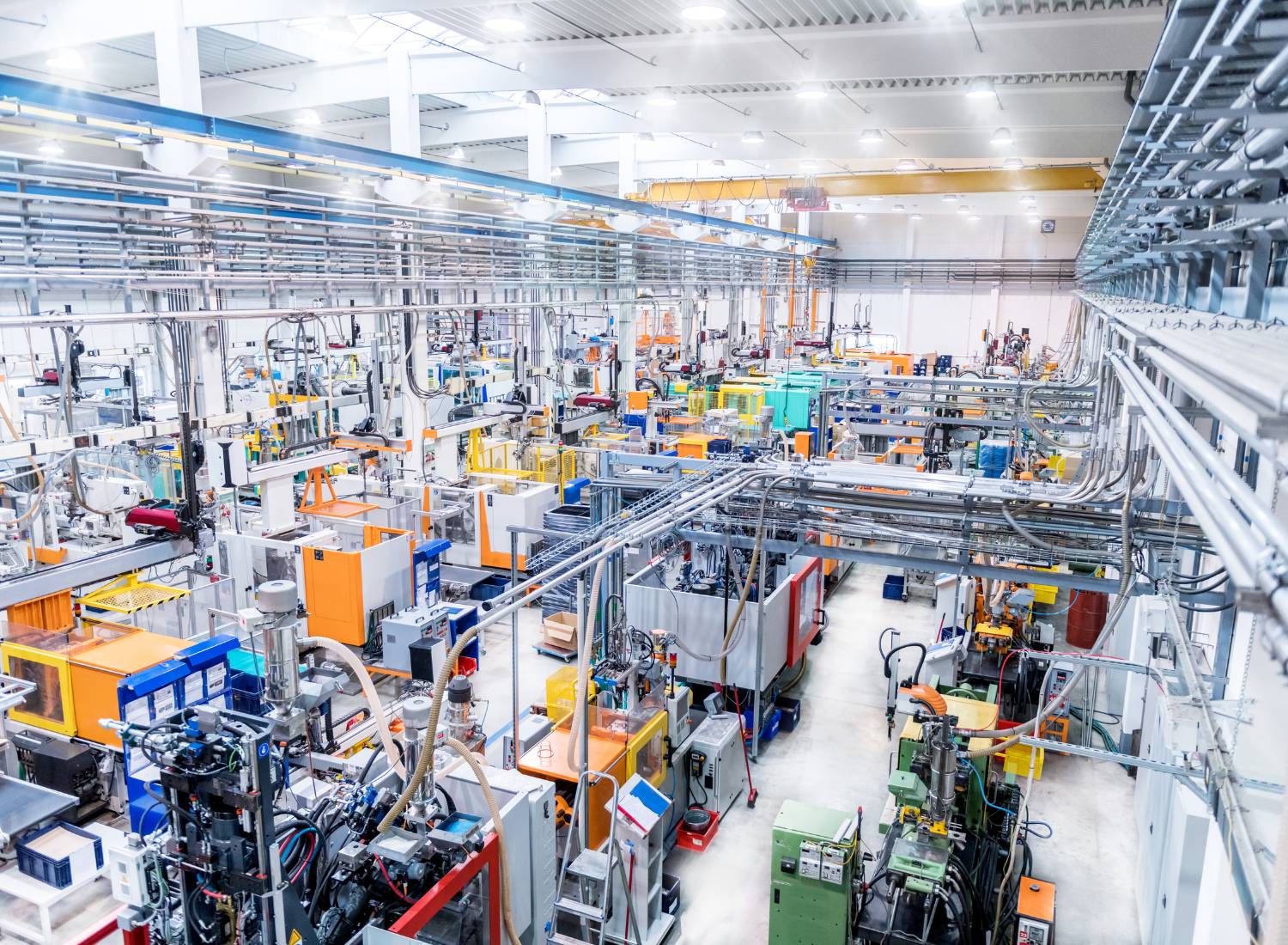
ManufacturingOctober 2025 — Southwestern Pennsylvania is experiencing a fresh wave of investment momentum driven by manufacturing resurgence, energy availability, digital infrastructure upgrades, and regional collaboration.

Between 2007 and 2023, expansions in the 10-county Pittsburgh region generated nearly $16 billion in announced capital investment, representing 54.8% of all projects tracked by the Allegheny Conference. 

The region’s industrial sector is showing renewed momentum, with manufacturing employment and output growing steadily, boosted by advanced and precision manufacturing capabilities. Natural gas from the Marcellus and Utica shale plays continues to serve as a backbone of regional energy production and emerging needs such as data centers. 

Infrastructure investment is also scaling up. The 2025–2028 Statewide Transportation Improvement Program allocates $28.8 billion across Pennsylvania for highway, bridge, and transit projects. As for the state’s digital strategy, the Pennsylvania Broadband Development Authority (PBDA) is actively deploying fiber to underserved areas under its “Internet for All” plan. Across the state, wired broadband availability now reaches about 97.5% of residents.

Meanwhile, population stability, cost advantages, and workforce alignment continue to attract firms seeking alternatives to higher-cost metros. The median home price is around $259,000, falling below the national average. On the industrial side, CBRE reports an average asking rent of $8.67 per square foot in 2Q25, competitive with or below other major Midwest markets.

Invest: spoke with four county leaders in the Greater Pittsburgh region, whose perspectives shine light on why the region is winning projects now and where momentum is building next.

Jack_Manning_Quote_StackJack Manning, Commissioner, Beaver County

It’s an accumulation of emerging from the post-pandemic malaise and being well-positioned for significant incoming investment. The Shell cracker plant kept Beaver County alive and financially stable during the pandemic. Shell put Beaver County on the map, highlighting its features: the Ohio River, a strong industrial waterway; rail lines, the one of the largest rail yards east of the Mississippi; access to highways like the Pennsylvania Turnpike, and close proximity to an international airport. Now, we’re seeing investments from Europe and domestically materialize in Beaver County. Connectivity is crucial for investment. It’s as vital as electricity, water and sewer. We’re as good as anyone, and better than most, in broadband and connectivity, which is also setting us up for hyperscale and smaller scale Al data centers. Our proximity to the airport 15 minutes away and other places in downtown Pittsburgh, coupled with financial stability, low taxes, affordable housing, and some great educational institutions, collectively makes it a desirable location.

Sean_Kertes_Quote_StackSean Kertes, Commissioner, Westmoreland County

We are focused on evolutionary ideas, rather than revolutionary. We want to be strong, grow, and make the county a better place for everyone. Manufacturing has become the second largest employer in the county. We are seeing healthy growth in our industrial parks, and many manufacturers from all over the world are showing interest in the county. Residents cannot move to an area without internet anymore. Broadband is a key requirement today. It is a necessity. It has been a mindset change, more than anything else. There’s a clear regional shift taking place, Allegheny is becoming increasingly tech-driven, while Westmoreland is growing as a center for skilled manufacturing and trades.

Nick_Sherman_Quote_StackNick Sherman, Commissioner, Washington County

Washington County is blowing up, and as someone born and raised here, I’m very proud of the region. We are making sure we are holding the line on spending and not overextending ourselves, while still aggressively moving forward with economic development. We have no plans to raise taxes in the near future as we’re finding more revenue through oil and gas taxes. We have started video and audio live streaming to Facebook, which gives residents the ability to see what we are doing. We float on natural gas and have the ability to double production at a moment’s notice, including building new pipelines. We don’t have the electrical capacity that we once had, and microgrids are trying to pop up everywhere. We have the LNG here to power microgrids. Our county airport has a waiting list for private jets, which can attract people with capital and money to the county.

Leslie_Osche_Quote_StackLeslie Osche, Chairman, Board of Commissioners, Butler County

Continued growth along the corridor includes new housing and business developments. We have great access for logistics firms and freight across rail lines and roadways. Our quality of life continues to attract young families. Approximately $36 billion in GDP crosses that roadway annually. Giant Eagle relocated its corporate headquarters to Cranberry Townships, along with other key businesses.Our county airport was approved by the FAA for a control tower – the only one between Pittsburgh and State College. Butler County maintains the lowest property tax rates in the region. The county has more small- and midsized manufacturers than any other county in Pennsylvania. We have a lot of energy development here, and are seeing increased natural gas production. There is a particular interest in using that to power a future data center hub. The Southwest PA region had a $64 million Build Back Better grant that allowed us to launch training in AI, automation, and robotics.

Want more? Read the Invest: Pittsburgh report.

Subscribe to Our Newsletters

"*" indicates required fields

Address*
Would You Like To Receive Our National Newsletter?*
Interests
Markets
This field is hidden when viewing the form