

North Carolina’s culinary growth reflects record tourism

Writer: Eleana Teran

North_CarolinaNovember 2025 — The Triangle has officially joined one of the world’s most exclusive dining networks. Earlier this month, the MICHELIN Guide unveiled its first-ever edition dedicated to the American South, recognizing 14 Raleigh-area restaurants and four across Durham and the broader region. For local chefs, tourism leaders, and economic developers, the news confirms what many have long believed: Raleigh-Durham’s food scene has arrived on the world stage.


Join us at caa’s upcoming leadership summits! These premier events bring together hundreds of public and private sector leaders to discuss the challenges and opportunities for businesses and investors. Find the next summit in a city near you!


“Forty-seven North Carolina restaurants and bars were recognized in the latest announcement, with 19 in the Triangle alone, including multiple Bib Gourmand honors and specialty awards. That visibility fuels food tourism — or what I like to call ‘eat, play, and stay,’” said Allen Thomas, president and CEO of the North Carolina Restaurant & Lodging Association, to Invest:. “The point is breadth: from a beloved barbecue counter to fine dining, visitors can experience an authentic, high-quality culinary journey that reflects our communities.”

According to Visit Raleigh, this marks the first time MICHELIN inspectors have rated restaurants in North Carolina, a milestone that positions the state alongside global dining capitals. The 2025 MICHELIN Guide American South covers six states, including North Carolina, South Carolina, Tennessee, Alabama, Louisiana, and Mississippi, along with the city of Atlanta. Of the Raleigh selections, three received the Bib Gourmand distinction, which honors restaurants delivering remarkable meals at great value, while eleven were highlighted as Recommended for quality and consistency. 

The recognition validates the Triangle’s long-building transformation. Durham has earned acclaim over the past decade for its inventive chefs, award-winning breweries, and James Beard honorees, helping redefine Southern cuisine for a new generation.  

Culinary recognition meets economic growth

Beyond the culinary prestige, MICHELIN’s arrival has measurable implications for tourism, hospitality, and investment. Food isn’t just a complement to travel, but a reason why people choose where to go. Culinary tourism has evolved from a niche interest into a serious economic driver. When a city earns MICHELIN recognition, whether stars, Bib Gourmands, or Green Stars, it often triggers a ripple effect across its entire visitor economy. 

MICHELIN-starred restaurants become bucket-list destinations, drawing travelers willing to book flights and hotels around a single reservation. These visitors tend to stay longer and spend more, driving demand for boutique hotels, cultural attractions, and premium experiences. Local businesses also benefit, seeing a surge in traffic and sales. “A Michelin reputation puts a destination on the map — not just for dining, but for luxury travel, events, and high-end experiences,” an Imagine report notes. 

North Carolina is already seeing that effect firsthand. In Charlotte, the MICHELIN Guide’s debut brought the state its first-ever Star, awarded to Counter-, which also received a Green Star for sustainability. Other establishments were recognized with Bib Gourmand and Exceptional Cocktails honors, and ten additional restaurants were named MICHELIN Recommended. Since the announcement, Charlotte’s dining scene has seen a sharp rise in bookings and media attention. Counter sold out months in advance, largely driven by travelers from outside the region, and other local restaurants have reported double-digit increases in weekday reservations and private-event inquiries.

A record year for North Carolina tourism

The state’s tourism industry is entering one of its strongest periods on record. According to the N.C. Department of Commerce and Visit NC, visitor spending reached $36.7 billion in 2024, a 3.1% increase over the previous year and a new all-time high for the state. Seventy-one percent of the state’s counties saw growth in visitor spending. 

Wake County ranked second statewide with $3.5 billion in traveler expenditures, up 7.8% from 2023, while Durham followed closely with $1.2 billion, a 3.1% increase. Mecklenburg County led overall, generating $6.4 billion in visitor spending, up 9.1% year-over-year.  

Tourism remains a major economic driver for communities across North Carolina. Visitors generated nearly $4.6 billion in federal, state, and local taxes in 2024, including $1.3 billion in local tax receipts — funds that directly support infrastructure, workforce development, and community services. The industry now supports more than 230,000 direct jobs statewide, with tourism payroll increasing 2.6% to $9.5 billion.

The strength is reflected not just in major metros like Raleigh, Durham, and Charlotte, but across rural counties where hospitality and outdoor recreation continue to anchor local economies. The state’s visitor economy remains resilient, fueled by scenic beauty, culinary innovation, and a growing reputation for authentic experiences that can’t be found anywhere else. 

Want more? Read the Invest: Raleigh-Durham report.

Subscribe to Our Newsletters

"*" indicates required fields

Address*
Would You Like To Receive Our National Newsletter?*
Interests
Markets
This field is hidden when viewing the form

Spotlight On: John Leonard, First Vice President and Regional Manager – Atlanta, Marcus & Millichap

John_Leonard_Spotlight_OnNovember 2025 — In an interview with Focus:, John Leonard, first vice president and regional manager of Marcus & Millichap‘s Atlanta office, discussed market resilience, shifting investor strategies, and regional growth. “Every transaction is different, and creativity is key to bridging the gap,” said Leonard.


Join us at caa’s upcoming leadership summits! These premier events bring together hundreds of public and private sector leaders to discuss the challenges and opportunities for businesses and investors. Find the next summit in a city near you!


What changes over the past year have most impacted the commercial real estate landscape in the Southeast?

It has been a challenging market for the past three years, especially since the Federal Reserve aggressively raised interest rates in June 2022. That move essentially stopped transactional volume, and the market has struggled since.

The past year, and particularly the last quarter, has brought some positive momentum. Recent policy developments supporting commercial real estate investment have reduced uncertainty, especially regarding tax advantages and government investment policies. As a result, activity has increased. Year over year, volume is up about 20%, and quarter over quarter, it is up 60%. While that shorter-term metric is not ideal for tracking overall trends, it reflects meaningful improvement.

With more certainty in the market, some investors are returning. Transactional volume has picked up significantly, and there is optimism it will continue through the second half of the year. This is a welcome shift for a market that has been subdued for several years.

How is investor sentiment evolving across the Atlanta market?

Overall, sentiment is positive. Despite some reports suggesting Atlanta’s growth is slowing, the metro continues to expand into secondary and tertiary markets. 

The Southeast, and specifically the Atlanta and Georgia markets, continues to show strong in-migration and employment growth. These factors have supported business activity and investor interest.

The multifamily sector saw significant construction in recent years, but much of that new supply has been absorbed. As this construction cycle winds down, multifamily performance is expected to stabilize. While each submarket faces its own unique challenges, the overall market remains strong and in demand.

What are investors looking for today that differs from previous cycles?

From a risk standpoint, there has been a shift. In 2021 and 2022, value-add multifamily deals were a major focus. Rents at that time were rising as much as 20% annually, making it possible to succeed without strong operational performance. Now, rents are flat or slightly declining, and investors must be more operationally skilled to manage and improve assets.

This has led to some price corrections in value-add properties. Investors are looking for signs of a bottom. In submarkets with potential rent growth, they are willing to pursue value-add opportunities, but in markets without that potential, such deals are harder to move.

The gap between seller and buyer expectations was extremely wide in 2022–2024, as many owners were still anchored to 2021–2022 pricing. Today, most owners have become more realistic, understanding that those prices are not returning. Buyers also recognize that interest rates are unlikely to return to 3%. Deals are now typically underwritten at interest rates between 5.5% to 6%, a level both sides have gradually accepted. 

Cost of capital directly impacts pricing. While this adjustment period has been challenging, there are still opportunities. For example, deals with assumable loans or creative seller financing can be attractive, particularly when existing debt carries a below-market rate. A HUD assumable loan at 4% for a 40-year term is a compelling proposition for many investors.

Looking at the 10-year Treasury at around 4.25%, that’s close to the long-term average. From 2015 to 2021, rates were closer to 2.5%, which spoiled expectations. That lower-rate period was driven by significant government spending and liquidity creation, which also created market imbalances.

The current environment represents more of a normalization. While the 10-year Treasury has dipped slightly in recent weeks, it remains market-driven. Most indicators suggest it will remain range-bound between 4% and 4.5%. Deals can work at that level, but investors must be realistic and not wait for a return to ultra-low rates.

What asset classes are currently seeing the strongest demand and where is there hesitation?

Multi-tenant retail has been extremely strong throughout most of this cycle, especially now. That includes both multi-tenant and single-tenant net lease retail, though each should be considered separately.

Multi-tenant retail never became overheated in 2021. Cap rates reached around 6%, but typically hover between 7.5% and 8%, so the market remained stable. During the pandemic, weaker tenants were forced out, leaving a stronger tenant base. Vacancies are lower than in the past, so while there may be less value-add potential, demand for this sector remains high.

Multifamily remains a strong asset class, though Atlanta has faced challenges with oversupply and application fraud. Some apartment builders report that half of all rental applications are fraudulent — an issue not seen to the same degree in other cities. This has slowed collections somewhat, but strong in-migration and job growth continue to support the sector’s long-term appeal.

Industrial has also been strong, particularly last-mile and smaller-bay spaces near the outskirts of the city. Self-storage is in a softer period due to flat rents and high reliance on new construction, but certain submarkets are starting to recover.

Single-tenant net lease properties are seeing a modest rebound in demand as the market moves toward more normalized conditions.

How is the company using technology to improve operations and client service?

Marcus & Millichap has invested in a platform called Archer, which applies AI technology to multifamily underwriting and analysis. The platform pulls data from multiple sources to produce underwriting models without requiring manual input of actual numbers, and those models are proving to be closely aligned with real performance.

While brokerage is still a relationship-driven business that requires in-person engagement, AI tools like Archer can improve efficiency in underwriting and deal analysis. For now, this is the main area where AI is being applied.

How do you see population growth shaping long-term real estate opportunities in the Southeast?

The region is very strong, and that strength continues to build. Having moved to the Southeast more than two decades ago, it is clear that the trajectory has been consistently upward.

Maintaining a business-friendly environment is key. In other regions, rent control measures have been used to address affordability, but in many cases, this has been counterproductive. Affordable housing is critical, but it should be addressed through solutions that encourage investment rather than deter it. 

Markets in the Southeast are becoming more interconnected. Cities like Charlotte, Nashville, and Atlanta are increasingly linked through migration and business activity, forming what could be considered a super metro area. While there is competition between these markets, they also benefit collectively from the region’s in-migration and job creation.

What are your top priorities for the Atlanta office over the next five to 10 years?

Recruiting and developing new talent remains a top priority. Expanding the agent pool allows the office to cover more territory and product types.

The company is well known for its training program, developed over 55 years of focusing solely on investment sales. This specialized expertise supports an advisory approach, helping clients preserve and create wealth.

Maintaining strong market knowledge, accurate underwriting, and client relationships is central to success. While technology has changed how people meet and communicate, relationships remain the foundation of the business. Our focus remains on building advisory relationships that extend beyond individual transactions.

How are deals getting done in today’s market, and what role is creative financing playing?

Transactions are still happening, though they often require more creativity. Some recent deals have involved sellers keeping equity in the property or offering seller financing. Motivated sellers are more willing to explore these structures.

With capital markets still challenging, creative financing will likely become increasingly important over the next few years. Every transaction is different, and creativity is key to bridging the gap between buyer and seller expectations.

Want more? Read the Focus: Atlanta report.

Subscribe to Our Newsletters

"*" indicates required fields
Address*
Would You Like To Receive Our National Newsletter?*
Interests
Markets
This field is hidden when viewing the form

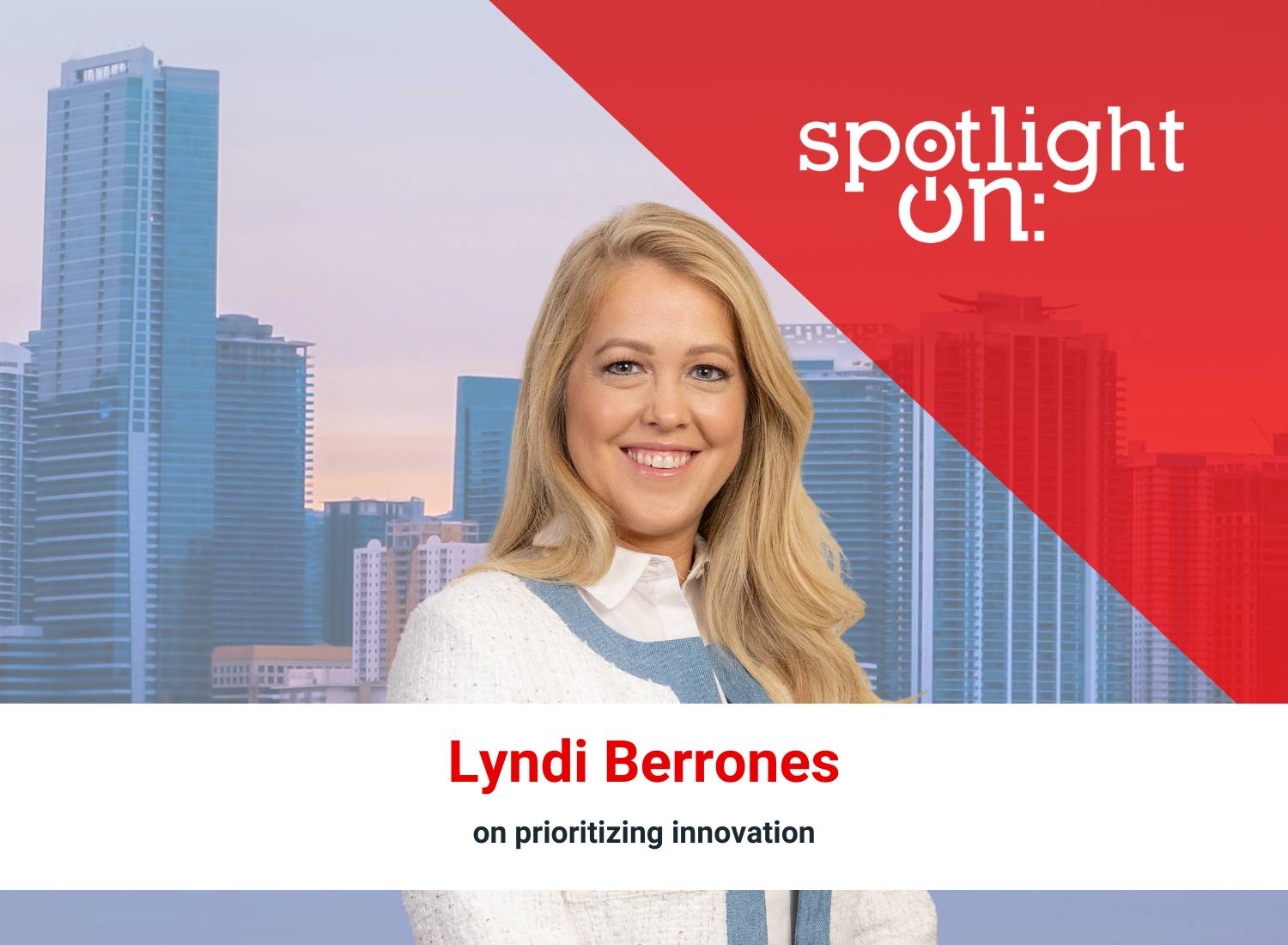
Spotlight On: Lyndi Berrones, Assistant Commissioner, Strategic Initiatives, Tennessee Department of Economic & Community Development (TNECD)

Lyndi_Berrones_Spotlight_OnNovember 2025 — In an interview with Invest:, Lyndi Berrones, assistant commissioner for strategic initiatives at the Tennessee Department of Economic & Community Development, said that the state is doubling down on innovation and future-focused infrastructure to remain competitive in a rapidly evolving economy. “We’re not just saying we’re prioritizing innovation, we’re actually doing it,” Berrones highlighted.


Join us at caa’s upcoming leadership summits! These premier events bring together hundreds of public and private sector leaders to discuss the challenges and opportunities for businesses and investors. Find the next summit in a city near you!


What changes over the past year have most impacted the organization, and in what ways?

We’re at a really exciting point right now, and we’re genuinely enthusiastic about where we’re headed. One of the most notable shifts for our office, and for our department within the state, is our expanded focus on innovation. Historically, Tennessee has been known for its emphasis on manufacturing, recruiting and growing manufacturing businesses across the state. While we’ve successfully recruited some tech, healthcare, and office projects  to some of our larger cities, Tennessee has primarily been recognized as a manufacturing and automotive state.

This year, however, we’ve made significant strides in innovation, particularly in research and development and nuclear energy initiatives. A great example is the launch of our Office of Innovation earlier this year in February. Our Commissioner came in three years ago with a forward-thinking mindset, asking how we could honor Tennessee’s manufacturing roots while advancing toward the future. Yesterday, we announced the appointment of someone to lead this new office, which is a big milestone for us.

Importantly, this isn’t just talk. In the most recent legislative session, which ended in April, the Governor and the General Assembly awarded over $63 million — the highest amount in state history — toward innovation and related initiatives. Our strategy isn’t to move away from manufacturing. We still value it deeply. However, we often ask companies where their R&D and innovation operations are located. They usually say places like California or Boston, not Tennessee. So now we’re asking, “Why not Tennessee?” In many cases, it’s simply legacy thinking from decades ago. We’re working to change that and we are starting by connecting our existing industries with our universities and research institutions to spark new innovation right here at home. 

On July 1, we launched the IRIS Grant Program to fund R&D projects between companies and universities statewide. Our goal is to create real synergy between our industries and academic institutions to grow these relationships and bring more innovation and R&D into the state. Tennessee has enjoyed decades of success in economic development, but we can’t afford to rest on that. Other states, especially those around us, are pushing hard toward jobs and technologies of the future.

We don’t want Tennessee to be left behind as industries evolve. We want to be a leader in innovation and in creating future-ready jobs. Ultimately, it’s about ensuring Tennesseans have access to high-quality, high-paying jobs and a great quality of life. This is the path forward.

What macroeconomic factors are you seeing, and how are they influencing site selection decisions and industry behavior?

Technological advancements have had a huge impact on our field, whether that be in site selection, the kinds of industries looking at Tennessee, or the nature of their projects. Ten years ago, even five years ago, economic development projects often involved massive job numbers but relatively smaller capital investments. That’s changed. Now, we’re seeing fewer jobs per project, but significantly higher wages and capital investments. That shift reflects the increased use of high-tech machinery, automation, and robotics.

Despite fears, we haven’t seen mass job losses. National unemployment remains low — around 3-4%. And realistically, we can’t fill thousands of new jobs per project. Companies simply can’t grow at scale without employing the right technologies. The silver lining? The jobs that do remain are higher-skilled, higher-paying roles. Our responsibility is to ensure Tennesseans are equipped with the skills they need for these future jobs. That’s why we’re collaborating closely with workforce development agencies like the Department of Labor, Tennessee Board of Regents, and others.

From a macro view, we’re also seeing significantly higher energy use across projects. AI and advanced technologies can triple (or even 10 times) the power needs of companies. This is a growing concern, not just in Tennessee but nationwide. We’re taking this seriously. In 2023, the Governor’s office approved a $50 million fund to help us recruit nuclear energy companies and suppliers. It’s already led to major announcements, including some at the global level. For example, the Clinch River nuclear plant project in East Tennessee is progressing. If it secures a federal grant from the Department of Energy, we’ve earmarked an additional $50 million in matching state funds to support the effort.

We want to be a state that anticipates and addresses these infrastructure challenges head-on, especially with the help of partners like TVA. Together, we’re making sure Tennessee stays ahead of the curve.

Can you speak a bit more about foreign direct investment and the international landscape?

This is one of our favorite topics because most people don’t realize how focused Tennessee is on foreign direct investment (FDI). In fact, since 2019, when Gov. Bill Lee took office, 40% of all capital invested in the state has come from foreign-based companies. That’s a huge number.

It shows that Tennessee is on the global map. International companies see us as a place with the right business environment, skilled workforce, sites and tax structure to thrive. One of our key strengths is our international FDI representatives, located in countries like Germany, Japan, Korea, Italy, and the U.K. Their sole focus is talking to companies looking to expand into the United States.

Once foreign companies see others succeeding here, it builds confidence. Look at Clarksville, for example. Over the past 10 years, more and more Korean companies have landed there, one after another. Much of that momentum is due to word-of-mouth: successful companies encouraging others back home to look at Tennessee. From Hankook Tire and LG Electronics to Shinhung Global. Dongwha Electrolyte, and now LG Chem, it’s actually incredible what is going on up there. One of our biggest recent wins is Orano, a French company building a $4.5 billion nuclear facility in Oak Ridge. It’s our largest capital investment to date.

We also have stories like Kewpie from Japan and Craig Manufacturing from Canada, which we recruited five years ago to Lawrenceburg, which is already expanding. Seeing international companies thrive in rural Tennessee communities is so rewarding. Some of them have truly made Tennessee home.

What other emerging infrastructure needs are becoming decisive factors for companies?

Broadband is a huge one. When Gov. Lee took office in 2019, 20% of the state didn’t have access to high-speed internet. Now, that number is down to just 1.7%, and we expect to award grant funding to close that remaining gap by the end of this year. Our goal is for 100% of the state to have broadband access before the Governor leaves office. It’s critical, not just for business attraction but for education, job access, and quality of life. We’ve heard stories of students doing homework in fast-food parking lots and people unable to apply for jobs online. That’s unacceptable, and we’re proud of the progress we’ve made.

Power, water, and sewer are also critical. Companies won’t invest in a site, much less a community, if it can’t meet their future needs. That’s why we invest through CDBG and site development grants to help communities build out their infrastructure for sustainable growth. Transportation is another key factor.

Beyond roads and highways, we’re focused on global connectivity. In the past year, we’ve added direct flights from Nashville to Iceland and Dublin, and we continue working toward our long-term goal of a direct flight to Asia. With over 200 Japanese companies in the state and growing Korean investment, we hear daily from companies asking for this. We’re working closely with BNA and state leaders to make that happen. We might even have a couple more international flight announcements coming this fall.

Looking ahead, what are your top priorities for the next few years?

Our main priorities are continuing to push innovation, research and development, and supporting nuclear initiatives. But just as important is community development. We want to ensure every community has the infrastructure, sites and quality-of-life assets to attract and retain companies. Many don’t realize that we offer grants for downtown facades, splash pads, historic sites and more. When companies visit a small town and see a charming downtown square with beautiful sidewalks and amenities, there’s often state funding behind that.

We also focus heavily on supporting existing companies. Around 70% of job growth comes from expansions, not new recruits. So we want the companies that started here, or even the ones we brought here 10 or 15 years ago, to remain successful and continue growing. At the end of the day, if a prospective company calls a local business to ask about doing business in Tennessee, we want that business to be our strongest advocate. That’s how we build lasting economic success.

Want more? Read the Invest: Nashville report.

Subscribe to Our Newsletters

"*" indicates required fields

Address*
Would You Like To Receive Our National Newsletter?*
Interests
Markets
This field is hidden when viewing the form

Tampa Bay’s era of affluent migration

Writer: Melis Turku Topa

Tampa_BayNovember 2025 — Florida’s enduring appeal to high-net-worth individuals shows no sign of slowing, and Tampa Bay is rapidly emerging as one of the state’s most attractive destinations for wealth migration.


Join us at caa’s upcoming leadership summits! These premier events bring together hundreds of public and private sector leaders to discuss the challenges and opportunities for businesses and investors. Find the next summit in a city near you!


Drawn by favorable tax structures, a thriving business ecosystem, and a lifestyle that balances sophistication with coastal living, affluent newcomers are reshaping the region’s housing market, investment trends, and long-term development outlook.

Money on the move

Florida continues to lead the nation in net income migration, with more than $39 billion in wealth entering the state each year — the equivalent of more than $4 million every hour. While Miami and Palm Beach have long dominated the luxury conversation, Tampa Bay’s growing reputation for quality of life, relative affordability, and business accessibility has made it a rising contender for high-net-worth relocations. 

Between 2016 and 2020, the Tampa-St. Petersburg-Clearwater metro welcomed more than 84,000 new residents from other states, many relocating from high-tax areas such as New York, Illinois, and California.

This migration has had a profound impact on the region’s housing landscape. The median home price across the metro now stands at about $408,000, while in Pinellas County the figure approaches $478,000, reflecting the ongoing pressure on supply amid elevated demand. 

The ultra-luxury segment — properties valued above $5 million — has grown by roughly 15% year over year, with waterfront sales setting new records.

Waterfront premium

In July 2025, the Waldorf Astoria Residences St. Petersburg penthouse sold for a record $27 million.

“The sale speaks to the extraordinary flight to quality we’re seeing in the area as it evolves into a world-class waterfront destination,” Kevin Maloney, founder and CEO of PMG Real Estate, told Axios following a record-breaking $27 million penthouse sale. 

Similarly, Mary Beth Byrd, broker at Smith & Associates Real Estate, observed that “with the influx of out-of-state buyers who are accustomed to price points well above what Tampa has produced, obtaining a significant piece of Tampa Bay’s waterfront like this is nothing less than a rarified opportunity,” as cited by Axios.

All-in-one

Developers across the region are moving quickly to respond to this demographic and lifestyle shift. Mixed-use projects such as Water Street Tampa and Midtown Tampa exemplify a new development philosophy that integrates residential, commercial, and experiential amenities within walkable urban cores. This approach caters to affluent buyers who value convenience, community, and access to cultural experiences alongside luxury. 

This transformation will be explored in Invest: Tampa Bay’s upcoming 7th Edition, with the next leadership summit slated for 2026. The edition will highlight the relationship between real estate and construction, and spotlight the leadership, innovation, and investment driving the market’s next chapter.

Want more? Read the Invest: Tampa Bay report.

Subscribe to Our Newsletters

"*" indicates required fields

Address*
Would You Like To Receive Our National Newsletter?*
Interests
Markets
This field is hidden when viewing the form

American road trip resurgence signals new opportunities for Sun Belt tourism

IMSP24_Banner_Canopy_By_Hilton_Minneapolis

Writer: Mirella Franzese

Road_tripNovember 2025 — After an unexpectedly subdued year for domestic travel, the great American road trip is poised for a comeback in 2026 as traveler preferences shift in the lead-up to the nation’s 250th anniversary.


Join us at caa’s upcoming leadership summits! These premier events bring together hundreds of public and private sector leaders to discuss the challenges and opportunities for businesses and investors. Find the next summit in a city near you!


According to Hilton’s latest report, this rebound in domestic travel could drive significant growth for emerging hospitality and tourism markets in the country. 

“As we look ahead to 2026, it’s clear that the meaning behind each journey matters more than ever. People are traveling with purpose, whether that’s to reconnect, recharge, (re)discover, or just take a breath, “ said Hilton’s President and CEO Chris Nassetta in a message to customers. “It’s a global movement rooted in intentionality, where travel begins not with a destination, but with motivation.”

According to the report, 71% of Americans plan to drive on their next vacation, as it gives them greater control over their own travel plans, which is an increase from the previous year. 

This is because travel priorities have shifted heading into 2026. Per Hilton, today’s road-trippers increasingly value comfort and perks above convenience. Ninety percent believe that a comfortable bed is the most important amenity after a long day on the road, while 83% say that “breakfast included” is a must-have benefit. 

“Today’s travelers come with intention, not just to enjoy amenities but to feel something,” Onal Kucuk, general manager of the 1 Hotel Nashville, told Invest:. 

Amid this shift, leisure and wellness travel continue to gain momentum nationally, as evidenced by elevated spending and consumer sentiment in the segment. In Hilton’s global research survey, 56% of respondents cited “rest and recharge” as the number one motivation to travel.  Meanwhile, in a 2024 report by McKinsey, approximately 82% of U.S. consumers said they considered wellness a top priority. 

Additionally, in North America, the average spend per trip on wellness is significantly higher compared to Europe or Asia-Pacific, as locals consistently invest more in wellness travel. 

In emerging tourism and hospitality markets, like the Sun Belt region, leisure travel drives the most foot traffic and spending.  

Yet, economic volatility throughout the year had a big impact on the leisure traveler, who is more susceptible to uncertainty, according to Mario Bass, president of Visit San Antonio. “Leisure is a more fickle market segment, one that is critical to the success of our destination,” he stated in an interview with Invest:.

According to Bass, nearly 70% of regional visits come from the leisure segment. In 2025, however, fewer international travelers came to San Antonio compared to the previous year, especially those from Canada and Mexico, who typically account for the most demand. 

“People are still coming, but there have been fewer travelers. Our international numbers are down about 10% for 2025 compared to 2024,” Ryan Fender, general manager of the Grand Hyatt San Antonio River Walk, told Invest:.  This decline was seen on the national level. According to the U.S. Travel Association, every 1% drop in international visitor spending is equivalent to $1.8 billion lost in export revenue annually. Yet, domestic travel remained largely stable this year, and American travel sentiment held steady, even if preferences shifted, as Bass noted. 

Despite uncertainty, most national travelers still went on their planned vacations this year, but traveled closer to home instead — a trend which is likely to extend into 2026, given the return of the great American road trip.

“This bodes well for San Antonio,” said Bass about travelers preferring visits “close to home.” 

This shows that national tourism isn’t slowing down, but rather evolving, as Fender notes.  “We’ve seen a shift in consumer behavior, not necessarily increased price sensitivity, but increased discernment. Guests want to feel confident in how they spend their money. They have more choices than ever, and they’re thinking critically about value.”

Luxury travelers, for instance, continue to gain market share throughout the Sun Belt. 

“We’re seeing that the luxury market is still traveling — the higher-income demographic. They’re what our industry calls “recession-proof travelers,” representing about 35% of the population,” Deana Ivey, president of the Nashville Convention Visitors Corp, told Invest:. 

“They’re still on the move. That’s an important note for Nashville. We’ve added new luxury products over the past several years that we didn’t have before,” said Ivey, citing the Four Seasons, Conrad, The Joseph, 1 Hotel, and the construction of the Ritz-Carlton. 

 In an effort to sustain this shift, hotels like the Grand Hyatt San Antonio River Walk are pivoting to leisure and wellness events in order to attract guests. These include 200-person community runs, weekly live music, rooftop Pilates, and comedy shows. 

“To meet this shift, we focus on creating energy and activity around the hotel. Even if guests do not participate directly, that vibrancy contributes to their overall impression….It all helps make the hotel feel alive, not just a place to sleep,” said Fender of the initiative.

“Promoting those strengths helps position the city and our property as top-tier destinations,” he added.

Want more? Read the Invest: reports.

Subscribe to Our Newsletters

"*" indicates required fields

Address*
Would You Like To Receive Our National Newsletter?*
Interests
Markets
This field is hidden when viewing the form

Spotlight On: John Manning, CEO, Co-Founder, and Chairman of the Board, KMI International

John_Manning_Spotlight_OnNovember 2025 — In an interview with Invest:, KMI International’s CEO and Co-Founder, John Manning, highlighted the demands within  the theme park market sector, the importance of collaborations, and the efforts to guide clients through current economic challenges. “The clients that we work with have raised plenty of funds to do what they want to do. If they are holding back, it is primarily because the cost of doing business is not lining up with the return on investment,” Manning said.


Join us at caa’s upcoming leadership summits! These premier events bring together hundreds of public and private sector leaders to discuss the challenges and opportunities for businesses and investors. Find the next summit in a city near you!


What key changes in the past year have most influenced KMI International’s operations?

Over the past year, our team has really come together. We sharpened our focus in key areas and strategically added team members to strengthen a service line where we were already performing well — theme park estimating. This has now grown into one of our largest areas of work. In addition to project management and project controls, our cost estimating services, particularly for theme parks, have increased dramatically this year. That’s a significant shift from last year, when we were working to break into this market; now, we are clearly seeing the results of that effort.

How are changes in the market affecting development pipelines in the different sectors that you are involved in?

Theme parks have grown significantly over the past few years. We worked extensively with Universal on the Epic project and continue to support Universal in other regions across the country. Overall, themed entertainment remains a strong growth area, with Disney also expected to launch a major expansion soon, signaling continued momentum in this sector despite broader economic pressures.

In aviation, we continue to support MCO and GOAA with estimating services, primarily focused on budgeting for long-term capital planning as they develop their 10-year strategic plan. While aviation remains a growth segment, we have intentionally reduced our footprint there to concentrate more heavily on themed entertainment, which has been a particularly profitable area for us.

Hospitality, by contrast, saw most of its new-build activity peak last year. While renovation work is still underway, the pace has slowed. We continue to maintain a strong hospitality team, but overall project volume in that sector has moderated.

How has your approach to themed entertainment evolved, especially in the face of strong demand in that sector?

We are currently estimating portions of approximately $20 billion in theme park developments in Saudi Arabia and are also evaluating projects in the United Arab Emirates. This is in addition to our ongoing work with Universal and other smaller venues across the United States. Our presence in themed entertainment has expanded as we’ve intentionally targeted this sector and added exceptional talent to our team.

The hospitality sector remains stable for us — neither growing nor declining — while in aviation we have deliberately shifted our focus toward themed entertainment, where we have a deep well of experience. Our company was founded by Mike Kraus and me following our work on Universal’s major development program in the late 1990s, and we have continued to grow that relationship since then. For a firm of just 25 people, we now support a remarkably broad portfolio of work.

What new markets or services has the firm added to reinforce your strategy?

Because we’ve shifted our focus heavily into themed entertainment — particularly show and ride estimating — we are now active in many different regions across the United States. For example, we are currently estimating a project in New York and partnering with firms in Tennessee. Our reach is no longer limited to one market; we are working in multiple geographic areas, both nationwide and globally.

How do you see the theme entertainment sector growing in the future?

The entertainment sector is constantly evolving, and AI will play an increasing role in how new rides and attractions are developed. These are key factors we are actively evaluating. Our estimating is performed virtually, leveraging AI-driven tools to scan drawings and accelerate the estimating process. Looking ahead, our focus will continue to center on immersive entertainment experiences.

What current or new relationships is the firm seeking to strengthen further?

KMI has always focused on developing and maintaining longstanding client relationships. We have longstanding relationships with several key partners. For example, we continue to provide estimating services to the Canaveral Port Authority, a client we have supported since 2015. With Universal, whom we have supported since 2003, we are actively maintaining and strengthening our relationship, while also seeking to build new partnerships with other themed entertainment organizations.

Collaboration is increasingly critical to how we work. Many of our projects involve serving as one part of a larger, multidisciplinary team. We regularly collaborate with designers and creative firms to deliver a complete, integrated package for our clients, and these relationships are central to our success. Being in close proximity to our collaborators allows us to enhance their services and respond quickly to project needs.

We partner with firms that rely on us for estimating across a wide range of sectors — from theme parks and Coast Guard facilities to hotels and cruise destinations — ensuring they have accurate, reliable cost insight wherever they operate.

What is the firm’s approach to talent retention and leadership training?

My primary focus is building our internal team focusing on hiring the right people for the right seats. As an employee-owned company, we are committed to financial transparency, and every team member is an employee-owner. We work closely with our people to help them understand how they can contribute to growing the company, and I devote more of my time to this than to anything else. While I support our business development efforts, my biggest priority is preparing our team for the future and ensuring our company remains employee-focused — a place where people feel welcomed and valued.

Many of our new hires come through referrals from existing employees, which speaks to the culture we’ve built. We occasionally recruit at colleges, but most of our team members join us with industry experience and a strong understanding of the market. We also do extensive networking with our collaborators, which helps us identify the right people and bring them on board.

What goes into estimating and helping clients with projects in the face of broader economic challenges?

The tariff environment has affected nearly all of our clients, slowing projects and causing delays. Many have had to pause, reassess, and shift where they source materials, and we have been closely involved in helping them navigate those changes as part of our process.

In contrast, we are not seeing the same level of interest-rate sensitivity that we have in prior years. Most of our clients have already raised the capital they need to move forward. When projects are put on hold, it is usually because current costs do not align with the expected return on investment, rather than the cost of borrowing itself.

Our markets are generally less interest-sensitive than others. That said, we do anticipate that lower interest rates will help unlock projects in sectors that have been hit harder — such as multifamily apartments. As those developments come back online, they will generate more work and spending, which in turn supports growth across all of the sectors we serve.

What are the firm’s priorities for the next three to five years?

We’ve learned the importance of being active in multiple markets, and we will continue to pursue those opportunities. In the Middle East — particularly Saudi Arabia, where much of the current theme park demand is concentrated — there is no shortage of capital. With a directive extending through 2034 for completing a significant slate of theme parks, they will continue to invest heavily and will need ongoing support.

Our goal is to keep building strong long term client relationships and to work wherever our clients need us. As we grow, we will remain focused on aligning our service offerings with what makes the most sense for our clients and the markets we serve.

Want more? Read the Invest: Greater Orlando report.

Subscribe to Our Newsletters

"*" indicates required fields

Address*
Would You Like To Receive Our National Newsletter?*
Interests
Markets
This field is hidden when viewing the form

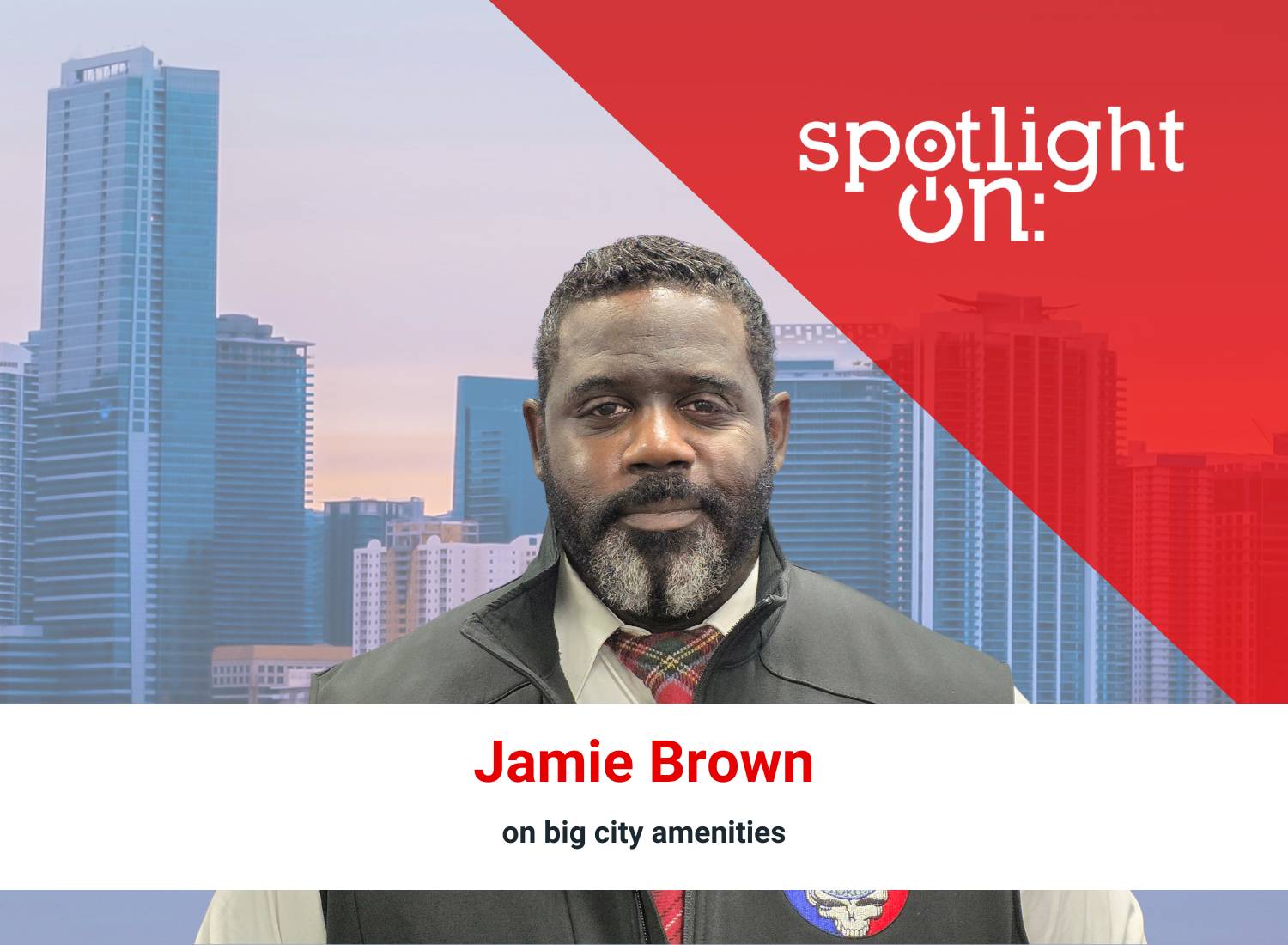
Spotlight On: Jamie Brown, City Manager, Public Works Director, City of Lake Worth Beach

Jamie_Brown_Spotlight_OnNovember 2025 — Jamie Brown, City Manager and Public Works Director of Lake Worth Beach, spoke with Invest: about the city’s various attractions and prime central location in Palm Beach County. “Some people desire a more quaint, smaller, and cozy South Florida feel while still being walking distance to the water. We offer that along with all of the amenities and activities you can find in larger cities, while still being close enough to those cities for easy access should it be sought-after,” he said.


Join us at caa’s upcoming leadership summits! These premier events bring together hundreds of public and private sector leaders to discuss the challenges and opportunities for businesses and investors. Find the next summit in a city near you!


What are your immediate priorities for Lake Worth Beach?

Lake Worth Beach is at an interesting point in its history. We are right in the middle of everything and are an artistic hub. We have many impressive projects that have recently been completed, with more on the way. We are known for our artistic vision, with many artists living here. It’s been stated that you can cross the bridge to purchase incredible art, but you can come here and see where it’s actually created.

The Benzaiten Center for Creative Arts, for example, is a hub for glass blowing and infusing. Artist lofts were a component in a recent downtown development, and there are large scale art installations and murals all over the city. We also have the multi-level WMODA (Wiener Museum of Decorative Arts) slated to begin construction downtown in 2026 with a completion date in 2028.

We have an 18-hole golf course on the water. The Lake Worth Lagoon (intracoastal waterway) is our back patio and the Atlantic Ocean is our backyard. The City possesses a beautiful beachfront that attracts a lot of attention.  In acknowledgement of all the aforementioned, the main City priorities center around smart growth. Making sure that as we consider development we don’t lose our historic character and artistic identity.

To what extent are PPPs a key aspect in bringing economic development to the city?

PPP’s are new to Lake Worth Beach. At a recent commission meeting, I presented an unsolicited proposal policy that the city commission has now finalized and adopted. We now have an official policy in place illustrating that timing is everything, as we are already in receipt of multiple unsolicited proposals for major projects. In addition, our golf course has received proposals from golfers with household names. 18-hole waterfront golf courses available to the general public are not in abundance in the county, making our course a gem with extreme potential. There are multiple unique properties in the city sparking PPP interest.

Are there any infrastructure projects, revitalization efforts, or economic expansions in the pipeline?

In our downtown, we have a multi-level garage currently under design to alleviate growing parking challenges as well as an entertainment corridor with many restaurants. Being culturally diverse is a beautiful thing. We have everything from street tacos to luxury fine dining. We have multiple developments that have recently finished or are coming forward in the next year, combining modern living units with resort-style amenities. We’re also an old city with historic districts and cottages dating back to the 1920s and 1930s. It is a diverse area that has many different living options. This is important with the economic growth the City is experiencing. We also continue to focus on infrastructure improvements spanning utilities, facilities, and transportation related endeavors.

What new amenities, services, or initiatives is Lake Worth Beach looking to offer in order to provide residents with the best quality of life?

We have a very active leisure services department that provides great activities for children and families. We offer a vast number of recreational opportunities. We host year-round events like our annual Street Painting Festival that brings in over 100,000 people over the course of a weekend.

We have many natural attractions, such as Snook Island. A few years ago following the addition of a living shoreline project, Palm Beach County Environmental Resources Management finished its Snook Island project in the Lake Worth Lagoon. It’s a popular destination to observe birds and marine life in their natural environment.

Our biggest draw is our beach and historic pier. Location is everything. We’re a coastal community close to the airport, just south of Palm Beach, and just north of Delray and Boca. We’re central and very close to everything else in the county. Oftentimes it’s just the simple things though, such as the ocean itself. It’s a major selling point on its own and many people visit here just to experience our gorgeous beach.

What makes the city an ideal place to live, work and play in?

We are a medium sized city with big-city amenities. Our water utility saw the completion of a reverse osmosis plant just over a decade ago, providing our residents, businesses, and visitors to the city with fantastic water quality. We have our own electric utility that also services neighboring municipalities and generates substantial revenue for the city in a multifaceted service approach.

We offer a lot for being a city of our size. Not everyone is seeking a large city environment in which to relocate. Some people desire a more quaint, smaller, and cozy South Florida feel while still being walking distance to the water. We offer that along with all of the amenities and activities you can find in larger cities, while still being close enough to those cities for easy access should it be sought-after.

For instance, per our charter, there are limitations on building heights. Our downtown area won’t ever have a 30-story building. Through our development process and land development regulations, we maintain the smaller town feel by not overdeveloping on the Dixie Highway corridor, downtown, or at the beach. We have modern buildings coming in with modern amenities, but we are balancing and maintaining the historic areas of the city as well.

What are the primary challenges for Lake Worth Beach, and how is your office working to address these challenges?

I view them not so much as challenges, but more as opportunities and most are infrastructure related. Specifically, the hardening of our electric utility infrastructure, keeping up with roadway maintenance, and capital improvement programs are priorities. We started a four-year road infrastructure bond program initiative a few years ago that covered one third of the city, but we still have a lot of work to do. Ensuring proper infrastructure funding in our annual budget and generating enough revenue in multiple facets of that budget for improvements is key.

We are an old city, and these improvements take time. We are slowly but surely progressing forward though, as evidenced by yet another upgraded Moody’s utility credit rating last month. In addition, one of our strengths is that we have an award-winning community redevelopment organization, which has brought in over $50 million in grants.

What will be the top goals and priorities for Lake Worth Beach over the next two to three years?

We have multiple developments of various sizes forthcoming from a housing standpoint, inclusive of apartments, condos and townhomes. Being a coastal city, we are landlocked with the ocean to the east and surrounded by others on all other sides limiting possible annexation opportunities. When horizontal expansion is constricted, vertical along with parcel redevelopment needs consideration. One of the challenges we face is increasing our density while respecting height restrictions. Traditional tall structures can’t be built, but parcel assemblage and redevelopment of older properties into new ideas while keeping the city’s historic character sparks new possibilities. Getting into PPPs can be an important step that will bring many benefits to Lake Worth Beach over the next several years.

Want more? Read the Invest: Palm Beach report.

Subscribe to Our Newsletters

"*" indicates required fields
Address*
Would You Like To Receive Our National Newsletter?*
Interests
Markets
This field is hidden when viewing the form

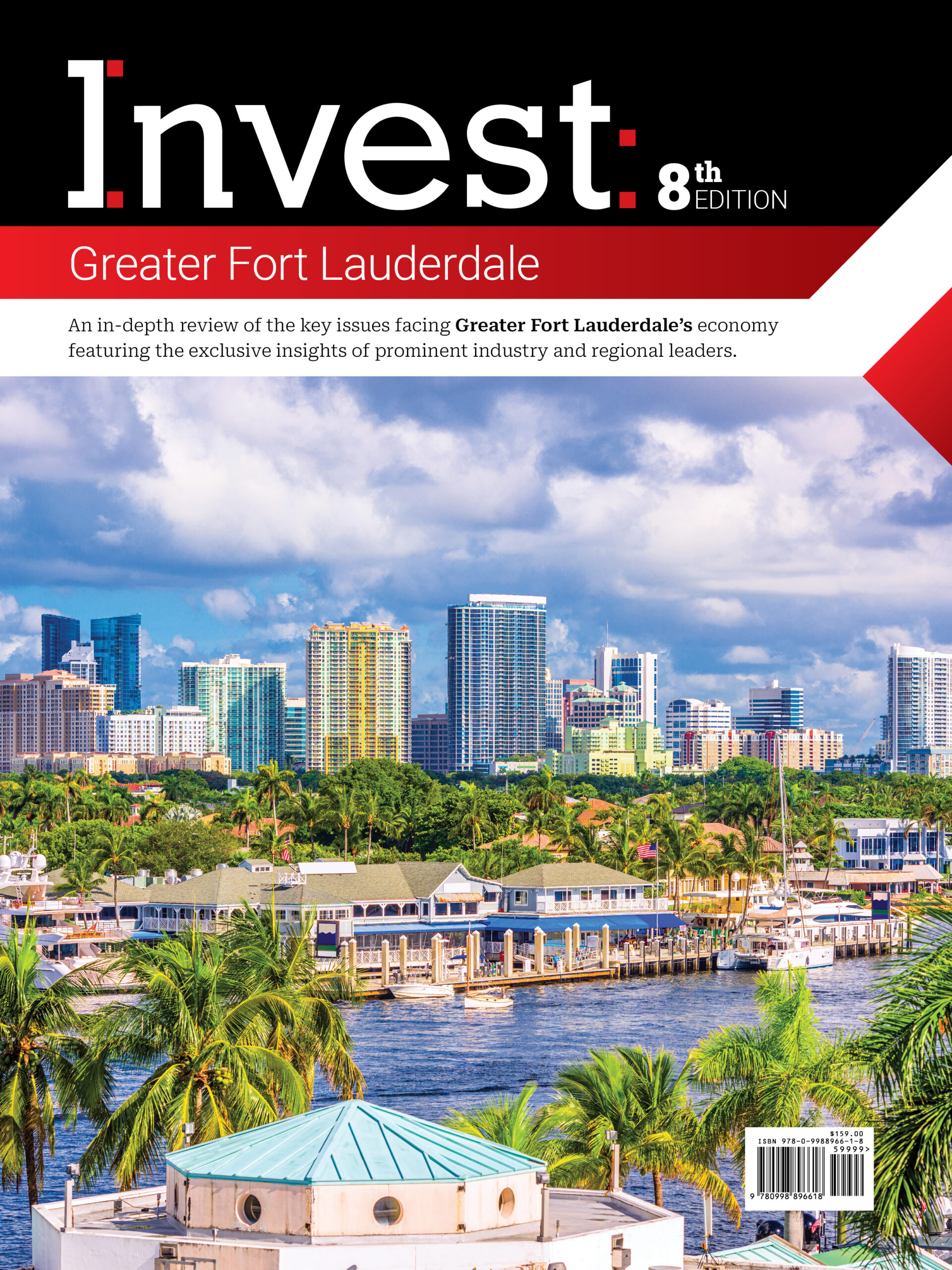
Invest: Greater Fort Lauderdale 8th Edition to explore growth drivers

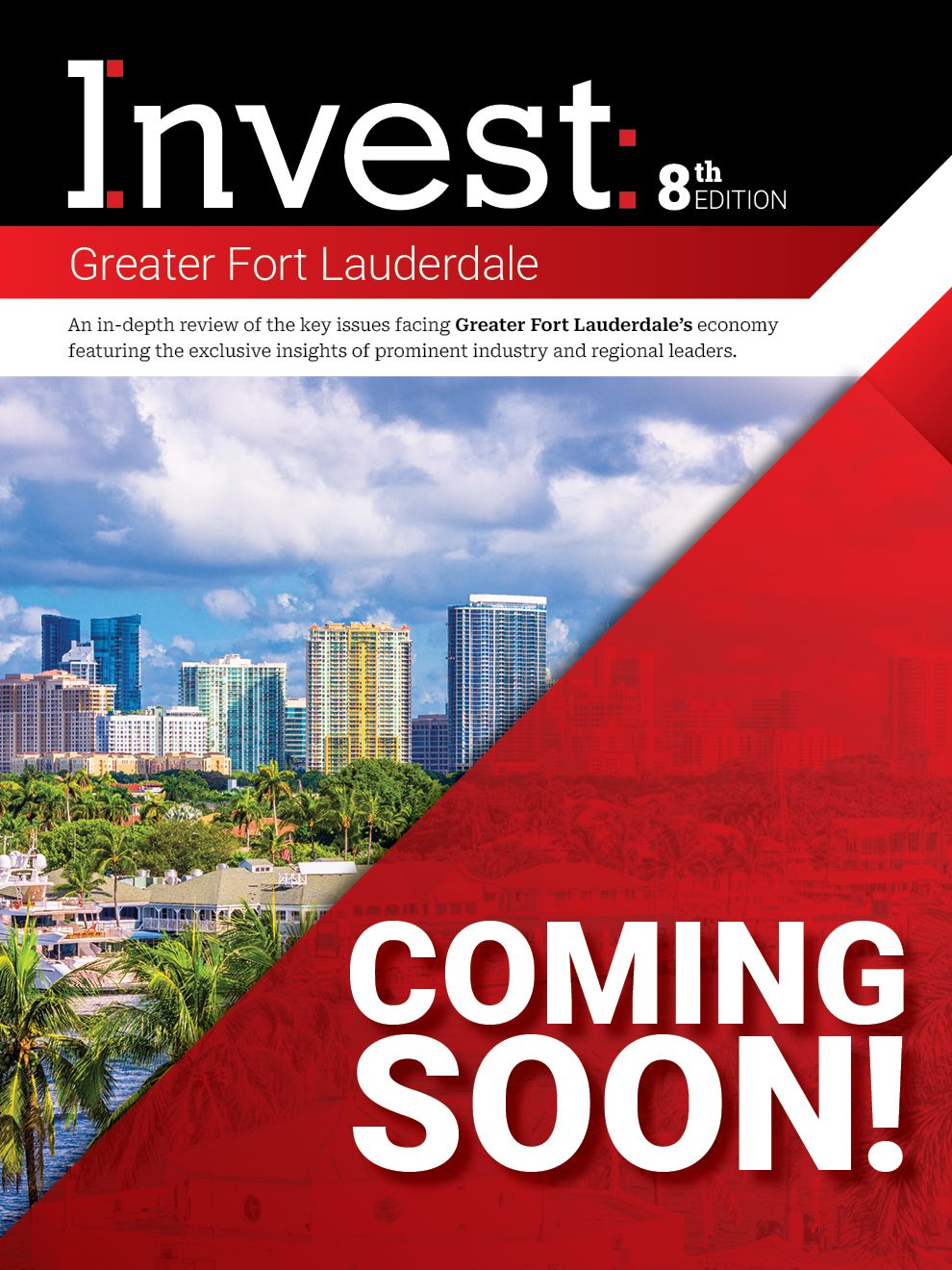
IGFLe8_Cover_Greater_Fort_LauderdaleNovember 2025 — Greater Fort Lauderdale continues to stand out as one of South Florida’s strongest engines of economic growth, backed by a rising concentration of business, community, and cultural assets. As the region cements its role at the center of the Tri-County area, local leaders are taking a proactive approach to improving quality of life and strengthening a business-friendly environment — priorities that anchor the upcoming Invest: Greater Fort Lauderdale 8th Edition.


Join us at caa’s upcoming leadership summits! These premier events bring together hundreds of public and private sector leaders to discuss the challenges and opportunities for businesses and investors. Find the next summit in a city near you!


Research is now underway for the latest report, which will examine investment trends, development activity, and competitive advantages across major industries. The edition will also feature deep dives on Broward County municipalities pursuing sustainable economic growth strategies.

Major infrastructure expansions — including ongoing upgrades at Port Everglades and Fort Lauderdale-Hollywood International Airport — have enhanced global connectivity and accelerated business attraction. At the same time, a growing talent pool and favorable tax landscape continue to draw companies from higher-cost markets, especially the Northeast. These trends are reinforcing Greater Fort Lauderdale’s position as a magnet for corporate relocations and innovation-led economic development.

“Strategic location, growing talent pool, and a favorable business environment have contributed to an influx of companies from sectors like technology, finance, and healthcare choosing Broward County as their base,” said Abby Lindenberg, CEO and founder of caa. “The challenge now is ensuring that regional infrastructure and housing keep pace with this rapid growth — key areas that will be covered in this year’s edition of Invest: Greater Fort Lauderdale.”

Distributed locally, nationally, and globally, Invest: Greater Fort Lauderdale 8th Edition provides an authoritative, holistic assessment of the region’s economy. Nearly 70% of Capital Analytics’ two million global readers are senior executives who rely on the report’s in-depth business intelligence to inform decisions across sectors including healthcare, education, banking, and economic development.

About caa & Invest: Greater Fort Lauderdale 8th Edition

caa is an integrated media platform that produces in-depth business intelligence through its annual print and digital economic reviews, high-impact conferences and events and top-level interviews via its video platform, Invest:Insights.

Invest: Greater Fort Lauderdale is an in-depth economic review of the key issues facing the regional economy, featuring the exclusive insights of prominent regional leaders. Invest: Greater Fort Lauderdale  is produced with two goals in mind: 1) to provide comprehensive investment knowledge on Broward County for local, national and international investors, and 2) to promote the region as a place to invest and do business.

The report conducts a deep dive into the top economic sectors in the region, including banking and finance, legal, healthcare, education, real estate, construction, energy, infrastructure and tourism. The publication is compiled from insights collected from more than 200 economic leaders, sector insiders, political leaders and heads of important institutions. It analyzes the leading challenges facing the market and uncovers emerging opportunities for investors, entrepreneurs and innovators.

For more information, contact: 

Milena Mignone
Sr. Executive Director
786-634-5306

Ryan Gandolfo
Senior Editor
786-843-8500

Want more? Read the Invest: Greater Fort Lauderdale report.

Subscribe to Our Newsletters

"*" indicates required fields

Address*
Would You Like To Receive Our National Newsletter?*
Interests
Markets
This field is hidden when viewing the form

While travel slows nationwide, San Antonio doubles down

CAA25_Conexio_Banner

Writer: Andrea Teran

San_AntonioNovember 2025 — While the U.S. braces for a decline in international travel in 2025, San Antonio is moving ahead with one of Texas’ largest airport infrastructure projects. At the Invest: Houston Leadership Summit on Nov. 20, Jesus Saenz, director of airports for the City of San Antonio, made the city’s intent clear: it’s not just planning for more flights — it’s preparing for a fundamental shift in its regional and global role.


Join us at the Invest: Houston 2nd Edition Leadership Summit! This premier event brings together hundreds of Houston’s business and regional leaders to discuss the challenges and opportunities for businesses and investors. This year’s theme centers on Houston’s role as a leader in world innovation. Buy your ticket now!


“We’re spending $1.6 billion on what we’re doing with a brand-new Terminal C — 18 gates, 850,000 square feet, and 40,000 square feet of brand new concession space,” Saenz said. “We’ve been running. My team probably says, ‘Can you calm down a little bit?’ But I’m a firm believer that when the embers are hot, you cook. And right now, is the time for us to cook in San Antonio.”

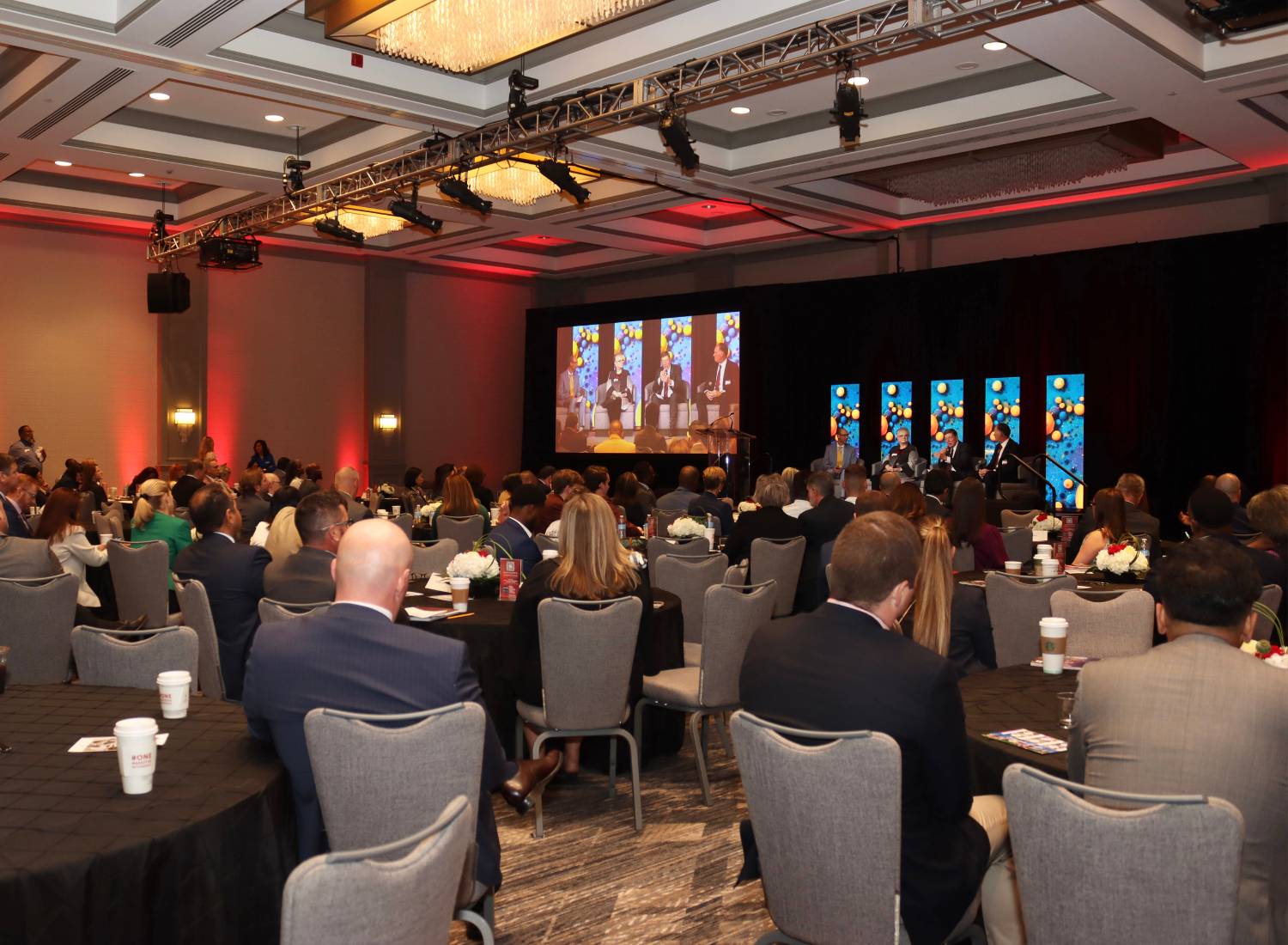
The summit, held at the Tobin Center for the Performing Arts, brought together more than 250 C-suite executives, public sector leaders, and industry stakeholders to explore the city’s infrastructure future. During a panel titled “Building for Tomorrow,” Saenz outlined what is now one of the region’s most ambitious undertakings: a $2.5 billion expansion of San Antonio International Airport — a long-term bet on global connectivity amid a national travel slowdown.

The new terminal is part of a multi-phase, 20-year strategic development plan projected to generate roughly 16,000 jobs and nearly double the airport’s footprint. The expansion also includes 29,000 square feet of passenger lounge space. 

“We’re wrapping up the design pieces … and this year, we’ve moved more than 11 million passengers — the most in the city’s history,” Saenz said during the panel. “We’re turning into a large hub.”

That timing puts San Antonio on a different trajectory than national air travel trends. Cities like Las Vegas and Los Angeles are seeing fewer foreign visitors this summer, with industry leaders and analysts warning the downturn may extend well beyond peak season. The World Travel & Tourism Council recently projected that the United States will be the only country among 184 studied where foreign visitor spending will fall this year. While other U.S. airports brace for weaker inbound volumes, SAT is investing for the long term.

“We’ve taken the number of nonstop flights from what it was in 2023 — 33 — to today, 49,” Saenz noted. “And we’re going to start service in May of 2026 into Canada. So we continue to move in those directions.”

“All that new infrastructure is going to need what? Electricity,” said Rudy Garza, CEO of CPS Energy, during the panel, linking infrastructure investment to the city’s broader growth strategy. “We’ve got a lot of planning work to do to make sure we do our part to make that happen, just as we’re trying to do for the great work that Jesus is doing at the airport.”

For Saenz and his team, infrastructure design has gone beyond capacity metrics. The new terminal will feature River Walk-inspired bridge elements and design motifs that reflect San Antonio’s cultural and historical character — a conscious move to create a sense of place. “We went out and obtained 100,000-plus direct feedback [submissions],” Saenz said. “Everyone said they wanted to have a sense of place … You’re going to see pieces of the River Walk on the bridges in the new airport terminal. We’ll take it back to the 1500s.”

At a time when many U.S. markets are deferring capital improvements due to labor and funding constraints, San Antonio’s airport is locking in 15-year commitments with air carriers to build stability and route diversity. “That gives us a very diversified portfolio so that we have all types of carriers and where we’re going — into transatlantic service, into Europe, continuing to grow what we’re doing,” said Saenz.

From a strategic standpoint, the SAT expansion positions San Antonio as a connective anchor between Austin and the rest of the I-35 corridor, especially as the two cities increasingly integrate into a single economic region. “The second that aircraft stops taking off and landing, nothing else really matters after that at an airport … Our goal is to be the most successful airport in the world. That’s what’s in our design standards today as we look out into the future.”

The panel discussion included leaders from CPS Energy, Monterrey Metal Recycling Solutions, and Joeris General Contractors, who underscored that this is not a standalone effort. It’s part of a coordinated regional strategy to reinforce San Antonio’s infrastructure, economic resilience, and role as Texas’ next-generation growth hub.

Want more? Read the Invest: San Antonio report.

Subscribe to Our Newsletters

"*" indicates required fields
Address*
Would You Like To Receive Our National Newsletter?*
Interests
Markets
This field is hidden when viewing the form

Power defines America’s next data center era

IPITe3_Banner_SetonHill

Writer: Mirella Franzese

America_data_centerNovember 2025 — The balance of data centers in the U.S. has shifted, according to a new report. While investments in data center infrastructure are expected to exceed $4 trillion globally by 2030, more than 40% will be invested in the United States, shaping the dynamics of local economies. Where this spending will trickle down to is still uncertain, but one key factor will play a decisive role: power.


Join us at caa’s upcoming leadership summits! These premier events bring together hundreds of public and private sector leaders to discuss the challenges and opportunities for businesses and investors. Find the next summit in a city near you!


At this scale, data centers are expected to tip the balance of entire regions, unlocking major growth, creating thousands of high-skill and high-wages jobs, and driving innovation across industries. 

Yet, in recent years, data center demand has well outpaced the energy capacity required to support it — a gap which is only expected to grow wider in the near-term. 

“Demand for power exceeds the growth capabilities of utilities,” said Mike Brady, VP of power generation execution for national energy provider Liberty Energy, in an interview with Invest:. 

McKinsey projects that data center demand in the U.S. will grow by 20% to 25% per year until 2030, while capacity will rise at a much slower rate. This alone will not be sufficient to meet demand, according to JLL.

At this rate, the U.S. will need three times the current level of energy consumption to maintain the surge in demand for data centers expected from 2023-2030. This new load on regional grids will call for additional infrastructure development, such as new energy resources and expansions in transmission. Yet, timelines for these build-outs will likely lag, given the rapid pace of data center growth in the country.

The availability of power and the speed of infrastructure delivery have therefore become the most decisive factors shaping site selection for data center projects across all U.S. markets, according to CBRE.

“Tech companies and hyperscalers are looking for power that is reliable, affordable, and low-carbon,” said Ricky Sakai, SVP of investment business development at Mitsubishi Heavy Industries America, in an interview with Invest:.

As a result, data centers have popped up in some of America’s more remote locations, especially in markets like Phoenix, Dallas, Northern California, Northern Virginia, and Chicago — all favored due to their abundance in power supply and grid resilience. 

In each of these regional economies, data centers are unlocking millions — if not billions — of dollars worth in direct and indirect expenditures, as per McKinsey estimates. The distribution of data centers across the U.S. is also shifting the national balance of power towards more isolated markets. 

The city of Gallatin in Middle Tennessee is a prime example: Meta’s $1.5 billion investment in the Gallatin Data Center delivered more than $1 million in direct funding to Sumner County schools and non-profits, and created more than 1,000 skilled trade jobs for its construction. 

“The biggest highlight of our year has been the grand opening of our Meta hyperscale data center, a $1 billion investment in our city,” Gallatin Economic Development Agency Executive Director Rosemary Bates told Invest:. “It’s a massive project, and its presence is significant for Gallatin.”

The potential for emerging data center markets is considerable as well, especially in states like Pennsylvania, where the demand for power is burgeoning, but energy resources are abundant. 

“Pittsburgh is a sleeper town with a huge opportunity to have data center infrastructure. Today, our mission focuses on taking advantage of big opportunities in an effort to grow southwestern PA’s economy, and right now, that’s through our energy assets,” said Matt Smith, chief growth officer of the Allegheny Conference on Community Development, in an interview with Invest:.

“These energy assets are attracting AI, data centers, and large-scale industrial and manufacturing projects, driving the economy forward.”

“Power is driving our economic solutions,” said Brady. “We’re only scratching the surface…The energy needed for the computing power, without latency issues, is enormous … We are going to see incredible changes in our lives.

 Yet, power alone won’t be enough to lure in capital investment, observed Smith. “Something that is clear across all of these big projects – whether it’s a data center or an industrial project making advanced switchgear – is that they all want speed.”

“Whether that’s permitting efficiency or making sure that local governments and the community are supportive … all that goes to the idea of getting the project up and out of the ground quickly,” he added. 

In general, launching a data center requires significant land, labor, and equipment resources, which, if constrained, could upset the timely completion and operational efficiency of new data center projects.

This means that states looking to attract large-scale data center investment will need to balance energy capacity and agility to deploy infrastructure with demand in order to secure bigger prospects. 

Want more? Read the Invest: reports.

Subscribe to Our Newsletters

"*" indicates required fields

Address*
Would You Like To Receive Our National Newsletter?*
Interests
Markets
This field is hidden when viewing the form