

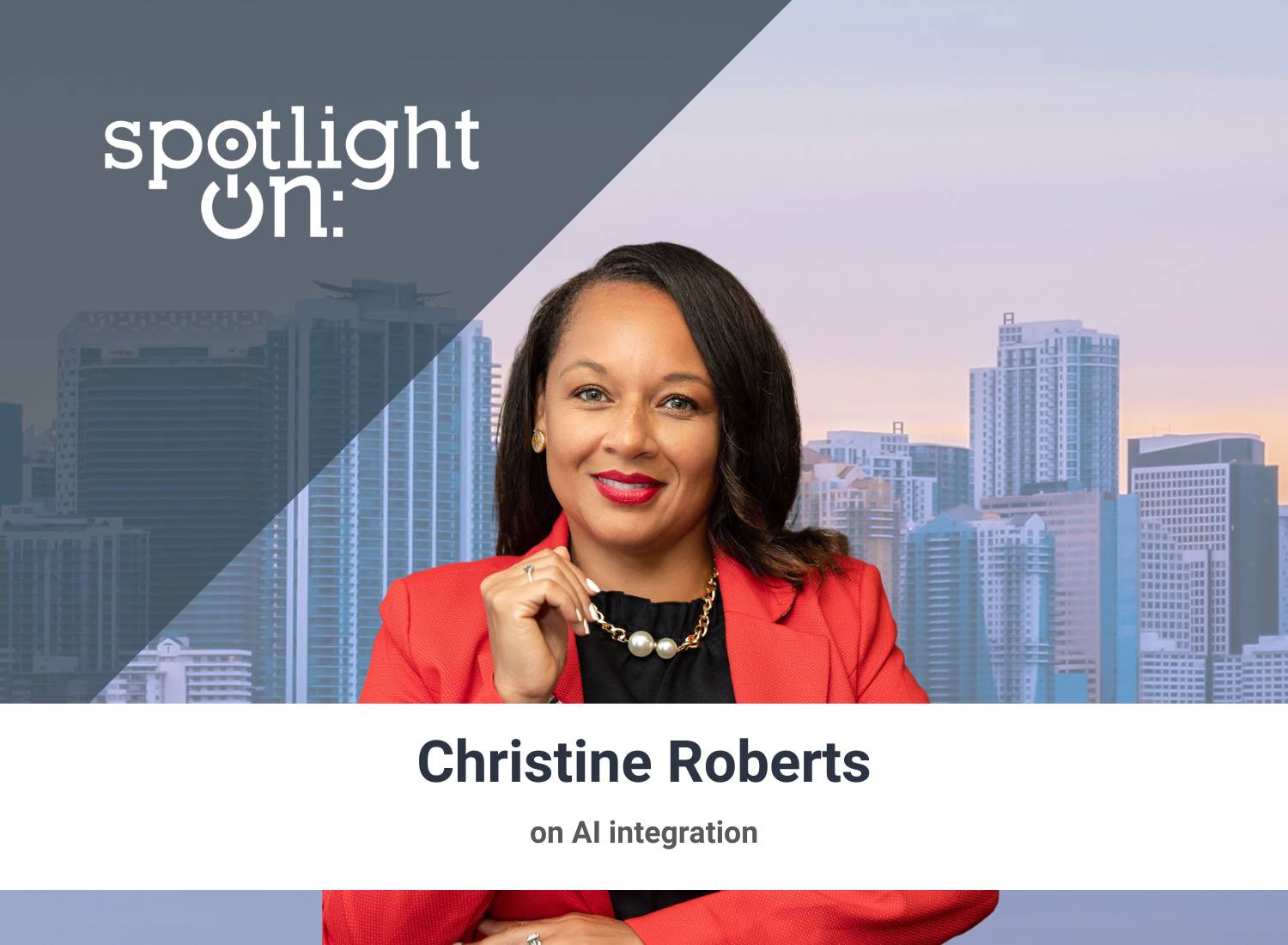
Spotlight On: Christine Roberts, CEO, Intention Enterprises

Christine_Roberts_Spotlight_OnNovember 2025 — In an interview with Invest:, Christine Roberts, CEO of Intention Enterprises, highlighted industry trends, financial literacy initiatives, and strategies for helping clients navigate economic challenges as she discussed the evolving role of AI in accounting. “AI enhances efficiency, but the human touch in interpreting financial data remains irreplaceable,” she said.

What changes over the past year have had the biggest impact on Intention Enterprises and in what ways?

As an emerging company, one of the most significant shifts we are navigating is the integration of Artificial intelligence into our field. There is a misconception that accountants and bookkeepers will no longer be needed once AI is introduced, but that is simply not the case. In fact, we believe our role will become more integral because we provide the human touch, which is the component that cannot be replaced. While AI can handle data entry and calculations efficiently, the explanation and interpretation of financial data remain our responsibility.

We have also observed AI being integrated into the software. Even QuickBooks, which is widely adopted by small and medium-sized businesses, has added AI features. The implementation of AI has been a tremendous timesaver. It enhances our efficiency, allowing us to focus more on strategic advisory roles rather than manual tasks.


Join us at caa’s upcoming leadership summits! These premier events bring together hundreds of public and private sector leaders to discuss the challenges and opportunities for businesses and investors. Find the next summit in a city near you!


How is Intention Enterprises leveraging technology and the use of AI to provide better customer service and streamline operations?

AI has become an integral part of our organization functioning  like an additional employee. It provides a second set of eyes to review our work, ensuring calculations are accurate and knowledge is up to date. For example, AI can help fact-check information, which is critical because tax laws change often. Despite having over 25 years of industry experience I find AI tools valuable to staying current and verifying critical updates.

Data entry is another area where AI has made a significant impact. Tasks such as bank feed categorization, which were previously manual, are now automated. This efficiency allows us to dedicate more time to client interactions, understanding their goals, and providing tailored consulting services. As we are growing our Fractional CFO offering, AI assists with intake and workflow processes, saving substantial time and improving service quality.

What is your overview of the accounting and capital management industry in Palm Beach, particularly regarding trends and industry dynamics?

Currently, tariffs are a major concern across industries. Even if a business is not directly involved in  trade, tariffs can have a ripple effect. For example, businesses in the medical, retail, and  technology sectors may face increased costs  from tariffs, these costs eventually trickle down to consumers and business clients.

Another trend we are seeing is the  need to educate small and medium-sized businesses on adopting professional accounting services. With evolving regulations, changes in sales tax laws, businesses benefit from partnerships with accounting professionals who can guide them.  Intention Enterprises is moving toward a knowledge-based model, where we will play a crucial role in informing clients about compliance and strategic financial planning.

How is Intention Enterprises adapting to address shifts in client expectations and enhance customer experience?

At Intention Enterprises, we go beyond data entry. We prioritize developing the narrative behind the numbers, equipping our clients with the knowledge to grow their businesses. This means spending time reviewing financial statements and helping clients interpret what these figures mean for strategic planning. Whether it is  prepared for the next quarter or the next five years, our goal is to empower clients with actionable insights that drive informed decision-making.

How important is financial literacy among decision-makers and others?

Financial literacy is incredibly important, not only for generating revenue but also for understanding how to manage the resources. It serves as the foundation for sound financial decision-making. In Florida, there is an initiative to introduce financial literacy training as early as middle school. I have partnered with Junior Achievement to teach financial literacy, planting the seed early so that young individuals understand these concepts and discuss them at home.  Financial literacy is crucial for business decision makers to understand resource management, strategic planning, and crisis management. Honestly without it, growth stalls, and mistakes compound.

In what ways does Intention Enterprises’ affiliations and partnerships contribute to pushing forward the goals of the firm?

Our affiliations and partnerships with financial institutions, chambers of commerce, and other organizations in the area serve distinct but interconnected purposes. We believe in giving back to the community. One of my key partnerships is with the Equity Entrepreneur Center, as the former Board Chair; we support emerging entrepreneurs. Currently, I serve as the Executive Vice President for the Boynton Beach Chamber of Industry and Commerce, which we founded nearly two years ago. The chamber now has 200 members and continues to grow. The primary focus of a chamber of commerce is to provide knowledge, foster networking opportunities, and facilitate partnerships. My passion lies in equipping companies with the resources they need to grow and remain sustainable.

I would also emphasize the importance of businesses engaging with their local governments. Partnering with city and county officials ensures that you have a voice in policies that affect your industry. I serve as the Vice Chair on the Palm Beach County Office of Equal Business Opportunity advisory board, where we advocate for small businesses to ensure they receive fair opportunities in the market. Everything is interconnected, and active participation is key to long-term success.

Taking into account economic headwinds, have there been any changes in the way that you advise your client companies?

Our approach has remained consistent, grounded  in conservative financial guidance. I encourage  my clients to always pay their quarterly taxes on time, remit sales tax promptly, and remain fully compliant with regulations. I emphasize the importance of planning for the future by maintaining emergency funds to weather market downturns. Florida businesses  experience lower revenue during the summer months, so I help clients build systems to ensure they have sufficient reserves to cover expenses during those periods.

What are the primary challenges affecting the accounting sector, and how is Intention Enterprises working to address these challenges?

The challenges vary depending on the industry.  One of our challenges is helping our clients stay on top of the changing financial landscape. Accountants are no longer just bookkeepers; we are advisors that help our clients plan strategically. At Intention Enterprises we work with clients to provide industry-specific solutions. For example, in the nonprofit sector the biggest financial pain is cash flow unpredictability because they rely on grants and donations. We help our nonprofits clients stay grant ready. In the healthcare space we’ve seen disrupted supply chains and increased costs. In response we worked with our clients to make financial plans for bulk purchasing and inventory forecasting to reduce long-term risk.

We like to believe that regardless of the business sector Intention Enterprises work to make our clients not only compliant but be prepared to grow and pivot.

What is your outlook for Intention Enterprises over the next two to three years?

My focus is to expand our team and on  education. I want Intention Enterprises to be a leader in financial empowerment; helping business owners understand the link between mindset, financial planning, and long term sustainability. In December, I published a journal called “Wealth Whispers” that offers reflection on how intentional financial strategies contribute to long-term personal and business success. We plan to grow with our clients.

Want more? Read the Invest: Palm Beach report.

Subscribe to Our Newsletters

"*" indicates required fields
Address*
Would You Like To Receive Our National Newsletter?*
Interests
Markets
This field is hidden when viewing the form

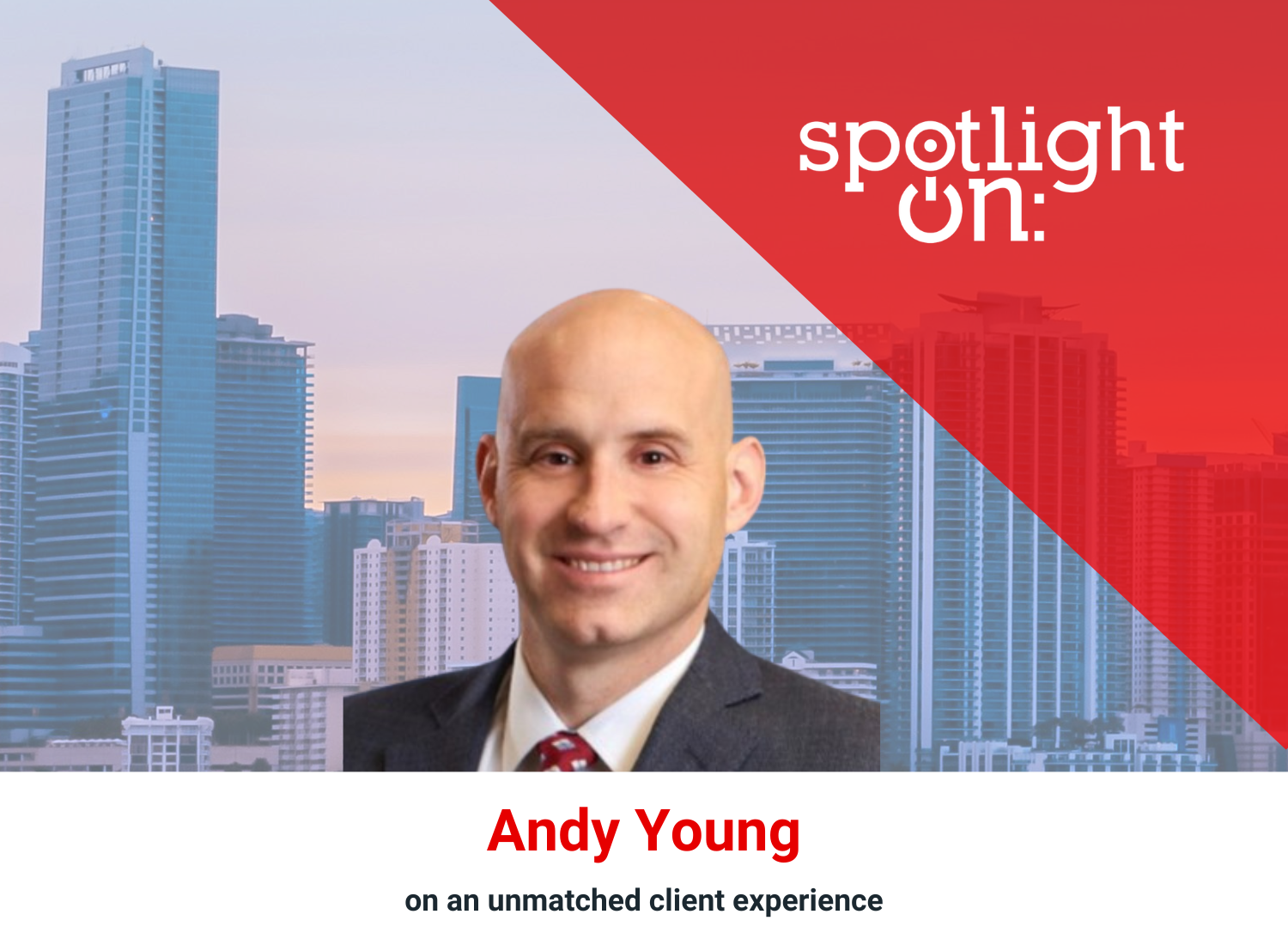
Spotlight On: Andy Young, Assistant Managing Partner, Forvis Mazars

Andy Young_Forvis Mazars_Spotlight OnNovember 2025 — In an interview with Invest:, Andy Young, assistant managing partner at Forvis Mazars, detailed the firm’s strategic growth and commitment to the Pittsburgh market. He explained how the recent combination with Mazars has been transformative. “Being able to form this network has opened up a lot of opportunities and has given us the ability to provide that unmatched client experience that we really strive for,” he said. Young also highlighted the strategic importance of the Pittsburgh region and the firm’s innovative approach to talent and technology.

What changes over the past year impacted the company, both globally and specifically in Pittsburgh?

Since forming Forvis Mazars, our clients have seen significant benefits. We have international clients that have operations in the U.S., and clients in the U.S. that have operations abroad. Forming this network has opened up a lot of opportunities and has given us the ability to provide that unmatched client experience that we really strive for. Some of this opportunity has been in the form of talent, including hiring people that have strong SEC experience, for example. That speaks to our commitment to investing in Pittsburgh, realizing that this has the opportunity to be a tremendous growth market for us. Our success hinges on those two things: the network and the ability to continue to get great talent in the door.


Join us at the Invest: Pittsburgh 3rd Edition Leadership Summit! This premier event brings together hundreds of Pittsburgh leaders to discuss the challenges and opportunities for businesses and investors. This year’s theme centers on workforce and innovation. Click here to learn more.


How does Pittsburgh fit into your broader U.S. and global strategy, and what makes the region important for your growth and client service priorities?

If you think about the experience our partners have, our roster for manufacturing and financial institutions is strong. Higher education is extremely important. We have a national-leading higher education practice. There are more than 30 publicly traded companies in Pittsburgh which is why we feel like we’ve got a huge opportunity here. From an energy perspective, Pittsburgh is second only to Texas in terms of natural gas production. Whether with the producers or with the entities that provide support to that industry, we see a future for our team to support the energy industry. Not to mention the recent major investment being made in the Pittsburgh region, the Pittsburgh airport. 

What strategies are you using to attract and retain top accounting and advisory talent in Pittsburgh?

Our industry, for a number of years, has had some challenges with fewer college students choosing to major in accounting. Pennsylvania recently passed a lower-hours threshold to be able to sit for the exam and become a CPA — one of many states to do so in effort to open up more pathways to earning a CPA license. Although there was some good news recently showing that accounting majors were up 12% nationally in 2024 compared to 2023, the fact remains that fewer young people are earning accounting degrees than when I started with the firm. That trend has caused many firms of all sizes to rethink how they hire.

At Forvis Mazars, we prioritize trying to get our talent up to speed and supporting their continued growth and development from day one. Today, these young professionals have to know what quality work looks like a lot quicker. Technology such as AI is taking some of the load off, but we lean into that with our people, letting them show off their skills and talent to our clients much earlier on. The really fun part is the relationships that we build with our clients, and making sure that they see that from the get-go is critical. That’s why we feel like we can really attract and retain high quality employees.

What significant tax and advisory trends are shaping your clients’ needs right now, particularly around clean energy tax credits and climate risk dashboards?

A very robust federal tax bill was just passed, and that presents a lot of opportunities for our clients, as well as for our people. For our region, there are numerous benefits, including 100% depreciation and expensing of provisions for certain manufacturing facilities. Hopefully that encourages investment in the region. While clean energy credits were drastically impacted by the new tax bill, significant opportunities remain and we have a team dedicated to navigating these credits.

Forvis Mazars has worked to develop tools that help our clients navigate these new rules. We also have our EDGE group, which is the firm’s innovation lab. They are on the front end of making sure that the technology we are utilizing is cutting edge. We allow anyone from across the firm to submit an idea to the EDGE team, typically to either help solve issues our clients are experiencing, or to help our teams work smarter and more efficiently. The EDGE team partners with others across the firm on these ideas by listening to understand, leveraging the right tools and technology, and building something that has the potential to help our clients or teams, or both. 

How is innovation and technology shaping the delivery of accounting and consulting services, particularly with the cutting-edge tools you mentioned?

Everybody talks about AI. It very much is a game changer, and I think it can really help us provide more value and get us where we need to be a little bit quicker, which frees our people up to focus more on the strategic issues that our clients need us to focus on. For instance, we have our new state and local tax software, SALT Explorer, which helps multi-state contractors navigate the complexities of working across many tax regimes. It’s a state-of-the-art tool which has seen strong success for our clients early in the program’s life.

In addition to helping with the clean energy credits, the program provides comprehensive information critical to making an informed decision about possibly operating in a given state. That makes it a powerful forecasting tool for our clients. We are leaning into those technologies, asking how we can do some of the things we’ve historically done a little quicker, which allows us to focus on the bigger issues for clients.

Can you share examples of your nonprofit initiatives and collaborations, and how they align with your broader ESG and corporate responsibility goals?

One of the things that I love about Forvis Mazars is our culture of giving back. The Forvis Mazars Foundation has a national footprint, but all of the donations are locally focused. Within every local market, our partners and leaders contribute to the Foundation, and each local office choses how they would like to allocate those funds in their own community. It is important that we have that local focus.

In addition, we also have our annual IMPACT Days. Our employee engagement council will decide where to volunteer and this past year, our group volunteered with an organization in Pittsburgh called Global Links. Global Links collects medical supplies and toiletries and then provides them to those in need. Our team separated and organized supplies for distribution. It was a great experience for our people. The willingness to give back is ingrained in our team and it’s another way to keep us engaged with our neighbors.

What are the key goals and priorities for you and for the Pittsburgh office for the next two to three years?

We’ve been in Pittsburgh now for more than 10 years. Later this calendar year we will be moving into a new office on the North Shore which our team is very excited about. We have a solid commitment from the national firm to continue investing in Pittsburgh.

Longer term, we really want to be viewed as a trusted partner in Pittsburgh and to the companies that are local, to help them unlock their full business potential. Forvis Mazars is here for the long haul. Pittsburgh continues to reinvent itself and evolve, and I feel like we’re right there with it. We really feel that we can continue to add value and grow our relationships more, because there is a strong investment coming from abroad.

Want more? Read the Invest: Pittsburgh report.

Subscribe to Our Newsletters

"*" indicates required fields

Address*
Would You Like To Receive Our National Newsletter?*
Interests
Markets
This field is hidden when viewing the form

US economic forecast 2026: Blind spots threaten growth

IPITe3_Banner_HBKS

Writer: Mirella Franzese

Economic_ForecastNovember 2025 — Despite signs of stabilization in the third quarter, the U.S. economy faces deepening structural pressures that could test growth in the following quarters. Economic growth steadied in the previous quarter, supported by record stock gains, firm consumer spending, and balanced labor markets — though cracks remain beneath the surface.


Join us at caa’s upcoming leadership summits! These premier events bring together hundreds of public and private sector leaders to discuss the challenges and opportunities for businesses and investors. Find the next summit in a city near you!


“The American economy is a $30 trillion dynamic and resilient beast, but it’s going to face a test here at the turn of the year,” Joseph Brusuelas, chief economist at RSM U.S., told Reuters

The road to 2026 remains challenging. The OECD’s latest economic outlook suggests a slower path forward, forecasting that growth will lose momentum through 2026. 

According to the OECD’s report, U.S. economic growth will slow to 1.8% in 2025 from 2.8% in 2024 — dipping below the 2-3% rate, widely viewed as healthy for an economy. This number is projected to slip further to 1.5% in 2026, as higher tariff rates, net immigration losses, and cuts to the federal workforce disrupt growth. Analysts also warn that other critical vulnerabilities persist, including funding cuts, sustained inflation, and the lingering impact of the ongoing federal shutdown — all of which could weigh on performance into 2026. (Check out the latest Invest: Business Sentiment Survey results for how executives are viewing the economy and business.)

Blind spots

As the Treasury notes, there are several blind spots in the path ahead that could severely undermine the American economy.

“We see both upside and downside risk,” said Stephen Meyer, CEO of the Philadelphia-based PPR Capital Management. “Rates are likely trending down, which is generally positive, but the broader question is whether the economy is strong enough to support that shift. Unemployment is a key concern… and inflation remains sticky enough to impact Fed decisions,” Meyer told Invest:.

Beyond rates and inflation, experts point to several key indicators that pose the biggest risks to the U.S. outlook.

The federal government shutdown

The federal government shutdown, which ended on Nov. 12, threatens to drag the current quarter’s GDP growth. This occurs through lost productivity from discharged workers, paycheck delays, and spillover effects on related industries, like government contractors and local services. The CBO estimates up to $14 billion in lost output from the shutdown, although economists believe the real toll could be higher, according to Poynter. The CBO expects most losses to be recouped in early 2026, though lasting damage to the late 2025 is likely.

Consumer spending

Consumer spending is the largest component of GDP, accounting for nearly 70% of the U.S. economic output, according to Morningstar. As such, it is considered one of the main determinants of the country’s economic health. However, in 2025, consumer spending has been at odds with consumer sentiment, leading to an uncertain outlook.  While real personal consumption expenditure increased by 1.4% in the second quarter of 2025 from the previous quarter, consumer sentiment is still markedly lower than in 2024, according to research from the University of Michigan.

While recession fears have stoked broader pessimism in the economy, consumers haven’t pulled back on spending yet. Because economic data lags real-time behavior, experts view the gap between sentiment and spending as a concern, especially given that spending data might not catch up with how consumers are really feeling. Spending therefore remains a major blind spot for economists when assessing upcoming quarters.

Labor markets

Ruling out the shutdown, a decrease in public sector employment is expected to weigh on labor markets through the 4Q25. More than 150,000 federal employees on the Deferred Resignation Program are expected to have departed government employment after an imposed period of leave, which ended on Sept. 30. Analysts expect October employment to reflect this decline in total payroll employment, unless these employees had their resignation date postponed, were recalled from administrative leave upon agency reconsideration of staffing needs, or had found replacement jobs.

The broader labor market is expected to remain a weak spot in the months ahead, according to the Wall Street Journal’s latest economic census. This quarter, economists expect the economy to add only 15,000 jobs a month — down more than 35,000 from July’s survey. The long-term outlook also falls below expectations. In the coming year, U.S. employers are expected to add fewer employees — just 49,000 a month on average, down from 74,000 a month in their previous survey. That is also WSJ economists’ lowest monthly payrolls forecast since the July 2023 survey.

Yet higher unemployment is still unlikely despite slower job growth, as the new administration’s immigration crackdowns have reduced the supply of workers in a number of key industries. According to the Treasury Department, labor supply and labor demand have softened at the same time, which has offset modest hiring with somewhat stable unemployment.  

“Indeed, labor markets appear to remain in balance as labor demand has softened with easing supply,” announced the Treasury in a press release. “With modest hiring but low layoff rates, firms appear to be shedding labor via attrition and planning on productivity to drive output growth.”

Stock market

Sustained corporate investment in the tech sector carried stocks to record highs in the 3Q25 — a positive economic indicator for the Treasury. However, the U.S. stock exchange is not representative of the economy as a whole, as Morningstar’s senior editor Margaret Giles notes. Large corporations and wealthy investors hold the biggest influence over the stock market, but small businesses make up the majority of the U.S. economy. Stock prices reflect investor confidence rather than current conditions like spending and employment, but remain vulnerable to tariff announcements, rate cuts, and press releases.

Inflation and political rift

Interest rates, geopolitical uncertainty, and tariffs are among the biggest upside risks to the inflation outlook. Energy prices remain extremely volatile, driven by geopolitical shocks such as conflicts and tariff changes. Even though the U.S. has advanced its trade and economic relations with China, as recently announced by the White House, tariffs are expected to continue to play a pivotal role in 2026.

“There is a lot of uncertainty surrounding tariffs, their effects on the cost of goods, and their effects on business expansion,” said Forvis Mazars Managing Partner Brian West in an interview with Invest:. “The economy has slowed slightly… More businesses are pushing back on expanding their teams and services. Budgets are being constricted from taking on opportunities for future planning. Business acquisitions have dropped in the last quarter. We are seeing signs pointing to a wait-and-see approach, which is putting a pause on hiring, decision-making, and new projects.”

Artificial intelligence

Corporate spending on AI infrastructure and data centers has buoyed economic growth and driven stock market rallies throughout 2025. While these projects are expected to create productivity gains and economic growth, timelines for completion are uncertain. Additionally, AI’s growing role in the workforce is reshaping productivity and employment structures, creating efficiency gains but also new forms of displacement, such as layoffs. 

“Artificial intelligence also could have disruptive impacts on the economy and labor markets as businesses and individuals integrate it or fail to. Firms that are slow to adapt to the technology could find themselves at a competitive disadvantage, as could workers that delay incorporating artificial intelligence to improve their skills growth and productivity,” stated the Treasury. As business leaders weigh expansion against uncertainty, the coming quarters may prove decisive in determining whether the economy’s soft landing can be sustained — or whether deeper structural challenges will resurface. 

“The future remains uncertain,” said Tom O’Connor, Nashville market executive for financial services leader Synovus, in an interview with Invest:. “We might have clarity in three months, or we might not.”

Want more? Read the Invest: reports.

Subscribe to Our Newsletters

"*" indicates required fields

Address*
Would You Like To Receive Our National Newsletter?*
Interests
Markets
This field is hidden when viewing the form

Where Pittsburgh leaders see the real value in AI

Writer: Melis Turku Topa

Pittsburgh_SkylineNovember 2025 — AI is no longer a tech upgrade, it’s a strategic imperative reshaping how companies operate, lead and grow. Around 75% of organizations globally now use AI in at least one business function, and nearly half deploy it in three or more functions.


Join us at the Invest: Pittsburgh 3rd Edition Leadership Summit! This premier event brings together hundreds of Pittsburgh leaders to discuss the challenges and opportunities for businesses and investors. This year’s theme centers on workforce and innovation. Click here to learn more.


Across Pittsburgh, organizations are building AI-driven corporate strategies that reshape business models, accelerate decision-making, and unlock new forms of value creation. 

As adoption scales, success increasingly depends on responsible implementation. Only 25% of businesses report a fully implemented AI governance program, and those with a formal AI strategy are more than twice as likely (80% vs 37%) to achieve successful adoption. That means effective upskilling, leadership dedication, and governance frameworks — including roles such as Chief AI Officer and Chief Data Officer — are rapidly becoming the key strategic differentiators of modern competitiveness.

Across boardrooms and campuses, executives are shifting the conversation from whether to use AI to how it can be responsibly integrated into long-term strategy. From predictive analytics in healthcare to generative tools in professional services and real estate, AI is not only optimizing operations but also reshaping how organizations think, lead, and compete.

Pittsburgh companies are moving beyond pilot programs toward enterprise-wide adoption. Data-driven decision-making now guides everything, from product design to customer experience and sustainability planning. For many firms, AI has become a foundational element of corporate strategy informing long-term investments and unlocking new growth models.

At K&L Gates LLP, Managing Partner Thomas Ryan noted that the firm’s early adoption of AI has positioned it ahead of the curve. “A significant achievement is being an early adopter for integrating AI across multiple disciplines,” said Ryan, in an interview with Invest:. “We have a firmwide AI industry working group that rolls out tests for new products, works with our clients, and finds ways to continue integrating and pushing our practices forward.”

This proactive approach mirrors a broader shift across Pittsburgh’s professional services landscape, where law firms, consultancies, and financial institutions embed AI into workflows to enhance precision, productivity, and client value.

With innovation comes responsibility. As AI becomes central to business operations, leaders are prioritizing governance, ethics, and workforce readiness. Responsible AI adoption encompassing transparency, fairness, and accountability is increasingly seen as a hallmark of forward-thinking organizations. A recent NTT DATA survey found that over 80% of executives believe leadership, governance, and workforce readiness are lagging behind AI adoption, underscoring a clear gap between technological capability and ethical oversight. As a result, companies that invest in governance frameworks and ethical leadership are distinguishing themselves as trustworthy and resilient in this new era of intelligent business.

In healthcare technology, Perry Genova, senior vice president and chief technology officer at Omnicell, emphasized that innovation must never come at the expense of safety.

“Everyone should be mindful of ethics and safety when discussing innovation, particularly in the case of artificial intelligence solutions,” Genova said. “AI can be extremely powerful and enabling but must be safely harnessed to ensure our customers and patients experience benefits without risk.”

Such a structured approach to AI governance reflects a growing awareness across industries where success depends not only on technological advancement, but also on the ethical frameworks guiding its use.

Beyond corporate settings, Pittsburgh’s academic institutions are at the forefront of preparing the next generation of AI-ready leaders — one of several themes covered at the upcoming Invest: Pittsburgh leadership summit on Feb. 26. Isabelle Bajeux-Besnainou, dean of the Tepper School of Business at Carnegie Mellon University, shared with Invest: how AI is shaping the future of business education.

“We’re expanding access to AI education beyond traditional students. We already work with companies through custom executive programs, but soon we’ll launch an AI for Business online course in partnership with CMU’s School of Computer Science,” she said. “It’s a comprehensive offering with 24 faculty members contributing to teach AI from a business perspective. Across the board  from operations to instruction to outreach AI has become deeply embedded in everything we do.”

By integrating AI across disciplines, CMU and other institutions are ensuring executives and students alike can adapt to a rapidly evolving digital economy — one where human insight and machine intelligence go hand in hand.

For some industries, AI’s potential is transformative, but not absolute. John Bilyak, market leader and principal at Colliers, for example, pointed out that the technology’s promise must be grounded in practicality.

“The key is to ensure technology enhances, rather than hinders, the practical aspects of real estate deals,” said Bilyak. “While AI certainly has its place, its potential might be overblown.”

Want more? Read the Invest: Pittsburgh report.

Subscribe to Our Newsletters

"*" indicates required fields

Address*
Would You Like To Receive Our National Newsletter?*
Interests
Markets
This field is hidden when viewing the form

San Antonio federal layoffs test economic stability and workforce readiness

ISATe4_Banner_Order_ of_the_Daedalians

Writer: Andrea Teran

San_AntonioNovember 2025 — A recent wave of layoffs tied to expiring federal contracts is deepening economic uncertainty across San Antonio, with nearly 1,300 job losses statewide anticipated before the end of 2025. In one of the most significant local examples, 279 janitorial and maintenance workers at Brooke Army Medical Center (BAMC) will be laid off after Thanksgiving, following the end of a five-year, $148.8 million contract with CBRE Government & Defense Services.


Join us at the Invest: Houston 2nd Edition Leadership Summit! This premier event brings together hundreds of Houston’s business and regional leaders to discuss the challenges and opportunities for businesses and investors. This year’s theme centers on Houston’s role as a leader in world innovation. Buy your ticket now!


CBRE, formerly J&J Maintenance, has operated at BAMC since 2001. While some affected employees may be rehired by the next service provider, the layoffs are expected to be permanent and come with the loss of tenure and benefits, according to the company’s Worker Adjustment and Retraining Notification (WARN) letter submitted to the Texas Workforce Commission.

“These layoffs are expected to be permanent,” wrote Howard Young, the company’s chief people officer, in the letter. “However, there may be an opportunity for the impacted employees to be hired by the new service provider.” Some of the affected workers are represented by the Laborers’ International Union of North America.

These job losses follow earlier cuts by TechWerks, which laid off 87 workers providing IT services to the Defense Health Agency in San Antonio. Combined with layoffs at federal contractors across Texas — including NASA subcontractors, Spirit Airlines, and Texas Instruments — the current cycle reflects a broader shift in federal spending priorities and its cascading effects on regional economies.

Despite recent layoffs, the Dallas Federal Reserve forecasts that Texas will add roughly 180,400 jobs in 2025, a 1.3% increase by year’s end. While employment rose at an annualized rate of 3.2% in August, year-to-date growth remains modest at 1.2%, well below the state’s historical 2% trend. Economists caution that seasonal factors, including school-year hiring, may be inflating recent gains.

Beneath the surface, key sectors are showing signs of strain. In September, the Dallas Fed’s Service Sector Outlook Survey recorded a sharp decline in business conditions, with the employment index falling into negative territory and hours worked contracting. Uncertainty also surged to 22.5, its highest reading since April, reflecting increased caution among employers. Retailers reported even deeper weakness, with sales, staffing levels, and overall business activity all declining. These figures suggest that while headline growth continues, San Antonio’s labor market — particularly in service and consumer-facing sectors — is cooling.

This sentiment is echoed by the National Federation of Independent Business (NFIB), whose Small Business Optimism Index fell to 98.8 in September — the first decline in three months. The Uncertainty Index climbed to 100, one of the highest levels in the NFIB’s 52-year history.

The layoffs come amid broader workforce shifts in San Antonio, where local institutions are expanding support services to manage economic displacement. Workforce Solutions Alamo, the region’s publicly funded workforce agency, continues to offer job search assistance, career training programs, and industry-aligned certifications through its “Ready to Work” initiative and federally supported programs under the Texas Workforce Commission. According to agency data, in-demand fields include health care, manufacturing, and information technology — sectors still experiencing growth despite localized contractions.

Want more? Read the Invest: San Antonio report.

Subscribe to Our Newsletters

"*" indicates required fields

Address*
Would You Like To Receive Our National Newsletter?*
Interests
Markets
This field is hidden when viewing the form

New Jersey county leaders on the power of small business growth

Writer: Mariana Hernández

New_Jersey_By_NightNovember 2025 — Small businesses remain the backbone of New Jersey’s economy, driving innovation, community development, and local employment across every county. With 1.1 million small businesses accounting for 99.7% of all firms and employing nearly half of the state’s workforce, the Garden State relies on its entrepreneurs to fuel economic resilience and growth.


Join us at caa’s upcoming leadership summits! These premier events bring together hundreds of public and private sector leaders to discuss the challenges and opportunities for businesses and investors. Find the next summit in a city near you!


From March 2023 to March 2024, small businesses were responsible for nearly all of the state’s new jobs, contributing 38,432 net new positions—a remarkable 99.5% of total job gains. This momentum reflects not only the importance of local business owners but also the collaborative support of government agencies, development authorities, and state programs to lower the entry barriers for entrepreneurs.

At the state level, the U.S. Small Business Administration (SBA) has played a major role, providing over $768 million in traditional loans since January 2025 through August 1 — $115 million more than the same period last year — and helping create or support more than 12,000 jobs. Meanwhile, the New Jersey Economic Development Authority (NJEDA) continues to bolster local economies through initiatives like the Premier Lender Program, which partners with banks to offer low-interest loans and financing to businesses that may not qualify for traditional funding.

Meanwhile, the New Jersey Business Action Center (NJBAC) continues to play a pivotal role through free consulting services, the Small Business Advocacy Program, and “Resource for Growth” events that connect entrepreneurs with lenders, regulators, and development partners. Together with county commissioners and economic development teams, these initiatives are helping to build a stronger, more inclusive economy across the Garden State.

Local leaders are also taking a proactive approach to business retention and expansion. From workforce training to simplified permitting or direct financial assistance, counties are aligning their economic strategies with the needs of their small business communities. Invest: spoke with commissioners from across the state on the policies, partnerships, and community-based efforts empowering small businesses to succeed in today’s evolving economy.

Orlando_Cruz_Quote_Stack_New JerseyOrlando Cruz, County Commissioner, Passaic County

Within the county itself, we have our workforce investment board that is partnering with experts to ensure that our community has access to good-paying jobs. Partnering with in-demand industries and preparing individuals so they are workforce-ready is key.

Our small-business developmental center works with individuals who either want to start a business or currently own a business and need guidance. They help small businesses navigate challenges, as well as assist entrepreneurs in getting started. We’re also proud that our local Small Business Development Center worked with more than 400 entrepreneurs and small businesses over the past year, with expansion and stability throughout the past few years, and is constantly working with our state partners to provide the necessary resources and support from filing their incorporation documents to signing their first lease to applying for grants through the NJEDA.

Creating a great partnership is of the utmost importance. The small-business development center has a long list of referral partners, ranging from financial institutions to nonprofits like SCORE. SCORE consists of retired business owners and CEOs who have a wealth of knowledge and experience in running a business and provide free counseling to entrepreneurs and small-business owners. Maintaining these partnerships has been crucial.

Brendan_Gill_Quote_Stack_New JerseyBrendan Gill, Commissioner, Essex County

The Workforce Innovation and Opportunity Act strengthens the Essex County Workforce Development Plan. This four-year plan sets a timeline to help residents of Essex County get the skills they need to succeed in a wide array of potential jobs. The programs train people in industries like healthcare, social assistance, education, retail trade, finance, insurance, utilities management, as well as scientific and technical services.

The growth of AI and AI-driven industries is something we’re trying to get ahead of. We are one of the few counties with an office of small business development where the residents can, at any time, be guided through the technical process of acquiring skills as a small business. For example, they can compete for public work, like for the sheriff’s department, roads and bridges, engineering, vocational school, county college, county hospital, criminal justice system, and jail.

The county of Essex alone is roughly an $800 million entity, and all that money is spent, by and large, on businesses and people within the county. Our aggressive outreach team and outreach office educate those potential businesses on how they can compete for that work that may exist in the public sector, and if they need other technical experience or training to do private sector work, such as insurance and bonds. They can also tap into the university systems, from Rutgers University, New Jersey Institute of Technology, Montclair State University, to Seton Hall University, all located in the county, for both undergraduate and post-secondary education.

Shanel_Robinson_Quote_Stack_New JerseyShanel Robinson, County Commissioner Director, Somerset County

We have recognized that people are prioritizing work-life balance, and are choosing where they live not only based on their place of employment but other factors they see as important. We are being proactive in recognizing those trends, informing people about all the great things Somerset County offers, while directly supporting employers who can leverage our recently created talent attraction tool, Why Somerset, during their prospecting and recruiting. Why Somerset provides information on our excellent public schools, housing market, safety, things to do, places for trailing, where spouses can work, and more. 

The County also supports our small businesses and recently invested in the creation of the Somerset County Business HUB. Housed in Somerset County Business Partnership’s new offices, the HUB was a direct outcome of how the pandemic created a need to provide business education on marketing, grants, loans, and other essential topics, where the focus was on supporting business growth and entrepreneurship. This focus drove this new multi-conference room space, designed to be used by small businesses.

Jason_Sarnoski_Quote_Stack_New JerseyJason Sarnoski, Commissioner Director, Board of County Commissioners, Warren County

A key challenge is managing the burden of state and federal mandates on local taxpayers. Keeping taxes low and affordable for residents is crucial, despite rising insurance and healthcare costs and decreased program funding. Losing federal and state support stretches our budget thin. We’re actively addressing IT infrastructure challenges and emphasizing proactive local planning to attract desired businesses.

However, opportunities abound. Our open space, tourism, and education offer avenues for growth, including new technologies like drones. There’s a strong demand for skilled blue-collar workers — carpenters, plumbers, electricians — which our tech school excels at training, fostering future economic development. Our agriculture industry is strengthening through tourism, drawing visitors who enjoy local farms and produce. This boosts our downtown shops and attracts people seeking open spaces and recreation, which we actively promote.

Want more? Read the Invest: New Jersey report.

Subscribe to Our Newsletters

"*" indicates required fields

Address*
Would You Like To Receive Our National Newsletter?*
Interests
Markets
This field is hidden when viewing the form

Spotlight On: Jonathan Hirschfeld, Managing Partner NJ, PwC

Jonathan_Hirschfeld_Spotlight_OnNovember 2025 — In an interview with Invest:, Jonathan Hirschfeld, managing partner for New Jersey at PwC, highlighted how rapid geopolitical and technological shifts have shaped client strategies and firm priorities. “Change creates opportunity,” he noted, emphasizing PwC’s role in helping clients navigate uncertainty across industries.

What have been the most significant changes shaping PwC’s operations in New Jersey over the past year?

We’re obviously in a time of constant change, whether in New Jersey, across the country, or around the world. When I think about the past year and 2025 so far, it’s been full of discussion around political developments, both in the U.S. and globally, tariffs, and tax law changes. Every day, there’s something new being discussed both in the United States and internationally. That creates a lot of complexity between countries, states, and companies.

We’re seeing change layered on top of change. Clients may be ready to act, but shifting circumstances often force them to pause and wait for clarity. This level of volatility feels more sustained than we’ve seen in some time.

But in our world—accounting, audit, tax, and consulting—change is an opening. It creates the space to step in with insight, offer stability, and help clients move forward with confidence amid uncertainty.


Join us at caa’s upcoming leadership summits! These premier events bring together hundreds of public and private sector leaders to discuss the challenges and opportunities for businesses and investors. Find the next summit in a city near you!


How are clients’ needs evolving across industries like life sciences, tech, and financial services?

Global issues, especially tariffs, are top of mind. For product and service companies, especially in pharma and life sciences, these changes affect more than taxes. They’re thinking about where and how to do business, where to invest, and where their people should be.

There’s also the technology piece. The pace of technological change is incredible. Every day, there’s a new tool or platform, and AI continues to evolve rapidly.

From a client perspective, they’re constantly asking: How can we do this better? How can we be faster? Maybe more cost-effective? That applies to how they manage operations, deliver products, and stay competitive. We’re focused on this in how we serve clients and how we operate internally.

What makes New Jersey an ideal location for PwC’s growth today?

New Jersey is an interesting location for many reasons. I’ve spent a lot of time in the pharmaceutical and life sciences space, and there are so many companies here in that sector, from startups to some of the biggest in the world. Many of them have been reinvesting in New Jersey and in the United States, and there is a lot of great thought leadership and innovation coming from this state.

There is also the geographic advantage. New Jersey is centrally located between New York and Philadelphia. You’re close to Wall Street and major financial centers, and right on the water, which is important for global trade and logistics. When I look at our practice in New Jersey and the range of industries we serve, the opportunity here is huge. The diversity of businesses across the state sets it apart.

How can the industry attract more young professionals to combat the CPA shortage and generational shifts?

As a CPA, born and raised in New Jersey, who went to college here, and has been with PwC for more than 30 years, I’m a big supporter of the profession. I do what I can to encourage the next generation to consider beginning their careers in this profession.

One of the challenges we’ve seen is the growth of the industry. The demand for CPAs keeps increasing, which is a good thing, but we haven’t seen the same growth in the number of people entering the field. Part of that is the result of the requirement to have 150 credit hours to become a CPA. For many students, that means another year of college. Given the cost of college and the desire to start working sooner, some other business careers have been more appealing.

Now, we’re seeing some efforts to rethink the path to becoming a CPA. There’s been significant progress in New Jersey and across the country to create alternate pathways that don’t require all 150 hours but include work experience or other qualifications. I believe this will bring back interest and excitement in the accounting profession.

At PwC, we’ve also been doing more to connect with students earlier, not just recruiting but educating them about what the accounting profession is and what a career at PwC can look like. Many of our interns start with us in their second year of college, and we’re finding that the earlier we start those conversations, the more interest and excitement we can build.

What new partnerships has PwC built to strengthen its community impact in New Jersey?

When I think about partnerships in this context, we’ve focused on getting our staff and partners more engaged in the community over the past few years. That means connecting with not-for-profit organizations, colleges, and local community groups — most of them right here in New Jersey.

There are so many great not-for-profit organizations doing important work for the people of New Jersey and beyond. When I stepped into this role as managing partner, it became even more clear how many of these groups would welcome support from PwC, whether that’s volunteering, raising awareness, or just being present.

We’ve been building and expanding relationships where we can get our people involved. A lot of our employees want to give back but don’t always know how to start. We help connect them with opportunities, whether it’s volunteering at events or, as they become more experienced, joining advisory boards or committees.

The firm also gives everyone a certain number of hours to spend on community work as part of their regular schedule. It sends a clear message that you are not just an employee doing accounting or consulting work. You are part of the community, and this is part of your role. It adds value, not just for the community, but also for personal growth and job satisfaction.

What are the most pressing challenges facing the accounting industry, and how is PwC responding?

I’ve been at PwC a long time, and one thing I can say is that change has always been part of this business. But what we’re seeing now is the pace of change accelerating. Clients are asking for things faster, and new technologies are coming into play constantly.

One of the biggest challenges is making sure our people stay current; what we call upskilling. Just a few years ago, we weren’t talking much about AI, prompting, or tools like ChatGPT. Now, they’re front and center. We’ve invested hundreds of thousands of hours in training across the firm to make sure our teams are ready.

We also have leaders and champions within the firm who are going even deeper into these areas and then helping bring the rest of us along. It’s not just about knowing the latest tools. It’s about making sure we use them appropriately and effectively in a regulated industry.

The other big challenge is the geopolitical environment; changes in tax law, tariffs, and policy. All of this affects our clients, whether they’re trying to make investment decisions, manage operations, or stay compliant. Our job is to stay ahead, offer insights, and help them move forward with confidence. That’s where we see real opportunity.

What are PwC’s top priorities in New Jersey, and how do they align with the firm’s broader global strategy?

Our priorities in New Jersey align closely with PwC’s overall strategy. One of the biggest focuses is technology, helping our clients adopt and implement it, and advancing our own capabilities internally.

On the consulting side, that means guiding clients as they take on digital transformation and helping them get the most out of these tools. On the compliance side, including tax and audit, it’s about staying current and understanding how our clients use technology and how that affects their reporting.

At the same time, we need to be on our own technology journey. We need to enhance how we work, stay on the leading edge, and make sure everything we’re doing remains high quality. Also, because we operate in a regulated environment, the tools and techniques we use must meet the standards required for our work. Quality is always at the forefront.

Want more? Read the Invest: New Jersey report.

Subscribe to Our Newsletters

"*" indicates required fields

Address*
Would You Like To Receive Our National Newsletter?*
Interests
Markets
This field is hidden when viewing the form

Spotlight On: Andrew Neary, CEO, Marsh McLennan Agency’s East region

Andrew_Neary_Spotlight_OnNovember 2025 — Andrew Neary, east region CEO of Marsh McLennan Agency, sat down with Invest: to discuss the firm’s strategic response to digital transformation, rising healthcare costs, and evolving client needs. Neary highlighted MMA’s growth through acquisitions, commitment to talent development, and its people-first approach to risk and benefits management.

What recent changes have impacted Marsh McLennan Agency, and in what ways?

Over the past 12 to 24 months, the most significant shift we’ve seen, like many industries, has been the rapid advancement of artificial intelligence, which is transforming how business is done. Every day, headlines reinforce how AI is reshaping operations, and at MMA, that’s been our top priority. We’ve responded by enhancing our digital capabilities and data analytics to stay competitive, if not ahead of the market, while delivering meaningful insights and developing creative risk management solutions.


Join us at the Invest: Pittsburgh 3rd Edition Leadership Summit! This premier event brings together hundreds of Pittsburgh leaders to discuss the challenges and opportunities for businesses and investors. This year’s theme centers on workforce and innovation. Click here to learn more.


What has been MMA’s acquisition strategy in recent years?

Over the past few years, MMA has continued to grow through strategic acquisitions, and, in the East region specifically, we’re currently integrating three key additions. Graham Company, based in Philadelphia, joined us in August 2023. Marsh McLennan acquired McGriff in November 2024, and we’re now assimilating much of their talent and capabilities into our East region. Most recently, Arthur Hall Insurance, became part of MMA in April 2025. Alongside our organic growth, these acquisitions help expand our expertise, enhance our service offerings, and broaden our geographic footprint.

Taking a broader look at the economy, how have ongoing changes in the market impacted your business?

When we look at market dynamics, we categorize trends into two key areas: risk and employee benefits. On the risk side, rapid advancements in digital technology, particularly AI and automation, are driving major change. Our response has focused on strengthening digital strategies and platforms, enabling us to extract clean insights from big data and deliver tailored solutions that enhance clients’ risk strategies. On the employee benefits side, the most pressing trend is the sharp rise in medical costs, driven by factors such as healthcare labor shortages, reduced Medicare and Medicaid reimbursements, and escalating pharmacy expenses. We’re conducting deep dives into these issues, including advanced utilization analysis, and developing strategies to help employers manage costs more effectively.

What key forces do you see shaping the industry today?

The industry is evolving rapidly, and digital transformation is leading the charge. Cyber risk continues to grow, both operationally and in terms of threat sophistication, as businesses adopt AI and automation to improve efficiency. Unfortunately, cybercriminals are leveraging those same technologies to launch increasingly complex attacks through text, email, video, and other channels.

On the property side, we’re seeing a shift toward a softer market, with increased capacity driving rate relief and more favorable terms. Casualty, however, remains in a hard market, with ongoing premium and rate increases, especially in auto and liability coverage. As the market continues to evolve, Marsh McLennan Agency is focused on partnering with employers and their workforces to deliver expert risk insurance brokerage and support business growth through strategic risk management. On both the risk and employee benefit fronts, we’re helping clients attract and retain top talent through comprehensive, competitive benefit packages and programs.

How is MMA helping organizations manage employee benefits more effectively, and what trends do you expect to define this space in the near term?

When consulting with clients on employee benefits, we rely heavily on several annual surveys. The first is our Business Insurance Trends Report, a comprehensive resource that provides valuable insights into the commercial risk market each year. We also publish an Employee Health & Benefits Trends Report each year, which helps guide clients on which risks they should prioritize each year. The third is Mercer’s National Survey of Employer-Sponsored Health Plans, which also offers robust annual data.

These sources are instrumental in identifying employee benefit trends. According to the latest Mercer survey — it is projected that healthcare costs for employers could increase by as much as 9% in 2026, a significant figure. 

To address this trend, we take a data-driven approach. We work closely with our clients to analyze what’s driving their specific cost increases, conduct deep dives into their data, and perform extensive benchmarking exercises.

Our goal is to identify what constitutes a sustainable trend or cost increase. We have a wide range of capabilities and strategies to help clients mitigate these pressures. As a firm, we pride ourselves on being proactive, not reactionary. We have our pulse on market conditions, client needs, and workforce dynamics, refining our approach as part of a long-term, multi-year strategy.

How is MMA approaching talent development and leadership growth, and what values drive your team culture today?

Our office in PPG Place is incredibly important to us, as it allows our team to remain closely tied to the community and ensure that local businesses are served by local specialists.

Our approach to professional growth begins with structured learning tracks and expands into technical training. For those interested in leadership opportunities, we offer robust development programs designed to support that transition.

At the core of our learning culture is a formal mentoring program. It’s a consistent resource that empowers talent to grow both professionally and personally, with guidance tailored to support their career progression.

What is your near-term outlook, and how is MMA positioning itself to support businesses and communities in a changing environment?

At a high level, our outlook centers on industry growth. We feel as though we are uniquely positioned to meet the rising demand from employers navigating increasingly complex risks, from insurance coverage to employee benefits. We believe our team is exceptionally qualified to lead in this space. Our growth is fueled by innovation, evolving client needs, and the expanding scope of risk management. With a strong culture and a high-performing team, we’re well equipped to meet these challenges and continue driving market momentum.

Looking ahead, what are your key goals and priorities for the next two to three years?

We approach strategy by setting clear goals and priorities. Each year, our region comes together in the fourth quarter to plan for the year ahead. What I appreciate most about our process is its foundation: the 3 C’s, which are colleagues, clients, and community. We begin with our colleagues, investing in their career development and personal growth. When our people thrive, they’re empowered to deliver exceptional service to our clients. In turn, that success allows us to give back meaningfully to the communities where we live and work.

This framework isn’t just a planning tool, rather it’s the structure that guides everything we do. When we lead with our people, we create a ripple effect that benefits our clients and strengthens our communities.

Want more? Read the Invest: Pitssburgh report.

Subscribe to Our Newsletters

"*" indicates required fields
Address*
Would You Like To Receive Our National Newsletter?*
Interests
Markets
This field is hidden when viewing the form

Spotlight On: Nicole Hood, Head of School, Abington Friends School

Nicole_Hood_Spotlight_OnNovember 2025 — In an interview with Invest:, Nicole Hood, head of school at Abington Friends School, discussed leadership, equity, and experiential learning. “We cultivate that sense of belonging and purpose daily. It shapes who our students become,” she said.

What have been the most significant milestones or moments of growth for Abington Friends School (AFS)?

Abington Friends School was founded in 1697 and is one of the oldest schools in the country. We’re about to graduate our 328th class. When I accepted this role, I knew I was stepping into a place with deep history and legacy.

We’re the oldest school in the country to operate continuously on the same site. A Quaker in the 1690s set aside land for a school and meeting house, and we’ve remained rooted here ever since.

I also joined as the first woman and first person of color to serve in this role, which marked a shift in what leadership looks like at AFS. I’m stylistically different from my predecessor, Rich Nourie.

Landing here came with many expectations. Now, a year in, I have a better sense of the school’s strengths and opportunities. I’m beginning to define the kind of leadership and legacy I want to leave.

Rather than specific milestones, it’s been a process of developing a deeper awareness of the school’s needs and how I can help move the school forward in our Fourth Century of Friends Education.


Join us at the Invest: Philadelphia 6th Edition Leadership Summit! This premier event brings together hundreds of Southeast Pennsylvania and South Jersey’s regional leaders to discuss the challenges and opportunities for businesses and investors. This year’s theme centers on the regional strengths of the eds and meds. Click here to learn more.


What have been the most meaningful insights or lessons as a new head of school in today’s educational climate?

We’re leading schools at a time that’s both polarized and challenging. When Claudine Gay stepped down from Harvard, I faced a moment of reflection. If someone with that kind of support couldn’t navigate this moment, how could I?

But I’ve been given real grace to learn here. AFS, grounded in Quaker values, welcomes new ideas and hard conversations. I’m not a Quaker myself, but I experience that openness daily.

There’s a deep commitment to listening and engaging across differences. Coming from Episcopal schools, I especially value the spiritual foundation that shapes how we build community, practice inclusion, and pursue equity.

Are you seeing broader shifts in K-12 education and how is this influencing your strategic priorities?

Schools everywhere are grappling with how to handle emerging technologies, from AI to social media and cell phones. At AFS, the Fourth Century Center leads our faculty development. This year’s focus is on technology’s place in education.

My thinking on AI has changed quickly. Eighteen months ago, I saw no use for it. Now, even as a strong writer, I see how it helps refine communication more efficiently. We’re introducing it thoughtfully, helping students understand when and how its use is appropriate — a key aspect of digital literacy.

Cell phones are also a major focus. Two years ago, banning them in high school felt impossible. Then Jonathan Haidt’s The Anxious Generation sparked a national conversation.

Our approach has been thoughtful and evidence-based. Through our inquiry lab, we’ve piloted phone-free days and gathered student feedback. Many now see that phones aren’t always serving them well. We haven’t made a final decision, but we’re exploring what a phone-free high school might look like. In middle and lower school, phones are already out of use during the day.

These are the kinds of questions we’re actively working through, and they’re just as relevant across the wider educational landscape.

What programs help students build curiosity and creative confidence across divisions?

We place a strong emphasis on experiential learning — real-world problem solving that brings education to life. A standout example is from our seventh-grade science program.

Last summer, a civic project in Abington Township and Jenkintown Borough removed 30 to 40 trees from our campus. A Middle School science teacher guided students in researching native species and recommending replacements. They presented their proposals to local officials, considering factors like drought resistance and environmental impact.

What made it memorable was that the presentation happened right after a snow day. The students had no rehearsal, but still delivered thoughtful, well-supported recommendations. The township took them seriously. Just last week, I saw the trees begin to be planted.

In Upper School, we offer two major programs. Upper School Career Exploration programs (called ExPrograms) run year-round and allow students to explore fields like medicine, business, engineering, culinary arts, and sports management. They leave campus to observe professionals and reflect on future possibilities.

We also have a two-week ExTerm program, where students pause regular classes for hands-on, project-based learning. Topics range widely, on or off campus, and are driven by student interests. It’s a real investment in meaningful, curiosity-driven exploration.

What are the biggest challenges you see on the horizon for independent schools and how is AFS responding?

Our mission, grounded in Quaker values and intellectual curiosity, is still powerfully relevant. Our emphasis on experiential learning reflects where education is headed.

Today, learning is less about checking boxes and more about developing thoughtful, ethical citizens. We have a strong story to share.

But like most independent schools, we face challenges. Tuition continues to rise faster than income. While we’re deeply committed to equity, the cost of attendance remains high. Our goal is to make this education accessible to as many families as possible, and we’re constantly working on how to do that.

How are you building a culture at AFS that supports deep learning across lines of difference?

This work is central to who we are. Friends schools, and AFS in particular, have long prioritized equity, diversity, and inclusion. We bring people together across differences and create space for dialogue and growth.

One powerful example is Beverly Johnson, who graduated from AFS in 1966. After the 16th Street Baptist Church bombing in Birmingham, she was brought to AFS through a Quaker-led initiative to support talented Black students from the South. She lived with a Quaker family during her time here.

She was the only Black student in her class but felt fully embraced. What’s remarkable is that this story was nearly forgotten — not because it lacked importance, but because acts of principle like this were so routine at AFS, they became part of the fabric. Other schools might use a story like that as a headline. Here, it was just what we do.

At open houses, I make it clear: equity and justice are not trends here. They’re part of our identity. Independent schools are opt-in communities. If that’s not what someone wants for their child, that’s okay. But this is who AFS has always been. I’m simply continuing that legacy.

What are your top strategic priorities for AFS over the next few years?

Internally, we’re focused on strengthening systems and operations — foundational work that may not be visible to families, but will improve day-to-day life for faculty, staff, and students.

We’re updating our employee handbook, for instance. That’s one thread. Another is expanding the work of the Fourth Century Center, ensuring our teachers have strong professional development grounded in Friends education.

We’ve hired a new director of teaching and learning who starts this fall. She’ll help ensure faculty understand what it means to be a Quaker school and how to deliver on that mission with clarity and purpose.

Finally, I’ll be focused on ensuring the school’s long-term financial health. We’re in a strong position now, but sustainability is about preparing for decades to come. AFS must continue serving a broad and diverse student population well into the future.

There’s comfort in leading a 328-year-old institution — I’m not going to break it. But there’s also the responsibility to plan for what it should become 50 years from now. Even in year one, that’s something I take seriously.

Want more? Read the Invest: Philadelphia report.

Subscribe to Our Newsletters

"*" indicates required fields

Address*
Would You Like To Receive Our National Newsletter?*
Interests
Markets
This field is hidden when viewing the form

Tampa Bay’s deep dive into the blue economy

CAA25_Conexio_Banner

Writer: Melis Turku Topa

Blue_EconomyNovember 2025  — With a coastline spanning more than 400 square miles and a maritime legacy that runs deep, Tampa Bay is turning its waterfront into a launchpad for innovation, commerce, and global connection.


Join us at caa’s upcoming leadership summits! These premier events bring together hundreds of public and private sector leaders to discuss the challenges and opportunities for businesses and investors. Find the next summit in a city near you!


The ocean economy — also referred to as the blue economy — includes maritime transport, ship-building, container logistics, marine science, coastal tourism, and related technologies. In Florida, this sector supports wages in the tens of billions of dollars and hundreds of thousands of jobs. In Tampa Bay, the mix of a major diversified port, robust research institutions, and growing innovation clusters creates a distinctive advantage.

At the heart of the region’s transformation is Port Tampa Bay. In October 2025, the port confirmed that the project to deepen the main 42-mile channel from 43 feet to 47 feet and widen to 500 feet is moving into design and preconstruction engineering, with full construction anticipated in FY28.

“We are going to make 60 additional acres of land that didn’t exist before that can be future berths and terminals to bring in more cargo … It’s super exciting,” Port Tampa Bay Vice President of Engineering Patrick Blair said, as cited by Spectrum News.

The economic implications are far-reaching, from larger vessels and cargo throughput to stronger logistics linkages and a competitive edge in global shipping. 

“The deepening of Port Tampa Bay’s shipping channels will bring prosperity, jobs and a positive economic impact to our region, all while having a limited environmental impact. A deeper shipping channel helps to strengthen the domestic supply chain and increases our global competitiveness. This is a moment of celebration for the port, our maritime community and partners and Tampa Bay as a whole,” said Paul Anderson, President & CEO of Port Tampa Bay, as cited by the U.S. Army Corps of Engineers.

Beyond cargo and logistics, Tampa Bay is also emerging as a hub for marine science, technology, and coastal enterprise. The region’s concentration of research talent and innovation supports next-generation activity — from ocean sensor systems and data analytics to marine robotics and advanced port operations.

One local anchor institution is the Florida Aquarium in Tampa’s downtown, which presents itself as much more than a visitor attraction. Through its Coral Conservation Program and Apollo Beach Conservation Campus, the aquarium collaborates with the University of South Florida’s College of Marine Science and the University of Florida’s Institute of Food and Agricultural Sciences (UF/IFAS) on coral research, reef restoration, and educational outreach. These partnerships reflect Tampa Bay’s growing role as a center for applied marine science and innovation.

Further expanding the region’s marine science presence, the new Mote Science Education Aquarium (Mote SEA) opened in Sarasota in October 2025, marking one of the most significant investments in ocean research and public education on Florida’s Gulf Coast. The $130 million, 146,000-square-foot facility, located at Nathan Benderson Park, is designed to connect the public directly with cutting-edge marine science conducted by the Mote Marine Laboratory. 

The aquarium features advanced exhibits on ocean ecosystems, marine robotics, and coral restoration, and it serves as a living laboratory linking Mote’s scientists with visitors, students, and industry partners.

“We wanted to create more than a place to see marine life, we wanted to ignite curiosity, inspire creations and celebrate the power of science. We are all here today to celebrate achieving this vision together.” said Michael Crosby, president and CEO of Mote Marine Laboratory & Aquarium, as cited by WWSB. 

The opening strengthens Tampa Bay’s broader blue-economy corridor, connecting research, education, and innovation along Florida’s west coast.

Want more? Read the Invest: Tampa Bay report.

Subscribe to Our Newsletters

"*" indicates required fields

Address*
Would You Like To Receive Our National Newsletter?*
Interests
Markets
This field is hidden when viewing the form