Spotlight On: Alex Paya, West Florida Division Chief Medical Officer, HCA Healthcare
Key points:
- • HCA Healthcare is expanding across West Florida to keep pace with population growth.
- • AI, workforce development, and specialty care are driving innovation and quality.
- • Community partnerships remain central to the organization’s long-term strategy.
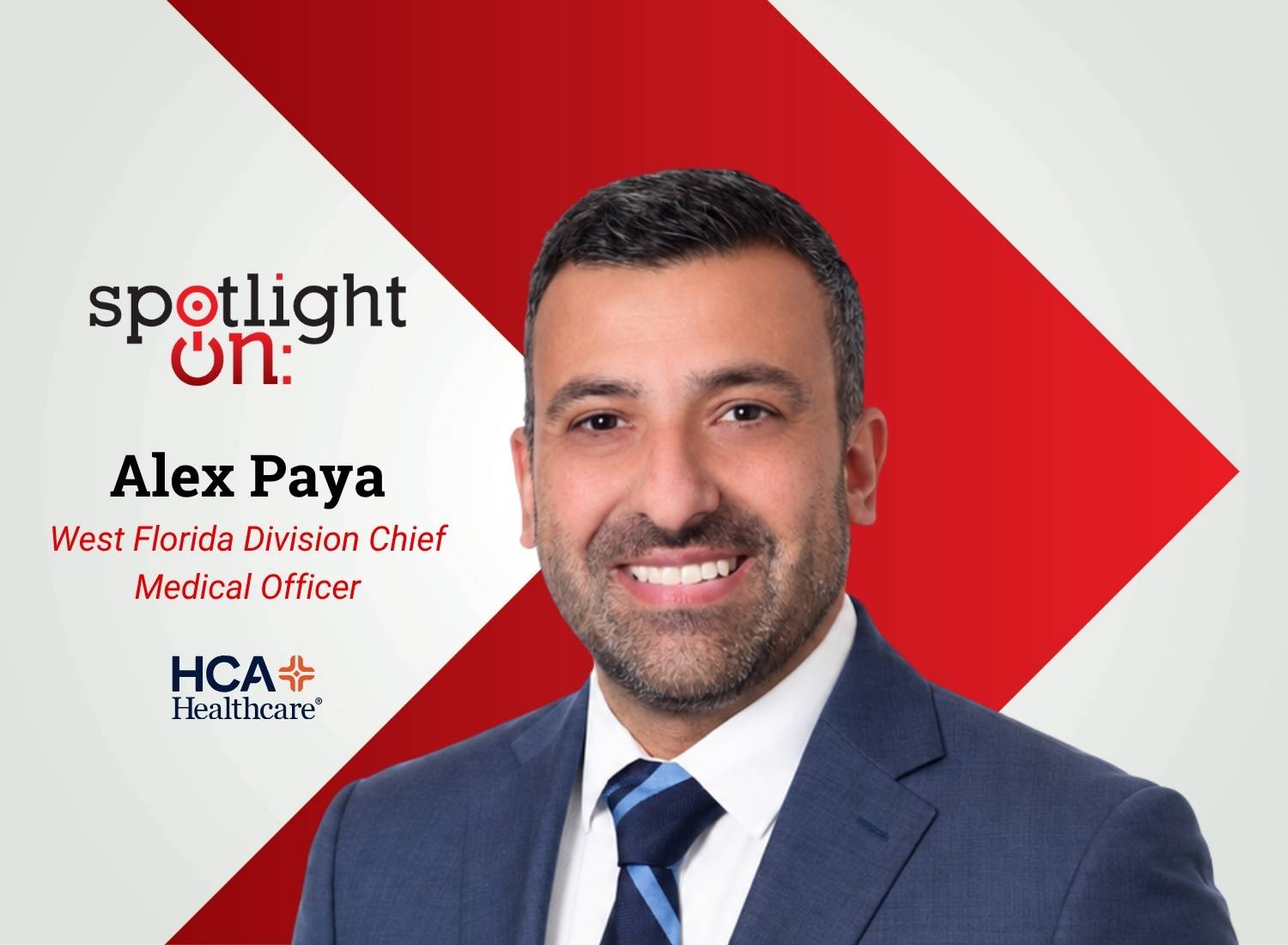 July 2026 — Invest: sat down with Alex Paya, West Florida Division chief medical officer of HCA Healthcare, to discuss how growth, workforce investment, and clinical innovation are shaping healthcare delivery across West Florida. As the region continues to attract new residents and expand at a rapid pace, HCA Healthcare’s strategy is focused on access, quality, and long-term community impact. “We’re focused on identifying where community need is greatest and ensuring that access to high-quality acute care keeps pace with population growth,” Paya said.
Join us at caa’s upcoming leadership summits! These premier events bring together hundreds of public and private sector leaders to discuss the challenges and opportunities for businesses and investors. Find the next summit in a city near you!
Over the past year, what major changes across HCA Healthcare have had the biggest impact on your division’s work?
Over the past year, we’ve seen significant growth across the West Florida Division. One of the most impactful developments was the acquisition of HCA Florida Lehigh Hospital in early 2025, which expanded access to acute care in Lee County. Along with our existing emergency, surgery, and urgent care facilities in Fort Myers and Cape Coral, this addition strengthens our ability to serve rapidly growing communities.
Beyond that, we’ve continued to expand our footprint through ambulatory surgery centers, freestanding emergency rooms, and MD Now urgent care locations. Today, across Florida’s West Coast, we operate 18 hospital campuses, 43 emergency department locations, 28 urgent care centers, and 63 physician practices. This expansion is very intentional. We’re focused on identifying where community need is greatest and ensuring that access to high-quality acute care keeps pace with population growth. There’s more coming in the months and years ahead as we continue to invest in high-growth areas.
HCA has launched new initiatives, including behavioral health partnerships. What impact are you seeing from these efforts across Tampa Bay?
At the core, these initiatives are about giving the community greater access to care and more choice in how and where they receive it. Behavioral health is a critical need across Tampa Bay and beyond, and partnerships in this area allow us to extend services in a way that’s both responsive and sustainable.
Across our facilities, we’re very focused on standing out as a leader in quality and clinical excellence. Every new initiative, whether it’s behavioral health, emergency services, or specialty care, is evaluated through that lens. We want patients and families to see that we’re deeply committed to delivering high-value, high-quality care, and that commitment guides how we expand and partner within the community.
What strategies are proving most effective for physician recruitment and nursing development in a competitive market like Tampa Bay?
Talent is absolutely foundational to everything we do. In West Florida alone, we support about 22,000 colleagues, and our focus is on ensuring that teams at the bedside have the resources, leadership, and support they need to deliver exceptional care.
From a nursing perspective, we invest heavily in education and professional development. That includes tuition reimbursement, scholarships, and a wide range of workforce development programs designed to support both current staff and future caregivers. We’re also deeply invested in Galen College of Nursing, with three campuses on Florida’s West Coast, along with other vocational training programs in our local communities.
On the physician side, graduate medical education is a major strength for HCA Healthcare. We are the largest sponsor of GME programs in the country, and in West Florida, we have nearly 1,000 residents and fellows across 10 hospitals. Each year, we welcome about 340 new residents and fellows. A key priority is retention, ensuring that these physicians continue their careers within our system and carry forward institutional knowledge and a shared commitment to quality care.
What trends are shaping your strategic planning today, particularly around AI and value-based care?
Artificial intelligence is certainly one of the most significant trends influencing healthcare right now. Its acceleration has been remarkable, and for us, the question is how to deploy AI in ways that truly enhance patient care.
One major area is predictive analytics. AI tools can help monitor patients for early signs of deterioration, sepsis, or risk of readmission, providing clinicians with an additional layer of oversight. Physicians and nurses appreciate having these tools as support, not replacements, for their clinical judgment.
AI is also making a meaningful impact in imaging, where it can help flag abnormalities earlier and support radiologists in their work. Importantly, there is always a licensed clinician overseeing care. The human touch remains essential, but AI offers an enhanced layer of protection and insight that ultimately benefits patients.
What challenges are top of mind for you today, and where do you see the greatest opportunities emerging from them?
One of the biggest challenges, and opportunities, is advancing specialty care to meet increasingly complex patient needs. In West Florida, we’re continuing to invest in robotic surgery, cardiac care, and endocrine surgery, areas where we already have a strong presence.
Our endocrine surgery programs, in particular, attract patients not just from Florida but from across the country and internationally. We also operate transplant programs that draw patients seeking highly specialized care. As demand grows, we’ve recognized the need to further expand research capabilities. Recently, we established the Hospital for Endocrine Surgery Research Center, which focuses on advancing treatment for endocrine tumors and strengthening our position as a leading provider of adrenal, thyroid, and parathyroid surgery.
These investments allow us to respond to patient needs while also pushing the boundaries of what’s possible in clinical care.
Community partnerships remain central to healthcare delivery. How is HCA strengthening its role in community health across Tampa Bay?
Community engagement is a core part of our mission. We strive to serve as an anchor institution in the communities we operate in, building strong, strategic partnerships that support long-term health and well-being.
In 2025, the West Florida Division contributed more than $1.1 million to community nonprofits and agencies. Through the HCA Healthcare Foundation’s Healthcare Tomorrow Fund, over $165,000 in grants were awarded to local charitable organizations this year. These grants support programs like the American Heart Association’s Taking Motherhood to Heart initiative and All Faiths Food Bank’s Food Is Medicine program, which addresses food insecurity and access to healthy nutrition in Sarasota County.
These efforts reflect our commitment to being approachable, engaged, and actively involved in the communities we serve.
From your perspective, what distinguishes Tampa Bay’s healthcare ecosystem from other markets?
West Florida, and Southwest Florida in particular, is experiencing some of the fastest population growth in the country. The region continues to attract families, retirees, and professionals from across the United States, which creates both opportunity and urgency for healthcare providers.
The pace of growth means we have to think proactively. In many cases, we can’t expand fast enough to meet demand, which is why you see such a strong focus on new facilities, expanded services, and innovative care models here. While markets like Miami are also growing, the sustained influx of new residents to Southwest Florida has made access, capacity, and quality top priorities.
Over the next two to three years, what are your key goals and priorities for the division?
Our overarching goal is to continue delivering top-tier healthcare services while clearly communicating where we stand out as an organization. We want the community to understand our strengths, whether that’s clinical excellence, specialty care, or innovation.
Another major priority is supporting our people. That includes nurses, patient care technicians, radiology technologists, and every colleague who contributes to patient care. We want to be known as a company that invests in its workforce and truly cares about the people who make our mission possible.
Finally, we’re focused on continuing to adopt and lead in new technologies while expanding responsibly. As we grow, it’s critical that we double down on quality, education, and innovation so that patients, communities, and partners continue to see HCA Healthcare as a trusted, forward-looking leader in healthcare delivery.
Want more? Read the Invest: Tampa Bay report.