
Spotlight On: Gene Scheurer, CEO, Optimum Healthcare IT
Key points:
- • Optimum’s acquisition by Infosys significantly expands its healthcare technology capabilities.
- • AI, cloud migration, and EHR optimization are driving healthcare’s digital transformation.
- • Optimum is helping providers cut costs while improving technology and patient care.
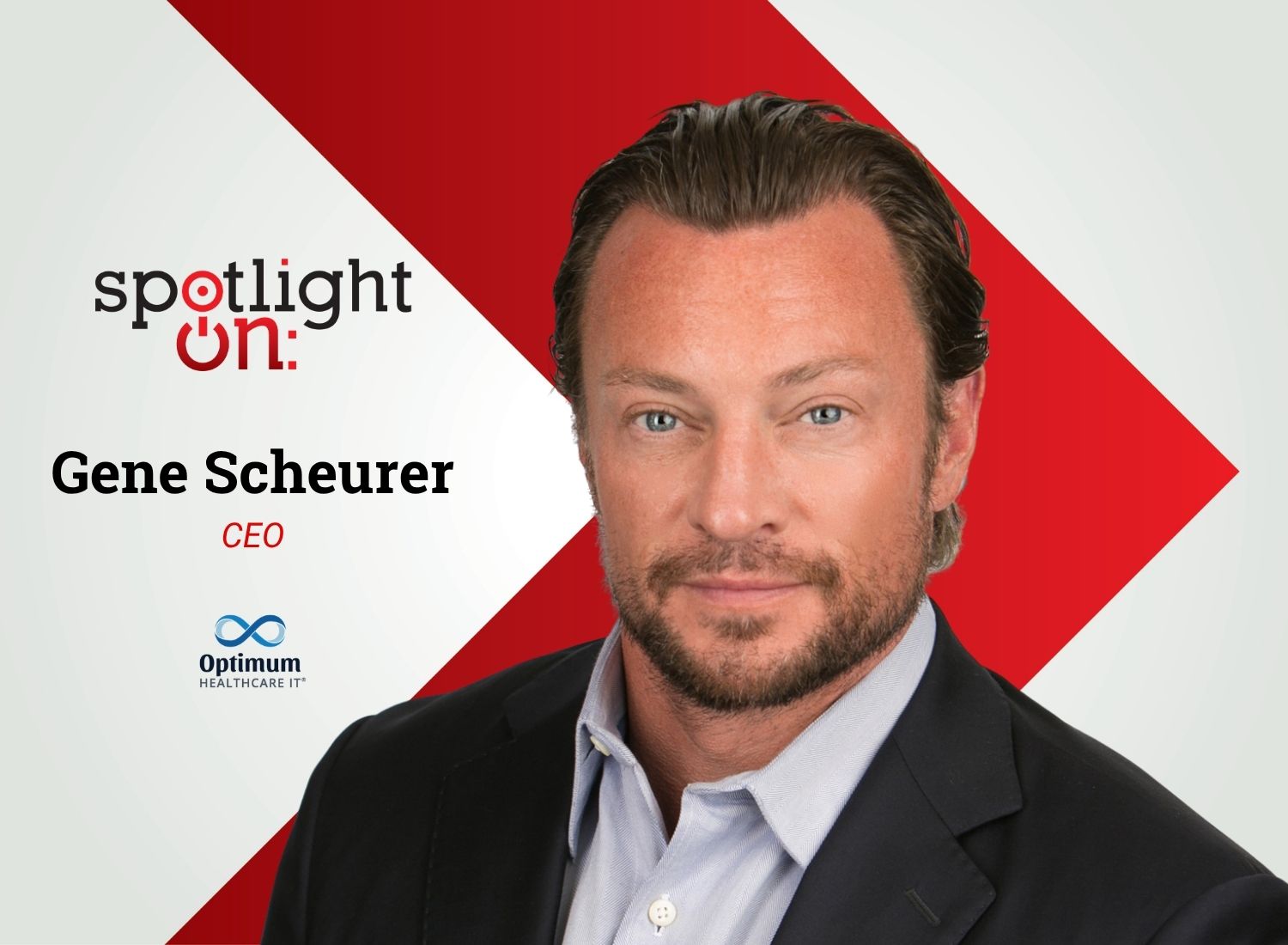 August 2026 —In an interview with Invest:, Gene Scheurer, CEO of Optimum Healthcare IT, discussed Optimum’s acquisition by Infosys, its expanded capabilities, and the evolution of healthcare technology. “We want to partner in depth with our customers and drive bigger results with bigger savings and bigger initiatives,” Scheurer said.
Join us at caa’s upcoming leadership summits! These premier events bring together hundreds of public and private sector leaders to discuss the challenges and opportunities for businesses and investors. Find the next summit in a city near you!
What major changes or milestones have had the most impact for Optimum Healthcare IT over the past year?
We operate in the healthcare IT landscape, primarily in healthcare and the provider market. What we are seeing is a lot of investment in technology, whether that is new EHRs or the consolidation of disparate applications and EHRs to achieve a single patient record.
We are also seeing significant M&A activity in the provider market, with larger healthcare systems looking to purchase strategic entities, whether distressed or intended to help fill out their strategic roadmap from a geographic perspective. Providers have thin margins, so clients are focused on cutting costs and improving their financial profile.
From Optimum’s perspective, the good news is that we can meet our clients where they are. Whether their strategic initiatives involve migrating to a new EHR, standing up a ServiceNow instance, or migrating data to the cloud, we have capabilities to support them. We also stood up a nearshore application managed services division in Costa Rica, which helps reduce support and maintenance costs.
How has the focus on efficiency and ROI evolved as healthcare providers invest more in technology?
From an ROI perspective, AI can play a significant role in the provider market, especially with revenue cycle optimization. We are seeing investments there. AI has come a long way and will continue to move forward in the market.
Our provider clients are not necessarily skeptical, but they are being strategic. They know AI is not a silver bullet that will solve every need. They are looking at the AI components built into their software partners’ products, while also developing their own AI road maps focused on internal efficiencies and ROI. Most organizations start in the revenue cycle optimization space, and there will be many new opportunities as that technology evolves, particularly in healthcare.
What strategic factors led to the Infosys acquisition, and how does it position Optimum for growth?
We are really excited about the acquisition. We were previously backed by Achieve Partners, a New York-based private equity firm that acquired a majority stake in the company in 2020. At that time, we were primarily doing EHR implementations, from advisory on the front end through implementation, training, go-live, and optimization.
Since then, we have stood up a ServiceNow business and were named the global ServiceNow Healthcare Partner of the Year in 2025 and 2026. We became a Workday-certified partner, allowing us to support Workday in the provider landscape. We also built a cloud migration practice, helping customers migrate Epic to the cloud and build roadmaps for their cloud initiatives.
Achieve had a five-year hold on its assets, and we reached five years in 2025. We went to market, and when Infosys came to the table, it made a ton of sense strategically. Infosys’ healthcare business was primarily in the payer space. Optimum brought deep provider experience, with 99.9% of our customers in the provider space, both domestically and internationally, including work in Australia and Canada.
Infosys brings major infrastructure outsourcing, technology outsourcing, business process outsourcing, cloud strategies, relationships with AWS, and a significant ServiceNow business. When we looked at the two companies together, we saw a unicorn. When we go into a hospital system now, we can bring almost any capability.
When we met the leaders at Infosys, they shared the same culture, passion for customer service, integrity, and a commitment to doing right by customers and employees. Bringing the two organizations together made sense, and we are thrilled about the go-forward strategy.
What added value should healthcare systems expect as a result of this transition?
We are maintaining Optimum as a brand. We are not changing our name to Infosys. We will still be a U.S.-based entity owned by Infosys.
The difference is that we now have the backing and capabilities of a 300,000-employee, $20 billion company that focuses on infrastructure outsourcing, business process outsourcing, and other capabilities we did not have before.
From a client perspective, they will see the same leadership team, customer service, brand, and capabilities, now backed by a global entity that brings additional resources to meet strategic needs and drive down costs. Whether it is infrastructure outsourcing, moving to the cloud, or complete business process outsourcing, our customers can access those capabilities under the Optimum brand.
It makes us bigger and allows us to add more value to customers. Our goal over the next five years is to grow Optimum into a billion-dollar company. We want to partner in depth with our customers and drive bigger results through greater savings and larger initiatives.
How do you help clients prioritize investments while advancing digital transformation cost-effectively?
Some clients have their own road map and know exactly what they want to do, and we enable them to carry out those initiatives. Other healthcare systems want us at the table, providing true advisory support.
We work with over 300 healthcare systems in the United States and internationally, so we see what many systems are spending money on and what challenges they share. That gives us perspective. We sit down and ask what they are trying to do, what their initiatives are, and how we can help achieve those initiatives while saving costs and reducing expenses.
One example is application rationalization. Over time, healthcare systems may accumulate many disparate applications and products. Some are no longer being utilized, but organizations keep paying for them because they need to retain the data. We can identify critical systems, systems where Epic may already perform the same functionality, and systems that can be sunset. The data can still be retained, but the organization can stop paying for systems that no longer serve an operational need.
That is an easy way to capture ROI and help fund more innovative technologies. For one customer, we took over maintenance and support for 42 Epic applications. Their SLAs with internal staff were in the high 50s to low 60% range. We cut costs by 40% and increased SLAs to 95% or 96%. That created cost savings and real-world efficiency gains.
How are Epic reset or refuel projects progressing, and what are organizations trying to achieve through them?
Epic is an amazing EHR and by far the market leader. It has developed great software and a great culture, which is why it continues to win so many deals.
With refuel or reset projects, a customer may have installed Epic seven or 10 years ago. Over time, physicians may request certain functionality, or an organization may complete M&A activity and begin customizing the system. Epic has its own AI initiatives and new modules on the way, but if a customer has customized its build too much, it cannot easily adopt those new capabilities.
Those customers need to go back to a model build. That is what reset or refuel projects are doing. We are seeing a lot of them because Epic is introducing innovative technology. Its roadmap is ahead of others, particularly in terms of technology and AI.
I am a patient at Mayo Clinic, and I get to see firsthand how its patient portal works. When I get blood work done, it is quickly loaded into MyChart on my phone, and it explains in layman’s terms what the numbers mean. I can also look at my mother’s chart and see summaries that help us understand what tests mean and what she should do for post-care. Epic has fundamentally changed millions of people’s lives through its software.
Epic also has Community Connect, which allows a hospital system to extend its Epic build to independent physicians in the region. Those physicians get access to Epic without necessarily being part of the larger healthcare system, and patients can be referred to the hospital for additional care. That is another way Epic is expanding its footprint and impacting more lives.
What are your top priorities for Optimum over the next five years?
The priority is to continue doing what we are doing and serving customers the way we serve them today, while enabling our services and solutions with Infosys behind us.
We are asking what technology will look like in 5-10 years and what we should be thinking about to stay ahead of the curve. Providers’ mission is patient care. They treat people in distress, manage emergency rooms, support cancer care, and handle the full scope of healthcare. They are not necessarily IT shops, and I am hearing more CEOs in the provider landscape say they should not be in the IT business. They are in the patient-provider business, and technology should enable that.
Providers have historically been labeled as technology laggards, not because they lack smart people, but because their mission is patient care. As technology evolves faster and is adopted more quickly, I think we will see a leapfrog event in which providers and healthcare systems become leaders.
For us, that means staying ahead of the curve, bringing new solutions, being innovative, and trying different solution sets with Infosys behind us. Infosys has given us capabilities we would never have achieved without the acquisition.
There will always be new technologies. Infosys is a major partner with Anthropic AI, and we are exploring what that means for healthcare systems. It is not about chasing a shiny new object. It is about thoughtful solutions that create real results, whether in patient care, ROI, or revenue cycle management. Bringing the smart people on the Optimum and Infosys sides together to deliver something unique in the marketplace is where we are focused.
Want more? Read the Invest: Jacksonville report.