Spotlight On: Greg Padalecki, President & CEO, Alterman Inc.
Key points:
- • Strong demand for infrastructure, manufacturing, and data centers is driving growth, with skilled labor remaining the biggest constraint.
- • Alterman is investing in workforce development and technology to improve productivity and meet rising demand.
- • Texas’ long-term growth will depend on expanding power infrastructure and developing talent.
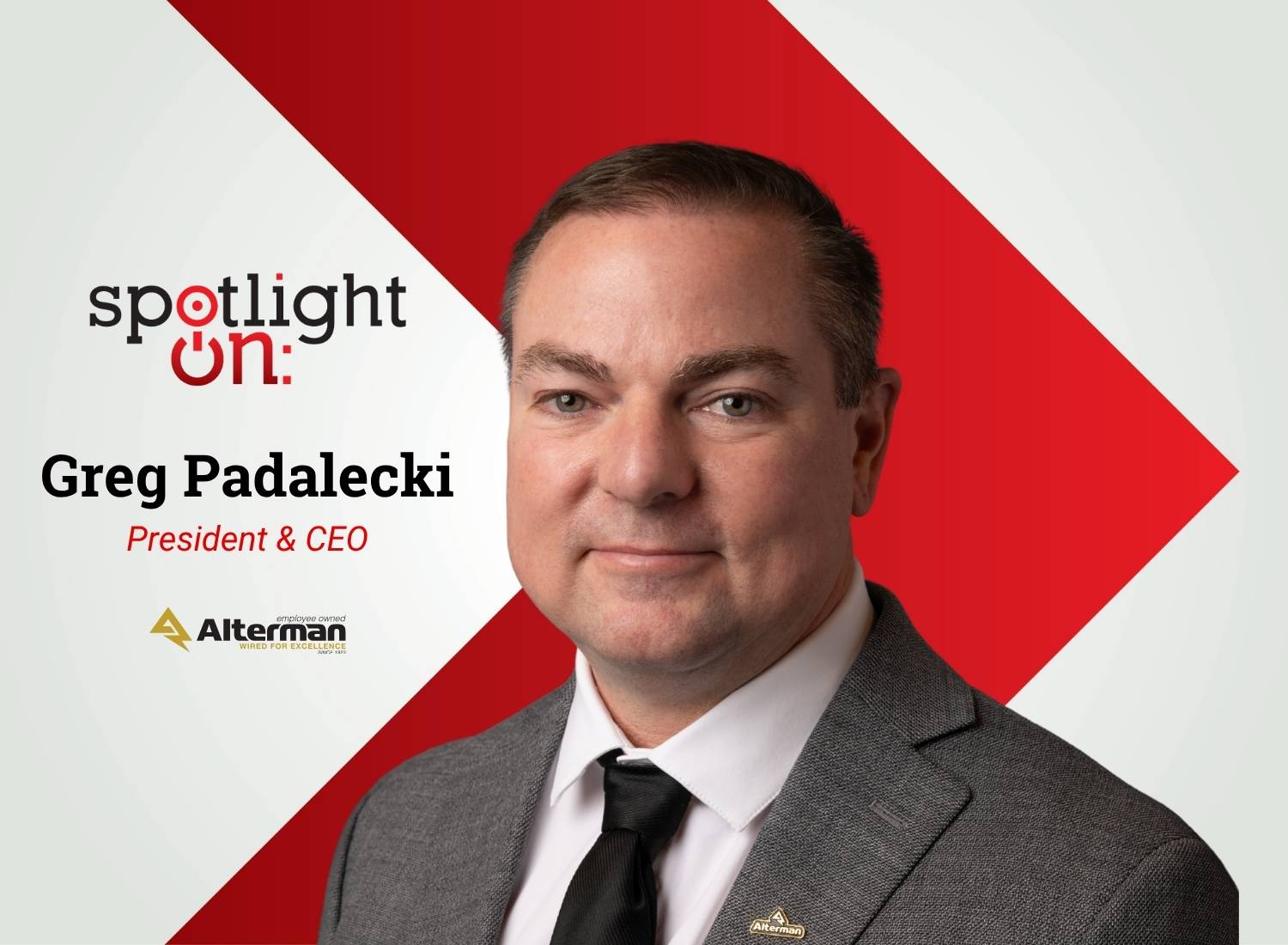 July 2026 — Invest: spoke with Greg Padalecki, president and CEO of Alterman Inc., about workforce development, infrastructure demands, data center growth, and the opportunities shaping Texas construction. “As long as companies continue to move here and invest here, contractors like Alterman will have opportunities to support that growth,” Padalecki said.
Join us at caa’s upcoming leadership summits! These premier events bring together hundreds of public and private sector leaders to discuss the challenges and opportunities for businesses and investors. Find the next summit in a city near you!
How would you describe San Antonio’s current business climate, and what trends are having the biggest impact on construction and infrastructure?
Last year and this year are similar from a constraints point of view, but I would say it feels even more challenging now. There is a tremendous amount of construction opportunity across Texas, including San Antonio. For contractors like us, there is more work out there than there are people to do it.
At Alterman, we are very focused on people development. We are trying to get more work done with the limited resources we have, and the biggest limited resource is the people who actually get the work done on construction sites. How do we develop field leaders and project managers? How do we turn a first-year apprentice electrician into a journey-level worker? We are focused on fast-tracking that skill-building.
There is a lot of opportunity right now, from the Spurs new arena project and airport expansion to data centers across the region. Those large projects are drawing electrical workers, which means they are also pulling resources away from more traditional projects such as schools and hospitals.
San Antonio remains a very attractive market. People appreciate the business climate in Texas, but they also appreciate San Antonio’s culture and quality of life. A lot of people are moving here, and I think it is a really good place to live.
How important is the connection between San Antonio, Austin, Houston, and Dallas in driving economic growth across Texas?
It is very important because the people building projects in San Antonio are often the same people building projects in Austin and Dallas. Contractors of scale are balancing resources across all of those markets.
It feels more regional than it ever has. Twenty years ago, we were a San Antonio contractor that stayed in San Antonio. Today, projects pull us throughout the state.
The data center work happening across Texas also affects every market. Large projects in Austin or remote parts of the state compete for the same labor resources. Everybody is spread thin because the state is so busy.
Which sectors do you believe will drive the most growth in San Antonio over the next few years?
Manufacturing is a major one. Toyota has discussed significant investment, and there are several manufacturing projects underway across the region. Hospitality and sports-related development are also important.
We are not building as many office buildings as we once were. Instead, we are doing more infrastructure-related work. When I think about infrastructure, I think about data, power, and water.
We do a lot of work in water and wastewater facilities, data centers, and projects that support grid hardening and electrification. Supporting larger power consumers requires upgrades to the distribution system across Texas, and utilities are investing heavily in that effort.
How are trends like data centers, AI, and advanced manufacturing changing the opportunities and challenges for companies like Alterman?
The biggest challenges are talent and supply chain constraints. Projects are becoming more complex, and customers want them completed faster than ever.
That reality is forcing construction companies to invest in technology and rethink traditional processes. How do we get more done with fewer people in a shorter amount of time? That is the question everybody is trying to answer.
AI can help improve processes and efficiency, but it does not replace the core work happening in the field. We still swing hammers, run conduit, and pull wire. We are also focused on strategies like off-site fabrication to improve productivity.
The people pipeline remains the biggest challenge. There are simply not enough electricians available. One thing many young people do not realize is that learning a trade does not limit their future options. Once you develop that foundational knowledge, there are opportunities in project management, estimating, engineering, leadership, and many other areas.
We are trying to bring as many people as possible through our apprenticeship programs because that is where everything starts.
What infrastructure investments are most important for keeping San Antonio and Texas competitive?
The amount of power required by today’s projects is at a completely different scale than what we were discussing 10 or 20 years ago. The system was not originally designed to support these levels of demand.
In some cases, projects are being built before the necessary power is available. Developers are counting on that infrastructure arriving later. Utility providers are working hard to address the challenge, but it remains one of the most important issues facing the state.
The regions that figure out how to deliver reliable power capacity will become even more attractive to large industrial users and data center developers. Texas is in a strong position, but there is still a lot of work to do.
How are data centers and on-site power generation changing the landscape?
If a company depends entirely on utility infrastructure, it is more likely to build near major cities where that infrastructure already exists. If it can generate power on-site, it gains the flexibility to build in more remote areas where land is less expensive.
That creates a workforce challenge because skilled labor must follow those projects. When workers move to remote locations for large data center developments, it can leave cities short-handed.
I think we will see more of these projects move into rural environments as on-site generation technology becomes more standardized and easier to deploy.
How is technology helping Alterman address these challenges?
Certain construction activities are well suited for AI support, including scheduling, estimating, and 3D modeling. We are investing in those tools, but not to replace people.
The goal is to help knowledgeable employees become more productive and allow them to focus on higher-value work. There has been concern about AI affecting jobs, but there is so much work available that our focus is really on improving efficiency and staying competitive.
Construction still has many disconnected systems related to labor, materials, and schedules. The companies that learn how to connect those systems effectively will be able to complete projects faster and more economically. That is where technology can create real value.
How does Alterman’s employee-owned model influence culture, growth, and talent retention?
The ESOP is the special sauce at Alterman. It is the glue that binds us.
Everybody here thinks like they own the company because they do. To be a good employee-owner, you have to understand how the business works, what drives success, and how decisions affect performance. We spend a lot of time teaching those concepts and communicating transparently.
The ESOP also makes us an attractive place to work. As the value of the business grows, employees directly benefit from that success. People come here, and they typically do not leave.
Once employees begin to see the value of ownership, they become even more invested in improving processes, increasing efficiency, and helping the company succeed. We are all rowing in the same direction.
What is your outlook for Alterman over the next several years?
I think the next three to five years will be very busy. There is still a tremendous amount of work to build, particularly around data centers and related infrastructure.
For Alterman, the focus is on investing in people, improving processes, and increasing our capabilities while demand remains strong. We want to position ourselves as the contractor that can work most efficiently, both during periods of growth and when the market eventually levels off.
I do not see a slowdown in the near term. There is solid prosperity ahead, and Texas remains a very attractive place to do business. As long as companies continue to move here and invest here, contractors like Alterman will have opportunities to support that growth. We are in the right place, doing the right things at the right time.
Want more? Read the Invest: San Antonio report.