Invest: Houston leadership summit charts the next chapter of a diversifying economy

Key points:
- • Houston leaders tied continued growth to coordinated investment in infrastructure, access to capital, energy innovation, and digital resilience.
- • Schools, employers, and training providers must build clearer pathways from the classroom to careers, including technical training and lifelong learning.
- • The region’s advantage depends on turning its energy, logistics, and talent strengths into commercially viable investment that reaches communities of all sizes.
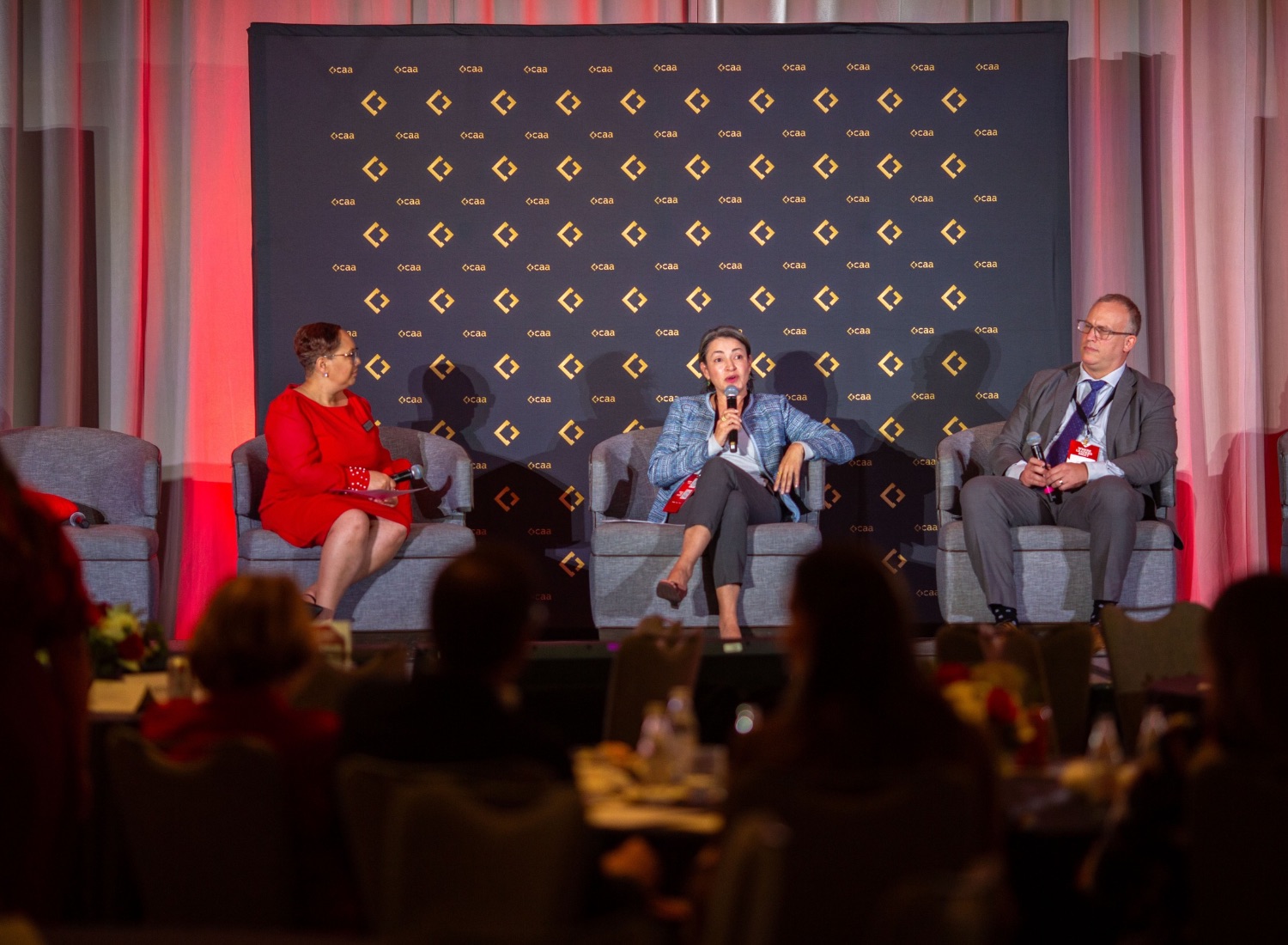
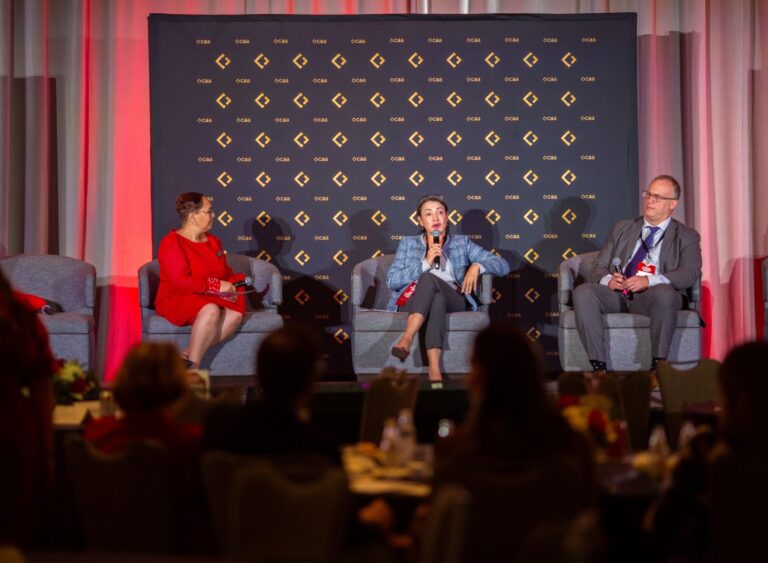
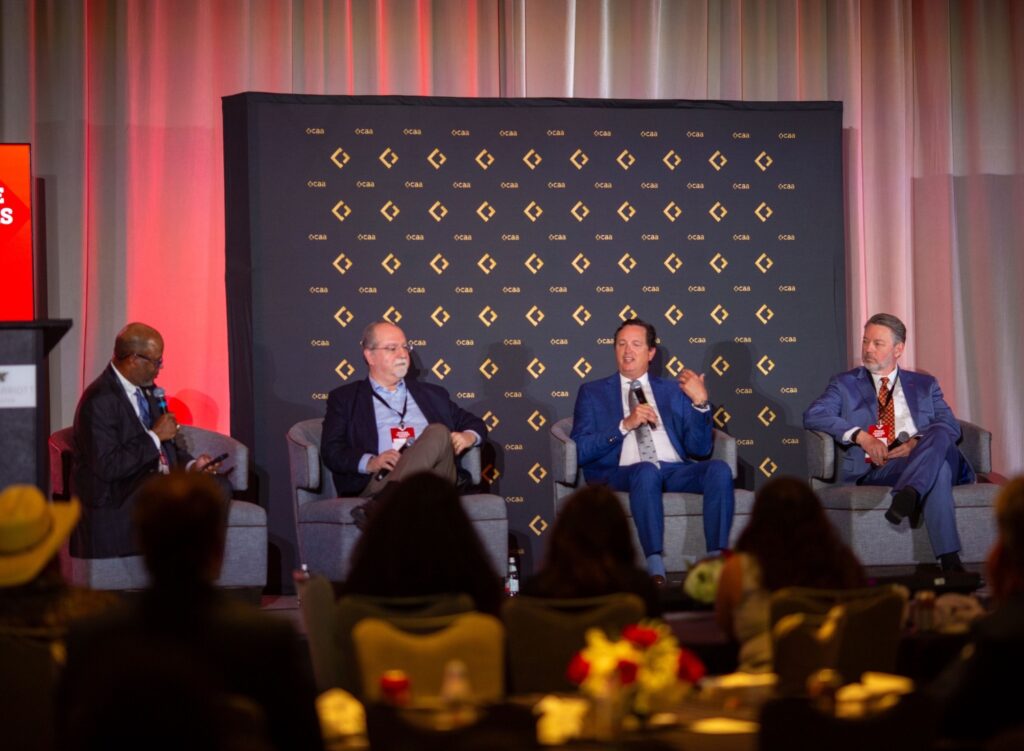
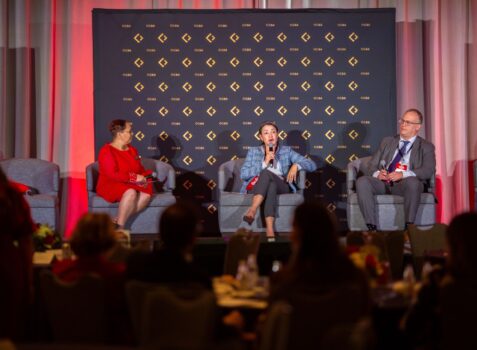 November 2026 — Business investment, workforce development and infrastructure took center stage at the Invest: Houston Leadership Summit, hosted by caa at the JW Marriott Houston by the Galleria.
Join us at caa’s upcoming leadership summits! These premier events bring together hundreds of public and private sector leaders to discuss the challenges and opportunities for businesses and investors. Find the next summit in a city near you!
The event, held on Nov. 5, 2026, brought together over 350 business executives, elected officials and community leaders to examine the opportunities and challenges shaping Greater Houston’s growth. The summit also marked the launch of Invest: Houston, 3rd Edition, caa’s annual economic review of the region.
“Where other regions see disruption, Houston builds an industry,” said Abby Lindenberg, founder and CEO of caa, during her opening remarks.
Building opportunity through education and leadership
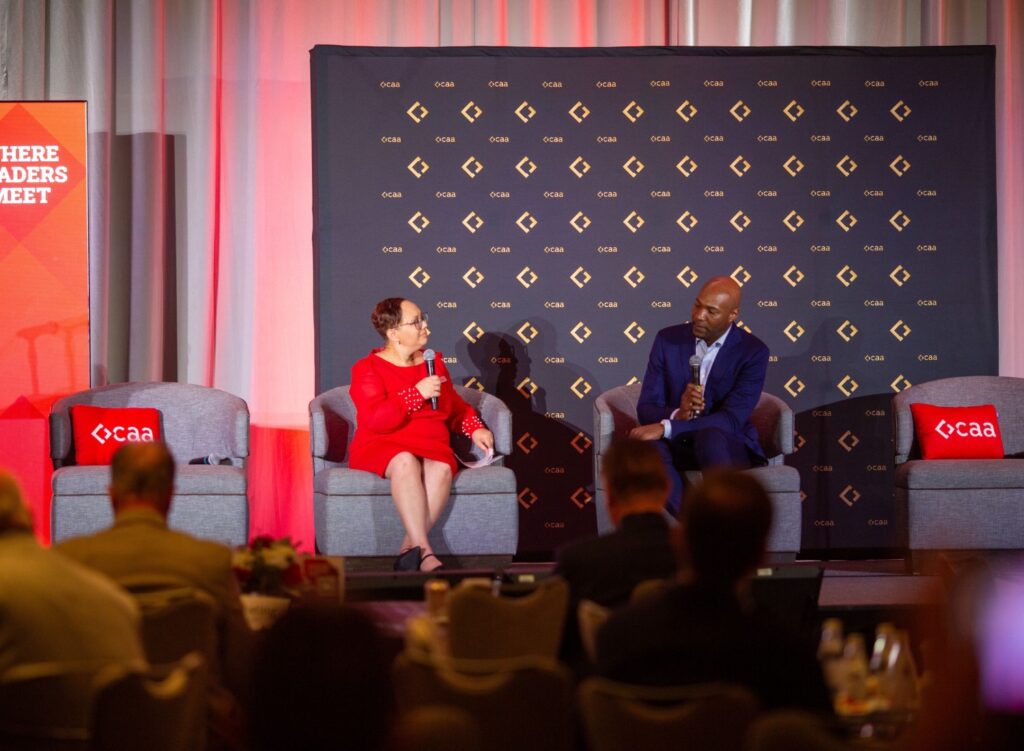
The summit opened with a fireside conversation between Lindenberg and Prairie View Mayor Nathan Alexander, who discussed infrastructure investment, economic development, and the city’s relationship with Prairie View A&M University.
Alexander highlighted a $9.5 million grant from the Texas General Land Office for wastewater infrastructure improvements, alongside approximately $20 million in road investments being undertaken with the county.
“We can’t build a 21st century Prairie View with 20th century infrastructure,” Alexander said.
Education and workforce readiness were the focus of Investing in Potential: How Houston is redefining educational opportunity, moderated by Andrea Teran, content manager at caa.
The discussion featured Dickinson ISD Superintendent Dr. Rebecca Brown, Deer Park ISD Superintendent Dr. Tiffany Regan and Champions School of Real Estate founder and CEO Rita Santamaria.
Panelists examined education funding, career pathways and partnerships connecting students with employers. Regan highlighted Deer Park ISD’s collaboration with GE Vernova, through which eight high school seniors are receiving hands-on training in wind turbine operations and maintenance, with jobs guaranteed upon graduation.
“Our goal now is the first five minutes after graduation,” Regan said. “Are they ready for that next five minutes?”
Leadership and organizational resilience were explored in a fireside conversation between caa Senior Editor Jerrica DuBois and Keion Henderson, senior pastor of The Lighthouse Church. Henderson discussed the church’s growth, its response to Hurricane Beryl and the importance of adapting leadership approaches as organizations evolve.
Financing growth and strengthening infrastructure
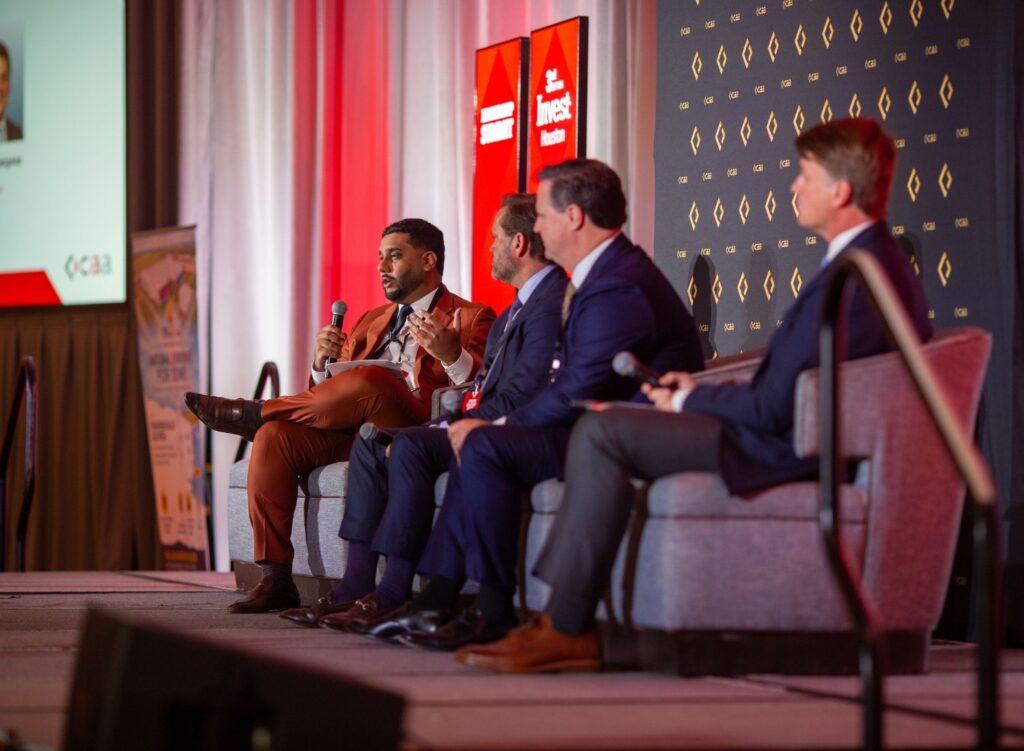
Houston’s investment environment and digital transformation were examined during Securing the Boom: Financing growth and fortifying Houston’s digital economy.
Following opening remarks by Scot Johnson of Adell, Harriman & Carpenter, AZA partner Shahmeer Halepota moderated a discussion featuring Scott Almy of Cornerstone Capital Bank, Christopher Dvorachek of ServisFirst Bank and Steve Thompson of Texas Gulf Bank.
Panelists addressed opportunities for emerging technologies across Houston’s established industries, alongside cybersecurity concerns and the importance of disciplined investment.
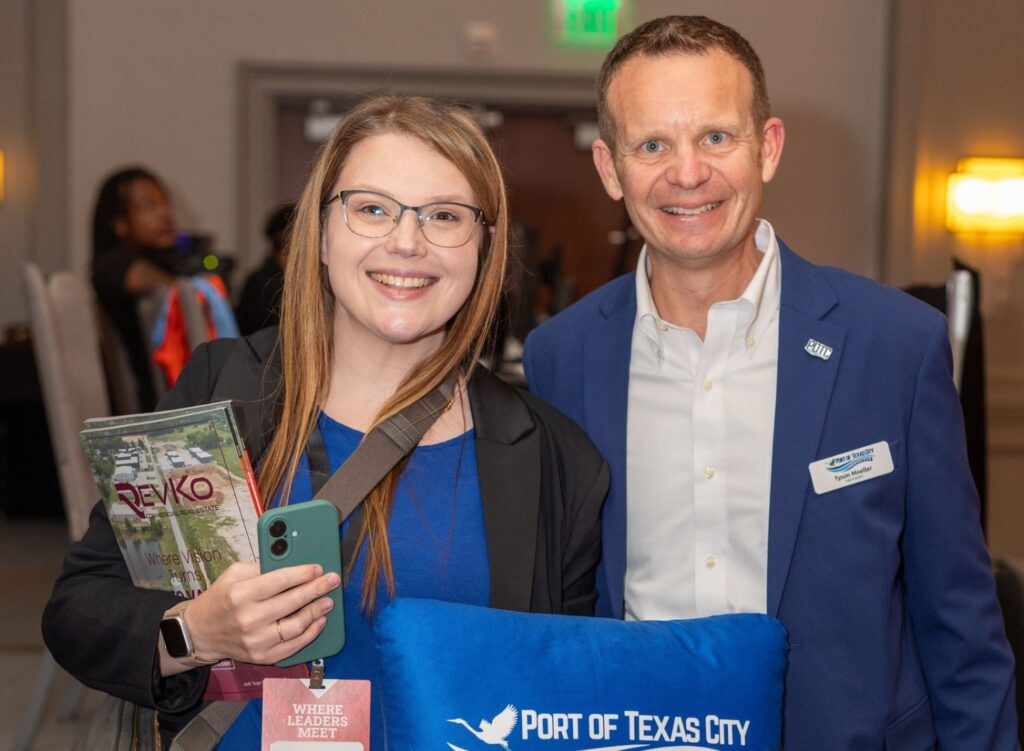
Infrastructure and logistics took center stage during Houston at the Crossroads: How infrastructure and logistics are shaping the region’s economic future, moderated by ChaceTech CEO Ferrell Fuller, with Kristin Edwards of Texas City, Jason Miura of Port Freeport, Tyson Moeller of the Port of Texas City and Texas City Terminal Railway Company, and Kevin Murphy of The Hunton Group.
Miura highlighted the completed Freeport Harbor Channel Improvement Project as an example of public-private collaboration. Panelists also discussed transportation investment, port funding, workforce shortages and rising demand for reliable power.
Garner Duncan, senior vice president of government affairs at Ezee Fiber, presented findings from a company-commissioned economic analysis showing that fiber availability in Harris County increased from 74% at the end of 2022 to nearly 94% by the end of 2025. The analysis estimated that fiber expansion supported approximately 2,100 Houston jobs between 2021 and 2024.
“In the 21st century, fiber belongs on the same list of infrastructure as the port, pipelines, and the highway,” Duncan said.
Innovation and Houston’s competitive edge
Houston’s evolving energy economy was explored in a fireside conversation between Lindenberg and Ryan Ezell, CEO of Flotek Industries.
Ezell discussed the company’s transformation through technology and diversification, noting that its addressable market expanded from approximately $2.5 billion in 2019 to $20 billion in 2026, with 80% now outside direct commodity-price exposure.
“We’re placing our bet on data,” Ezell said, emphasizing the role of analytics in improving operational efficiency and supporting long-term growth.
He also identified opportunities for collaboration among energy companies, technology firms and utilities to address rising electricity demand driven by artificial intelligence, data centers and industrial expansion.
In a special presentation, Nick Wolda, president of Visit The Woodlands, highlighted the community’s evolution into a major employment and tourism destination. He noted that tourism-related taxes account for nearly 60% of township revenue, helping maintain a low property tax rate, while identifying additional hotels and an indoor performing arts center as opportunities for future growth.
Houston’s quality of life and investment appeal were further examined during The Case for Houston: How culture, connectivity and affordability shape a city’s appeal, moderated by Reginald Martin of the Houston Hospitality Alliance.
The panel featured Justo Gonzalez of Garcia Hamilton & Associates, Rodney Nabors of First Financial Bank, Marty Pell of Wellby Financial and Bryan Pettigrew of Sam Houston Race Park.
Panelists discussed how affordability, cultural diversity, financial accessibility and entertainment contribute to Houston’s competitiveness. Pell highlighted Wellby’s efforts to expand financial inclusion, including 250 free financial education events conducted last year and the use of AI-driven credit assessment to improve lending accessibility.
Wayne Mansfield, president and CEO of Longview Economic Development Corporation, also delivered a presentation on the importance of infrastructure, manufacturing, workforce readiness and amenities in attracting investment to East Texas.
“We still equate quality of life with economic development,” Mansfield said.
Connecting capital with talent
The summit’s final panel, Who Funds It, Who Does It: How access to capital and access to talent are shaping Houston’s future, examined the relationship between business investment and workforce capabilities.
Moderated by DuBois, the discussion featured Mike Blankenship, managing partner at Winston Taylor, and Joanitt Montano, provost and chief academic officer at The College of Health Care Professions.
Blankenship emphasized the importance of workforce retention and leadership capabilities in mergers and acquisitions.
“You’re not just buying an asset, you are buying the talent that is there,” Blankenship said.
Montano highlighted the need for stronger employer partnerships to address healthcare workforce shortages, citing a hospital collaboration that reduced medical assistant training from nine months to 12 weeks while allowing participating employees to maintain their full-time pay.
“We have to start with the employer needs, and what the needs of the community are, and work ourselves backwards,” Montano said.
Looking ahead
Across discussions on education, infrastructure, energy and investment, the summit underscored the importance of collaboration in sustaining Greater Houston’s economic competitiveness.
As the region navigates changing workforce needs, infrastructure demands and new investment opportunities, the summit highlighted the importance of turning economic momentum into lasting results.


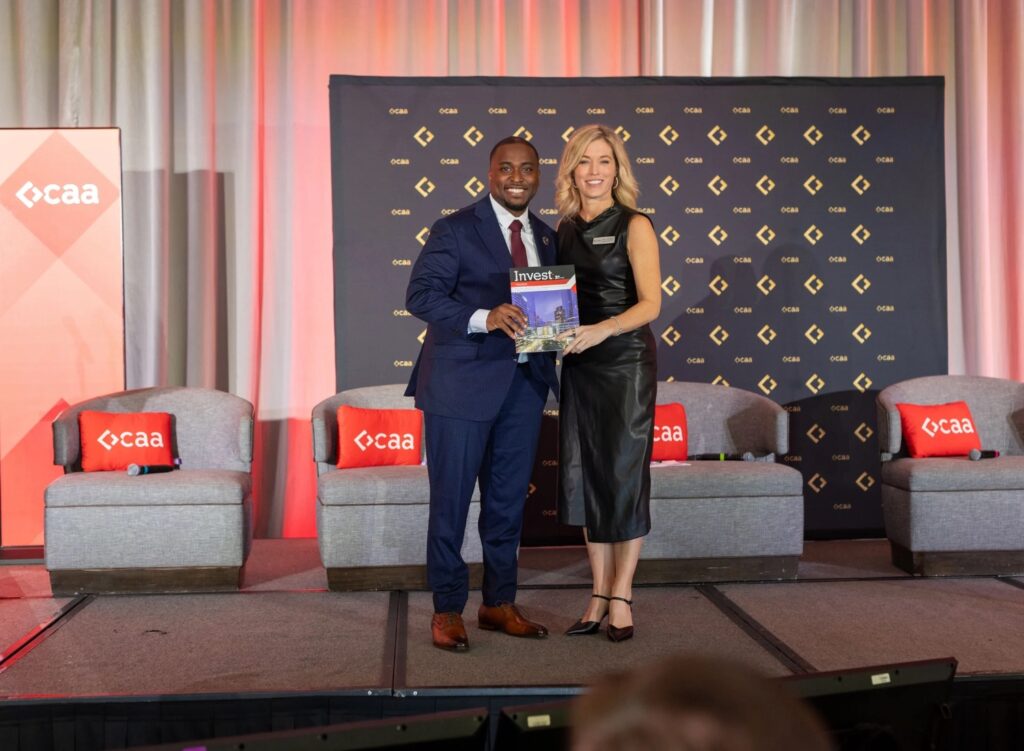
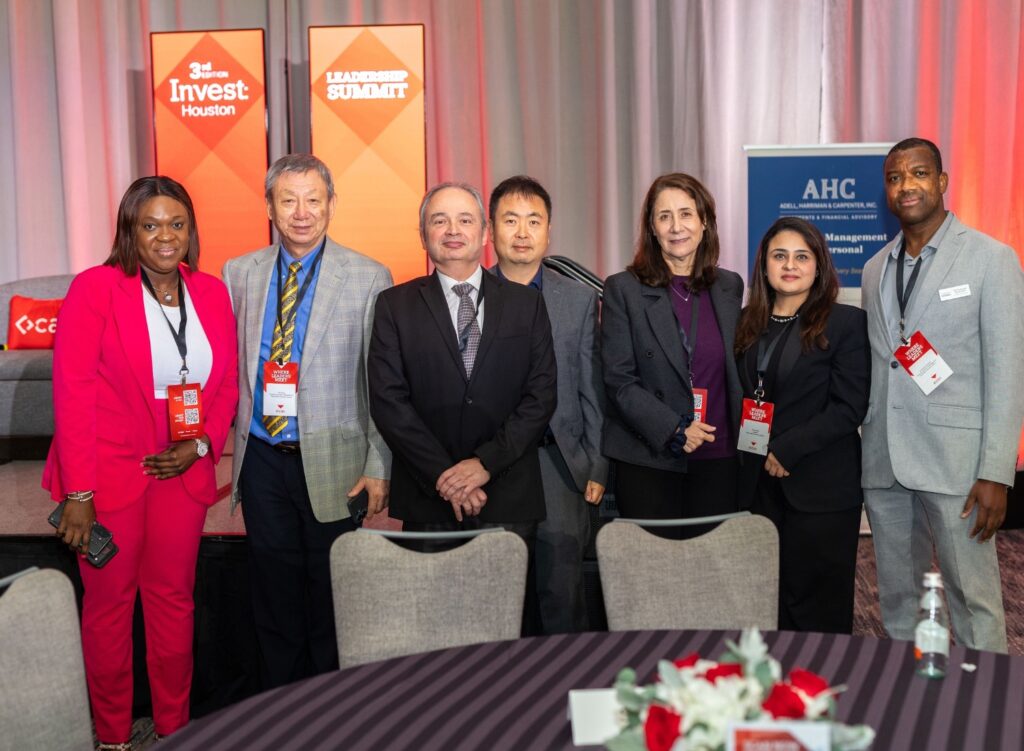
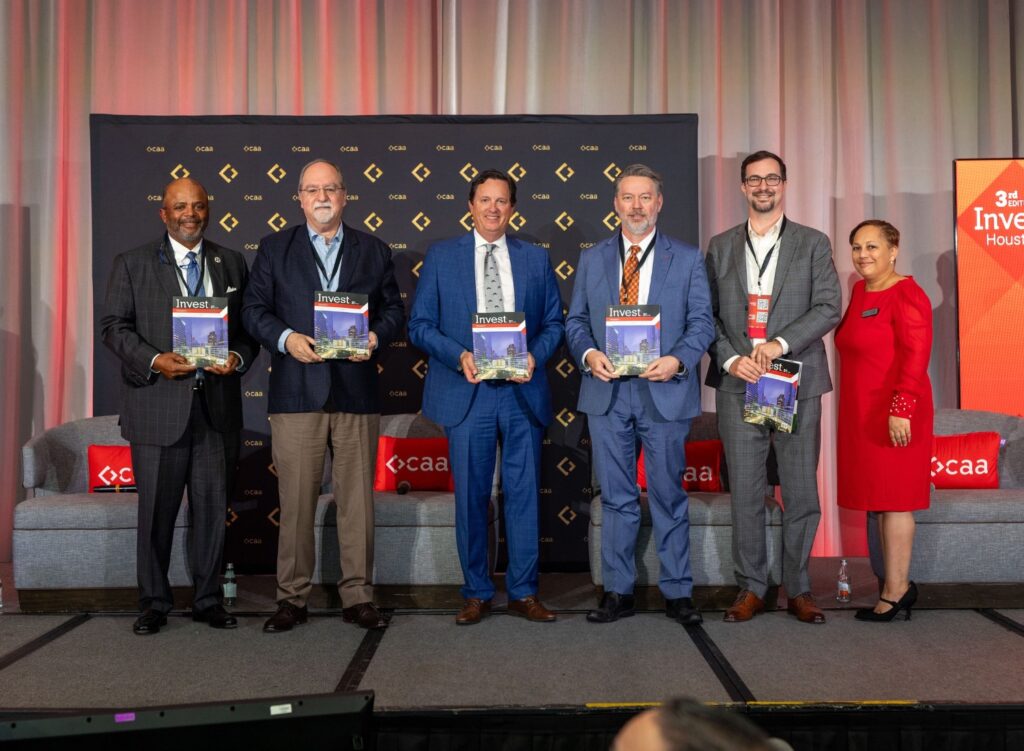
Check out more photos from the event on Flickr.
Want more? Read the Invest: Houston report.